A team excavating in Luxor has uncovered a mummy in a wooden sarcophagus that dates to 1600 BC.

“Archaeologists have discovered a shrine in a temple in Egypt that describes a ritual never seen before.”

Six thousand artifacts taken from the Kerak Castle will be displayed in the city museum.

Syria announced the uncovering of a large, remarkable 1,600-year-old mosaic depicting scenes of the Trojan War.

New mosaics with various figures were unearthed during the ongoing excavations in the ancient city of Hadrianopolis, which is called the ‘Zeugma of Black Sea.’”

“Archaeologists may have found the sanctuary of the Samian Poseidon while they were conducting excavations at the Samicum Acropolis in Greece.”

The British Institute for the Study of Iraq is hosting an online international conference to mark the 100th anniversary of Sir Leonard Wooley’s first season of excavations at Ur.

Shai Gordin and Avital Romach explain the benefits of using computers to study ancient cuneiform texts.

New release: A Companion to the Hellenistic and Roman Near East, edited by Ted Kaizer (Wiley, £159; Amazon).

International Archaeology Day on October 22 will be celebrated at the Nashville Parthenon with a number of activities.

“An American tourist knocked over two ancient Roman busts in the Vatican Museums after he was told he couldn’t meet with Pope Francis.”

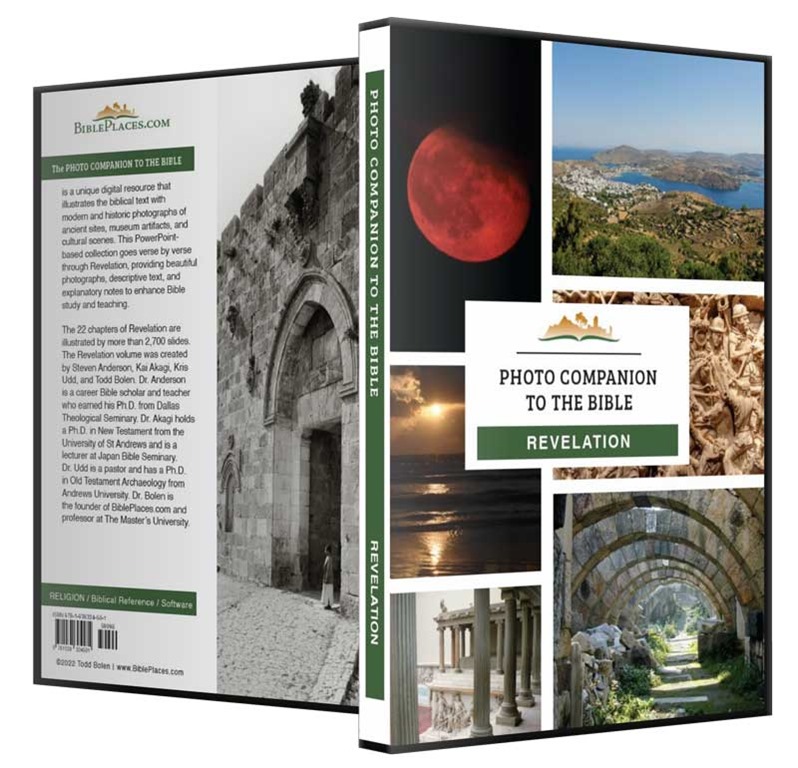
Our team has been working on a special little project, and we look forward to sharing that this week. By way of preview, I will say that it is a powerfully beautiful celebration of one of the most loved passages in all the Bible.

HT: Agade, Arne Halbakken, Ted Weis, Explorator

Share:

Egyptian archaeologists do not often find a complete sarcophagus in its original tomb, but they did recently while National Geographic cameras were rolling. The tomb of Ramses II’s treasurer was discovered at Saqqara at the bottom of a 25-foot shaft that was filled with sand.

“Hieroglyphics: Unlocking Ancient Egypt” is a new exhibition at the British Museum.

“The mode of writing used in Ancient South Arabia, the legendary realm of the Queen of Sheba, was especially unique. The Sabaeans and their neighbours did not write on common materials such as leather or papyrus but rather on something surprisingly simple: branches of fresh wood just cut off the tree.”

Zoom lecture on Oct 11: “The Jordan Museum: More Than 10,000 Years of Human Resilience and Innovation,” by Ihab Amarin.

Excavation work on the Sardis synagogue is complete after 60 years, and all major finds will be displayed in the Manisa Museum.

Archaeologists discovered a Roman-era gymnasium north of Konya (biblical Iconium). The Laodicea mentioned in the article is not the same one mentioned in the New Testament.

Turkish Archaeological News has a roundup of stories for September.

A statue of Hercules from the 2nd century AD has been discovered in excavations at Philippi.

Mercenaries were an important part of Greek armies in the 5th century BC, a fact ancient Greek historians fail to mention.

Archaeologists are using Apple’s iPad Pro to gather data, analyze objects, create a database and come to conclusions about the ancient site of Pompeii.”

“Entertainment among the Romans” is a new exhibition at the Lugdunum Museum in Lyon, France.

HT: Agade, Arne Halbakken, Alexander Schick, Ted Weis, Explorator, Paleojudaica

Share:

“The discovery of hidden hieroglyphics within Tutankhamun’s tomb lends weight to a theory that the fabled Egyptian queen Nefertiti lies in a hidden chamber adjacent to her stepson’s burial chamber.”

“Silphion cured diseases and made food tasty, but Emperor Nero allegedly consumed the last stalk. Now, a Turkish researcher thinks he’s found a botanical survivor” (subscription).

Sam Mirelman describes the Babylonian Akītu Festival and the Ritual Humiliation of the King.

Owen Jarus gives a lengthy survey of the history of Babylon.

The Peabody Museum of Archaeology at Harvard University is hosting an event on International Archaeology Day on Oct 15.

Phillip J. Long has written a new book, The Book of Enoch for Beginners: A Guide to Expand Your Understanding of the Biblical World.

Dan Reynolds will be speaking at the PEF on Oct 13 on “The Inheritance of Christ: Christian Pilgrimage in the Holy Land Before the Crusades, c. 800 – c. 1099.”

“September 2022 proved to be a banner month for discoveries in the world of biblical archaeology.” Bryan Windle reviews the top three.

HT: Agade, Keith Keyser, Arne Halbakken

Share:

Hundreds of hieroglyphics have been discovered in a tunnel in Hattusa. There are more photos in these articles in the Turkish press.

“Zahi Hawass recently said that he is certain that a mummy he is currently studying will turn out to be that of Queen Nefertiti.”

The arrest of three antiquities thieves near ancient Memphis resulted in the discovery of ancient tunnels leading to two New Kingdom rooms engraved with hieroglyphics.

Egyptian archaeologists are seeking to have the role of Egyptians recognized in the discovery of King Tut’s tomb and the deciphering of the Rosetta Stone.

All of the artifacts from King Tut’s tomb will be displayed in the Grand Egyptian Museum, expected to open in November.

“Discovering King Tut’s Tomb” opened a few weeks ago in Las Vegas, and the exhibit includes animations, virtual reality pods, and more than 300 replicas of artifacts. Elsewhere in town the National History Museum houses the King Tut exhibit formerly displayed at the Luxor Hotel & Casino.

Leon Mauldin notes the 200th anniversary of the decipherment of the Rosetta Stone that occurred a few days ago.

Egypt has passed a new law imposing penalties on those entering archaeological sites or climbing antiquities without a permit.

Djémila in Algeria has some of the best preserved ruins from the Roman empire.

Sites in Iraq are opening to tourists after destruction by IS forces.

Discover Magazine reviews our lack of knowledge about the hanging gardens of Babylon.

Tom Metcalfe asks, “What’s the world’s oldest civilization?”

Opinion piece: “Some US museums will overlook the dubious origins of acquisitions if it suits their purposes.” The focus is on a group of statuary discovered in southwestern Turkey in 1967.

Five ancient sundials have been discovered in Jordan, and a professor is seeking to raise awareness of their use in antiquity. The professor who authored a study on it believes that the situation would be improved with the establishment of a dedicated astronomy museum.

Bryan Murawski offers four tips for preaching geography-heavy texts. (Anybody else suspect that he has never heard of the Photo Companion to the Bible?)

The Babylon Bee reports that archaeologists have found the red pens used to write the words of Christ in the New Testament.

HT: Agade, Joseph Lauer, Arne Halbakken, Charles Savelle, Explorator, George Grena

Share:

New research confirms that a lost branch of the Nile River played a significant role in the construction of Giza’s pyramids.

“Egypt is celebrating the bicentenary of the decipherment of ancient Egyptian hieroglyphs and the creation of Egyptology with a batch of new events and a social media campaign.”

The exhibition “Ramses the Great and the Gold of the Pharaohs” is now on display at the de Young Museum in San Francisco.

An Italian team is set to return to excavations at Ebla, 12 years after war in Syria halted 47 years of uninterrupted digging. Though the archaeological site was not bombed, the ruins were seriously damaged by tunnels, trenches, and pillboxes. The Syrians for Heritage, however, are opposed to the University of Rome La Sapienza’s resumption of excavations at Ebla and Tell Ferzat. Ferrell Jenkins posts a couple photos from his visit to Ebla 20 years ago.

Archaeologists have identified more than 350 “kites” in northern Saudi Arabia and southern Iraq.

The scholars who deciphered Linear Elamite explain how they did it.

A new archaeological museum has opened in Isfahan, Iran.

New release: Weavers, Scribes, and Kings: A New History of the Ancient Near East, by Amanda H. Podany (Oxford, 2022; $35)

The Bible Mapper Blog continues to create and share free maps each week:

I’ll have more stories in part three of this weekend’s roundup tomorrow.

HT: Agade, Arne Halbakken, Joseph Lauer, Charles Savelle, Alexander Schick, Explorator

Share:

Marking the 100th anniversary of the discovery, the National Geographic Museum in Washington DC has an immersive exhibit, “Beyond King Tut.” The University of Oxford’s Bodleian Libraries is running an exhibit, “Tutankhamun: Excavating the Archives.” They have created a 1.5-minute fly-through video of a 3-D model. Some of the original photos of the tomb’s opening have been digitally colorized. You can view some very high-resolution photographs that were taken in the creation of a facsimile of the funerary chamber in order to reduce the number of tourists.

Zahi Hawass has written a history of the Egyptian Museum in Tahrir Square in Cairo.

Zahi Hawass wants the Rosetta Stone to be donated to the Arab Republic of Egypt. (Is this news?)

Friends of ASOR webinar on Sept 15: “The Good Kings: The Modern Obsession with Ancient Egyptian Kingship,” featuring Prof. Kara Cooney and moderated by Prof. Sarah Parcak.

A new exhibition on “Byblos. The World’s Most Ancient Port” will be held at the Dutch National Museum of Antiquities from October 14 to March 12.

The British Museum Blog: “Discover how a collaborative international partnership helped restore eight ancient glass vessels after their destruction in the 2020 Beirut explosion.”

The BBC Travel series Ancient Engineering Marvels explores the Ziggurat of Ur, noting that tourism is slowly returning to Iraq.

“A marble statue of the Anatolian mother goddess Cybele created 2,350 years ago has been discovered in the ancient city of Antandrus.”

Ahmet Denker has spent 12 years working on a virtual reconstruction of the temple of Artemis in Ephesus.

“Algeria, Croatia, Egypt, France, Italy, Morocco, Spain and Tunisia are working together on an underwater archaeological expedition, researching the Skerki Bank region off the Sicily and Tunisian coasts.”

The BBC looks at the challenge of understanding what is (and what isn’t) ancient children’s toys.

A digital artist has created a photograph of what he thinks Alexander the Great looked like.

HT: Agade, Arne Halbakken, Alexander Schick, Joseph Lauer, Explorator

Share: