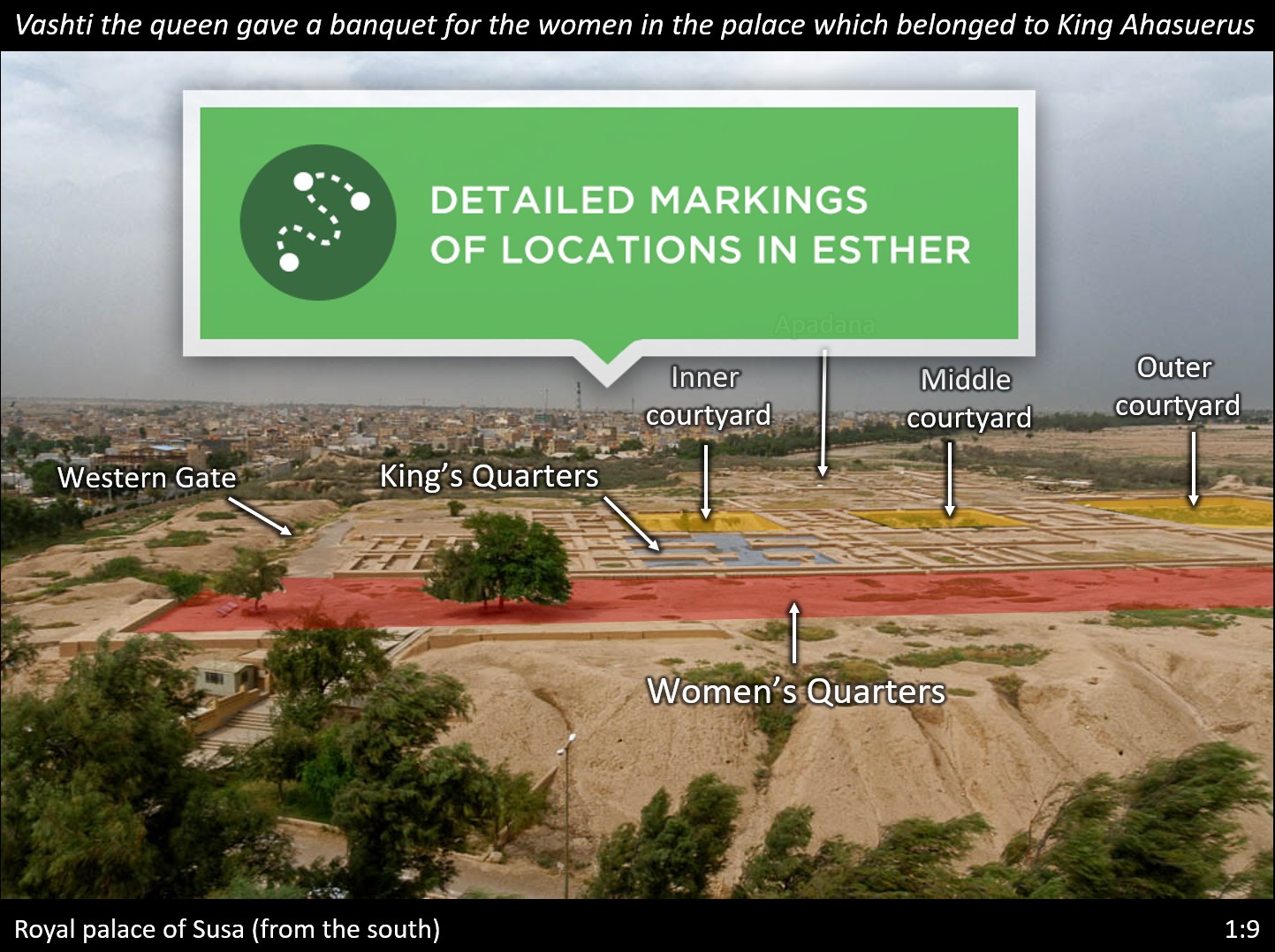
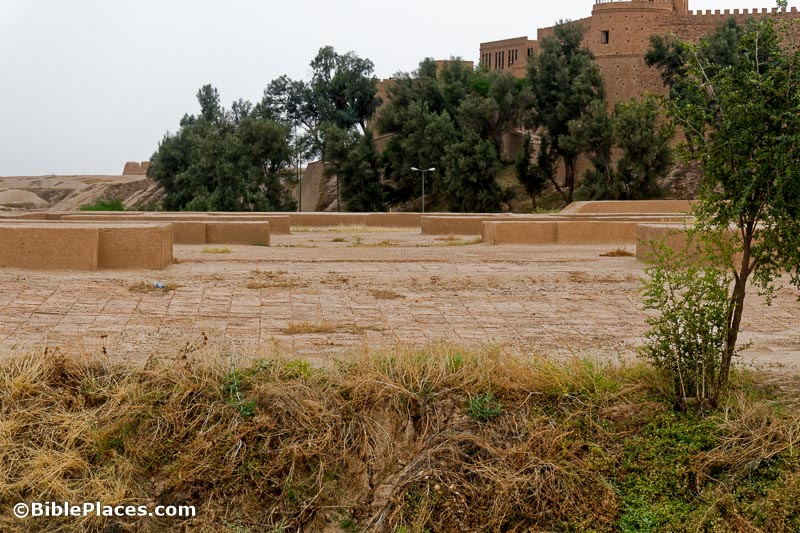
One of the most exciting, but least visited, biblical sites is Susa. It’s exciting because the entire drama of the Book of Esther takes place there, and we know exactly where Ahasuerus sat on his throne, and Esther approached him, and Mordecai overheard the conspiracy, and Haman waited in the courtyard.

Biblical Archaeology Review asked me to write about Susa for their “Site-Seeing” column for the current issue. You can flip to page 18 to see it, or it’s currently available for reading online.

My goal in writing the column was help you to enjoy the site and its rich biblical connections, especially if you’re not ready yet to sign up for a tour of biblical Iran!


The throne room of Susa from the inner courtyard
Share:

An inscription written in the Persian, Elamite, and Babylonian languages has been discovered at Naqshe-Rustam, the royal necropolis of Persepolis.

Work on the sewer system in Kition, Cyprus, keeps revealing ancient remains from the Classical and Roman periods.

A decade of restoration work of King Tut’s tomb has been completed. The History Channel has many photos.

The vase that the British Museum realized was a mace is in fact a vase.

The BBC reports on several women whose interest in archaeology began with a childhood fascination with mummies.

Eisenbrauns is running a sale of 30-50% off of titles in the Duke Judaic Studies and Sepphoris Archaeological Report series.

Beit Shemesh and Kiriath Yearim are the subjects of discussion in this week’s The Book and the Spade.

Shmuel Browns shares several photos he took along the Alon Road in eastern Samaria.

If you have been to Israel before, answer a few quick questions to help Wayne Stiles as he puts together a video series to help travelers prepare for a Holy Land Tour.

It’s a slow week, so here’s a bonus quotation:

“My definition of archaeology, shared with students during almost forty years of teaching historical geography, is that archaeology is the science of digging a square hole and the art of spinning a yarn from it” (Anson Rainey, “Stones for Bread: Archaeology versus History.” Near Eastern Archaeology 64 (2001): 140.

HT: Agade, Ted Weis

Share:

An archaeological team working at Hatnub in Egypt has discovered the ancient system used to transfer stone blocks from the quarry.

Egyptian archaeologists have discovered parts of a booth with a seat from the time of Ramses II.

“Archeologists at the University of Toronto are in advanced negotiations with Turkey’s Ministry of Culture and Tourism to establish an archeological park at Tell Tayinat.”

Over 2 million tourists visit Pamukkale in Turkey annually, but many of them never see the impressive remains of Hierapolis next door. Ferrell Jenkins shares a beautiful photo of the Pamukkale springs.

“Lawrence of Oxford” is a new exhibition at the Magdalene Libraries and Archives that focuses on the early life of the man later known as Lawrence of Arabia.

The Harvard Semitic Museum Youtube channel offers various short videos as well as lectures.

A relief from Persepolis valued at $1.2 million was stolen a couple of times before researches at the

Oriental Institute helped provide evidence that led to its seizure and repatriation.

A rare, 3,000-year-old Assyrian relief sold for $31 million, tripling the pre-sale estimate of $10 million.

New book: A. Lichtenberger & R. Raja, eds., The Archaeology and History of Jerash. 110 Years of Excavations.

HT: Ted Weis, Charles Savelle, Agade, A.D. Riddle

Share:

A sandstone statue of a sphinx was discovered in excavations at the Kom Ombo temple.

A large and outstanding Assyrian relief from the reign of Ashurnasirpal II is being auctioned in October by Christie’s on behalf of Virginia Theological Seminary.

Egypt is celebrating the fiftieth anniversary of the project to save 20 gigantic monuments in the Abu Simbel complex from flooding by moving them to higher ground.

Is it safe to travel to Egypt now? Temma Ecker explains why now is the perfect time to experience Egypt.

The 21st Annual Bible and Archaeology Fest is being held in Denver on November 16 to 18.

Rémy Boucharlat will be lecturing on Pasargadae at the Asia House in London on October 3.

Eisenbrauns is having a 40%-off sale on many ANE works.

AASOR is looking for an editor. NEA is looking for an editor. BASOR is looking for a copyeditor.

Ehsan Yarshater, editor of the Encyclopedia Iranica, died earlier this month.

HT: Agade, Ted Weis

Share:

“Newly deciphered Egyptian symbols on a 3,400-year-old limestone ostracon from Luxor’s Tomb of Senneferi appears to be the first written evidence of the ABC letter order of the early Semitic alphabet.” The BASOR article on which this story is based is available here to subscribers.

A well-preserved Egyptian tomb at Saqqara belongs to a general who served Rameses II.

“Egyptian archeologists say they have discovered parts of a huge red brick building dating back to the Greco-Roman period north of Cairo.”

Live Science reports on how Egyptian archaeologists rescued two massive carvings from looters.

“After almost three months of study, a new geophysics survey has provided conclusive evidence that no hidden chambers exist adjacent to or inside Tutankhamun’s tomb in the Valley of the Kings.”

Cyprus returned 14 items to Egypt that were stolen in the 1980s.

Over 3,600 items illegally smuggled into the US were returned to Iraq in an official ceremony.  

The April 2018 newsletter of Egypt’s Ministry of Antiquities has been published.

With the discovery of 92 cuneiform tablets, archaeologists working at an ancient Assyrian site now
know that they are excavating the lost city of Mardaman.

An Assyriologist studying cuneiform tablets taken from Hobby Lobby by the federal government discovered evidence for a lost Sumerian city.

The National Museum of Iran has contributed 1,110 inscribed objects to the Cuneiform Digital Library Initiative.

Saudi Arabia has begun a new program to study archaeological sites in the region of al-Ula, including the Nabatean city of Madain Saleh.

HT: Joseph Lauer, Agade, Ted Weis, Charles Savelle

Share: