Israel has surpassed the 3-million-tourist mark for 2010, breaking the annual record for tourists set in 2008.  More than 60% of tourists are Christians and the nation’s goal is to reach 5 million tourists a year by 2015.

Last week’s annual meeting of the Near East Archaeological Society was attended by Ferrell Jenkins, who provides summaries of many of the lectures.  Aren Maeir has posted his observations of one day of the ASOR meetings.

The Magdala excavations are continuing around the calendar and photos are now posted from November.

Israel is calling on the Palestinian leadership to reject the “study” that the Jewish people have no right to the Western Wall.

The PBS Special “Quest for Solomon’s Mines” is now available online, though viewing in some
countries is not permitted.  UCSD’s role in the feature is discussed in a campus news story.

I have not yet seen it, but a trusted reader tells me that Anson Rainey’s Teaching History and Historical Geography of Bible Lands: A Syllabus that I mentioned here before “consists almost entirely of the text of biblical passages, without any commentary or other notes.”  You might browse it before you buy.

This week I read A Promise Kept, a new book produced by Insight for Living.  Subtitled “A Pictorial Journey of the Coming of Christ,” the beautifully illustrated and superbly written book was just what I needed to start the Christmas season.  It’s available this month for a donation and will be on sale in the IFL store in December.

Share:

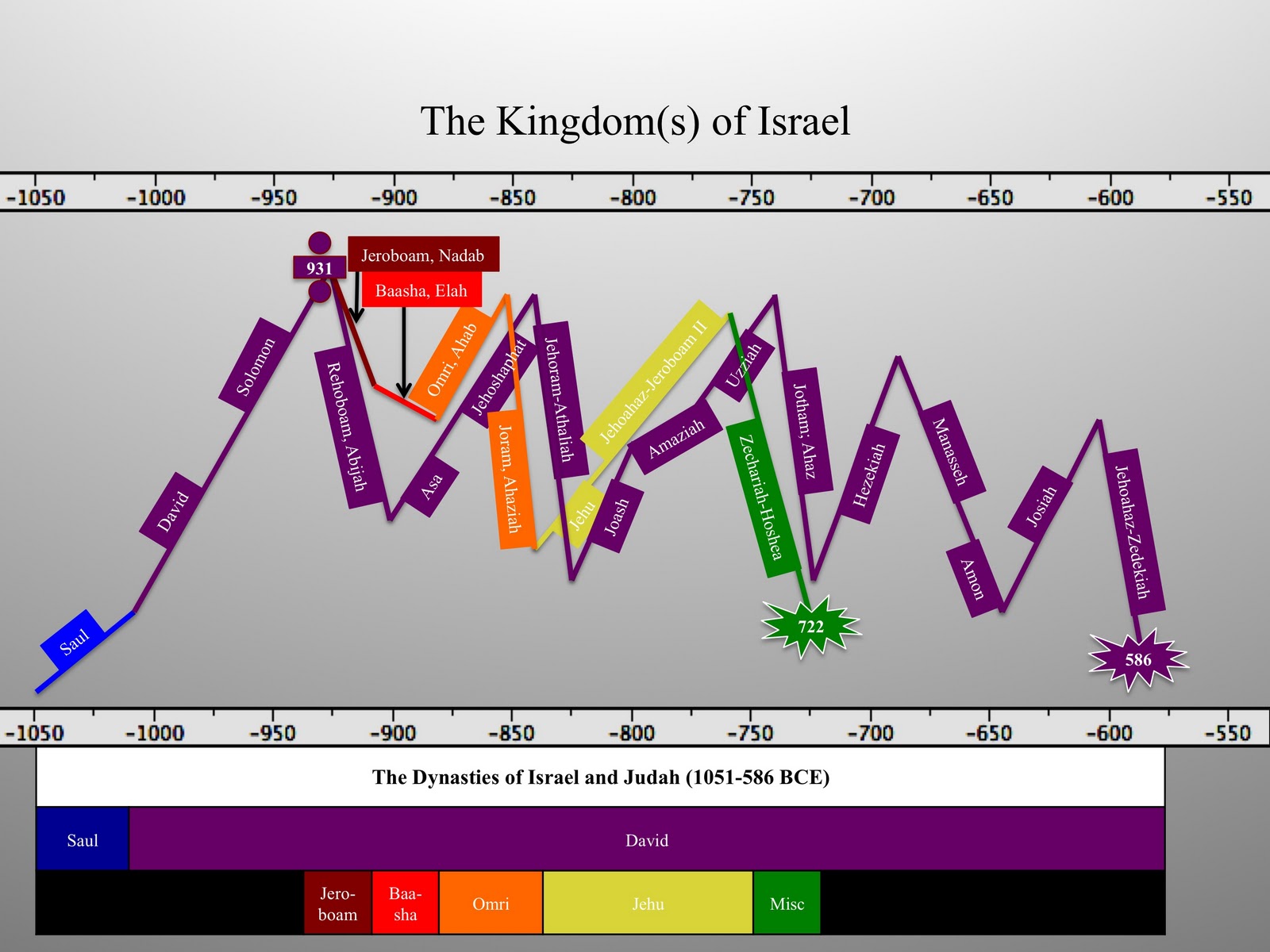
This week’s free item is the ESV Bible Atlas.  I mentioned many of the great features I liked about this atlas when it was imagereleased five months ago.  One of the stand-out qualities is the free CD included with the atlas with more than a hundred of the maps in electronic format.  A friend wrote recently to ask how to get the beautiful reconstruction diagrams (many by Leen Ritmeyer) without scanning them one by one.  Scanning is particularly difficult because of the diagrams’ large size and the seam in the middle.  (I’ve cut the binding off of a number of books in order to get good quality scans, but this does make the book less use-able.) 

There is a good solution.  All of the ESV Bible Atlas drawings are included in the ESV Study Bible (plus a few extra).  The study Bible is now available in digital form in Logos Bible Software.  Thus for $40 you get all of the diagrams in ready-to-use PowerPoint format, plus all of the extensive study notes (which I use frequently in my study).

In other words, you get a wealth of resources with the combination of the ESV Bible Atlas (with CD) and the Logos version of the ESV Study Bible.

UPDATE: After writing the above, I stumbled upon a previous post which reminds me that the printed version of ESV Study Bible includes online access to the notes and diagrams.  Thus you can choose whether the printed or electronic Bible best fits your need, knowing that either way you get the diagrams in digital form.

For this week’s give-away, we have a free copy of the ESV Bible Atlas.  The rules: enter your name and email address by Monday noon (PST).  The winner will be contacted by email for a shipping address and all other names and email addresses will be deleted.

UPDATE (11/29): The True Random Number Generator at Random.org has selected #14. 

Congratulations to Keith.

Share:

I was disappointed to see this morning that the Jerusalem Post has erected a pay wall for some of their content, including the weekend magazine and the “Christian Edition.” 

Dear reader,
The Jerusalem Post is pleased to introduce its Premium Content, featuring online editions of the daily "Jerusalem Post" electronic paper, "The Jerusalem Report," our youth magazine "Dash", The Jerusalem Post’s "Christian Edition" and our easy-Hebrew magazine "Ivrit" and more (click for more details). This service is available exclusively by subscription, for US$8 per month. 
As an introductory offer, if you register now you will get free access to these products for the first week of use.

Though the pay model was widely considered a failure in online journalism some years ago, a few news organizations are trying to revive it.  I doubt that many will consider the paid content in the Jerusalem Post worth $8 per month, especially as most would be interested in only one of the “editions.”  Perhaps the content will improve and more will be attracted to it.  Another approach that I believe would work better is the use of “micropayments” to view individual articles.  Fortunately, it appears that previous articles can still be accessed from links in this blog.

Share:

An inscription with the name of Ramses III has been found in Saudi Arabia, suggesting Egyptian interest in the trade routes to what is today Yemen.  A related article is “Solomon & Sheba, Inc.,” by André Lemaire, published earlier this year in Biblical Archaeology Review.

A Logos collection that may interest readers here is the William Mitchell Ramsay Collection.  The 16 volumes may sell for $30 if enough people bid on it.

Prof. Gershon Galil of the University of Haifa will be visiting Yeshiva University, giving a talk on
Tuesday evening, November 16.  His topic is “A Word is Better than a Million Potsherds: David and Solomon Between Text & Material Culture.” The talk will take place in Furst Hall (500 West 185th St, at the corner of Amsterdam Avenue), on the 5th floor, in room 535, at 8:30 p.m. 

Yoav Farhi will be lecturing on Tuesday, November 16, at 7:00 p.m. at Southern Adventist University in Collegedale, Tennessee.  His topic is “Ancient Coins of Khirbet Qeiyafa: A Stronghold on the Road to Jerusalem.”

Aren Maeir will be speaking at Central Bible College in Springfield, Missouri on November 17, at 5:30 p.m.  The college’s participation in the excavations at Gath this season are the subject of an article in the local press.
I wonder if anyone knows whatever happened to this anticipated biblical archaeology book by Stager and Cross.

HT: Eric Welch and Joe Lauer

Share:

The premiere scholar on biblical sites in Turkey is Mark Wilson, and his long-awaited book has just been published.  Biblical Turkey: A Guide to the Jewish and Christian Sites of Asia Minor is a 400-page work that includes “all the references to cities, regions, provinces, and natural features in the Hebrew Bible/Old Testament, Biblical_TurkeyApocrypha/Deuterocanonicals, New Testament, and Apostolic Fathers.”  Though I haven’t seen the book, I have no doubts that this is the best book on the subject and an essential reference work.

The book is published in Turkey which makes purchasing a little more work.  One option is to purchase from the Turkish website for a cost of 30 euros (about $42) including delivery.  A second option is to take advantage of an introductory discount (20 euros/$28) available by sending in an order form by fax or email (details below).  A third option for those going to Atlanta later this month is to purchase it at the David Brown Books table at the SBL/ASOR conference (but I’d recommend you get one on the first day before they sell out their stock).

Option two details:

After preparing the list of the book you wish to order (Biblical Turkey in this case), click on “By Fax Order Form”. There you can write your credit card details, take a print out and send it as fax to us.  Our Fax Number: 90 212 244 32 09.”

You can also download the form, fill it out, scan it, and send it to [email protected] for processing. For any further questions about an order, please email that same address.

Share: