Archaeologists have discovered the oldest pearling town on an island in the Persian Gulf.

Writing for Christianity Today, Mark Wilson recounts the history of Antioch on the Orontes, including its significant place in the early church and the numerous earthquakes it has suffered.

Jason Borges provides some essential information for visiting Antalya, a beautiful city on the southern coast of Turkey. I would add a day-trip recommendation for Termessos.

This 10-minute video explains the ancient craft of parchment-making, in the city which gave its name to parchment (Pergamum).

“The coveted metal copper and a sheltered location turned the Cypriot village of Hala Sultan Tekke into one of the most important trade hubs of the Late Bronze Age.”

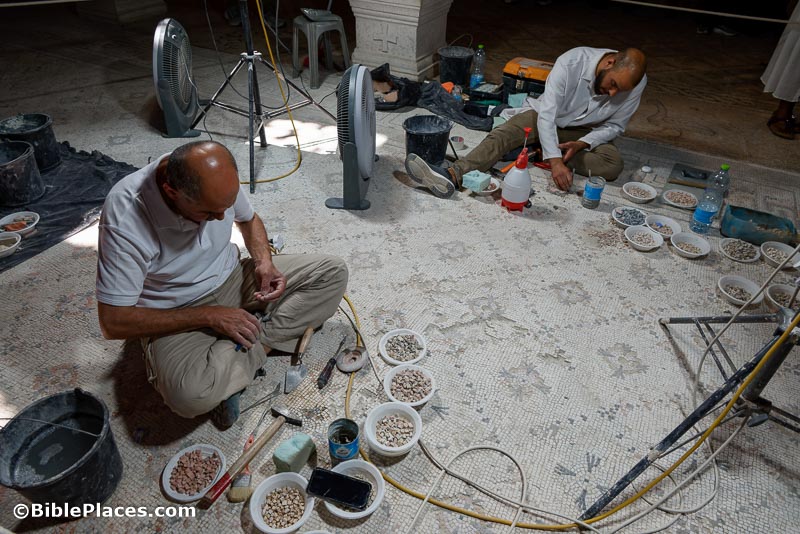
“The exhibition ‘The colours of the Romans. Mosaics from the Capitoline Collections,’ on show in Rome’s Montemartini Museum, has been expanded to include a new section presenting 16 newly restored works dating from the late Roman period and never before shown in public.”

Entrance to the Pantheon in Rome will no longer be free.

The most expensive coin ever sold at auction was sold using false provenance and the owner of the auction house has been arrested.

“Governments, law enforcement officials and researchers have linked a mounting number of the Met’s relics to looters and traffickers.”

New release: The Public Lives of Ancient Women (500 BCE-650 CE), edited by Lucinda Dirven, Martijn Icks, and Sofie Remijsen (Brill, $143).

HT: Agade, Arne Halbakken, Explorator
Share:

The site of Horvat el-Bira, a Roman villa with a later Byzantine church, was cleaned up by local residents during the recent Good Deeds Day.

Ruth Schuster tells the story of Yodfat (Jotapata) in the Jewish Revolt of AD 66-70 and describes the archaeological evidence of its defeat.

Melanie Lidman follows up on the various mistakes that the IAA made in failing to identify the “Darius Ostracon” as a modern inscription.

UC San Diego Today tells the story of Neil Smith, from his days as a 19-year-old using GIS in Wadi Faynan to his work today in co-directing the Center for Cyber-Archaeology and Sustainability.

Israel Today is offering a free virtual tour of Hazor on April 16.

Aren Maeir is on The Ancients podcast to discuss the Philistines.

New release: The Koren Tanakh of the Land of Israel – Leviticus ($50). This volume “provides background scholarship for the book of Leviticus, including archaeology, flora/fauna, ancient Near East parallels, language cognates, historical, and geographical perspectives, to the sacrificial procedures, laws, and narratives of the book.”

New release: Ahab’s House of Horrors: A Historiographic Study of the Military Campaigns of the House of Omri, by Kyle R. Greenwood and David B. Schreiner (Lexham Press, $20).

Paleojudaica is celebrating 20 years of blogging. That’s a remarkable run well worth celebrating!

HT: Agade, Arne Halbakken, Explorator

Share:

Archaeologists working in the temple of Dendera discovered a Sphinx-like statue that may depict Emperor Claudius.

“Egyptian officials have released photos of an ancient scroll, the 52-foot-long (16 meters) Book of the Dead papyrus recently discovered in Saqqara. The 10 images show ancient illustrations of gods and scenes from the afterlife, as well as text on the document, which is more than 2,000 years old.” The released photos were first posted on the government’s Facebook page.

The British Museum’s Curator’s Corner provides a lesson in how to read ancient Egyptian hieroglyphs (27 min).

New release: Ancient Egypt, New Technology: The Present and Future of Computer Visualization, Virtual Reality and Other Digital Humanities in Egyptology, edited by Rita Lucarelli, Joshua A. Roberson, and Steve Vinson. (Brill, $174; free download)

The first-ever detailed study of the theater at Pergamum reveals that it is larger than the theaters at Smyrna, Ephesus, Miletus, or Aspendos. An aerial photo shows the locations of the theater, stadium, and amphitheater in relation to the acropolis.

Turkish Archaeological News has a roundup of major stories for the month of February. They also provide a damage assessment of cultural properties one month after the earthquake.

“The revamped archaeological museum of Argos in the Peloponnese and its upgraded display collection will soon reopen to the public.”

Archaeologists have discovered for the first time wooden stakes described by Julius Caesar and used as a kind of ancient barbed wire.

New research suggests that humans may have first begun riding horses around 3000 BC.

New exhibition at the San Antonio Museum of Art: “Roman Landscapes: Visions of Nature and Myth from Rome and Pompeii”

The Global Smyrna Meeting on the Seven Churches of Revelation will be held June 4 to 10, featuring many scholars in the field including Mark Wilson, Mark Fairchild, James Hoffmeier, David deSilva, and Ben Witherington.

HT: Agade, Arne Halbakken, Ted Weis, Mark Hoffman, Explorator

Pool of Siloam excavations in late February. Photo courtesy of John DeLancey.

Share:

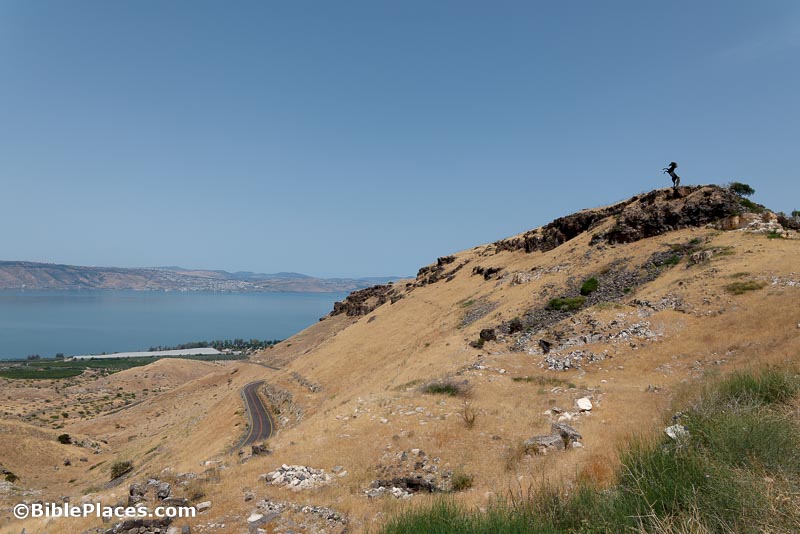
Graduate students on a field trip discovered a statue of a lioness near a synagogue in the Golan Heights.

Several editorials reflect on the Darius Ostracon fiasco, including Nathan Steinmeyer at BAS, Ruth Schuster at Haaretz, and The Jerusalem Post.

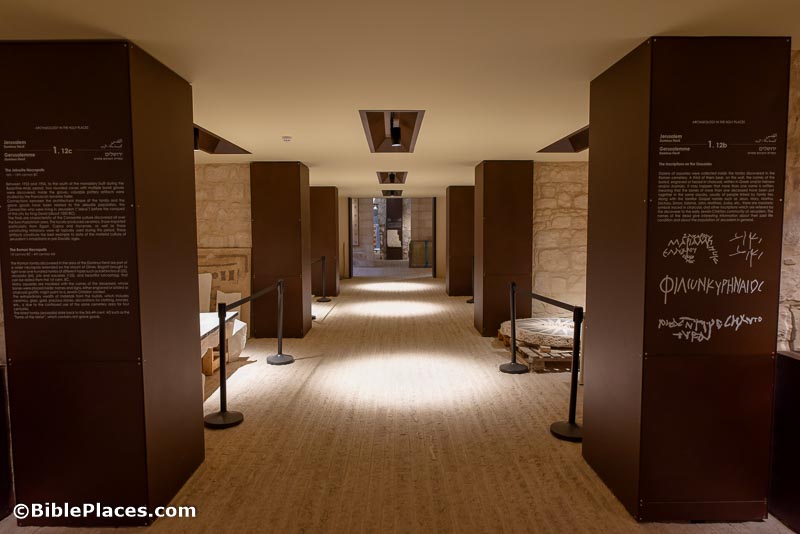
“The Davidson Center in Israel’s Jerusalem Archaeological Park will reopen to the public next week after being closed for three years for renovations. The center will have updated exhibits featuring first-ever publicly displayed archaeological finds, innovative technology, and interactive galleries.”

Nixza Gonzalez writes about 11 beautiful national parks in Israel, most of which are not on the itineraries of most groups.

Chandler Collins evaluates the evidence that identifies Herod’s tower near Jaffa Gate (“the tower of David”) as either Hippicus or Phasael, concluding that the popular view today is wrong.

Piotr Bienkowski disputes the recent proposal that Edom was related to the copper mining at Faynan in the 10th and 9th centuries BC.

New release: A Handbook of the Aramaic Scrolls from the Qumran Caves: Manuscripts, Language, and Scribal Practices, by Daniel Machiela (Brill, $192; free download)

In the latest Digging for Truth episode, Bryan Windle recounts his top 10 list of discoveries in biblical archaeology in 2022.

Excavations of the Pool of Siloam in late February. Photo courtesy of Simeon Western

HT: Agade, Arne Halbakken, Ted Weis, Mark Hoffman, Explorator

Share:

A scan of the north side of the Great Pyramid of Giza detected a corridor measuring 30 feet by 6 feet.

“The Egyptian Ministry of Tourism and Antiquities announced on Friday the discovery of a group of tombs from the Persian, Roman and Coptic eras in the Al-Bhansa [Oxyrhychus] region.”

“Archaeologists excavating at the ruins of Old Dongola in Sudan have discovered ancient Egyptian hieroglyphics inscribed on sandstone blocks.”

Iran and China are collaborating to conduct underwater archaeological surveys in the Persian Gulf.

A curator at Manchester Museum describes the significance of the touring exhibition, “Golden Mummies of Egypt.”

The Art Newspaper reports on the full scale of earthquake damage to heritage sites in Turkey and Syria.

Hybrid lecture on March 9: “Iron in the Sky: Meteorites in Ancient Egypt,” by Victoria Almansa-Villatoro. Register here.

“Daniel—The Top Ten Archaeological Discoveries” is the latest episode on Digging for Truth.

Expedition Bible’s latest video is on the “Search for the Tower of Babel.”

New release: Esarhaddon, King of Assyria, by Josette Elayi

Bryan Windle highlights the top three reports in biblical archaeology in the month of February.

HT: Agade, Arne Halbakken, Gordon Dickson, Ted Weis, Explorator

Share:

Scholars have long wondered if an Amorite language existed, until the discovery of two tablets written at least partially in the language.

“An archeological site at Girsu, in modern-day south-central Iraq, a major city in the ancient Mesopotamian civilization of Sumer, has been unearthed revealing a palace and a temple that date back over 4000 years.”

Egyptian police discovered a fake tomb created to defraud antiquities traffickers.

Kim Phillips addresses questions of what’s real and what’s hype in the sale of Codex Sassoon.

Eric Cline explains how the recently discovered evidence of a drought in 1198-1196 adds to our knowledge of the collapse of the Hittite Empire and other societies.

France 24 shows drone footage of the earthquake damage to Turkey’s Gaziantep castle.

“It’s still an open question among scholars whether Mycenaeans participated in long-distance metallurgical trade in the Bronze Age. The mythological narratives found in Greek literary tradition suggest they did.”

“The UK is working on a new arrangement with Greece through which the Parthenon Sculptures could be seen both in London and in Athens.”

Greece has announced a four-year renovation project of the National Archaeological Museum in Athens.

Online lecture on Feb 28, 10am: “Excavations at Nineveh and Nimrud in 2022.” Join by Zoom here, or watch the recording a few days later here.

New York tells the story of Michael Steinhardt and the investigation of his antiquities collection.

New release: The Most Extraordinary Life: Discovering the Real Jesus, by Bob Rognlien. Also on Kindle.

My colleague William Varner has just published his latest work, The Preacher and the Song: A Fresh Look at Ecclesiastes & Song of Songs.

HT: Agade, Explorator, Arne Halbakken, Gordon Dickson, Alexander Schick, Ted Weis

Share: