Yesterday, 22 ancient Egyptian royal mummies were paraded through Cairo on their way to the new museum.

D. Clint Burnett discusses various references to inscriptions in the New Testament as well as the value of inscriptions in interpreting the New Testament and early Christianity.

Modern development and looting is taking its toll on the ancient Greek city of Cyrene in Libya.

The Times Insider column looks back into references to Moshe Shapira in The New York Times in the late 1800s.

Webinar on April 14: “Why Pottery Matters: Judean Storage Jars and the Qumran Sect,” by Jodi Magness (Zoom link)

Webinar on April 15: “A Toast to Ancient Greek Wine Drinking,” with Kathleen Lynch

Webinar on April 18 sponsored by the Friends of ASOR: “Archaeogaming: Why Video Games Deserve Their Own Archaeology.”

Webinar on April 22: John Curtis and his fellow curators give an overview of the soon-to-open Epic Iran exhibit in London.

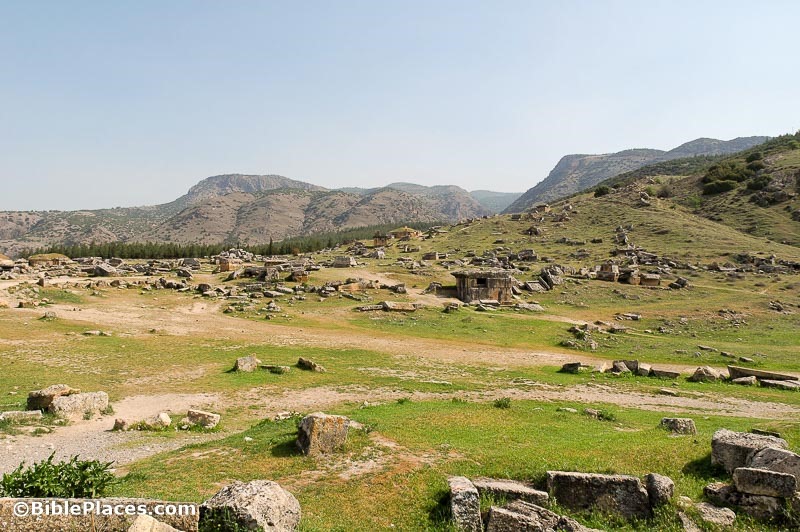
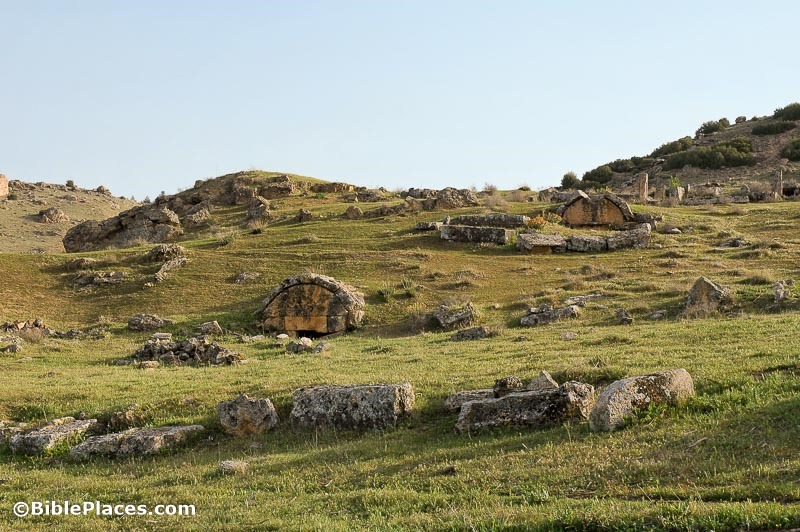
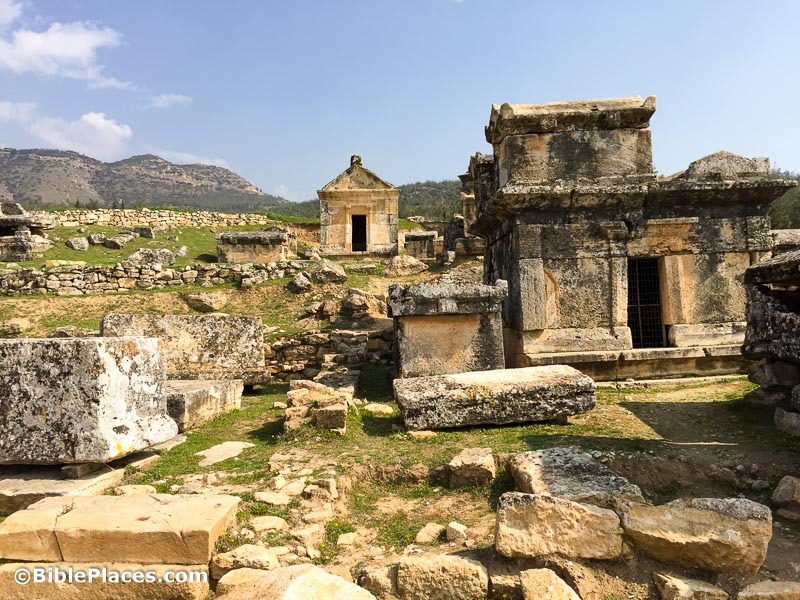
Mark Wilson’s presentation on Hierapolis for the Tutku Guide Seminar is now online. He is followed on the same video by Mark Fairchild’s presentation on Paul’s little-known ministry in Cilicia.

“The online edition of the Amarna Letters aims to make transliterations, translations, and glossaries of the letters and administrative texts available to both scholars and the wider public.” The letters to and from the Levant, excluding Phoenicia, are now available.

Free download until April 13: Migration Myths and the End of the Bronze Age in the Eastern Mediterranean, by A. Bernard Knapp, published by Cambridge University Press.

HT: Agade, Charles Savelle, Ted Weis, Arne Halbakken

Share:

Archaeologists have discovered dramatic evidence of the conflagration that destroyed Azekah circa 1130 BC, leading them to dub the site as a “small Pompeii.”

According to news reports, a rare Tyrian shekel was discovered during a renovation project at the Tower of David Museum. This is true, except that the coin is not a shekel and not rare. It is a silver tetradrachm of Demetrios II Nikator from Tyre with a date of SE 184 = 129/8 BC.

While undergoing conservation work, a large structural crack was discovered in Herod’s tower in the Citadel of David.

Justin Kelley’s BAR article on “The Holy Sepulchre in History, Archaeology, and Tradition” is summarized in Bible History Daily, where a detailed plan of the Church of the Holy Sepulcher is also provided.

Scholars are using high-tech imaging to understand thousands of hand-engraved crosses on the Church of the Holy Sepulcher.

A new “Emmaus Trail” allows walkers to travel the 11 miles (18 km) from Abu Ghosh to Nicopolis/Latrun. Leen Ritmeyer takes the occasion to propose that Emmaus should be identified with Bethel in the Old Testament.

David Moster has posted a new video that explains how to “make sense of the new Dead Sea Scrolls,” including a discussion of how important these discoveries are to biblical studies.

Randall Price is on The Book and the Spade discussing the new Dead Sea Scrolls discoveries.

The latest teaching video from John DeLancey is “The Life of Jesus – His Redemptive Purpose.”

New book: Jesus of Nazareth: Archaeologists Retracing the Footsteps of Christ, by Michael Hesemann. The author’s background and motivations are reported here.

Bryan Windle lists the top 10 discoveries related to Jesus.

Robert E. Cooley died on Thursday. During his career, he excavated Tel Dothan and helped to found the Near East Archaeological Society.

HT: Agade, Charles Savelle, Ted Weis, Arne Halbakken

Share:

Bryan Windle reviews the top three reports in biblical archaeology in the month of March.

In a seven-minute video, Aren Maeir gives a quick overview of the archaeological process from start to finish.

Hannah Brown explains why spending a day or more at Timna Park in southern Israel is worthwhile.

Wayne Stiles is hosting a free webinar for the Passion Week, with an engaging look at Jesus’s final week, day by day.

An extract from the new CSB Holy Land Illustrated Bible identifies five incidents and three patterns in Pilate’s life that set the context for the trial of Jesus.

BibleTimeLines.com has an extensive collection of timelines, graphics, and videos, including a timeline for the Passion Week.

Jordan J. Ryan considers how Constantine’s Church of the Holy Sepulcher celebrated more than Jesus’s resurrection.

The Infusion Bible Conference is a 3-day event focusing on the context of the biblical world. I’ll be back again this year. Early registration ends soon. Church leaders can take advantage of the IBC Press Kit to share with their congregations. (The conference has a virtual option this year.)

Not the millennium: “Jerusalem’s Biblical Zoo is attempting damage control after kids saw a lion eat a bunny.”

HT: Agade, Ted Weis, Charles Savelle, Explorator, Arne Halbakken

IMG-20210322-WA0008

The cemetery at Qumran has recently been “reconstructed.” Photo courtesy of Michael Schneider in Jerusalem.

Share:

An 11-year-old on a family hike in the Negev discovered a rare fertility figurine dating to about 500 BC.

Haaretz (premium) has a story about the debate over whether the Lachish gate shrine was a shrine, and if so, if it was desecrated by a toilet.

A new book by Idan Dershowitz argues that the scrolls of Moses Shapira, long believed to be forgeries, are actually the earliest Dead Sea Scrolls and were a “pre-canonical antecedent” of Deuteronomy. The book is available on Academia. Christopher Rollston argues that the scrolls are forgeries. Drew Longacre concurs.

A notice from the Hazor Excavations team indicates that foreigners will be permitted to volunteer in Israel this summer with proof of vaccination. The Gath registration webpage confirms this.

My new reflection on the Garden of Gethsemane is now available to members of Jerusalem Perspective.

The New York Times runs an obituary for Hershel Shanks.

Jerusalem University College has announced its newest program: The Christian Movement in the Mediterranean, with a two-week voyage tracing Paul’s voyages in the Mediterranean.

New: Ancient Israel’s Neighbors, by Brian R. Doak (Book 1 in Oxford’s Essentials of Biblical Studies series).

The early-bird discount for the Infusion Bible Conference ends on April 9. The topic is “Paul and His Roman World,” and the new location is Nashville.

HT: Agade, Ted Weis, Arne Halbakken, Keith Keyser, Explorator

Share:

A statue of Ramesses II has been placed in the Grand Hall of the Great Egyptian Museum so that the rays of the sun will illuminate it on February 22 and October 22 each year.

Closing on March 14: “Queen Nefertari’s Egypt,” at the Kimbell Art Museum in Fort Worth.

Carole Raddato provides a list of the top 5 archaeological sites in Lebanon.

The British Museum identifies the top 10 historical board games, beginning with the Royal Game of Ur.

Duncan Howitt-Marshall explains how the ancient Greeks set us on the path to Mars.

Police recovered a rare bronze plate with a decree from Emperor Tiberius.

The renovated mausoleum of Emperor Augustus in Rome has reopened after being closed for many years.

Tyler Rossi writes about portraiture on ancient Roman coinage, noting that Julius Caesar was the first living person depicted on a Roman coin. Was this why he was assassinated?

in AramcoWorld’s well-illustrated article “The Quest for Blue,” Tom Verde explains that the color blue, while pervasive in nature, is much harder to reproduce and required considerable ingenuity in the ancient world.

Now in paperback from Oxford University Press: Archaeology and the Letters of Paul, by Laura Sarah Nasrallah.

HT: Agade, Explorator, Ted Weis, Paleojudaica

Share:

Archaeologists working near the Western Wall of the Temple Mount have discovered the largest collection of ancient dice ever found.

The seventh issue of the newsletter of the Department and Institute of Archeology at Tel Aviv University includes reports on fieldwork at Azekah, Masada, and Jerusalem, along with other articles on research and laboratory work.

I don’t know that the claim of it being the oldest water tunnel is true, but the Balama tunnel near Jenin is certainly interesting and little-known.

A rare sighting of a sperm whale off Israel’s coast was made several weeks ago near Nahariya.

I am happy to see my old friend Jeroboam II getting some attention this week, as he is featured in the latest archaeological biography by Bryan Windle.

Three upcoming meetings of The Minerva Center for the Relations between Israel and Aram in Biblical Times:

The Clinton Bailey Archive of Bedouin Culture is coming to the National Library of Israel. The collection includes a wealth of information about ancient Bedouin tribal cultures, including audio recordings, videos, and photos.

Joel Kramer joins Sean McDowell for a Q&A on the Bible and Archaeology.

New release: The Moses Scroll: Reopening the Most Controversial Case in the History of Biblical Scholarship, by Ross K. Nichols, illustrated by Daniel M. Wright

HT: Agade, Steven Anderson, Explorator, Ted Weis, Paleojudaica, Arne Halbakken

Share: