A Greek inscription found at the Nabatean city of Halutza confirms previous scholarly identification of the site as Elusa. The Times of Israel article provides more information about the results of the excavation.

Aren Maeir made a visit to Gath/Tell es-Safi this week, where everything is very green.

Tel Tzuba (Belmont) is the latest destination for Israel’s Good Name.

Cesares de Roma is a Spanish art project that has brought to life silicone images of Julius Caesar, Caesar Augustus, and Nero.

The Romans attempted to ban wild Purim parties in the year 408.

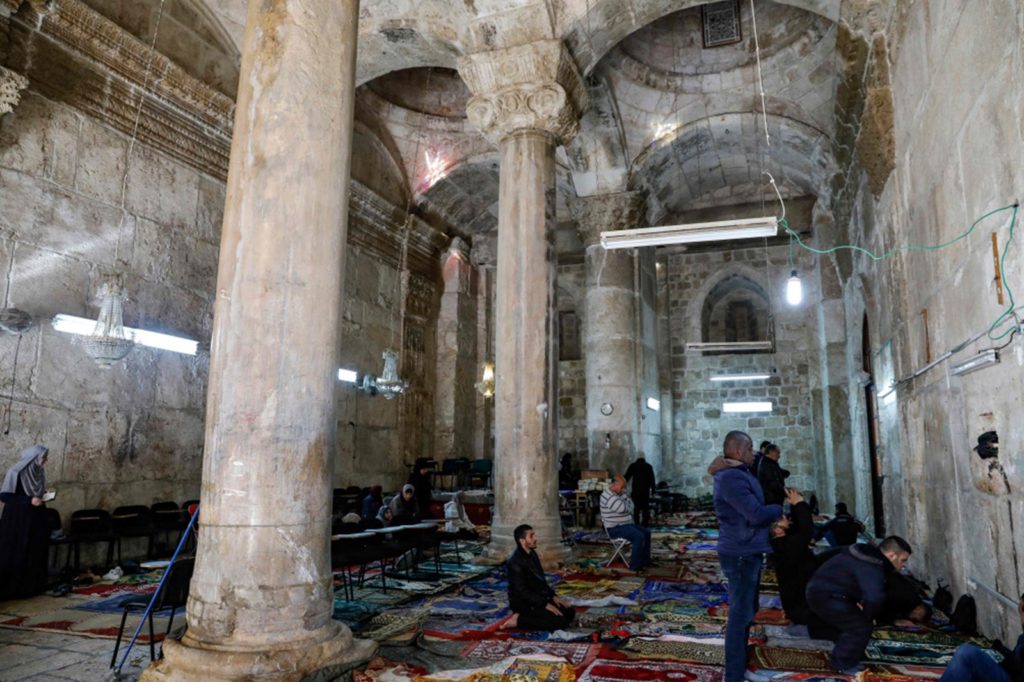
In light of the present controversy, Leen Ritmeyer explains the history of the Golden Gate of Jerusalem.

Egypt has opened a 105-mile hiking trail called the “Red Sea Mountain Trail” that west of Hurghada.

40,000 runners from 80 different countries ran 42 kilometers in the Jerusalem Marathon.

David Moster explains biblical geography in a 9-minute video entitled, “If an ancient Israelite had Google Earth.”

This isn’t new, but I haven’t seen it before: Flight of Faith: The Jesus Story is a 48-minute documentary with lots of aerial footage.

The Bible Lands Museum in Jerusalem has opened a new exhibit entitled “Highway through History.” As part of the launch, they have created a five-minute drone video of Beth Shemesh and the excavations in preparation for the road expansion.


The New York Times reviews “The World Between Empires” exhibit now at the Met.

The “Alexander son of Simon” ossuary is possibly related to the man who carried Jesus’s cross. It is on display now at the Museum of the Bible in Washington, DC, and this week they recorded a short video about it. Apparently they were so inspired by an inquiry from your roundup writer.

HT: Agade, G. M. Grena, Chris McKinny, Ted Weis, Steven Anderson, Paul Kellogg, Charles Savelle

Share:

A well-preserved Greek inscription from the 5th century recording a blessing for one ‘Master Adios’” was discovered in central Israel.

Plans to convert the Golden Gate of the Temple Mount into a Muslim place of prayer are being resisted by Israeli police.

Two crews of antiquities thieves working in eastern Samaria were arrested in recent weeks. One of them was looting Alexandrium-Sartaba.

A short trailer has been released promoting this season’s excavations at Tel Shimron.

There is still time to sign up for this summer’s season at Tel Burna. Shiloh has some openings as well.

Heavy rains this week caused flooding in the Jerusalem area.

The Times of Israel shares a photo essay of wildflowers of the Dead Sea.

Israel’s Good Name recounts his recent university trip to Wadi Dalia and Sartaba in eastern Samaria.

Leon Mauldin reflects on Proverbs’ view of sluggards and ants, and he shares a photo of ants at Neot Kedumim.

The BBC visits the recently opened Terra Sancta Museum in Jerusalem.

New book: Exploring the Holy Land: 150 Years of the Palestine Exploration Fund, edited by David Gurevich and Anat Kidron. (Amazon)

I am on the Diligent Pastors podcast this week with Scot Chadwick, talking about the land of the Bible, photo collections, and preparing for a trip to Israel. Pastors especially may want to check out other episodes in this new podcast.

HT: Ted Weis, Agade, G. M. Grena

Share:

An inscription written in the Persian, Elamite, and Babylonian languages has been discovered at Naqshe-Rustam, the royal necropolis of Persepolis.

Work on the sewer system in Kition, Cyprus, keeps revealing ancient remains from the Classical and Roman periods.

A decade of restoration work of King Tut’s tomb has been completed. The History Channel has many photos.

The vase that the British Museum realized was a mace is in fact a vase.

The BBC reports on several women whose interest in archaeology began with a childhood fascination with mummies.

Eisenbrauns is running a sale of 30-50% off of titles in the Duke Judaic Studies and Sepphoris Archaeological Report series.

Beit Shemesh and Kiriath Yearim are the subjects of discussion in this week’s The Book and the Spade.

Shmuel Browns shares several photos he took along the Alon Road in eastern Samaria.

If you have been to Israel before, answer a few quick questions to help Wayne Stiles as he puts together a video series to help travelers prepare for a Holy Land Tour.

It’s a slow week, so here’s a bonus quotation:

“My definition of archaeology, shared with students during almost forty years of teaching historical geography, is that archaeology is the science of digging a square hole and the art of spinning a yarn from it” (Anson Rainey, “Stones for Bread: Archaeology versus History.” Near Eastern Archaeology 64 (2001): 140.

HT: Agade, Ted Weis

Share:

Excavations of Qumran’s “Cave 53” have concluded without discovering any scrolls. The Times of Israel provides a good summary of the efforts of recent years.

Two clay horse figurines were discovered last month in northern Israel,” one near Kefar Ruppin and the other near Tel Akko.

Bible History Daily reports on the discovery of the Roman funerary busts in Beth Shean.

A Byzantine cistern discovered under a playground in Jerusalem may become a national site. The article references Ramla’s “Pool of Arches,” which you can read about here.

There are no parallels to the bearded male head unearthed at Abel Beth Maacah, writes Naama Yahalom-Mack in a detailed description of the object.

Following an outcry, the highway over Tel Beth Shemesh will be 20 meters wide instead of 80.

Ferrell Jenkins shares his favorite photo of a fisherman casting his net into the Sea of Galilee. 

John DeLancey has been posting daily for his current Biblical Israel Tour. For Day 12, they visited the City of David and the Old City.

An earthquake centered in Nazareth shook the Galilee region on Thursday night.

A record amount of snowfall on Mount Hermon has opened the site to a peak capacity of visitors.

HT: Agade, Joseph Lauer

Share:

The Times of Israel reports on the excavations of Kiriath Jearim, including the large platform wall they have discovered.

The archaeologists of Abel Beth Maacah provide a lavishly illustrated account of their first six years of excavation.

Ben Witherington believes that Magdala of Galilee, edited by Richard Bauckham, should be nominated for archaeological book of the year. That post begins a series of short Q&A posts with the editor.

A preliminary excavation report for Tel Yarmuth (biblical Jarmuth) describes the massive Early Bronze walls and plans to make a new archaeological park.

Two new exhibits are opening next week at the Hecht Museum at the University of Haifa.

The Bible Lands Museum Jerusalem has announced their spring lecture schedule. I suspect that all are in Hebrew.

Erez Speiser explains the four paths to get to the top of Masada.

The latest of Ferrell’s Favorite Fotos is a blended shot of the Jezreel Valley from an airplane.

Snow fell in Jerusalem this week for the first time in several years.

Thousands of Orthodox Christians celebrated Epiphany at the Jordan River yesterday.

Eisenbrauns has a sale on its titles in the History, Archaeology, and Culture of the Levant series.

“Searching for a King” premieres on Saturday in Indianapolis, and the event will be livestreamed on Facebook.

Die Ikonographie Palästinas/Israels und der Alte Orient (IPIAO). Eine Religionsgeschichte in Bildern Band 4: Die Eisenzeit bis zum Beginn der achämenidischen Herrschaft (The Iconography of Palestine/Israel and the Ancient Near East. A History of Religion in Pictures), by Silvia Schroer (970pp), is now available for purchase or as a free pdf.

HT: Agade, Joseph Lauer, Chris McKinny, Ted Weis, Charles Savelle

Share:

Archaeologists disagree on whether the highway running over Tel Beth Shemesh should be expanded or not. That was the plan when a salvage dig was initiated several years ago, but now one of the responsible archaeologists claims that the site must be preserved at all costs.

Not so, says Prof. Oded Lipschits of Tel Aviv University. “The extent [of the tell] is huge, but there is nothing special there or grandiose that would justify turning the site into a tourist attraction.”

Yesterday’s article in Haaretz magazine (premium) walks through the politics of the decision. From those interested in the archaeological results, the main discovery is that Judahites returned to living at the site soon after the Assyrian destruction in 701 BC. This contradicts the theory of some that there was a long occupation gap, possibly the result of an Assyrian policy forbidding resettlement. Whether or not such a finding justifies building a tunnel, overpass, or alternate route is the point of dispute.

HT: Joseph Lauer

Beth Shemesh new excavations aerial from southwest, ws062018211
Tel Beth Shemesh from the south, June 2018
Share: