A Babylonian tablet contains a completely accurate trigonometric table more than 1,000 years before Pythagoras lived.

A donation to the Israel Museum has more than doubled the total number of gold coins on display in Israel.

James Davila has been doing a series on the Jordanian lead codices: Part 1 (the materials test); Part 2 (the inscriptions); Part 3 (the Abgar-Selaman epitaph).

Though most tour groups don’t make it to Eilat on the Red Sea, Wayne Stiles explains why it is important in the Bible.

David M. Weinberg argues that the Israeli government should fund the Temple Mount Sifting Project so that it can continue.

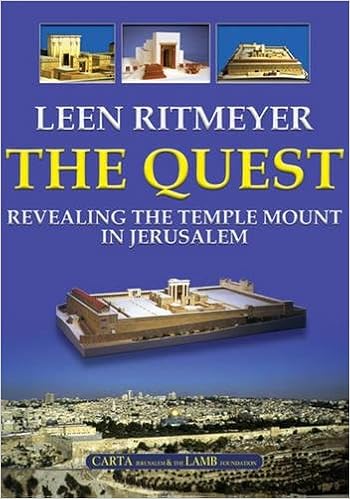
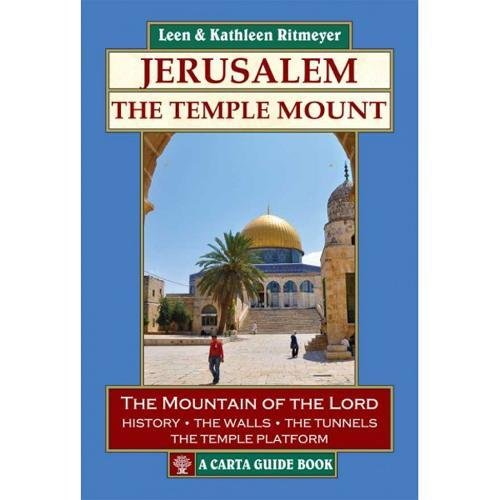
Carta has published some great new books (and maps) recently. I plan to recommend some of them here when I get a chance, but you can take a look at the latest offerings now.

Texas International Bible Institute has created a series of 360º videos on-site at various locations in Israel. You can start here and select from the list on the side.

Eisenbrauns has announced a forthcoming festschrift entitled Studies in the History and Archaeology of Ancient Israel in Honor of Israel Finkelstein (Nov 2017).

Eric Cline is on The Book and the Spade discussing his latest book, Three Stones Make a Wall.

The 20th Annual Bible and Archaeology Fest will be held this year in Boston.


The Routledge Encyclopedia of Ancient Mediterranean Religions is reviewed positively here (but it’s expensive; I don’t think I’ve seen a Kindle book for $408 before).

HT: Joseph Lauer, Agade

Share:

A large 4th-century AD winepress has been discovered and excavated in the Ramat Negev region.

The IAA has posted a 1-minute video in Hebrew.

A new study argues that everything we knew about the origin of the Philistines is wrong.


The Times of Israel reviews discoveries made in excavations at Magdala, with an eye on priestly inhabitants.

A new DNA study indicates that the modern-day Lebanese people are descended from people who
lived in the area 4,000 years ago.

Wayne Stiles reflects on a lesson Jesus taught when he walked on the Sea of Galilee.

The Tempe Mount Sifting Project has begun a video series that tours the Temple Mount, beginning with Solomon’s Stables, including footage of the destruction in 1999.

Steven Ortiz is on The Book and the Spade discussing the 10th season of excavations at Gezer.

On the 75th anniversary of his death, Sir Flinders Petrie is profiled in The National, with the focus on his support of eugenics.

The inaugural issue of Archaeology and Text is now online.

The Tell es-Safi (Gath) team got real creative for their season-end group photo.

HT: Joseph Lauer, Agade, Charles Savelle

Share:

Archaeologists working near biblical Aphek have discovered a large water reservoir dating to about the time of King Hezekiah. The press release includes a one-minute video.

They found Roman remains at el-Araj, a candidate for New Testament Bethsaida. Here’s a photo of some of the Roman mosaic floor.

The third week of the excavations of Gath has ended, and they found an inscription.

Chris McKinny summarizes the results of the third week at Tel Burna. And if you missed the second week review, you can find it here.

The Temple Mount Sifting Project has discovered a Doric capital dating to the 2nd century BC.


The Times of Israel profiles ABR’s new excavation project at Shiloh.

The Greek Orthodox Church has sold the amphitheater and hippodrome of Caesarea in a secretive manner that raises lots of questions.

Archaeologists have found 8 more ancient shipwrecks off the coast of Greece, bringing the total number now discovered there to 53.

“Egyptologists have discovered what they believe is the burial chamber of Ankhesenamun, Tutankhamun’s wife.”

Here are five surprising inventions of ancient Rome, including luxury cruise ships.

Ferrell Jenkins shares his experience and photos with camel caravans in the Sinai.

John MacDermot will lecture on “Olga Tufnell – The Life of a Petrie Pup” at the British Academy in
London on September 20.

Recent Shroud of Turin Research is the top of this week’s edition of The Book and the Spade.

I thought the Kindle sale for Eric Cline’s Three Stones Make a Wall: The Story of Archaeology was for one day only, but the $1.99 deal was still good the last time I checked.

HT: Carl Rasmussen, Charles Savelle, Joseph Lauer, Agade, Mike Harney

Share:

Jerusalem is a place deeply meaningful to so many people. It is not only full of history, but it is also full of the future. I really enjoyed reading through your responses on this survey, for we all feel passionately about this city!

The site chosen by more than any other was Hezekiah’s Tunnel. When you add the second most common response, the City of David, it’s obvious that the most ancient part of Jerusalem is a clear favorite. It wasn’t that many years ago that few people visited the City of David or walked through Hezekiah’s Tunnel. That has changed with recent development, and now you need to get reservations weeks or months in advance and pay more than 5 shekels for entrance!

Here’s why a few of you chose Hezekiah’s Tunnel as your favorite:

Fascinating history, quiet, away from crowds”
I love the feeling of re-living biblical history. I love teaching on the water systems of Jerusalem and seeing the joy of discovery on friends’ and study tour participants’ faces!”
(1) It’s just as it was (not just ruins). (2) It’s mentioned very specifically in the Bible, and was important. (3) Its discovery bolstered confidence in the Biblical record. (4) It’s good fun walking through it. (5) Not many people do walk it, so you feel you’re getting a special treat!”

The City of David provoked several interesting responses, including these:

In spite its small size (10 acres), the City of David contains an incredible amount of tangible evidence demonstrating the historical reliability of the Bible.
It is so important, so controversial, and still so difficult to figure out. I keep going back only to be more confused and intrigued. Who can help me?

Another favorite is just up the hill: the excavations on the south side of the Temple Mount.

Story of Mary, Joseph, Jesus and Simeon in Luke 2
Robinson’s arch, Herodian street and sewer tunnel, old shops, Roman destruction, mikvahs, are ancient history.  But you can also see the new Jewish quarter with its synagogues and Torah schools and the Muslim minarets on the Haram that remind you of the mix of societies living here today. . . . So much history meeting today all in one spot.

The Garden Tomb and the Church of the Holy Sepulcher received an equal number of votes. I’m not sure if I know those who voted for the Garden Tomb, but all (three) who chose the Holy Sepulcher are biblical scholars. Why the Holy Sepulcher?

My fascination with the burial of Jesus, among other things!
As close as it is possible to get to the place where Jesus died and rose.

One person who chose the Garden Tomb wrote:

That’s where I realized that He is not there but He has risen!

The Western Wall received three votes. Why?

It’s close to the Holy of Holies, had great prayerful experiences there with friends, and loved watching the feast of tabernacles and witnessing Jewish culture.  It’s beautiful at night! 

Bringing in the Shabbat with singing and dancing.

Several people chose locations for their views of the city, but they didn’t choose the same location:

Mount of Olives: From the Mount of Olives you can look down at the Temple Mount and so much biblical history took place right there from the Old Testament to the New Testament and to think of what will happen in the future there at that site!

Ramparts Walk: It affords the best views of the city, a good overview of the surrounding topography and you can see the dovetailing of Jordanian defense walls with those from 1492. You also have a good view of the recent excavations on Mt. Zion as well as interesting portions of the Arab quarter.

Herod’s Tower: The timeless, expansive view of most of the Old City, Temple Mount, Mount of Olive’s, Holy Sepulchre, St. John of Hospitallers.  Perhaps the best view of the City.

A number of you picked the Pools of Bethesda/St. Anne’s Church, the Mount of Olives (including Gethsemane), the Israel Museum (including the model of Jerusalem and the Shrine of the Book), and Yad VaShem.

Let me wrap it up with a couple of the more unusual choices.

Church of the Sepulchre of Saint Mary: Awesome stairs going DOWN inside the entrance with a mixed ecclesiological history. Great architecture!

Atop the Russian Ascension Bell Tower, Mount of Olives: Of course, this is a place I have yet to get to, but based on images I have seen taken from this vantage point, the view of the Old (and New) City westward, and the views eastward across the wilderness, with a excellent camera to capture the view, would be my FAVORITE site in Jerusalem. Perhaps one day!

Interestingly enough, no one picked my favorite place in Jerusalem: the Temple Mount. It can be difficult to get up there, but I make every effort with every group I lead because:

  • There are so many awesome Bible stories to talk about here, including God’s choice of the spot, Solomon’s dedication of the temple, Jesus’s visits, the apostles in Solomon’s colonnade, and Paul’s arrest.
  • It’s a good place to talk about Islam, including its (occasional) interest in Jerusalem.
  • You just cannot grasp how large the Temple Mount is until you’re there.
  • God is not done here. There is no place on the planet more central to the fulfillment of God’s purposes.

Thank you for participating! We’ll do another survey in a week or two.

Share:

Jodi Magness keeps digging up cool mosaics in the Late Roman synagogue at Huqoq. (Unfortunately, they seem to have released only two photos.)

A manuscript with a medical recipe from Hippocrates has been discovered in restoration works of the library of St. Catherine’s Monastery in Sinai.

The first week of excavations has concluded at Gath, and Aren Maeir has posted a daily summaries and photos from the week.

Chris McKinny has posted a summary of Week 1 at Tel Burna.

The first aquarium in Jerusalem will open later this month next to the Biblical Zoo.

A study of ancient sea walls has found that the Romans used a volcanic ash in construction because it was strengthened by its contact with sea water.

“Iraq’s Ministry of Tourism and Antiquities has accelerated its efforts to finish by the end of 2018 the Virtual Museum of Iraq, which will create a comprehensive database of Iraqi archaeological heritage online.”

Hobby Lobby will pay a fine and return artifacts to settle a lawsuit brought by the US government.


The Federalist argues that the US government should allow Hobby Lobby to retain the artifacts because doing so will ensure their preservation and study.

John DeLancey has posted an 11-minute video showing a hike up Mount Arbel. He has several dozen teaching videos on his website here.

The Bible and Interpretation has posted a review article by Aren M. Wilson-Wright, “Hebrew or
Not?: Reviewing the Linguistic Claims of Douglas Petrovich’s The World’s Oldest Alphabet.”

Lawrence Schiffman writes about a recent conference of Jewish, Christian, and Muslim scholars on the history and archaeology of the Temple Mount.

Wayne Stiles: “Have you noticed how often hymn writers use the Jordan River as a metaphor for transitions in the spiritual life? That may be because the Bible does the same.”

Ferrell Jenkins asks, “Did Philip baptize the Ethiopian at ’Ain ed-Dirweh?”

Scott Stripling is the guest this week on The Book and the Spade, discussing the first season of ABR excavations at Shiloh.

Tom Powers investigates celebrations of the 4th of July held by the American Colony in Jerusalem.

HT: Ted Weis, Charles Savelle, Agade, Joseph Lauer

Share:

In the final season of the Tel Gezer Project, archaeologists have found evidence of Merneptah’s fiery destruction of the city, including the skeletons of an adult and child. The capture of Gezer is mentioned in the famous Merneptah Stele, along with the slaughter of Israel.
Norma Franklin explains why the winery they discovered at Jezreel fits the time and place of Naboth’s vineyard.

The IAA has posted a 3-minute video on the “Siloam street” and drainage channel that is being excavated between the Pool of Siloam and the Temple Mount.

Gabriel Barkay is interviewed on the World Affairs Report (28 min, mp3).

Did Jeremiah bury his loin cloth at the Euphrates or at Ein Perat? Ferrell Jenkins provides photos of both and some evidence for the latter.

Carl Rasmussen shares photos and reflects on his time in Jerusalem during the Six Day War.

Photorientalist exhibits photographs from the 19th and 20th centuries, including a number of exhibitions that tell a story, such as “Palestine’s Nativity Trail.” They are accepting submissions.

One of your considerations in choosing a summer excavation to join is the field school. Year after year, the Tell es-Safi team has one of the best schedules of lectures and field trips.

The PEF’s refusal to accept papers which discuss Jewish excavations in Jerusalem ultimately led to its cancellation of the conference on “Anglo-German Exploration of the Holy Land 1865-1915.”

The Book and the Spade reposts a Dead Sea Scrolls Documentary, produced for the 50th anniversary of the discovery and including audio from Albright, Yadin, Trever, DeVaux, and others.

J. C. McKeown writes about famous doctors in the ancient world on the Oxford University Press blog.

Gary Rendsburg has recently posted his 1998 interview of Cyrus Gordon on YouTube.

A new program at Leiden University seeks “to show the great potential video games have for archaeology in terms of public outreach, heritage preservation, and education, but also for actual research.”

Eisenbrauns has a big sale going in July, with 60 titles at 60-80% off. Here are a few recommendations:

HT: Joseph Lauer, Agade, AWOL, John DeLancey

Share: