The Common Swift, a unique bird that spends most of its life on the wing, returns to Western Wall for a short vacation from Africa. Nature-lovers are planning a welcoming ceremony Monday.
The Friends of the Swifts Association, the Society for the Protection of Nature in Israel, and Tel Aviv University are working together to save existing nesting sites of the special bird. Its arrival at the Western Wall also symbolizes the approaching spring, said the sponsors of the welcoming ceremony.
[…]
They said that a special study to map the nests was conducted in 2002 by researcher Ulrich Tigges and by the late Prof. Mendelssohn, during which 88 nests were noted. This study map served as a guideline during the work of strengthening the Western Wall, keeping the nests unblocked.
Birds have been making their nests near the temple ever since the psalmist wrote, “Even the sparrow has found a home, and the swallow a nest for herself, where she may have her young, a place near your altar….Blessed are those who dwell in your house” (Psalm 84:3-4).
In light of the current discussion concerning the so-called “Jesus Discovery” of the depiction of a Jonah/resurrection motif on a 1st century CE ossuary (see here) it is probably prudent to re-examine the typological relationship between the two prophets of Jonah and Jesus.
Besides the explicit connection of “the sign of Jonah” mentioned in Matt. 12:38-41; 16:4; Luke 11:29-32 there are several probable connections that can be derived through comparing the Gospels to the book of Jonah and 2 Kings 14:25 (i.e. the only Old Testament mention of the prophet outside of the prophetic book of Jonah).
Consider the following suggested similarities/parallels:
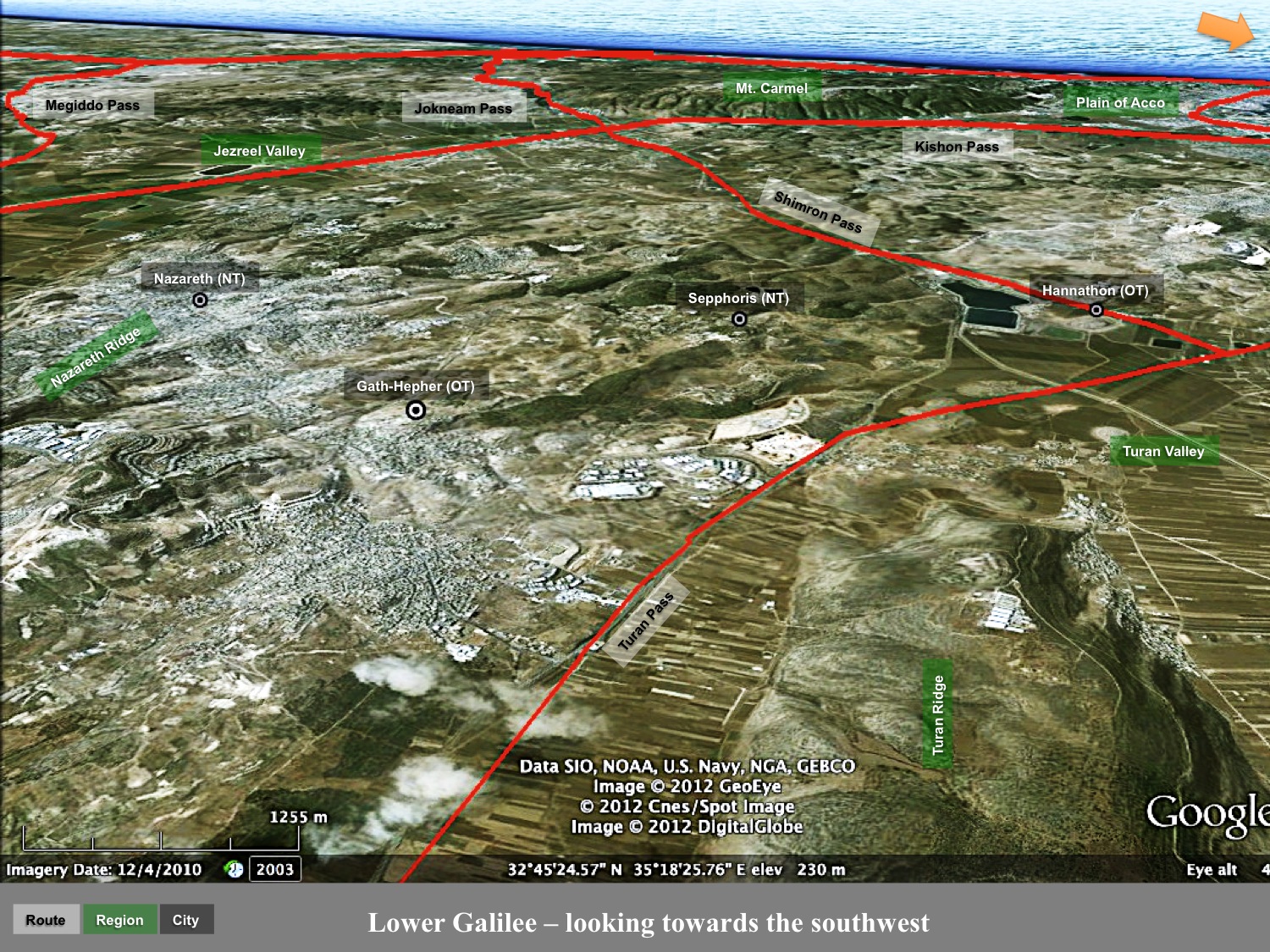
1. Each prophet heralded from and began his ministry in Lower Galilee. Jonah/Gath-Hepher and Jesus/Nazareth – 2 Kings 14:25; Matt. 2:23.
2. Each prophet’s ministry occurred during a time in which Israel’s hierarchical, wealthy members “trampled upon the poor.” Jonah/“cows of Bashan” during the time of Jeroboam II (8th cent. BCE); Jesus/”devourers of widow’s households” – Amos 4:1-3; 5:11-12; 8:3-7; Matt. 19:23-25; Mark 12:41-44; Luke 16:19-31; 20:46-47.
3. Each prophet preached Yahweh to Gentiles despite a desire to primarily minister to their own Israelite/Jewish population. Jonah joined Phoenicians on their way to North Africa (i.e. Tarshish) to avoid the goyim of Nineveh (Jonah 1:1-3) and Jesus stated that he was sent “only to the lost sheep of the house of Israel” (Matt. 15:24). However, both eventually ministered to Gentile populations – Jonah with Nineveh and Jesus for example with the Syro-Phoenician woman (Mark 7:25-28), Legion of the tombs of Gadera (Luke 8:26-34), and the centurion’s servant at Capernaum (Matt. 8:5-13).
4. Each prophet slept in the bottom of a ship in the midst of a raging storm while the ship’s sailors were wracked with fear and bewilderment due to the prophet’s slumber (Jonah 1:4-6; Mark 4:35-38). Additionally, each prophet was the reason for the ceasing of the storm (Jonah 1:7-16; Mark 4:39-41).
5. Explicit connection (see above) Each prophet spent “three days and three nights” in the “heart” of the earth before being “brought up from the pit.” Compare Jonah’s prayer (Jonah 2) and Jesus’ “sign of Jonah” (Matt. 12:38-41; 16:4; Luke 11:29-32) to Jonah’s expulsion (Jonah 3:1) and Jesus’ resurrection (e.g. Matt. 28:1-6).
6. Each prophet, despite being from northern Israel (i.e. Israel in the 8th cent. BCE and Galilee in the 1st cent CE), were obedient to the Law of Moses in worshipping Yahweh at his chosen location of Jerusalem (Deut. 12:5-7; 2 Sam. 7:13; 1 Kings 5:5). Compare Jonah’s “worship in the temple” (Jonah 2:4, 7), despite the enduring presence of the syncrestic temples of Dan and Bethel, to Jesus going up to Jerusalem for various feasts (e.g. Luke 2:41; 22:1).
7. Each prophet proclaimed coming destruction upon his audience’s capital city. Compare Jonah’s proclamation to Nineveh (Jonah 3) and subsequent, vengeful grief over their repentance (Jonah 4:1-4) to Jesus’ prophecy of doom to Jerusalem (e.g. Matt. 24) and subsequent, knowing grief over their rejection (Matt. 23:37; and especially Luke 19:41-44). As an aside, I find Jonah’s statement in Jonah 4:3 to be an ironic double entendre in the vein of Caiaphas’ statement in John 11:49-50.
8. Each prophet left the city that they had just preached in and went to the east of the city and prayed. Compare Jonah’s selfish, languishing prayer concerning the loss of his shade east of Nineveh and Yahweh’s response (Jonah 4:5-11) to Jesus’ selfless, anguish-filled plea to “let this cup pass” in Gethsemane and Yahweh’s silence (e.g. Luke 22:39-44).
More could be said about the typology of Jonah in relation to Jesus, especially with regards to the notable differences between the two. Nevertheless, in my opinion the above similarities undergird the connection between Jonah and early Christian motifs (see for example Jensen’s post which mentions 4th cent. CE depictions in Rome). Whether, the Talpiot ossuary is the first known example of this connection is an open, debatable question, but in either case it seems clear that the motifs derive from a clear typology that is rooted in the Gospels.
Paleobabble posts a report on the Noah’s Ark fraud by one who knows the Turkish guides involved.
The report probably contains some of the true story, but it is obscured by a liberal dose of speculation and hearsay. Confidence in the author is further eroded by her lack of experience in the field, her photos of herself in conservative eastern Turkey, and her forthcoming book entitled Climbing Mount Ararat: Love and Betrayal in Kurdistan.
Eisenbrauns’ Deal of the Weekend is Ancient Place Names in the Holy Land: Preservation and History, by Yoel Elitzur. It is marked down from $65 to $26.
What did Jerusalem look like in Jesus’ days? A brief article at the Jerusalem Post describes the Herodian Quarter (Wohl Museum).
Archaeologists in Egypt have begun restoring a second boat buried next to the pyramid of Cheops (Khufu).
Neil MacGregor, Director of the British Museum, gives a 20-minute presentation at TED on the “biographies” of the Cyrus Cylinder. He believes this artifact is a major player today in the politics of the Middle East.
Eilat Mazar is warning that the antiquities on the Temple Mount are in danger because of plans to unite all of the mosques into one large one.
The seventh season of excavations at Tall el-Hammam concluded this week. According to email newsletters, the major discovery this year was a monumental gateway dated to the Middle Bronze period (2000-1550 BC).
The fifth edition of The Carta Bible Atlas (formerly The Macmillan Bible Atlas) is apparently more than just a cover re-design (as was the fourth edition). According to the publisher, “The Carta Bible
Atlas has been enriched by the addition of 40 new maps. Anson F. Rainey added maps and discussion on contemporary subjects surrounding the biblical narrative and R. Steven Notley revised and expanded the New Testament section. Prof. Notley further enhanced this volume by extending its historical reach to include the map of Palestine at the end of the third century as recorded by Eusebius, Bishop of Caesarea.” Eisenbrauns has this updated classic in stock.
The news report was that Tel Shiloh would receive about $1.3 million for renovation and preservation of the site, besides an additional $2.5 million from private sources. Only a fewbloggers seem to note the new archaeological excavation underway on the southwestern side of the tell, with work scheduled to begin on the proposed tabernacle site in a few weeks.
Arutz-7: “Muslims hurled stones and shoes at police escorting Jewish and Christian visitors on the Temple Mount in Jerusalem’s Old City on Tuesday.”
JPost: “The Tourism Ministry on Tuesday launched an online ballot where the public can vote on what shape the NIS 833 million renovation of the Dead Sea will take in the coming years.”
NASA has a photo showing the weekend’s snowfall on Mount Hermon and the ranges to the north.
Wayne Stiles connects the beauty on display at Neot Kedumim with the Passover holiday.
The Jerusalem Post has a new column named “All Out Adventure.” It begins with a rather tame outing to Sataf in the Judean hills.
Tom Powers has an interesting and well-illustrated post on the Historic Valley Railway that once connected Damascus to Haifa.
G. M. Grena teases his readers with an Arabic-English riddle. I think I can make some sense of it.
Question: I’m writing to ask if you know of a place on the web (or anywhere else) that I could find good pictures or diagrams of Herod’s Temple. I want to help my church be able to really understand the temple that Jesus entered during Passion week. I’m preaching the Mark 11 version of the cleansing of the temple this week. –K.W.
Answer: Yes, there are a few sources. The place to start is the website of Leen Ritmeyer. As you probably know, he was the architect for the excavations south of the Temple Mount and his reconstructions are the best. He now has a series of excellent photos CDs for sale in his online store.
In particular, for your purposes I would recommend:
Volume 2: Jerusalem in the Time of Christ
Volume 4: The Archaeology of Herod’s Temple Mount
Volume 5: Worship and Ritual in Herod’s Temple
Even if you don’t have time for these to arrive in the mail before you teach,
I’d suggest picking them up for the (many) future opportunities when they will come in handy. For immediate download, the Ritmeyer website also has individual images available.
Another source is images from a virtual model created by a team at UCLA. There is an explanation of the model here, a series of (small) 360-degree panoramas here, and five still shots of the model here.
They also have an 8-minute video which gives you a tour of the model. You can turn the sound down and give your own explanation.
Archaeology Illustrated also has some individual images for sale, though their system seems to be less user-friendly (with the purchase of credits which can then be used towards illustrations).
The ESV Study Bible also has some great illustrations. These are available in digital format with purchase of a print Bible ($30) or from Logos ($40) or Accordance ($40). You can see some samples posted at Amazon. Ritmeyer was a consultant on these images as well.
Any readers who have additional suggestions are welcome to make them in the comments below.
In his column today at the Jerusalem Post, Wayne Stiles traverses the length of the Western Wall underground, recommending this as an ideal way to get more out of your day in Jerusalem.
Traveling though these excavated tunnels a few weeks ago, I saw several discoveries made in recent years. The steps of a very large mikveh (ritual bath) are visible about 10 meters below the modern path (noted previously on this blog here).
Eastern steps of mikveh built next to western wall of Temple Mount
Last month, they finished excavating and opened up to visitors a new portion of the Struthion Pool.
This is located to the east of the part of the pool that once served as the terminus of the tour.
Struthion Pool
Excavations continue in the Great Hall, not far from the location of the largest stone in the Temple Mount.
The BiblePlaces Blog provides updates and analysis of the latest in biblical archaeology, history, and geography. Unless otherwise noted, the posts are written by Todd Bolen, PhD, Professor of Biblical Studies at The Master’s University.