Muslim officials are proceeding with plans to construct a minaret on the Temple Mount. This minaret will be located near the Golden Gate (arrow in photo above) and will be the tallest minaret in the complex at 134 feet (42 m) high. This will be the first minaret constructed in 639 years, as the other four (circled in photo above) were built between 1278 and 1367. The prayer tower will be Jordanian in style and will cost approximately $700,000.

Such a construction is a violation of the principle of status quo of disputed holy sites in Israel, and almost certainly will be built without any archaeological supervision. It is ironic that if one wants to build a cottage in a remote part of Israel and antiquities are present, then an excavation must take place. But if one wants to construct on one of the most important sites in the Holy Land, there are no such requirements.

Share:

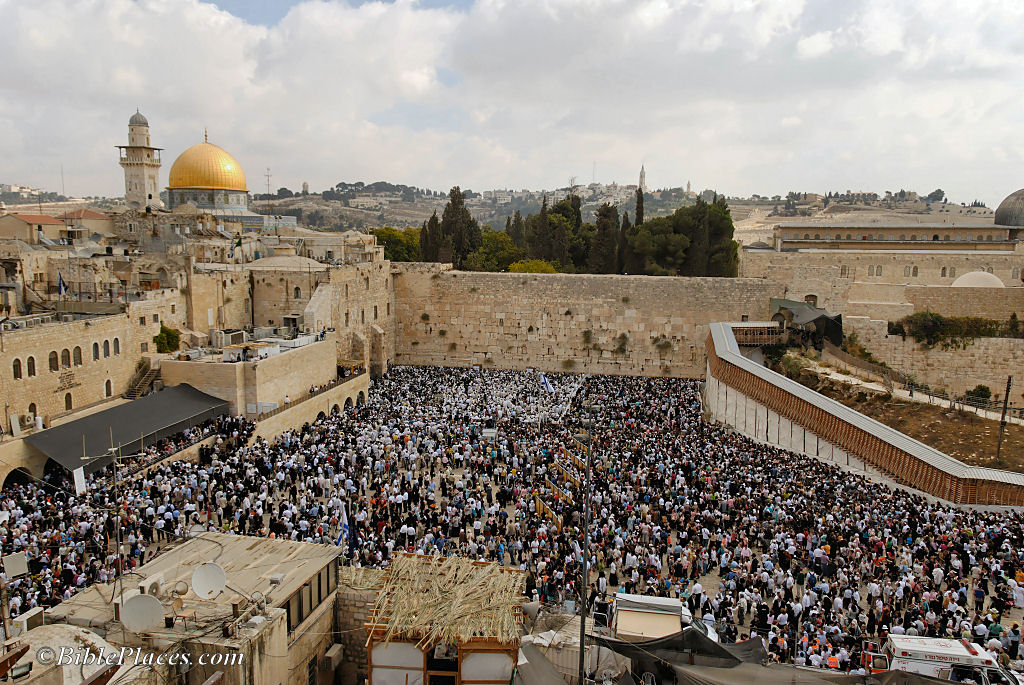
A record number of Jews streamed to the Western Wall this morning for the traditional blessing of the priests during the festival of Sukkot. Police had to close the entrances into the prayer plaza because of the crowds.


Arutz-7 reports:

The ceremony has become a tradition ever since the liberation of the Temple Mount during the Six-Day War in 1967 and is seen as an observance of the Jewish obligation to make a pilgrimage to Jerusalem and the Holy Temple three times a year, on Pesach (Passover), Shavuot (Pentecost) and Sukkot (Tabernacles). During the weeklong Pesach and Sukkot holidays, the ceremony is held on the second of the Hol haMoed (intermediate) days.

Hundreds of kohanim, Jews who trace their lineage to Aaron, the first High Priest, stood closest to the Western Wall to take part in the special blessings. Attending the Western Wall prayers Monday were Chief Rabbis Shlomo Amar and Yonah Metzger, as well as Western Wall Rabbi Shmuel Rabinovitch. Rabbi Rabinovitch told Arutz-7 that Monday’s priestly blessing marked the largest such gathering for prayers at the site since the first Sukkot after the Six Day War.

Police were forced to close the gates leading to the Western Wall Plaza due to its being filled to capacity by worshippers. “The blessing, however, reaches those stuck outside the plaza as well, obviously,” Rabbi Rabinovitch said. He added that many of those packing the plaza were not outwardly observant. “Many secular Jews have adopted the custom of making a pilgrimage to the Western Wall on the holiday,” he said.

The Birkat Kohanim is a part of daily prayers in Israel, but is only recited on holidays in most communities outside Israel. The blessing given appears in Numbers 6:23-27:

And G-d spoke to Moses saying: Speak unto Aaron and his sons, saying, in this manner shall you bless the children of Israel. Say to them:
May the Lord bless you and keep you.
May the Lord shine His face upon you.
May the Lord lift His countenance upon you, and grant you peace.
Share:

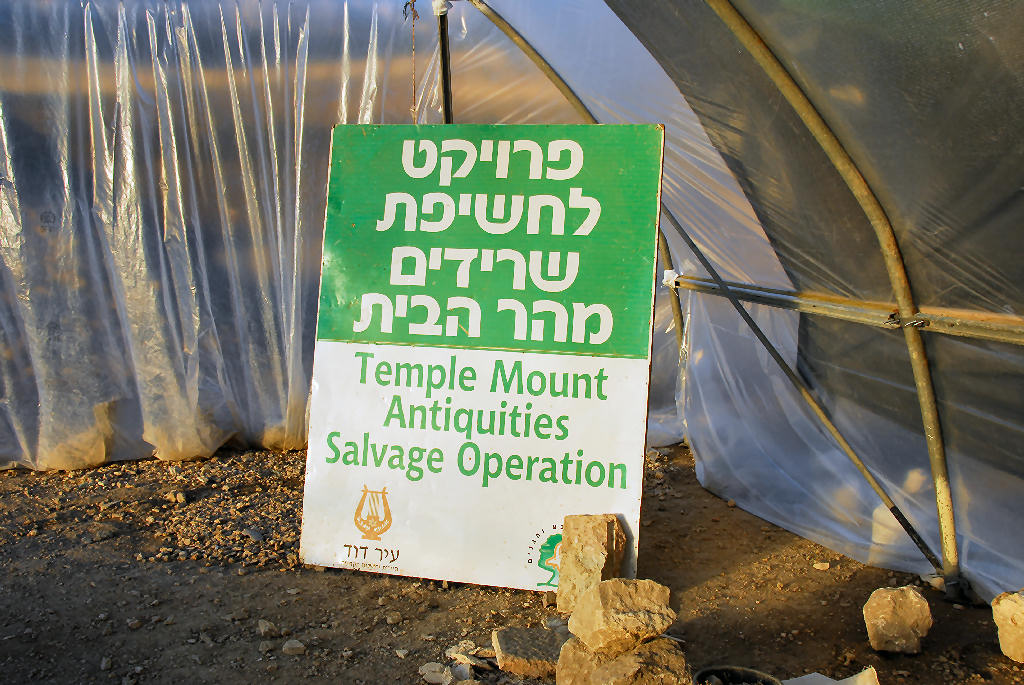
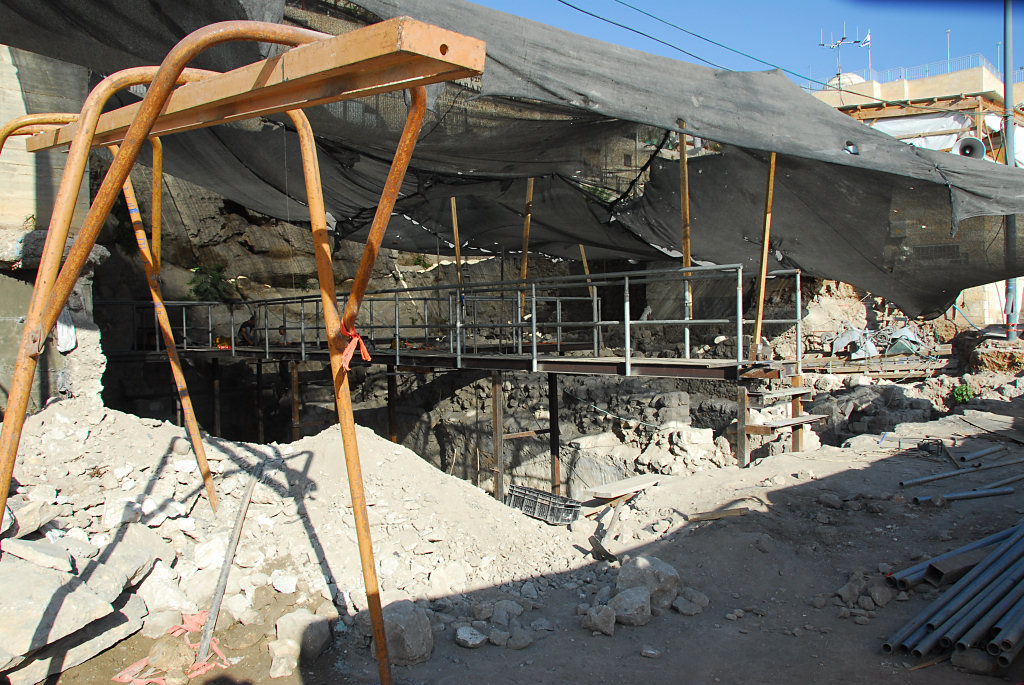
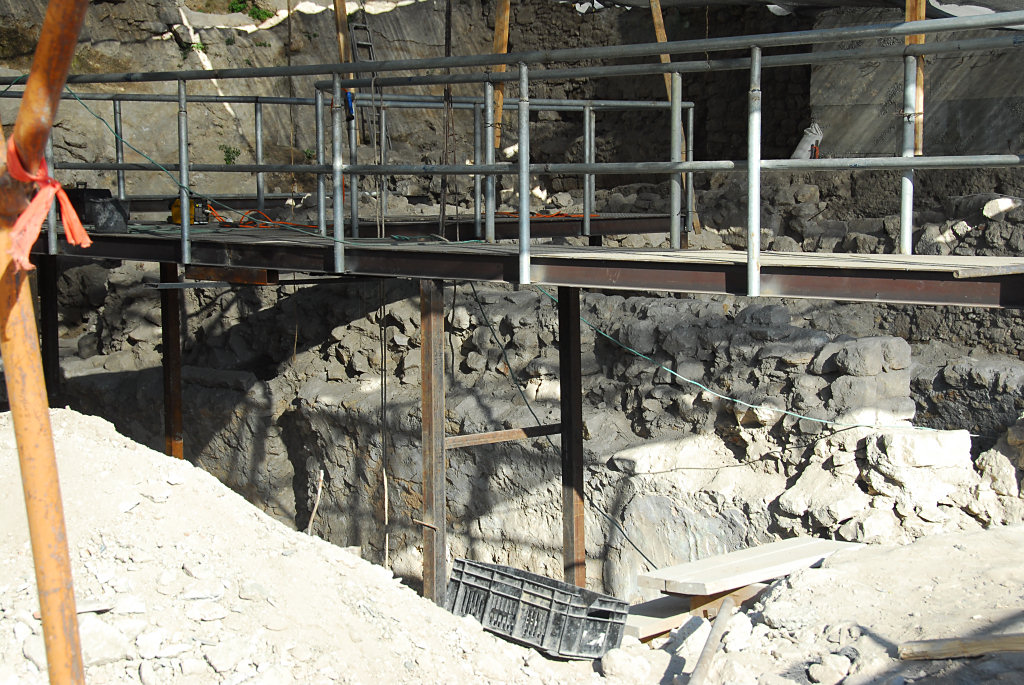
Excavations have been going on for a few months in the back (west side) of the Western Wall plaza. The Israel Antiquities Authority has a brief description of the finds so far. In short, they are excavating a building complex from the Mamluk and Ottoman periods that consists of several vaults.

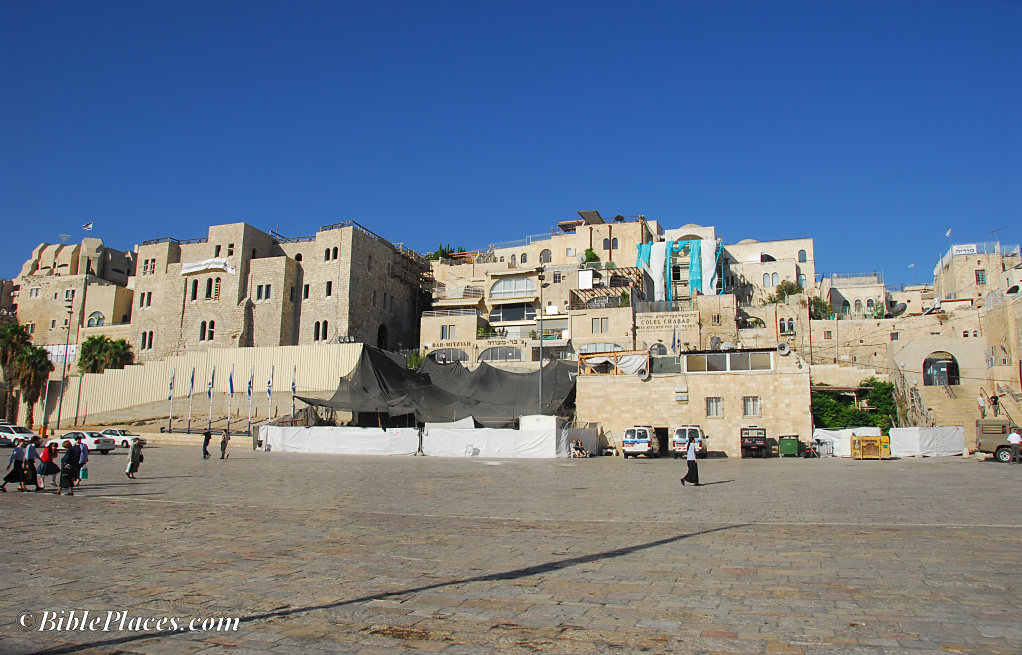
This is a view from near the Western Wall towards the excavations, which are located just to the left (south) of the police station.

The excavations began in April, before construction of a building in this location.

One of the vaults is visible below the metal walkway.

Share:

We’ve reported in multiple BiblePlaces Newsletters and here about the plan to excavate the collapsed earthen ramp leading from the Western Wall plaza to the Temple Mount. This ramp gives access to the only Temple Mount gate open to non-Muslims. Haaretz reports today that the Israel Antiquities Authority will begin digging in a few days.

The ramp, which leads from the Western Wall plaza to one of the Temple Mount Gates, is located in one of the most sensitive places in the world, and plans to carry out excavations under it have therefore been held up by the Shin Bet security service and the prime minister’s military secretary for the past two years, for fear of Muslim riots.
Archaeologist Meir Ben-Dov warned yesterday that any digging in the area could lead to bloodshed. 


“Digging in this place goes way beyond the archaeological sphere. This place is far too sensitive and the price would be much too high,” he said.
However, a reliable source told Haaretz that “now that the Palestinian Authority is paralyzed and incapable of resisting, it’s an excellent opportunity to carry out the plan.”

These photos were taken in the last year.
The temporary wooden ramp is on the left side of the earthen ramp to be excavated.

The north side of the earthen ramp collapsed after a snowfall in February 2004.

The ramp is more prominent when viewed from the south side. The new excavations will apparently create a connection between the Western Wall prayer plaza and the Jerusalem Archaeological Park (aka Southern Temple Mount Excavations).

Share:

If you’ve only been to Israel in the last five years, then you never had a chance to visit inside the Muslim buildings on the Temple Mount. In fact, chances are good you weren’t even allowed on the Temple Mount at all. If you visited before the outbreak of violence in 2000, you likely visited these but probably were not able to enter “Solomon’s Stables” below Al Aqsa Mosque. Now there’s a recent video showing all of that.

When I first saw the link, I ignored it because it didn’t seem that it would have anything of interest to me. Certainly no one has been able to take a videocamera through all of the off-limits areas in recent times. I was wrong. And the 4-minute video is worth watching if you have any interest in seeing the interior of the Dome of the Rock, the Al Aqsa Mosque and Solomon’s Stables. The clip could benefit with an audio commentary explaining what you’re seeing (including some remains of Herodian architecture!), but most of it is easy to understand.

Watch it at ynetnews.com.

Share: