Excavations under a house in northern Israel have revealed what may be the largest wine factory from the Crusader era.

Archaeologists have discovered an arrowhead from the Roman siege of Jotapata in AD 67.

A i24News video shows the “pilgrim road” leading from the Pool of Siloam to the Temple Mount of Jerusalem.

“Archaeologists working in the buried Roman city of Pompeii say they have uncovered a ‘sorcerer’s treasure trove’ of artefacts, including good-luck charms, mirrors and glass beads.”

A new exhibit about a 4th-century synagogue mosaic floor has opened in the Archaeological Museum of Aegina. Aegina is a Greek island not far from Athens.

“Anchors Aweigh: Seaports of the Holy Land” is a new exhibit opening on Tuesday at the Bible Lands Museum in Jerusalem.

Preliminary images of seven (alleged) Dead Sea Scroll fragments owned by the Southwestern Baptist Theological Seminary are now online. (The link looks unusual, but it works.)

Lubna Omar provides a personal perspective as a Syrian archaeologist unable to protect her country’s heritage.

A guy passionate about ancient Egypt and baking used ancient yeast to bake a loaf of bread.

Egyptian authorities transferred a 90-ton obelisk of Ramses II from Zamalek to El Alamein.

The Oriental Institute is celebrating its 100th anniversary.

Carl Rasmussen shares photos of the largest altar in the world.

I always like the photos that Wayne Stiles includes with his posts, and this week is no different with his reflections on Abraham’s faith.

Matti Friedman writes a helpful review of Jodi Magness’s new book on Masada.

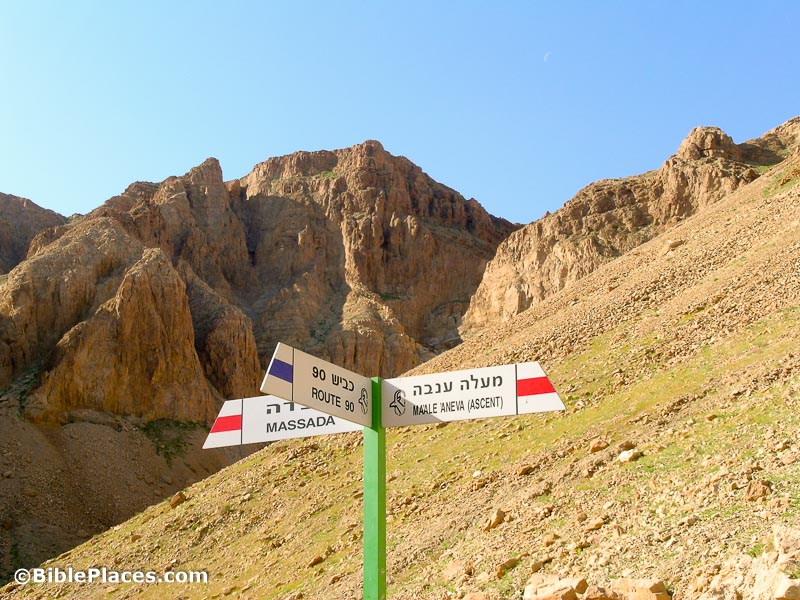
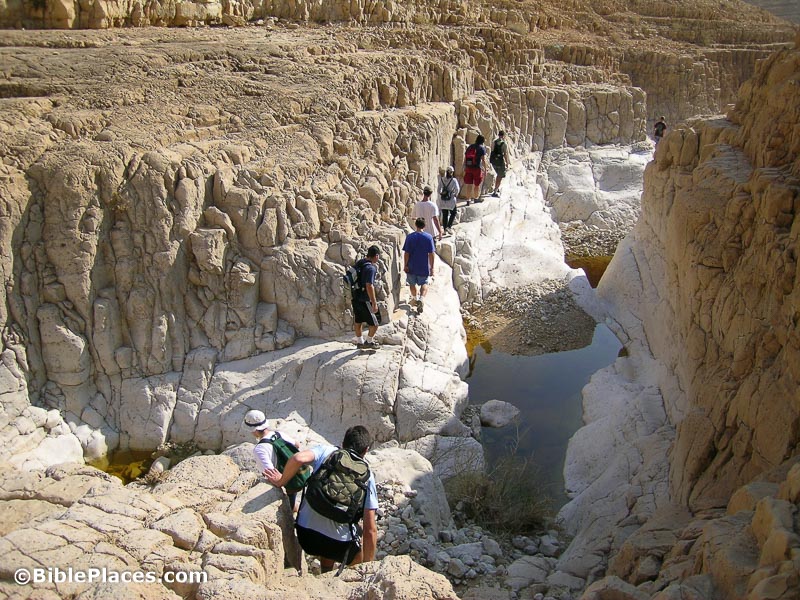
Did you know there are four long distance hiking trails in Israel? They range in length from 37 miles to 637 miles.

HT: Agade, Joseph Lauer, Alexander Schick, Ted Weis

Share:

New excavations in Perga have revealed the well-preserved(!) foundation of the Tomb of Plancia Magna. And Carl Rasmussen also has photos of new reconstruction work at Thyatira.

Pat McCarthy’s newest page at Seetheholyland.net is about the Sisters of Nazareth excavation, including a church possibly built over Jesus’s childhood home.

Aaron Demsky explains how the Samaria Ostraca shed light on the names of Zelophehad’s daughters and Israel’s settlement in Manasseh.

Mark Barnes draws out some lessons from Shechem, including how conflict, covenant, and choice defined its history.

In a new podcast, Clint Burnett discusses the background of the Nazareth Inscription as well as assessing whether it provides evidence of Jesus’s empty tomb (Apple).

Peter grew up in Bethsaida and ended up in Rome. Wayne Stiles explains how he got there by a series of “hard left turns.”

Shemesh Online reports on the compromise reached that will allow for the construction of the highway over the tell, the reduction of the width of that road, as well as the building of a pedestrian overpass to connect the two sides.

Kristina Killgrove gives five reasons why you shouldn’t buy that ancient artifact.

Cathie Spieser looks at the theology of birth and rebirth in ancient Egypt.

Chapter 8 of The Gospel of Mark in the LUMO Project has been dubbed in Koine Greek.

On The Book and the Spade, Clyde Billington and Gordon Govier discuss some recent stories, including Macherus, Melchizedek, and the Philistines.

In his ongoing Footsteps series, Bryan Windle identifies three things Paul likely saw in Corinth.

Ferrell’s Favorite Foto #24 is of Gibeon.

HT: Agade, Jared Clark, Joseph Lauer

Share:

Archaeologists working at el-Araj (Bethsaida?) are claiming that a Byzantine church they are excavating is the “Church of the Apostles.” The story is reported in Haaretz (premium); the excavation website has lots of photos.

The excavation season at Gath is over. Among this week’s posts is this one with their end-of-season photo shoot.

“A rare, very early rural mosque was unearthed during recent archaeological excavations in the southern Israel Bedouin city of Rahat.”

Excavations on Mount Zion have revealed a moat from the Crusader siege of Jerusalem in 1099.

“An unprecedentedly vast Neolithic settlement — the largest ever discovered in Israel and the Levant, say archaeologists — is currently being excavated ahead of highway construction five kilometers from Jerusalem

The University of Basel announced its possession of the oldest autograph of a Christian letter.

Researchers are studying the harbor technologies of Portus, the maritime harbor of Rome in the first centuries AD.

For the first time in decades, Egypt has opened the Bent and Red Pyramids of Dahshur to tourists.

Wayne Stiles draws spiritual lessons about closed doors from Paul’s second missionary journey.

New from Eerdmans: Scribes and Scrolls at Qumran, by Sidnie White Crawford

Now at the top of my wish list (but more difficult to acquire outside of Israel): Ancient Jerusalem Revealed: Archaeological Discoveries, 1998–2018, edited by Hillel Geva.

HT: Joseph Lauer, Ted Weis, Charles Savelle, Agade

Share:

Museums:

“Assyrians in the Shadow of Vesuvius” is a new exhibit at the National Archaeological Museum in Naples.

“Buried by Vesuvius: Treasures from the Villa dei Papiri” is now on display at the Getty Villa in southern California. The post discusses how the Getty Villa was designed after the Villa of Papyri.

“Last Supper in Pompeii” is a new exhibit opening later this month at the Ashmolean Museum.

A replica of the destroyed Lion of Mosul is going on display at London’s Imperial War Museum.

A major exhibition on Troy will open at the British Museum on November 21.

The Egyptian Museum, though losing much of its collection to the Grand Egyptian Museum, will undergo a three-year renovation with the hope of securing status as a UNESCO World Heritage Site.

A new exhibition on Tall Zira’a opened this week at The Jordan Museum.


Lectures:

Shahrokh Razmjou will be lecturing on “The Rise and Fall of Persepolis: A Wonder of the Ancient World” in London on July 23.

Twenty scholars will be speaking at the 22nd Annual Bible and Archaeology Fest in San Diego, November 22-24.


Tourism:

Jerusalem’s “Tomb of the Kings” will reopen to visitors for the first time since 2010, but the tombs themselves will be off-limits.

With restorations complete, Bethlehem’s Church of the Nativity has been removed from UNESCO’s list of endangered world heritage sites.

The Lahun Pyramid opened to the public for the first time last week.

Every year there’s a story that Carchemish will soon be opened to the public.

Babylon has been named a 2019 UNESCO World Heritage Site.

Adam Stewart Brown articulates well why you should visit the Holy Land.

HT: Joseph Lauer, Ted Weis, Charles Savelle, Agade, Explorator, Bill Krewson

Share:

Dig:

A tower from the time of King Hezekiah was discovered on a military training base in the Hebron hills.

The first week of the Tel Burna excavation has wrapped up, and Chris McKinny shares a summary and lots of photos.

Aren Maeir provides some of the objectives for each area as they prepare to begin the 2019 season at Gath.

The latest video of the Shiloh Network News is now online.

New finds at Tell Deir Alla in the Jordan Valley contradict previously published results that the north side of the site was used for cultic purposes.” I’m not sure how “new” these finds are, but the aerial view of the site is nice.

The May 2019 issue of the Newsletter of the Egyptian Ministry of Antiquities features the latest news and discoveries.


Tour:

Sappers finished clearing mines at the seventh and final monastery at Qasr al-Yahud. Six more months of mine clearing are required before the area will be safe.

Nazareth Illit (Upper Nazareth) has voted to change its name to Nof HaGalil, to end confusion with the city of Jesus’s childhood.

In a painstaking process, the Penn Museum moved its red granite 12.5 ton sphinx of Ramses II to its main museum hall.

The Getty Conservation Institute’s work at Herculaneum is focused on preserving the wall paintings.


Read:

Now available from Eisenbrauns: A Corpus of Ammonite Inscriptions, by Walter E. Aufrecht. This second edition includes 254 additional inscriptions, most of which have no provenance. (Use code NR18 to receive 30% off.)

Gordon Franz has posted an updated version of his article, “‘How Beautiful Are the Feet’ on the Via Egnatia.”

Carl Rasmussen shares a photo of “handcuffs” from the Roman period, along with a list of more than 20 mentions of “chains” in the New Testament.

Ferrell Jenkins posts photos of the wildflowers of the field as well as cedar and hyssop.


Listen:

John DeLancey is Gordon Govier’s guest on The Book and the Spade this week, discussing “the destruction of Jericho.”

Eve Harow interviews Leen Ritmeyer on the Land of Israel Network.


Go:

Wayne Stiles is leading a tour to Israel and Egypt in October 2020.


Thanks:

Agade, Ted Weis, David Padfield, Alexander Schick, Explorator


Break:

There will be no roundup next weekend.

Share:

This year’s Institute of Biblical Context conference was superb. If you can make it to next year’s conference (theme: the contextual world of the apostle Paul), I’d recommend it (June 8-10 in Zeeland, Michigan).

(Re-)Opening day for the Temple Mount Sifting Project was a great success.

Abigail VanderHart provides an interesting look into how the antiquities market is regulated in Israel.

The Israel Antiquities Authority is offering visitors a chance to volunteer in an archaeological excavation. There are other options with Volunteers for Israel.

Biblical Israel Ministries and Tours has produced a 6-minute devotional video with footage from Gamla.

With the summer excavations about to begin at Gath, Aren Maeir shares a preview of the 2019 shirt.

Israel’s Good Name recounts his travels in the southern Aravah, including Timna Park and several other off-the-beaten-track sites.

Walking the Text has just released the 2nd edition of “The #1 Mistake Most Everyone Makes Reading the Bible.” Select “More” at the top right.

The American Center of Oriental Research Newsletter for July-December 2018 is now online.

Egypt is asking the UK to stop Christie’s auction of a bust of King Tut.

In a well-illustrated article on the ASOR Blog, Vanessa Davies explains why the Egyptians and the Hittites made “peace”  16 years after their major battle.

Crowds of tourists are causing big problems at major tour destinations around the world.

All of Jerusalem will become a “clean air” zone under a new law passed by the City Council.

Ferrell Jenkins explains the history of the cedar of Lebanon trees at Neot Kedumim Biblical Landscape Reserve.

HT: Agade, Charles Savelle, Ted Weis

Share: