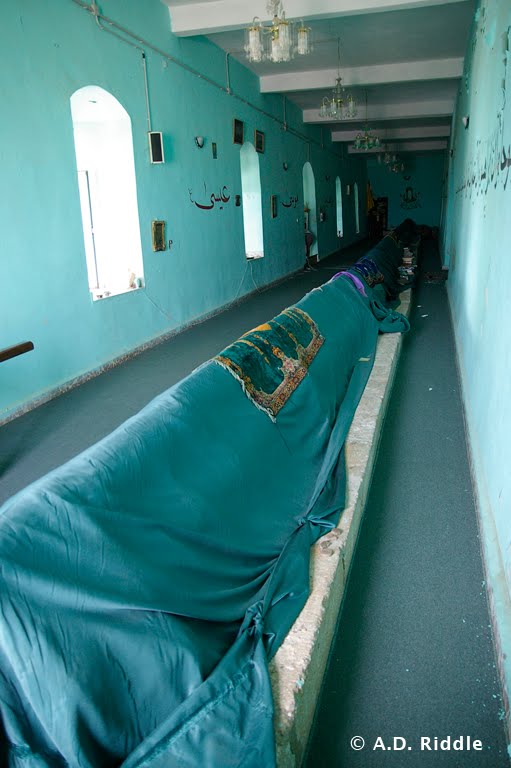
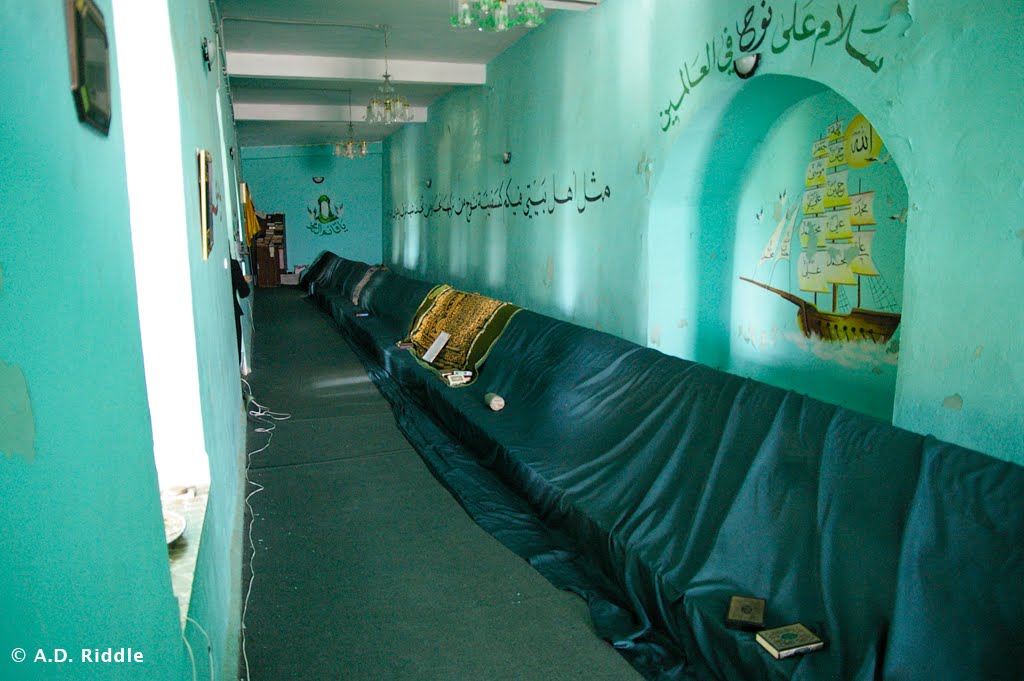
In Lebanon, just northeast of the city of Zahle, there is a small village named Karak Nouh. Karak Nouh is located in the Beqaa at the eastern foot of the Mt. Lebanon range. In a building adjoining the village mosque, there is a long sarcophagus draped in a green cloth. It is claimed this is the tomb of Noah.


Karak Nouh, Lebanon.

Mark Twain wrote about his visit to Karak Nouh in The Innocents Abroad.

Noah’s tomb is built of stone, and is covered with a long stone building. Bucksheesh let us in. The building had to be long, because the grave of the honored old navigator is two hundred and ten feet long itself! It is only about four feet high, though. He must have cast a shadow like a lightning-rod. The proof that this is the genuine spot where Noah was buried can only be doubted by uncommonly incredulous people. The evidence is pretty straight. Shem the son of Noah, was present at the burial, and showed the place to his descendants, who transmitted the knowledge to their descendants, and the lineal descendants of these introduced themselves to us to-day. It was pleasant to make the acquaintance of members of so respectable a family. It was a thing to be proud of. It was the next thing to being acquainted with Noah himself.

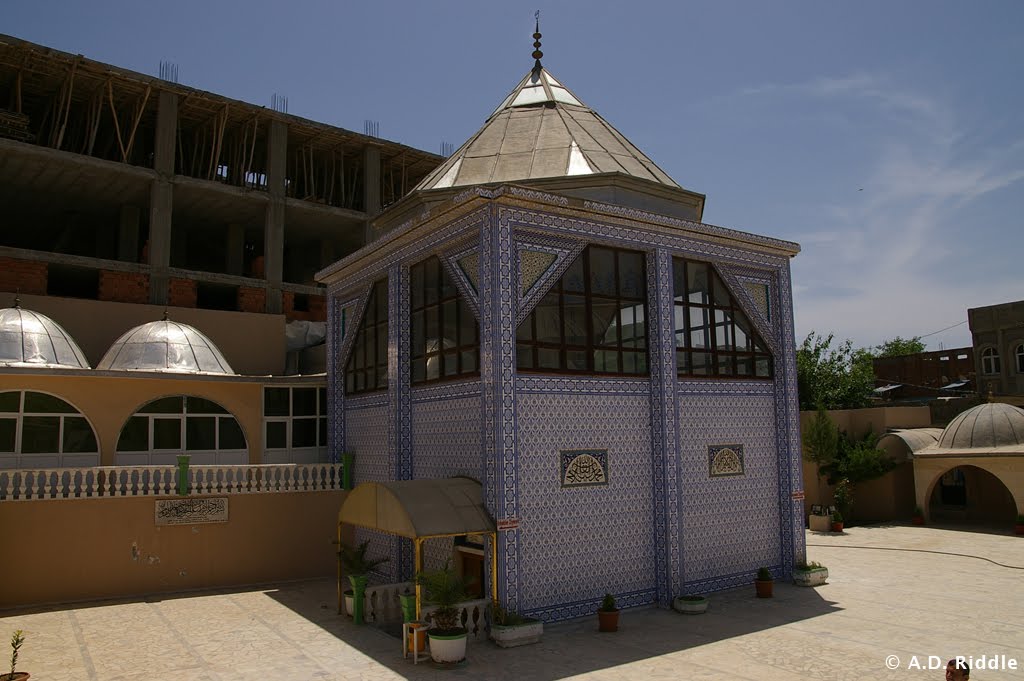
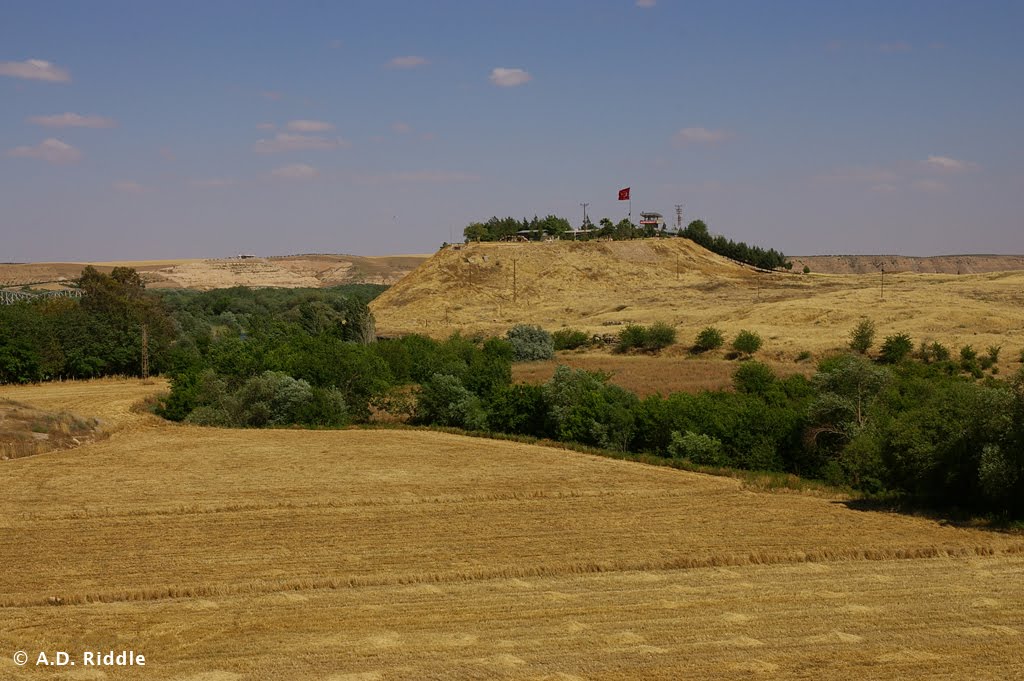
There is another tomb of Noah in the city of Cizre, Turkey (pronounced Jizre). Cizre is on the Tigris River, north of the location where Iraq, Turkey, and Syria all meet. To the east is Cudi Dağ, identified as Mt. Ararat in some traditions.

Tomb of Noah, Cizre, Turkey.


Evidently, there is also a shrine to Noah name Hazrat Nuh in Kerak, Jordan. I have not visited this one, nor do I know if there is a tomb associated with the shrine. I believe the shrine is the small, turquoise building at the far left in this photograph. It is located in a cemetery on the northwestern edge of the modern town.

Kerak, Jordan.

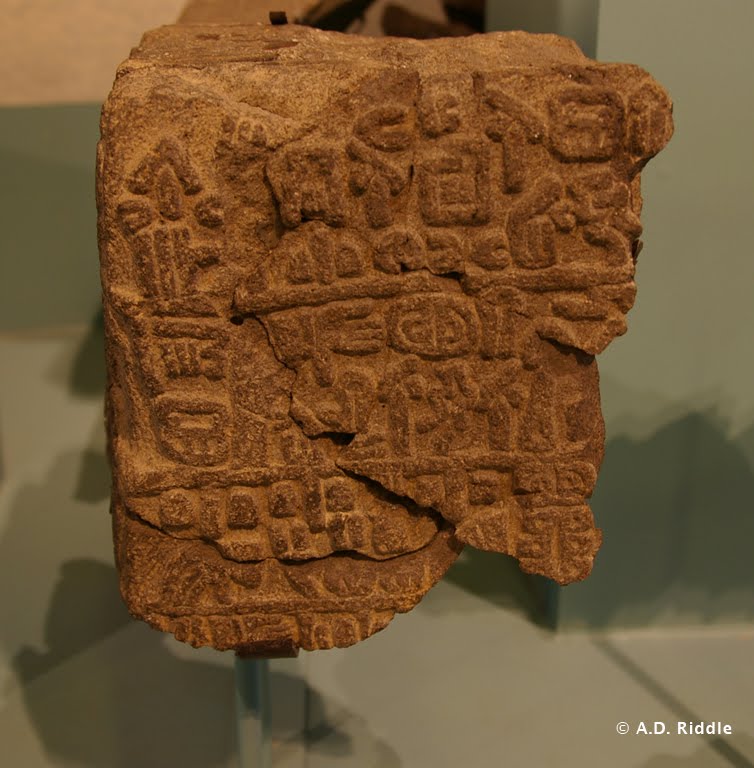
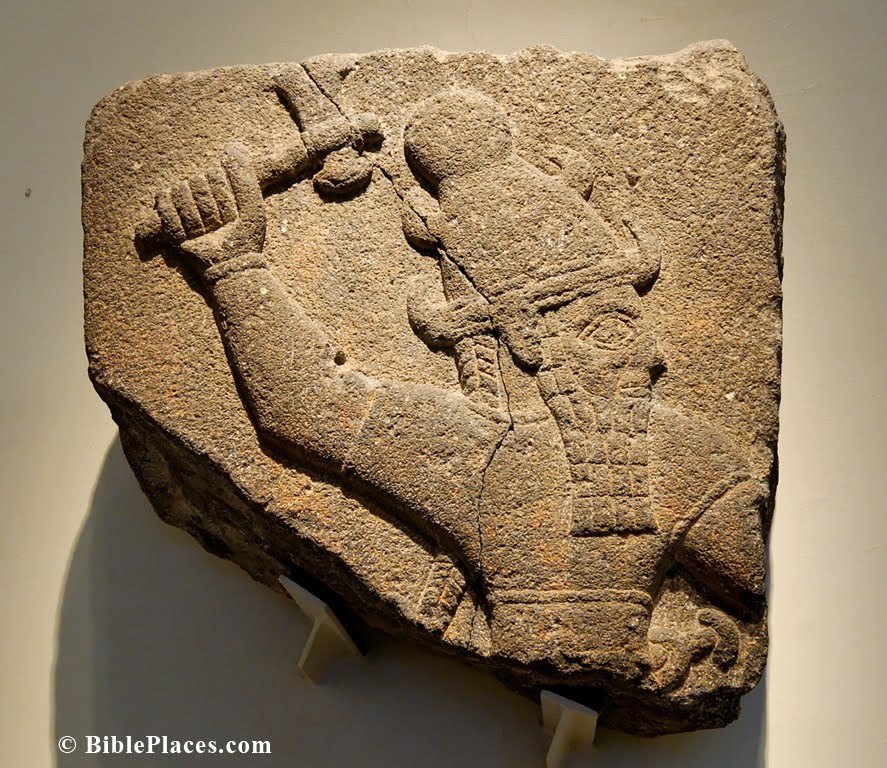
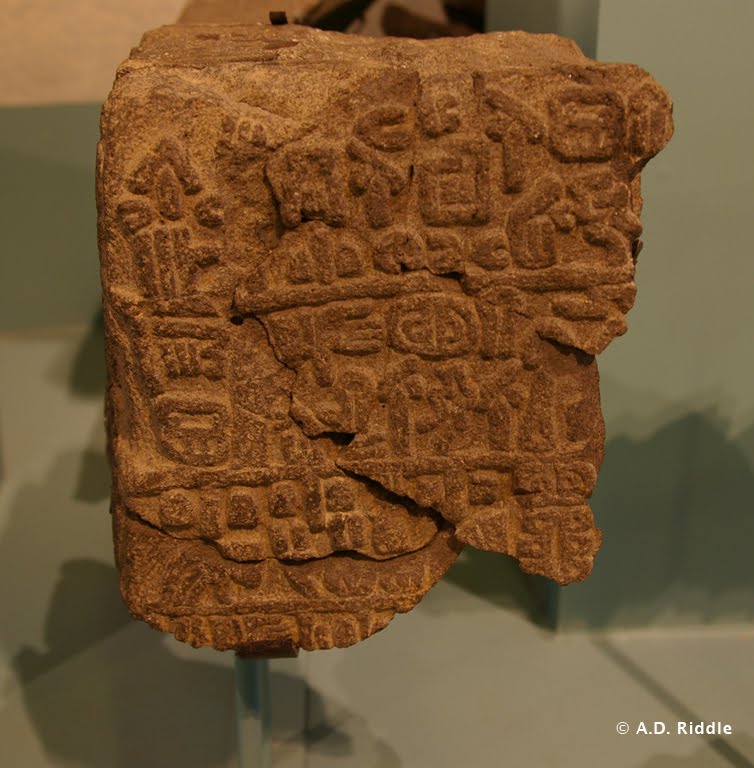
According to an online news article, Turkey’s Minister of Culture and Tourism, Ertuğrul Günay, is pressuring Germany to return a gate sphinx found at Hattusa, even threatening to revoke the German Archaeological Institute’s permit to excavate Hattusa. The Germans have been directing excavations at Hattusa, the ancient capital of the Hittite Empire, since 1906.

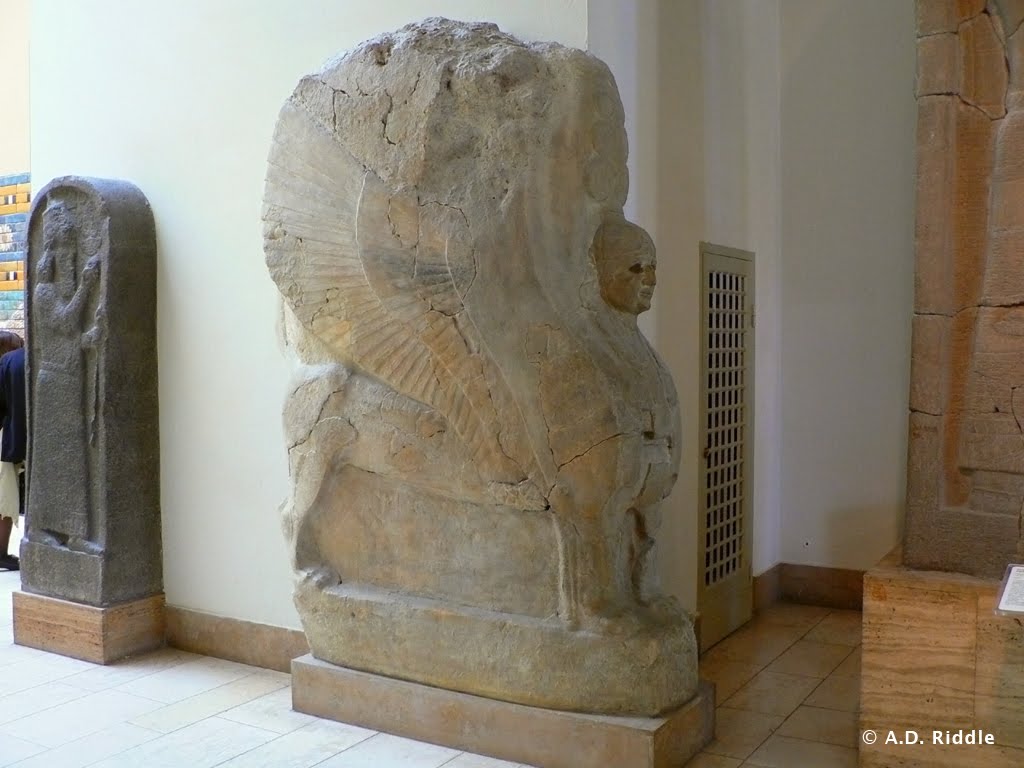
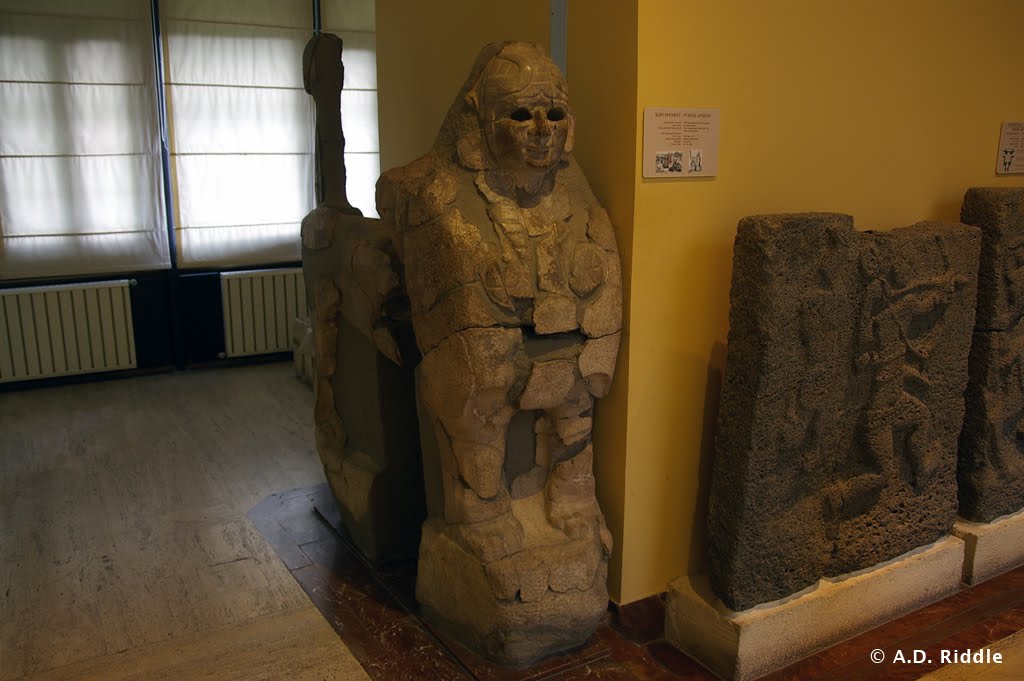
The sphinx in question is presently on display in the Pergamonmuseum in Berlin. It belongs to a pair of sphinxes from the Sphinx Gate of the Yerkapi rampart at Hattusa. The complementary sphinx is on display in the Museum of the Ancient Orient in Istanbul, Turkey.

Berlin Pergamonmuseum.
This is a copy of the sphinx shown below. The sphinx which is being disputed is not in the photo; it is displayed on the opposite wall behind where the photographer stood. (The photographer is now kicking himself.)

Istanbul Museum of Ancient Orient.
Sphinx from Yerkapi rampart Sphinx Gate at Hattusa. This sphinx complements the one in Berlin.

Turkey has given Germany until the end of July to return the sphinx. Germany has apparently rejected previous requests. The sphinx was taken to Berlin in 1915 to be restored.

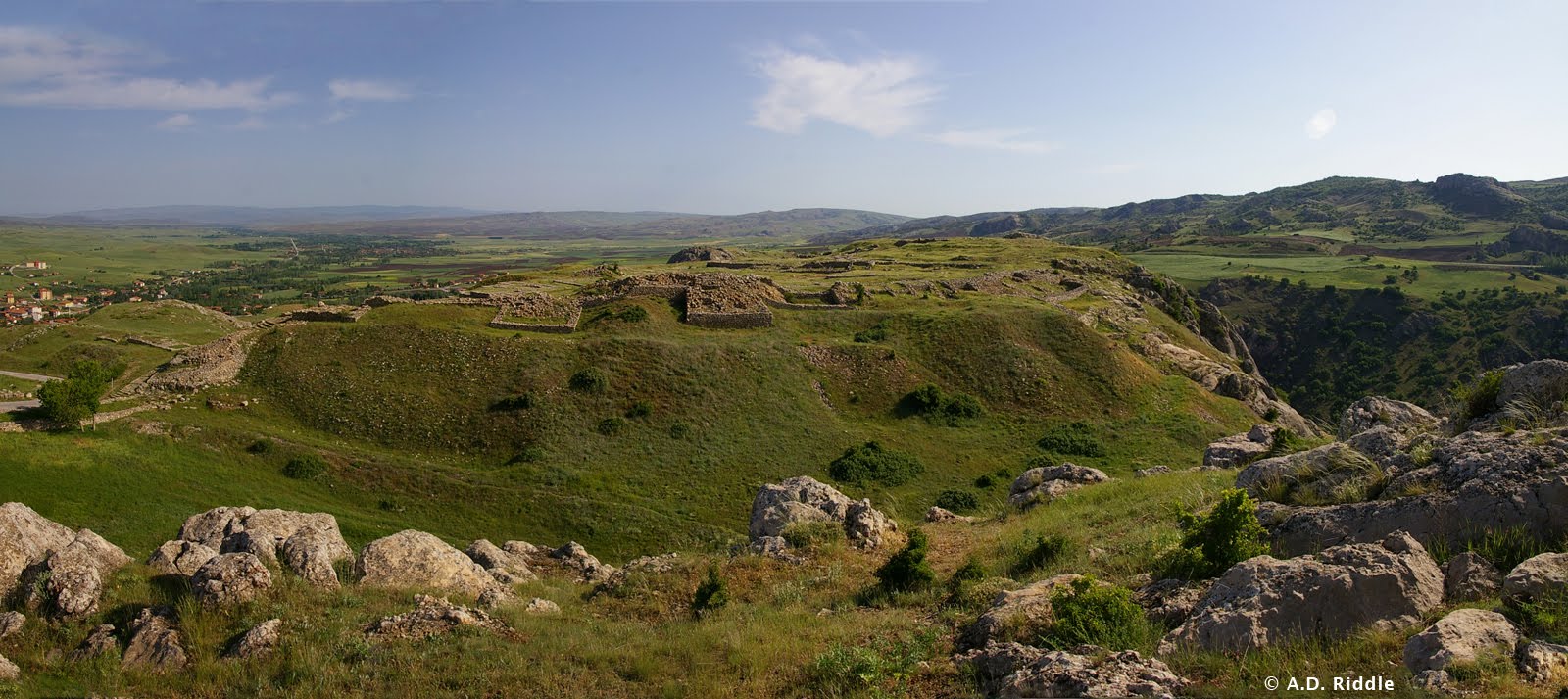
Hattusa is an enormous and complex site just on the outskirts of the modern village of Boğazkale (more commonly known by its former name Boğazköy). Hattusa had dozens of temples and a citadel.

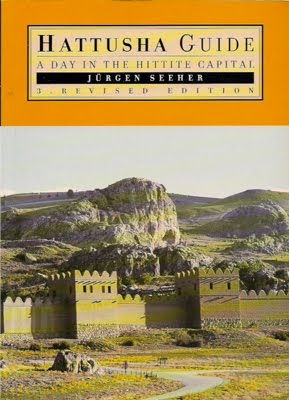
The fortifications included various gates with parabolic arches, a massive rampart on the southern end, and casemate walls. The German excavations are currently directed by Andreas Schachner. From 1994-2005, Jürgen Seeher directed the excavations. Seeher is the author of the best guidebook on Hattusa, Hattusa Guide: A Day in the Hittite Capital, 3rd rev. ed. (Istanbul: Ege Yayınları, 2006). It is chock full of photos, plans, and descriptions, and has a fold-out map.

Much of the guide is available online here. If you have the opportunity to visit the site, allow yourself at least one complete day and make sure you have a car and Seeher’s guidebook.


Yerkapi rampart at the south end of Hattusa.
Below center is a postern gate and tunnel and directly above is the Sphinx Gate.

Buyukkale, the Royal Citadel at Hattusa.

HT: Jack Sasson

UPDATE (5/20): Germany has agreed to give the Sphinx to Turkey.  Details are here.

This isn’t exactly breaking news, but I did not find any other blogs that had written about it, and it seems worthy of mention.

Back in September 2007, Turkish Daily News (now known as The Hürriyet Daily News and Economic Review) reported that operations to clear the land mines near the site of Carchemish had commenced. At the time, it was estimated the clean-up would take about one-and-a-half years. Todd mentioned it here.

As a follow-up to this story, it was reported last December in Today’s Zaman that the mines had been cleared and the land was now in the process of being turned over to the city. After bidding for the mine-clearing project, work actually commenced in March 2010. Three hundred days later, it was complete. Mine-sniffing dogs were used in the initial stages, and to avoid damaging antiquities, the mines were removed to another location for detonation (usually, mines are detonated on the spot). Now that the mines have been cleared, archaeologists will begin “serious and long-term” excavations, which it is hoped will attract tourism.

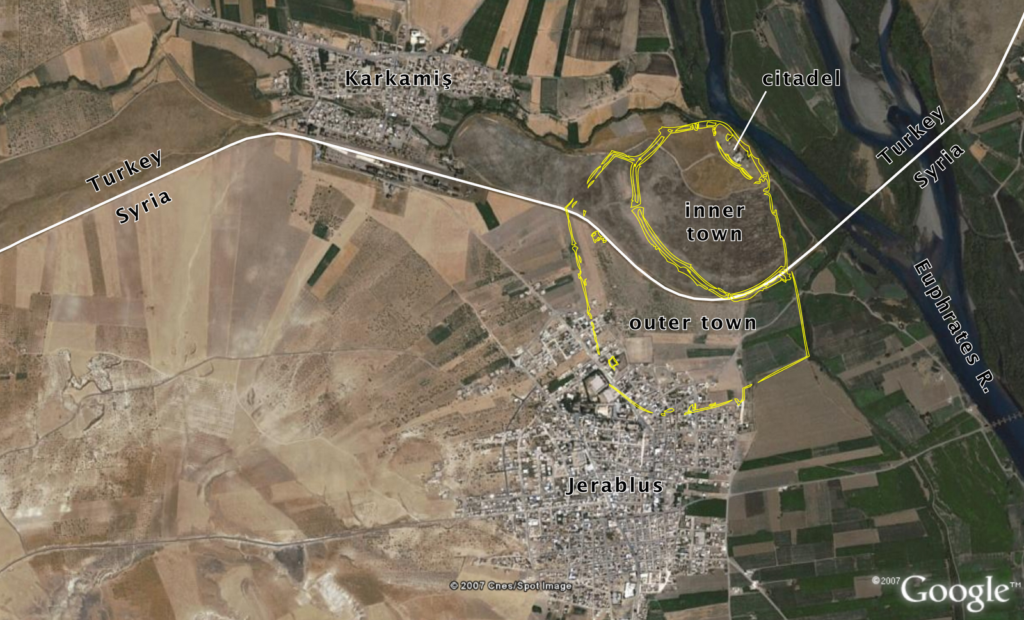
The site of ancient Carchemish is cut by the modern Turkey-Syria border. The citadel and inner town are located within Turkey, but most of the outer town is located in Syria. On the Turkish side is the modern village of Karkamiş and on the Syrian side is the village of Jerablus. As part of Turkey’s attempts to open up trade with its neighbors, plans are underway to open three new border crossings with Syria by 2012, one of which will be located at Karkamiş.


For an account of the earlier excavations conducted by Sir Leonard Woolley, see here.

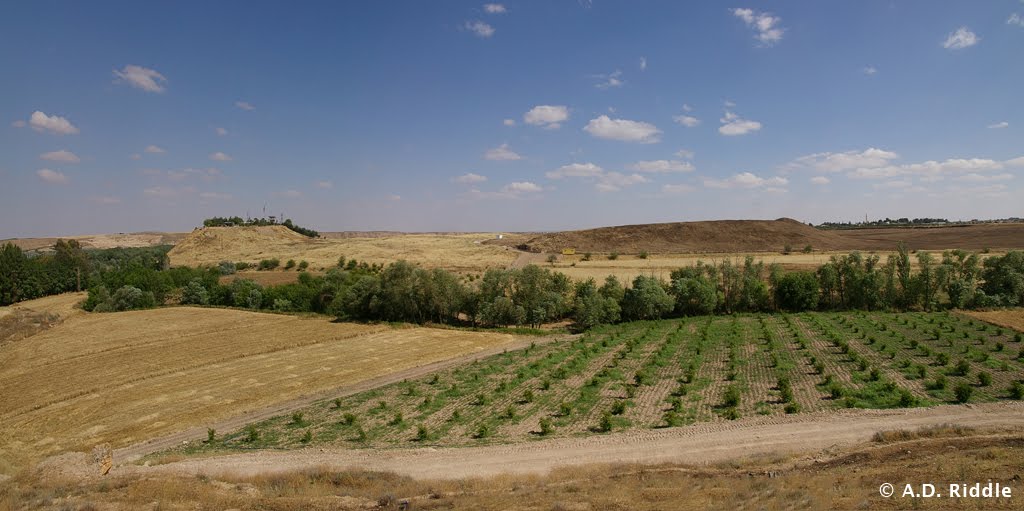
Carchemish from the northwest, view of citadel and inner town wall.

Carchemish citadel from the northwest.

About four months ago, Todd announced the publication of a new guidebook for Turkey entitled Biblical Turkey: A Guide to Jewish and Christian Sites of Asia Minor, by Mark Wilson (Ege Yayınları, 2010). What prompts this review is the news that the book can now be ordered from Amazon.com and sells for $39.95.

Biblical Turkey
is not a guidebook like Lonely Planet or Rough Guide—it does not tell you where to find accommodations or the best places for affordable dining. What Biblical Turkey does do, however, is give you just about all the archaeological and historical information you will need for numerous sites in Turkey. The book includes every well-known and lesser-known site which is mentioned in the Bible, but it includes much more than that. As such, this is rich resource, whether you travel to Turkey or not (though, I recommend that you take a trip at some point).

What sets this book apart from A Guide to Biblical Sites in Greece and Turkey, by Fant and Reddish (Oxford Univ. Press, 2003), is its comprehensiveness. Fant and Reddish did not include a number of sites that are mentioned in the Bible, such as Cnidus, Carchemish, and Harran. Wilson includes all of these as well as many other important archeological sites which are not mentioned in the Bible, such as Van Kalesi (ancient Tushpa, the capital of Urartu), Gordium (the capital of Phrygia), Kanesh/Kültepe (the Old Assyrian trading colony), and Nemrut Dağ (the mausoleum of Antiochus I of Commagene).

Nemrut Dağ west terrace, toppled heads from colossal statues.

Biblical Turkey is organized by five regions, beginning in eastern Turkey and working westwards. Each chapter begins with historical and geographic descriptions of ancient regions and provinces (e.g., Cappadocia, Galatia) and then covers the ancient cities within that region. For each region and city, biblical references are listed, a historical summary is given, and the relevant inscriptions and archaeological remains are described. Though written in a non-technical style, the text betrays a depth of technical knowledge in these areas which is quite impressive. Nearly every two-page spread is graced with a carefully selected photograph of the site, an architectural element, or an inscription, which is helpful for understanding the text. Finally, for many sites, Wilson provides a title or two for “further reading.” Most of the titles he suggests are guides available at the site itself, often written by the archaeologists, and published in Turkey. These can be difficult to obtain, but it is helpful nevertheless to have this information. (For those who are desperate enough to pay the stiff shipping charges, many of the titles can probably be purchased at Zero Books.)

I find several other features of Biblical Turkey helpful. The Turkish names are provided alongside the more common English names which facilitates navigating by maps and road signs. The book is also generously furnished with site plans and sidebars. The sidebars come in three types: “side trip” boxes provide brief descriptions of lesser-known sites you may want to add to your trip if you have spare time, “in-site” boxes give more background detail (e.g., a New Testament timeline, the seven ecumenical councils, or ancient travel on the Mediterranean), and “ancient voice” boxes discuss ancient textual sources in greater detail.

Maybe I’m gushing now, but I wish all guidebooks were written like this one. A lot of thought and research went into the content and its organization. Turkey is a vast country with many fascinating things to see and study. With this book in hand, no longer will so much of it go unnoticed.

FURTHER NOTE: Mark Wilson is the director of Seven Churches Network and Asia Minor Research Center. You can read more about Mark here. Leen Ritmeyer reviewed and recommended the book here.

There is so much going on that I’m going to start the “Weekend Roundup” today and continue it tomorrow.

Shmuel Browns has posted many photographs of the “Church of Zechariah” at Khirbet Midras that was announced a few days ago.  These photos (here and here) reveal just how well-preserved the mosaic floor is.

In his interview on the LandMinds show, Leen Ritmeyer explains how he determined the location of the original Temple Mount.

On his blog, Leen Ritmeyer addresses “Tunnel-vision politics in Jerusalem” with some helpful photos and a diagram.

Zahi Hawass has an update on the state of Egyptian antiquities.  He is a very important man, as he himself observes, “I am the only source of continuing truth concerning antiquities….I am the guardian of these monuments that belong to the whole world….I want everyone to relax, and know that I am here.”

“An ancient church mentioned in the Bible has been discovered in western Turkey.”  This claim from the excavators of Laodicea is false.  The Bible describes a group of people who met for worship in
Laodicea in the first century (Rev 3:14-22).  The archaeologists found a building where Christians met in the fourth century.

This article in Jewish Ideas Daily points out some of the irony of Ahmadinejad welcoming “home” the Cyrus Cylinder.  I wonder what the chances are that it will ever be returned to the British Museum.

I encourage you to pray for Anson Rainey who is very ill and hospitalized now in Petah Tikva. 

Visiting information was posted on the Agade list (or you may contact me).

HT: Joe Lauer, Daniel Wright, Agade

Fifteen marble pillars have been discovered in Gaza’s port.

There’s some question about whether the British Museum has agreed to a three-month extension of the loan of the Cyrus Cylinder.  More of the saga is explained here.

Excavations are in progress at Tell el-Hammam and director Steven Collins gives an update in a new video on location.  The project was also recently featured in a special on Jordanian TV.

The Israel Ministry of Tourism is promoting the Dead Sea in the final selection of the New7Wonders of Nature.  You can vote here, or you can visit the facebook group here.  A win for the Dead Sea would be a win for Israel and Jordan both.

The Biblical Archaeology Society has just released its annual issue of excavations.  Lots of details about 2011 digs throughout Israel and Jordan are available online.

Weekend rains raised the water level of the Sea of Galilee by one inch, but it’s still hovering at the red line.

Archaeologists are beginning preservation work on the ruins of Babylon.

Visitors to the acropolis of Pergamum in Turkey can no longer arrive there by bus, but now are
required to take a cable car.

Someday I’d like to visit the oasis of Siwa in western Egypt.

Google Labs has a Books Ngram Viewer that allows you to compare the use of words in books in the last couple of centuries.  This comparison of “Israel” and “Palestine” was not quite what I expected. 

A comparison of “Gezer” and “Megiddo” reveals the periods when the excavations have been active.

Disney is coming to Israel, with plans announced for a complex of shops and a 25-screen theater. 

Apparently there will be an amusement park but it will not be a “Disney theme park.”  I’m not sure what that means, unless we’re simply not to expect Mickey to take photos with our children.

HT: Explorator, Paleojudaica, Ferrell Jenkins