We lived within a mile of each other in the Judean hills for a decade, but we only “met” online years later. I was astonished that an Israeli rabbi had written a book about the archaeology of Esther (set in modern Iran). Somehow we connected by email, and when his book on the archaeology, geography, and history of Jeremiah came out, I was happy to recommend it.
I did not know at the time that Rabbi Yehudah Landy z”l was from an illustrious line of rabbis, a direct descendant of the Vilna Gaon. Nor did I know about his impressive rabbinical training, his founding of a yeshiva, or his deep knowledge of the Babylonian and Jerusalem Talmuds. (He completed these dozens of times in his life!)
I did know that he was a licensed Israeli tour guide, an expert author of books in both Hebrew and English, and a kind and humble man. Once, I needed a photo of a biblical site in the Judean hill country where I had previously lived—and where he still did. He provided that photo with permission to include it in the Photo Companion to the Bible.
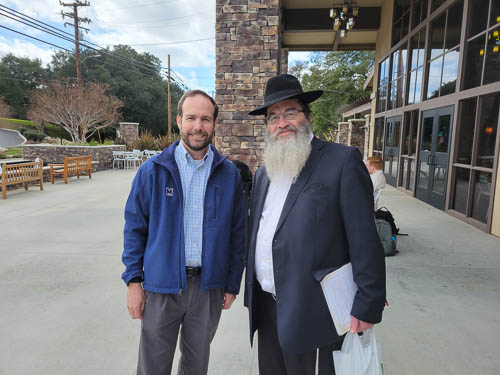
A few years ago, he was traveling to the Los Angeles area, and he went to some extra effort to travel up to The Master’s University. Perhaps he was intrigued by this evangelical Christian school that thirty years ago established its own campus in Israel. We enjoyed a wonderful visit and tour of the TMU campus, with a few head turns at the unusual sight of a visiting rabbi. One topic of our discussion was the book he was finishing on the archaeological and geographical background of Joshua; I was glad to hear of his progress.
Within a few weeks of his return to Israel, Rabbi Landy responded to an email with a brief reply that he was “in need of serious medical treatment.” Since then I have prayed for his healing. I wrote to him a few times and always assumed the best when I didn’t hear back. But I learned last week that he died in the fall of 2023. He was only 64, and an online source said he had a brain tumor.
Much was lost with his passing. I can only imagine what he still planned to do with his encyclopedic knowledge of Scripture, the land, and Jewish writings. I can only imagine the personal impact he had on others, wide enough to reach this Gentile Christian living in California.
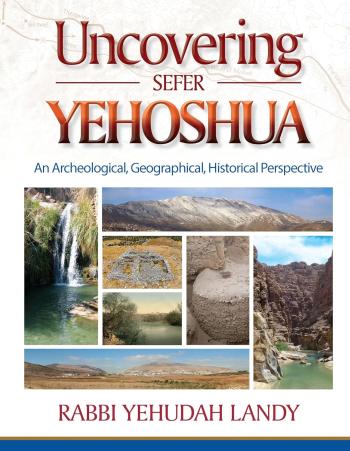
The reply that informed me of his passing also included the happy note that his book on Joshua has recently been published in English. This is indeed something for which to give thanks. The Lord sustained his life so that he could finish this work which he had spent years researching and writing. Of all the books in the Bible, none is as “land-focused” as Joshua, which makes this such a valuable work for someone with his areas of expertise.
Understanding Sefer Yehoshua (the Book of Joshua) is a beautiful book, attractively laid out with 1-3 photos on nearly every one of its 300 pages. The 32 chapters walk through the biblical text, beginning with an introduction on “The History of Torah Research on the Land of Israel.” Some chapter titles are:
- The Borders of Eretz Yisrael
- Crossing the Jordan
- Conquest of Yericho
- The Extent of Yehoshua’s Conquest
- Apportioning the Land by Lottery
- Shiloh and the Mishkan (Tabernacle)
About ten chapters are devoted to the individual tribal inheritances, and a couple others focus on the cities of refuge and the Levitical cities. A lengthy final chapter addresses “Archeological Findings.”
An obvious value of this book to most of my readers is Rabbi Landy’s knowledge of the works of Jewish sages. This is rarely considered in atlases or commentaries on Joshua. Another strength of this book is the precise topographic maps, utilizing satellite imagery and marked with cities and borders based on Rabbi Landy’s careful research.
In the book’s introduction, Rabbi Landy notes a few of the unique contributions that he makes in the pages that follow. These include:
- A fresh understanding of Joshua’s battle with the northern kings at the waters of Meirom
- An original proposal on where the tribes of Israel stood on Mounts Gerizim and Ebal
- A novel interpretation of Joshua’s cryptic response to the tribes of Joseph in Joshua 17:14-18
Rabbi Landy has gifted us with a valuable resource that I believe will be treasured by many. Not only Bible students and teachers, but future writers of atlases, commentaries, and works of historical geography will benefit tremendously from his years of research and travel. By publishing his work both in Hebrew and in English, he has ensured that it will reach the broad audience it deserves. The book is available from the publisher and from Amazon.
Rabbi Landy will be greatly missed, but we can be thankful that he used his time and talents in ways that will help many to better understand the Bible. May his memory be for a blessing.