In Lebanon, just northeast of the city of Zahle, there is a small village named Karak Nouh. Karak Nouh is located in the Beqaa at the eastern foot of the Mt. Lebanon range. In a building adjoining the village mosque, there is a long sarcophagus draped in a green cloth. It is claimed this is the tomb of Noah.
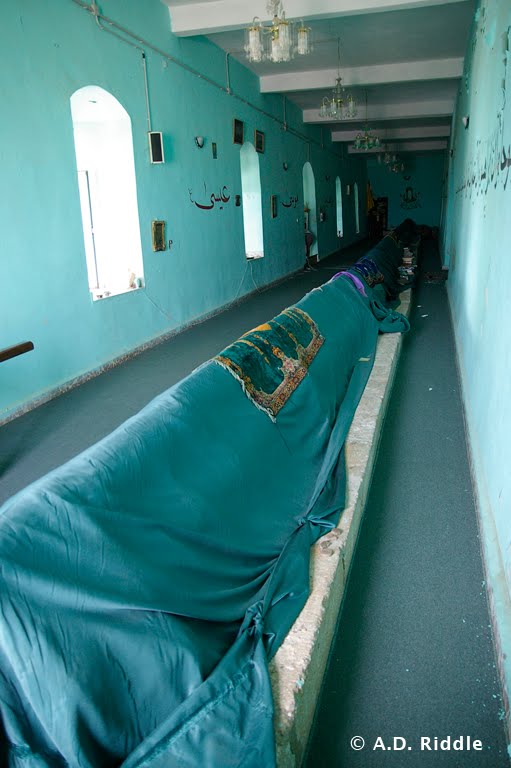
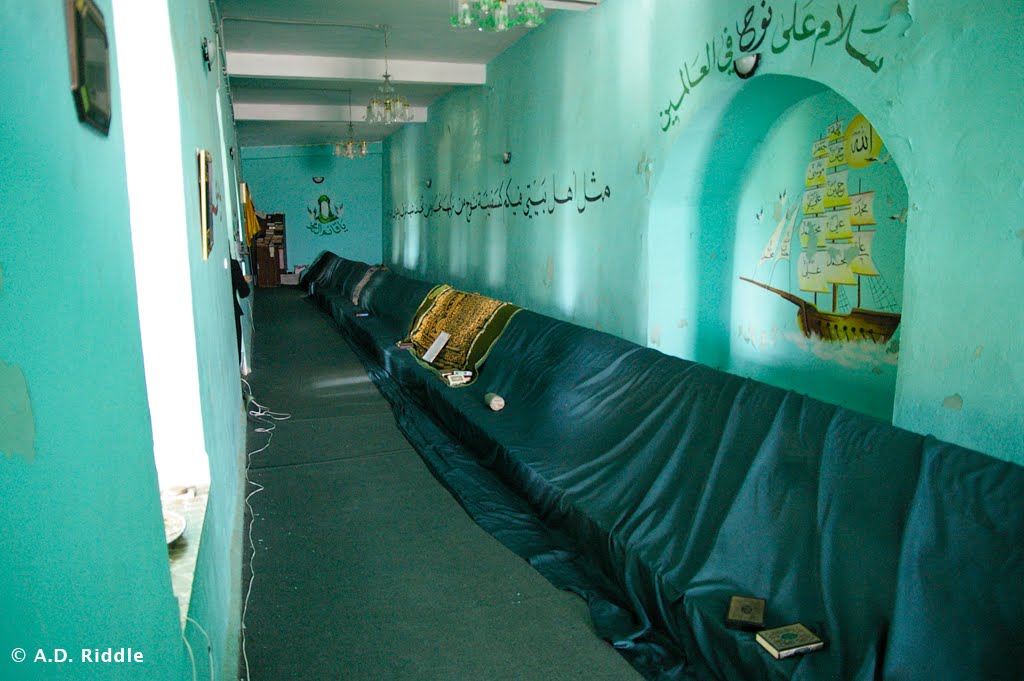
Karak Nouh, Lebanon.

Mark Twain wrote about his visit to Karak Nouh in The Innocents Abroad.

Noah’s tomb is built of stone, and is covered with a long stone building. Bucksheesh let us in. The building had to be long, because the grave of the honored old navigator is two hundred and ten feet long itself! It is only about four feet high, though. He must have cast a shadow like a lightning-rod. The proof that this is the genuine spot where Noah was buried can only be doubted by uncommonly incredulous people. The evidence is pretty straight. Shem the son of Noah, was present at the burial, and showed the place to his descendants, who transmitted the knowledge to their descendants, and the lineal descendants of these introduced themselves to us to-day. It was pleasant to make the acquaintance of members of so respectable a family. It was a thing to be proud of. It was the next thing to being acquainted with Noah himself.

There is another tomb of Noah in the city of Cizre, Turkey (pronounced Jizre). Cizre is on the Tigris River, north of the location where Iraq, Turkey, and Syria all meet. To the east is Cudi Dağ, identified as Mt. Ararat in some traditions.
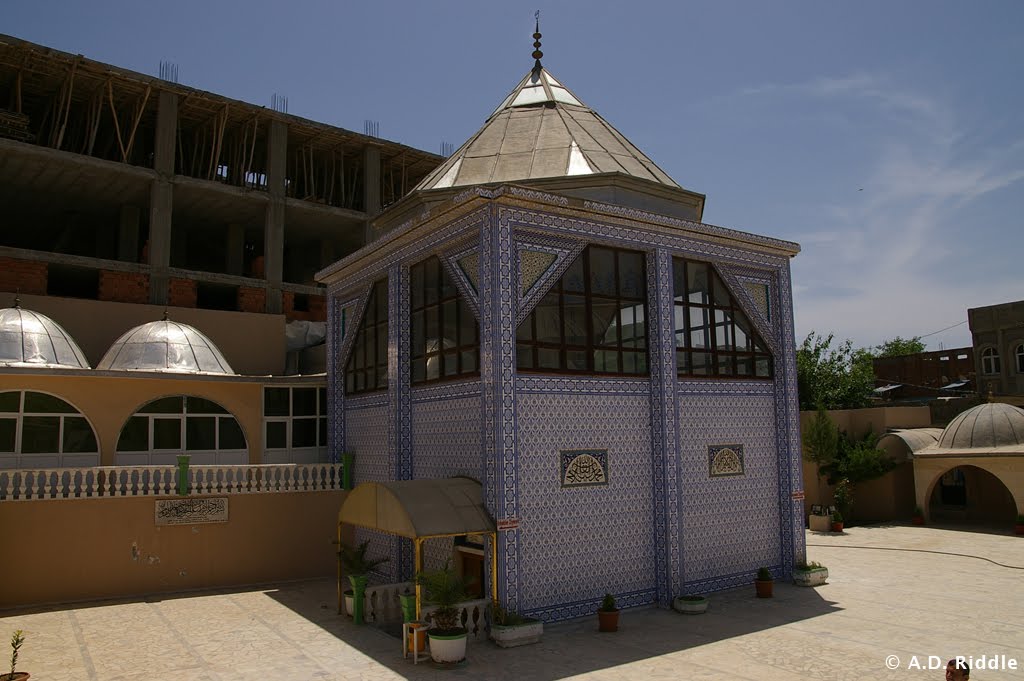
Tomb of Noah, Cizre, Turkey.


Evidently, there is also a shrine to Noah name Hazrat Nuh in Kerak, Jordan. I have not visited this one, nor do I know if there is a tomb associated with the shrine. I believe the shrine is the small, turquoise building at the far left in this photograph. It is located in a cemetery on the northwestern edge of the modern town.

Kerak, Jordan.

Share:


This month, Accordance’s Featured Product is the American Colony Collection module. They are offering the module at a discounted price of $109 (regularly $149) through the month of March. You can read Todd’s introduction to the collection here and learn more about the Accordance module from Todd and Accordance’s David Lang. If you have already purchased the collection from BiblePlaces.com and are an Accordance user, you may want to consider the crossgrade option.

Share:
The Saudi Commission for Tourism and Antiquities has initiated a new program called “Discover! Saudi Arabia” in an effort to promote the tourism industry. It is not easy to travel to Saudi Arabia, though apparently now tourist visas are being issued if you travel with a group organized by a legitimate tour company. [See comments—I am not able to determine whether Saudi Arabia is currently issuing tourist visas or not.]

A major exhibition of archaeological artifacts from Saudi Arabia named “Roads of Arabia” is presently making the museum rounds in Europe. It has already shown at the Louvre and just today completed its run in Barcelona. Eventually, the exhibition will make its way to major U.S. cities. Here is the exhibition description from the Louvre’s website.

This exhibition offers a journey through the heart of Arabia, orchestrated by photographs of the region’s sumptuous landscapes. It takes the form of a series of stopovers in some of the peninsula’s extensive oases, which in ancient times were home to powerful states or which, beginning in the 7th century, became Islamic holy places. The three hundred items chosen, most of which have never left their country of origin before, provide an original panorama of the different cultures that succeeded each other within the kingdom of Saudi Arabia from prehistoric times through the dawn of the modern world.

They reveal in particular the little-known past of a dazzling, prosperous Arabic world now being gradually discovered by archaeologists. Moving Neolithic funerary stelae, colossal statues of the kings of Lihyan (6th – 4th century BC), and silver tableware and precious jewelry placed in tombs testify to the dynamism of this civilization. Despite a hostile natural environment, the inhabitants succeeded in taking advantage of their country’s geographical situation as a crossing point for the roads linking the shores of the Indian Ocean and the horn of Africa to Egypt, Mesopotamia, and the Mediterranean world. Early in the first millennium BC this trans-Arabian trade flourished, bringing prosperity to the caravan cities and permeating the local culture with new fashions and ideas from the great neighboring empires.

The second section of the exhibition highlights the role of Arabia as the cradle of Islam. The roads became crowded with pilgrims as well as traders; a first group of exhibits evokes the pilgrim paths and Al-Rabadha, one of the principal stopping-places. Following this road as far as Mecca, a second group comprises a selection of funerary stelae illustrating the evolution of writing and ornamentation between the 10th and 16th century and providing precious information on Meccan society at the time. Muslim sovereigns vied with each other in their generosity towards holy places, with buildings and such ventures into embellishment as this monumental door from the Ka’ba, the gift of an Ottoman sultan.

A review of the exhibition can be read here and a few photos can be seen here.

Finally, Jeffrey Rose just published an article entitled “New Light on Human Prehistory in the Arabo-Persian Gulf Oasis” in the journal Current Anthropology (pdf available here). Rose suggests that in the Late Pleistocene and Early Holocene the area now known as the Persian Gulf was a large oasis which was watered by the Tigris, the Euphrates, the Karun, and the Wadi Batin rivers. Readers may recall the suggestion that Wadi Batin was perhaps the Pishon River, mentioned in Genesis 2:11 in connection with the garden of Eden. On this latter point, see James A. Sauer, “The River Runs Dry: Creation Story Preserves Historical Memory,” Biblical Archaeology Review 22/4 (1996), pp. 52-57, 64 and the discussion in Barry J. Beitzel, The New Moody Atlas of the Bible (Chicago: Moody, 2009), pp. 88-90 and p. 280, note 16.

HT: Joe Lauer

Share:

Iraq
Efforts are underway to resurrect Iraq’s tourism industry. CNN reported in January on conservation work at the site of Babylon, and the Global Heritage Fund has been involved in similar work at Ur. In 2009 and 2010, the Iraqi government reported 165 tourists visited the country.

The online edition of Archaeology magazine has posted a piece entitled “Letter from Iraq: The Ziggurat Endures.” It was written by Michael Taylor, a National Guardsman who visited Ur in May, 2008. There are a few photos of the ziggurat and one of the royal tombs.

Last fall, American archaeologists returned to southern Iraq for the first time in 25 years. A report at PhysOrg outlines the research of Jennifer Pournelle. She is studying the importance of marshland resources, and how proximity to marshlands may have helped determine where ancients cities were founded in southern Iraq. A short video can be seen here.

Egypt
Last Sunday, the Cairo Museum reopened, along with five other museums and all of Egypt’s antiquities sites. On Wednesday night, looters attempted to make off with a 160-ton, red granite statue of Ramses II located at Aswan. Their efforts were thwarted by security personnel (and maybe the size of the statue).

Zahi Hawass, Egypt’s Minister of State for Antiquities Affairs, has claimed that a 3,200 year-old funerary mask owned by the Saint Louis Art Museum was stolen from Egypt. The mask was discovered in excavations at Saqqara in 1952 and purchased by the museum for half-a-million dollars. The museum has filed suit to prevent seizure of the mask by the U.S. attorney’s office in St. Louis.

Beginning today and running through September 4, the Tennessee State Museum is featuring a three-part exhibition entitled Egyptian Relics, Replicas & Revivals: Treasures from Tutankhamun. The exhibit brings together objects and replicas from the University of Memphis, the University of Tennessee-Knoxville, Vanderbilt University, and the International Museum Institute of New York.

Admission is free. Details are available at the museum’s website.

Anson Rainey Tributes
A week ago Saturday, Anson Rainey passed away at the age of 81. This past week, the radio program LandMinds produced a four-part tribute to Rainey in which they conducted interviews with Paul Wright of Jerusalem University College, and Yigal Levin and Aharon Demsky of Bar-Ilan University.

Audio of the program can be found here. Biblical Archaeology Review also has a brief note about Rainey’s passing on their website.

Miscellaneous
Thesaurus Linguae Graecae has made available an online edition of the Classical Greek lexicon Liddell-Scott-Jones, with hyperlinks to texts in the TLG database. The lexicon can be found here and an account of its print and digital versions here.

On Monday, March 21, from 6:00 to 8:00 pm, Thomas Levy will speak at George Washington University’s Capitol Archaeological Institute in Washington, DC. His lecture is entitled “Quest for Solomon’s Mines: Cyber-Archaeology and Recent Explorations in Jordan,” and will be presented at the Elliott School, 1957 E St. NW, Room 113. Both the lecture and a reception are free and open to the public. Some information is provided here.

HT: Joe Lauer and Jack Sasson

Share:

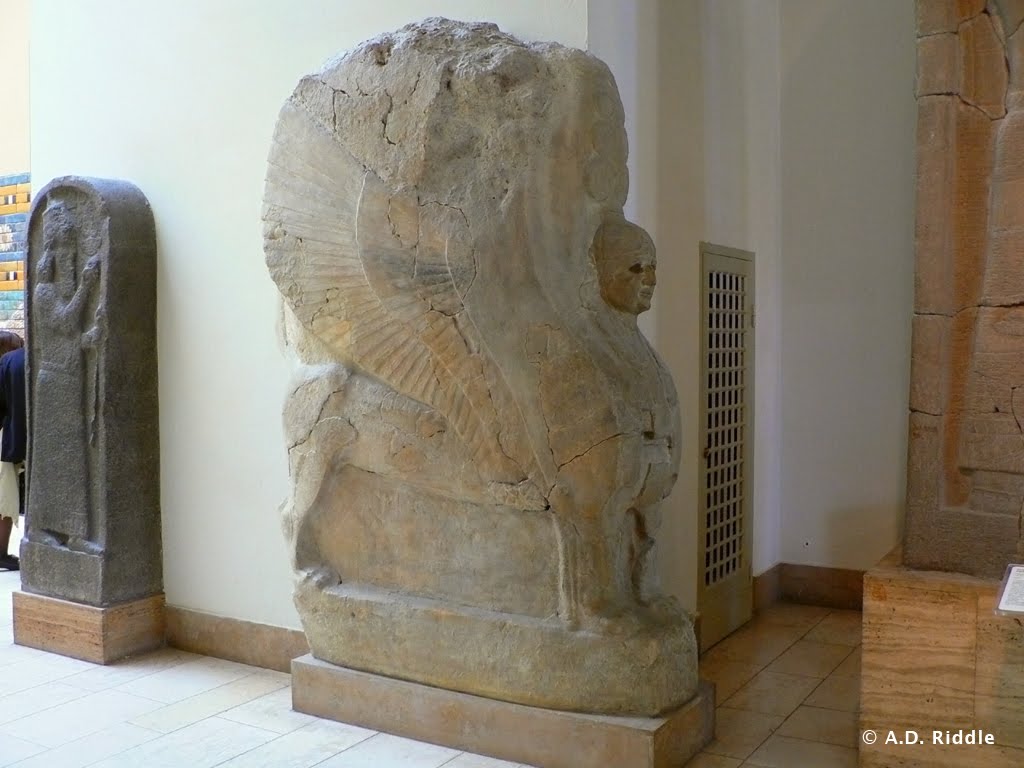
According to an online news article, Turkey’s Minister of Culture and Tourism, Ertuğrul Günay, is pressuring Germany to return a gate sphinx found at Hattusa, even threatening to revoke the German Archaeological Institute’s permit to excavate Hattusa. The Germans have been directing excavations at Hattusa, the ancient capital of the Hittite Empire, since 1906.

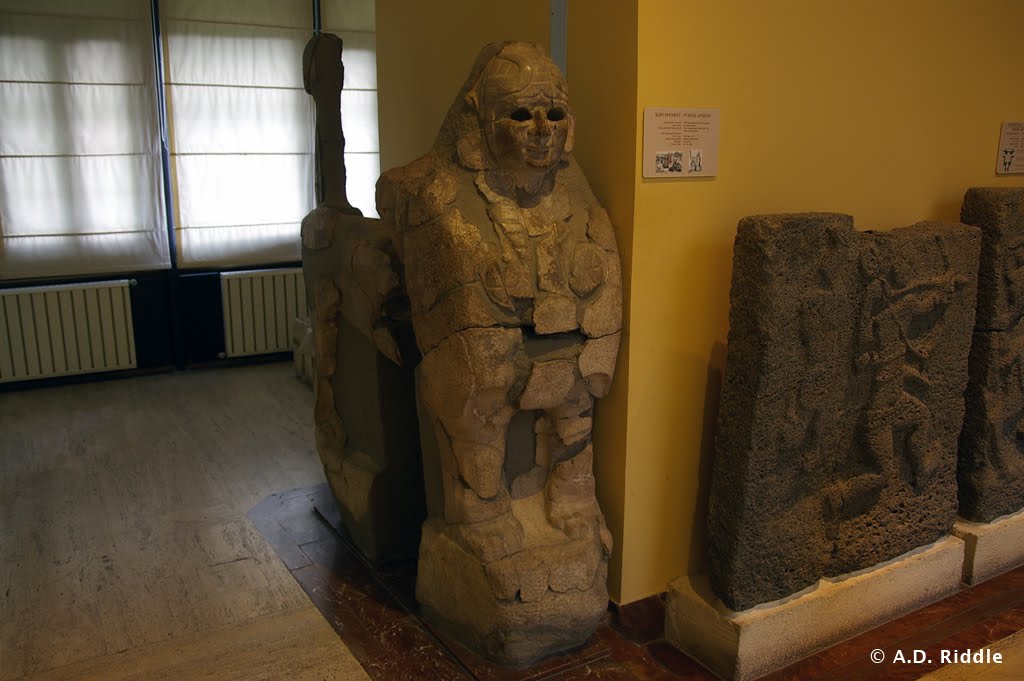
The sphinx in question is presently on display in the Pergamonmuseum in Berlin. It belongs to a pair of sphinxes from the Sphinx Gate of the Yerkapi rampart at Hattusa. The complementary sphinx is on display in the Museum of the Ancient Orient in Istanbul, Turkey.

Berlin Pergamonmuseum.
This is a copy of the sphinx shown below. The sphinx which is being disputed is not in the photo; it is displayed on the opposite wall behind where the photographer stood. (The photographer is now kicking himself.)

Istanbul Museum of Ancient Orient.
Sphinx from Yerkapi rampart Sphinx Gate at Hattusa. This sphinx complements the one in Berlin.

Turkey has given Germany until the end of July to return the sphinx. Germany has apparently rejected previous requests. The sphinx was taken to Berlin in 1915 to be restored.

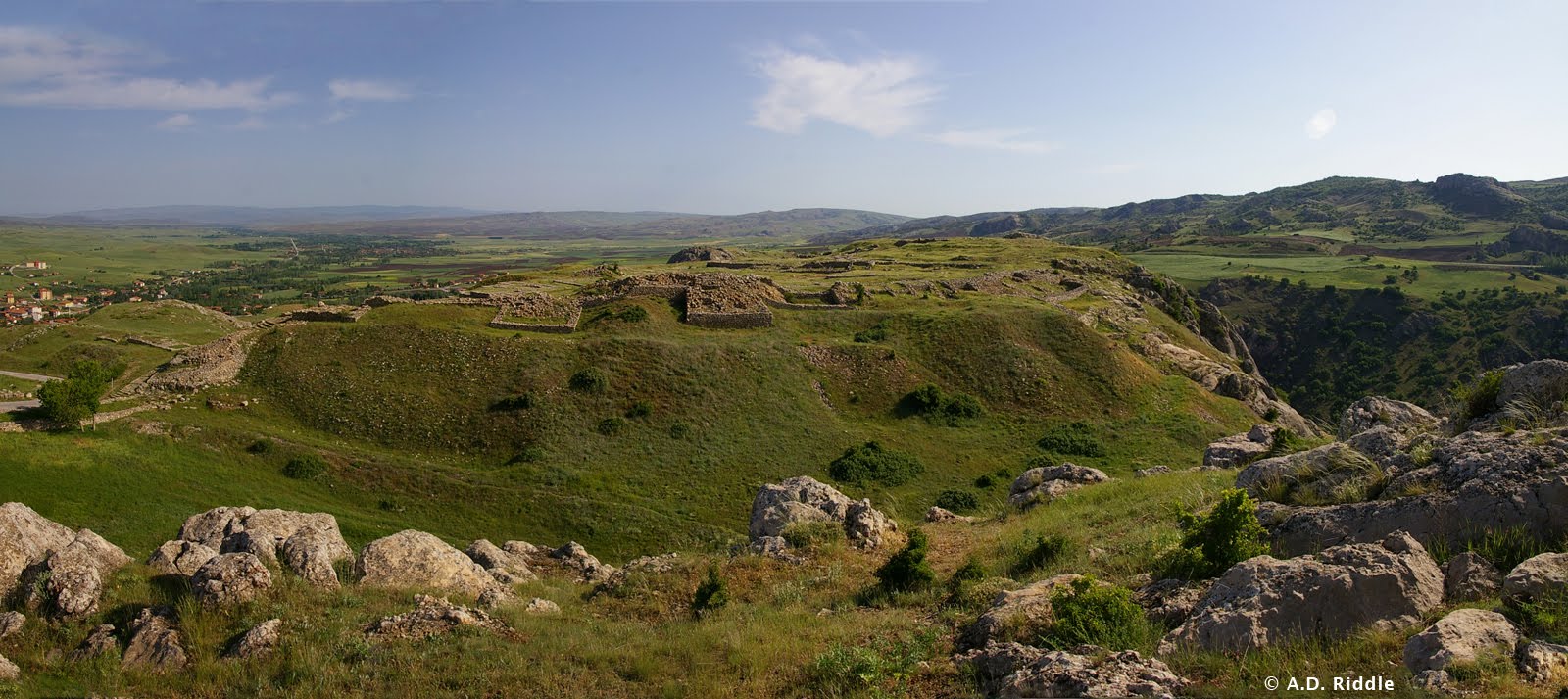
Hattusa is an enormous and complex site just on the outskirts of the modern village of Boğazkale (more commonly known by its former name Boğazköy). Hattusa had dozens of temples and a citadel.

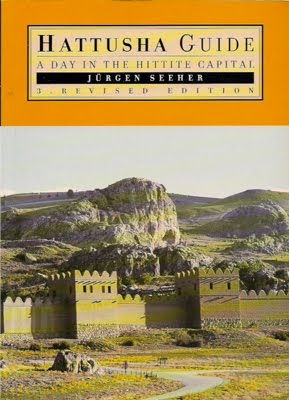
The fortifications included various gates with parabolic arches, a massive rampart on the southern end, and casemate walls. The German excavations are currently directed by Andreas Schachner. From 1994-2005, Jürgen Seeher directed the excavations. Seeher is the author of the best guidebook on Hattusa, Hattusa Guide: A Day in the Hittite Capital, 3rd rev. ed. (Istanbul: Ege Yayınları, 2006). It is chock full of photos, plans, and descriptions, and has a fold-out map.

Much of the guide is available online here. If you have the opportunity to visit the site, allow yourself at least one complete day and make sure you have a car and Seeher’s guidebook.


Yerkapi rampart at the south end of Hattusa.
Below center is a postern gate and tunnel and directly above is the Sphinx Gate.

Buyukkale, the Royal Citadel at Hattusa.

HT: Jack Sasson

UPDATE (5/20): Germany has agreed to give the Sphinx to Turkey.  Details are here.

Share:

This isn’t exactly breaking news, but I did not find any other blogs that had written about it, and it seems worthy of mention.

Back in September 2007, Turkish Daily News (now known as The Hürriyet Daily News and Economic Review) reported that operations to clear the land mines near the site of Carchemish had commenced. At the time, it was estimated the clean-up would take about one-and-a-half years. Todd mentioned it here.

As a follow-up to this story, it was reported last December in Today’s Zaman that the mines had been cleared and the land was now in the process of being turned over to the city. After bidding for the mine-clearing project, work actually commenced in March 2010. Three hundred days later, it was complete. Mine-sniffing dogs were used in the initial stages, and to avoid damaging antiquities, the mines were removed to another location for detonation (usually, mines are detonated on the spot). Now that the mines have been cleared, archaeologists will begin “serious and long-term” excavations, which it is hoped will attract tourism.

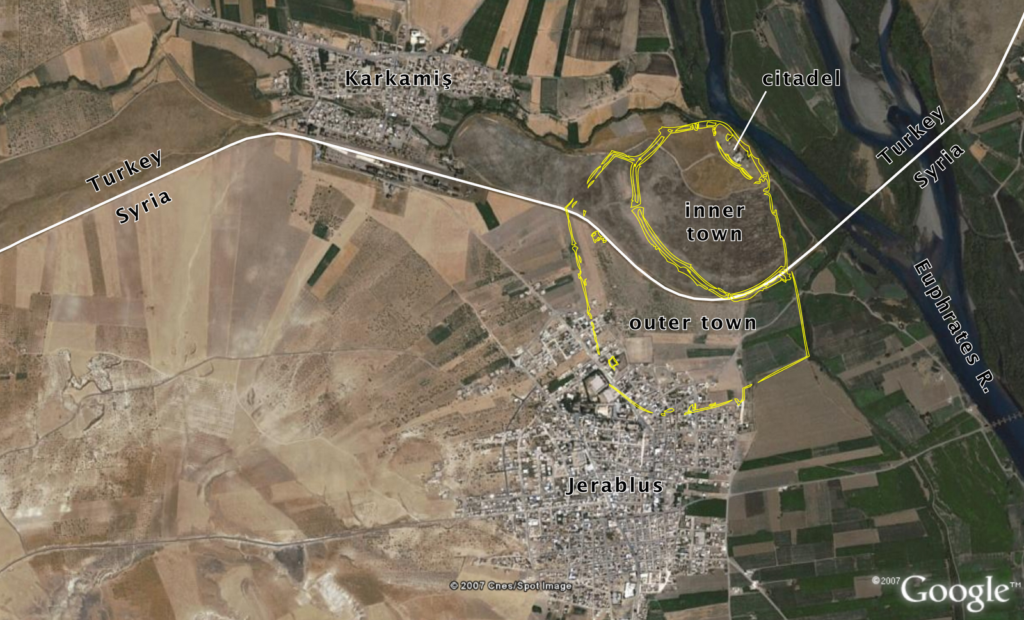
The site of ancient Carchemish is cut by the modern Turkey-Syria border. The citadel and inner town are located within Turkey, but most of the outer town is located in Syria. On the Turkish side is the modern village of Karkamiş and on the Syrian side is the village of Jerablus. As part of Turkey’s attempts to open up trade with its neighbors, plans are underway to open three new border crossings with Syria by 2012, one of which will be located at Karkamiş.


For an account of the earlier excavations conducted by Sir Leonard Woolley, see here.

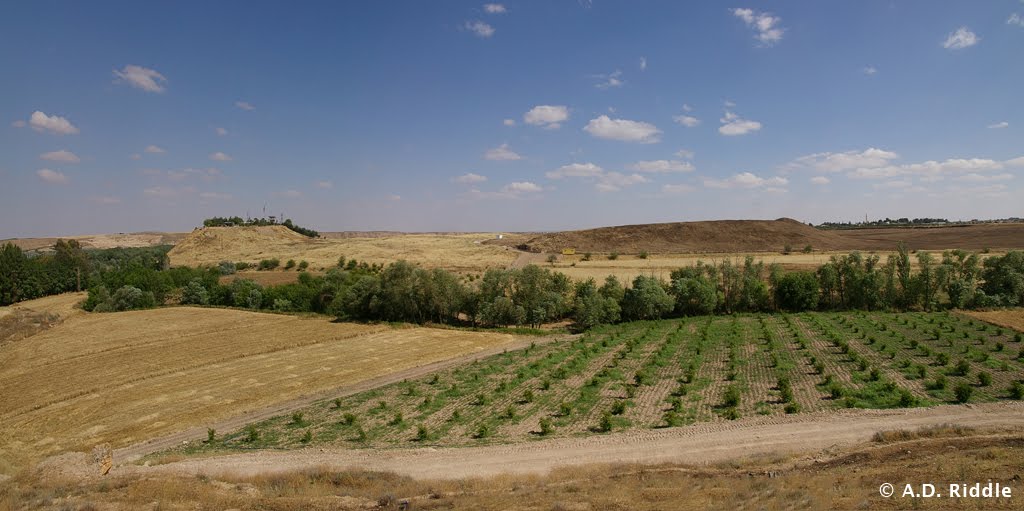
Carchemish from the northwest, view of citadel and inner town wall.

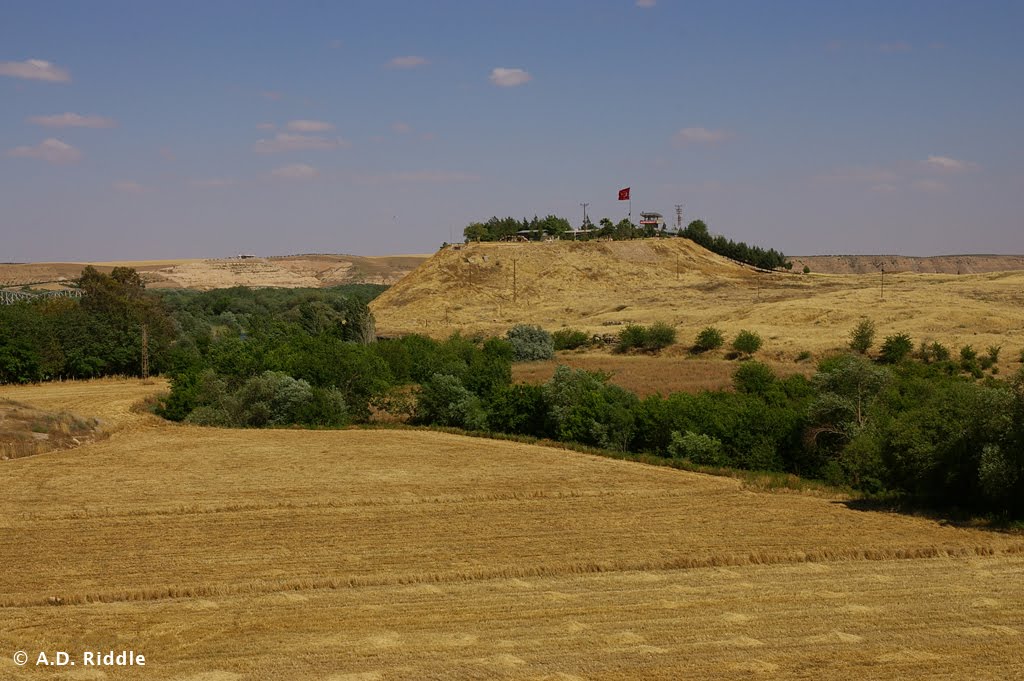
Carchemish citadel from the northwest.
Share: