Phillip J. Long, Professor of Bible and Biblical Languages at Grace Christian University, recently reviewed the Photo Companion to Acts on his blog, Reading Acts. His review is the lengthiest of this work to date and we are most grateful for drawing readers’ attention to the strengths and weaknesses of this resource.

He begins by commenting on his familiarity with our work:

I first became aware of Bolen’s Pictorial Library of Biblical Lands at an ETS [Evangelical Theological Society annual meeting] in 2003. I have used these photographs in virtually every class I teach in order to add some colorful graphics to an otherwise dull PowerPoint presentation.

Big smile here! We are thankful that our photos have been so useful.

My favorite part of the review follows next:

If you are teaching the Book of Acts, then the Photo Companion to the Bible is an essential collection of images to use to illustrate your lectures and sermons. If you are a student of the Bible, you can read the text of the Bible and page through the slides in order to place the text into a physical context.
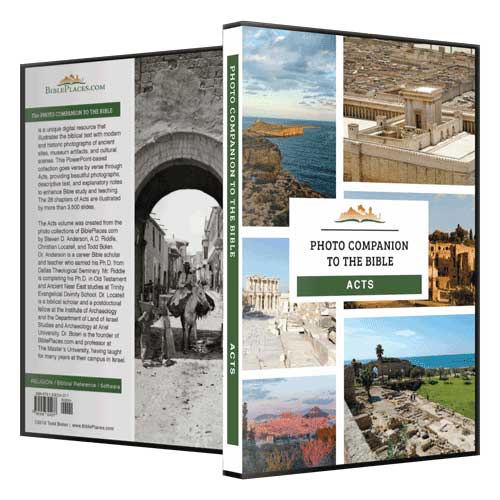

He notes a number of strengths of the collection, including the aerial photographs, the explanatory notes, the references to journal articles, and the free updates. In particular, he highlights the copyright concerns in using photographs that are alleviated by this resource.

He also provides some critiques, including slides which do not seem on topic or which may be unnecessary. You can go to his full review for those and all of his other observations.

We are very grateful to Dr. Long for his careful and thoughtful review. We invite you to consider using the Photo Companion to Acts in your own study or teaching of this book.
Share:

Eggshells discovered in the City of David are the first evidence of chicken eggs used the diet of ancient Israelites.

A group of high schoolers discovered a rare gold coin from the time of Theodosius II (AD 420) on a class trip in Galilee.

A new archaeological visitor center has opened at Jokneam, at the base of Mount Carmel not far from Megiddo. The highlight is a 9th-century statue of the city’s ruler. There’s a slideshow on Facebook.

The partnership between Israel Finkelstein and Tel Aviv University physics professor Eli Piasetzky began when the latter was volunteering undercover at the Megiddo excavation.

The new Petra Museum has been inaugurated. It is located next to the main entrance to the site.

Flora Brooke Anthony provides examples of how Egyptians depicted in art their northern neighbors in the Levant.

Egypt’s Ministry of Antiquities Newsletter for March 2019 is now online.

Adriano Orsingher explains the purpose of Phoenician and Punic masks.

Salvage excavations in Larnaca, Cyprus, revealed more than 110 tombs from the Early Bronze to the Late Roman periods.

Lightning recently struck the Acropolis in Greece, closing it temporarily.

Emory University is receiving the Senusret Collection, “one of the most extensive collections of ancient Egyptian and Near Eastern artwork to be donated to a US museum.”

“Life Lessons from Israel: Dan” is the latest video produced by Biblical Israel Ministries & Tours.

Israel’s Good Name recounts his visit to Herodium.

Now is the time to register for the 2019 season at Tell es-Safi/Gath.

“The arched stone-built hall in Jerusalem venerated by Christians as the site of Jesus’ Last Supper has been digitally recreated by archaeologists using laser scanners and advanced photography.”

Carl Rasmussen’s posts this week focus on Jesus’s crucifixion, including (1) crucified man from Jerusalem; (2) bone box of Caiaphas; (3) Church of the Holy Sepulcher; and (4) the best rolling stone tomb in Israel.

Pilgrims in Jerusalem yesterday celebrated Good Friday and Passover.

Police arrested several people who were planning to smuggle two baby goats onto the Temple Mount for a sacrifice.

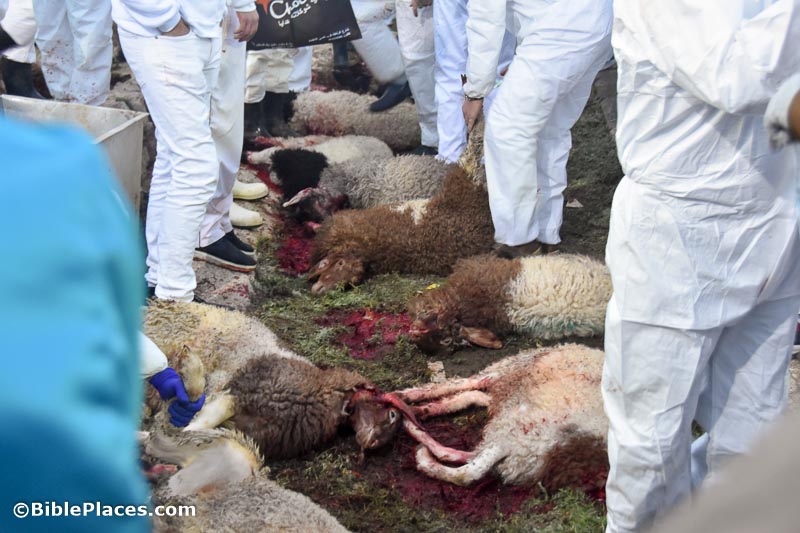
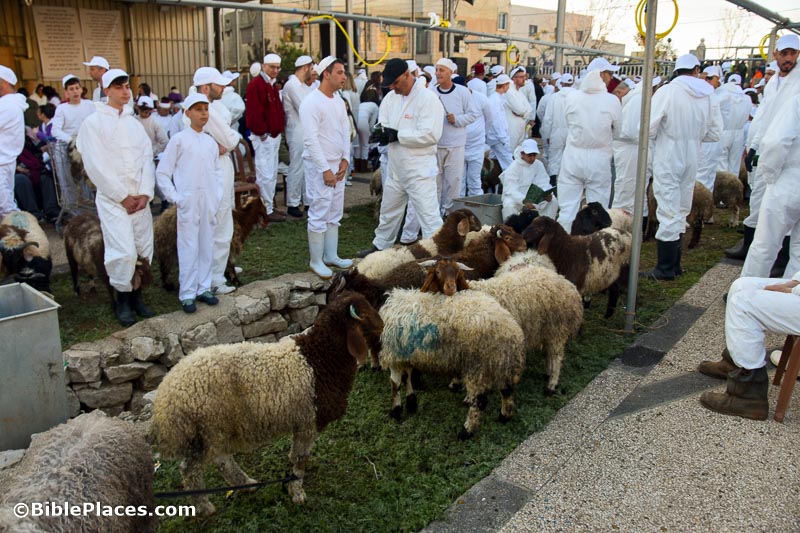
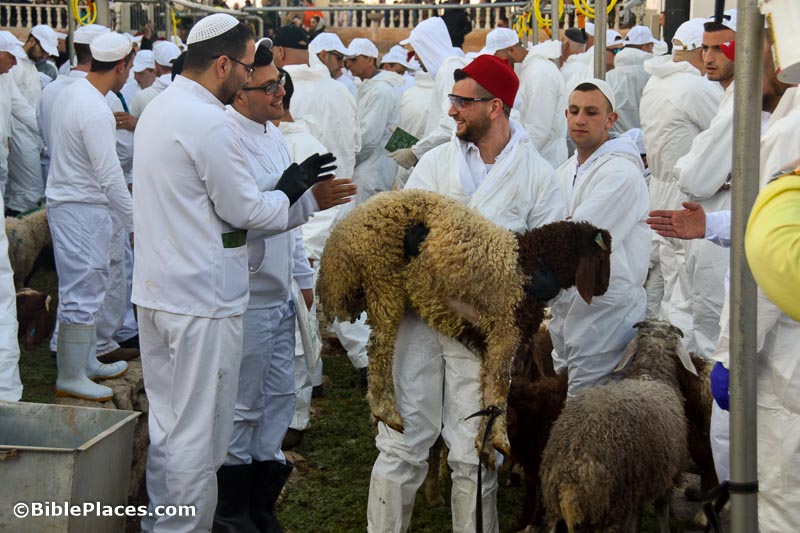
The Samaritans celebrated Passover on Thursday evening. See below for a few photos my son took at the event.

HT: Agade, Ted Weis, Steven Anderson, Chris McKinny

“He was led like a lamb to the slaughter…”

“And as a sheep before her shearers is silent, so he did not open his mouth…”

“He was cut off from the land of the living; for the transgression of my people he was stricken…”

Share:

A large statue of Trajan has been discovered in Laodicea.

Archaeologists have excavated another thermopolium in Pompeii, bringing the number to about 80.

Steps believed to be from the palace of Pontius Pilate in Jerusalem have been re-opened to visitors in Rome after 300 years.

The palace of Nero is now open to visitors and includes virtual reality features.

An ancient shipwreck off the Greek island of Alonissos is now being opened to recreational divers.

“Archaeologists have uncovered more than 100 ancient inscriptions [from the Middle Kingdom] carved into rock at Wadi el-Hudi, where the ancient Egyptians mined amethyst.”

The Temple Mount Sifting Project will re-start its sifting work on Jerusalem Day, June 2, but at a new location.

David Moster has released a new 5-minute video on butter churns from the ancient world.

Eisenbrauns has a 40-50% off sale through Sunday on some books related to ancient Israel.

New release: Excavations at Karkemish I. The Stratigraphic Sequence of Area G in the Inner Town, edited by F. Zaina. The print volume is available for purchase; the pdf is available for free (third item from the bottom).

Keith Taillon explains how Egyptian obelisks ended up in Paris, London, and New York City.

Luxor Times posts photos of the Grand Egyptian Museum, scheduled to open next year.

Brent Nongbri explains the archaeology of early Christian manuscripts.

The study of imagery from U2 spy planes is revealing numerous archaeological features.

Carl Rasmussen is giving a nicely illustrated tour of the Tomb of Annas, beginning with the exterior and continuing inside.

Ferrell’s favorite photo is one he took last week of a ewe and lamb grazing along the road from Jericho to Jerusalem.

HT: Agade, Ted Weis

Share:

A 1st-century Jewish settlement is now being excavated near Beersheba, and one find is an early depiction of a nine-branched menorah.

Christopher Rollston offers some reflections on the Nathan-Melek seal impression, concluding that it is “most likely” that this is the same person mentioned in the Bible.

“Excavation work carried out in Ramses II’s temple in Abydos, Sohag, has uncovered a new temple palace belonging to the 19th Dynasty king.”

Hasmonean-era tombs near Jericho have been looted recently.

Conservation work was done on the Western Wall ahead of the Passover holiday.

“Ancient Color” is “a new exhibition at University of Michigan’s Kelsey Museum of Archaeology, dives deep into the material and application of pigment in ancient Rome, and in doing so highlights a colorful, international history.”

Opening today at the Peabody Museum: “Ancient Mesopotamia Speaks: Highlights from the Yale Babylonian Collection.”

With 40 inches of rainfall so far this year, the Sea of Galilee rose 6 inches last weekend.

Recent rains caused flash flooding near the tomb of Cyrus in Pasargadae.

David Moster explains “Telling Time in Ancient Israel” in a new 9-minute video.

Wayne Stiles has just announced a tour to sites in Turkey and Greece, including a 3-night cruise to the Greek isles.

Reported on April 1: the discovery of the world’s oldest break-up letter.

If you’ve been thinking about registering for the Institute of Biblical Context conference this June, note that the early bird discount ends on Wednesday.

This video shows footage of Jerusalem one month after the Six-Day War in 1967.

HT: Joseph Lauer, Agade, Alexander Schick

Share:

A seal impression belonging to “Nathan-Melech, servant of the king” has been discovered in Jerusalem’s City of David. The inscription dates to about 600 BC, which is about the same time as a figure named “Nathan-Melech” served Josiah, king of Judah (2 Kgs 23:11). It’s not known if these two are the same person.

He removed from the entrance to the temple of the LORD the horses that the kings of Judah had dedicated to the sun. They were in the court near the room of an official named Nathan-Melech. Josiah then burned the chariots dedicated to the sun.

The Times of Israel covers the story well and provides a number of illustrations. But you might want to begin with this well-made 3-minute video.

I will just add that Robert Deutsch published an identical seal impression in his book Messages from the Past in 1999; both impressions were made from the same seal. The new discovery has the significant advantage of being found in context instead of on the antiquities market.

HT: G. M. Grena, Joseph Lauer, Jared Clark

Share:

Excavations in the Sharafat neighborhood in west Jerusalem revealed a Hasmonean-era agricultural village. Haaretz (premium) has a longer article with more photos.

A study of the garbage dumps of the Byzantine city of Elusa in Israel’s Negev reveals that the city’s decline was the result of climate change.

The Malham Cave, under Mount Sedom near the Dead Sea, has been identified as the longest salt cave in the world.

The third artifact in the TMSP’s 12 object series is a fiscal bulla inscribed “Gibeon / to the king.”

Amnon Ben Tor will be awarded the Israel Prize in the field of archaeology.

Gabriel Barkay, an Israeli archaeology, recalls his experience in excavating Susa in Iran

The Anglo-Israel Archaeological Society will be hosting lectures in the coming months by Amihai Mazar (on Tel Rehov), Jonathan Price (on Beth Shearim), and Jürgen Zangenberg (on Horvat Kur).

Andrea Berlin will be lecturing in Rockford, Illinois, on April 1, on “Phoenicians and Jews — A Tale of Two Peoples in Israel’s Upper Galilee.”

“Striking Power: Iconoclasm in Ancient Egypt” is a new exhibit at the Pulitzer Arts Foundation in St. Louis. A review article explains why so may of the statues’ noses are broken.

The latest video by the Institute for Biblical Culture is on “Ancient Israelite Fashion.” New classes in April include “The Prophets of Ancient Israel” and “The Geography of Biblical Israel/Canaan II.”

The founder of Sirin Riders explains why Israel is a great place to ride horses.

James Papandrea is on The Book and the Spade discussing his new book, A Week in the Life of Rome.

HT: Agade, Ted Weis

Share: