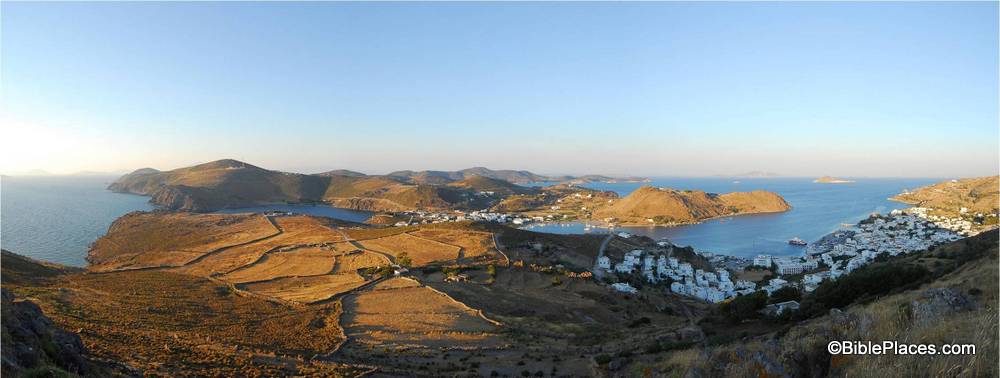
Eilat Mazar has resumed excavations in the (so-called) Ophel, and her partners at Armstrong College plan to provide regular updates. They begin with an on-location interview of Mazar.

Excavations continue to reveal Egyptian presence in Joppa from the New Kingdom period.

Mark Fairchild’s search for ancient synagogues in Turkey is profiled in the local press. The article includes an interesting video by Fairchild of his discoveries.

In light of an article in the Wall Street Journal, Charles Savelle reflects on the value of knowing biblical geography.

Ferrell Jenkins is back in Israel and he shares a rare photo of Jacob’s well.

King Tut and his predecessors may have been afflicted with temporal lobe epilepsy.

Did you forget to celebrate the 2000th anniversary of Caligula’s birthday?

Clean-up of the polluted Kishon River is finally scheduled to begin, 12 years after divers were found
to have contracted cancer.

The cedars of Lebanon are threatened by climate change.

As Rosh HaShanah (the New Year) begins in Jewish homes around the world at sundown on Sunday,

Wayne Stiles reflects on the Gezer Calendar and other ways we keep time.

The 50th anniversary of Lawrence of Arabia inspires Anthony Horowitz to travel to Jordan.

HT: Explorator, Jack Sasson
Wadi Rum Jebel el Qattar, df070307712
Wadi Rum. Photo from the Pictorial Library of Bible Lands.

Southwestern News has a full issue devoted to the Dead Sea Scrolls and the Bible. Published by Southwestern Baptist Theological Seminary, currently hosting an exhibition on the Dead Sea Scrolls, the magazine has some valuable content, including:

  • Historic photographs from the Ecole Biblique collection
  • A description of the current exhibition and how to prepare for a visitswbts-dss
  • A feature of the iScroll kiosks
  • The story of the initial Scrolls discovery (that buys into the lie of the innocent shepherd)
  • “Why the Dead Sea Scrolls Matter”
  • Suggestions for further reading
  • Information on the school’s M.A. and Ph.D. programs in Archaeology and Biblical Studies, including a list of offered classes
  • And more

The issue is available via issuu and may be printed or saved as a pdf file.

HT: Alexander Schick

Conservation work on the Lions Gate (aka St. Stephen’s Gate) has been finished, according to a press release issued by the Israel Antiquities Authority.

The work of preserving and stabilizing the Lions Gate in the Old City’s eastern wall has been completed. This impressive gate is the last of the seven open gates of the city wall that were meticulously and professionally treated in recent years by the Conservation Department of the Israel Antiquities Authority. This was done within the framework of the comprehensive project of conserving and rehabilitating the Old City walls, at the initiative of and with funding provided by the Jerusalem Development Authority and the Prime Minister’s Office.
At the start of the conservation work on the Lions Gate the project engineers discovered that the sentry’s post situated above the gate’s entrance, which was where the soldier guarding the tower once stood, was in danger of collapse. The sentry’s post was entirely dismantled, broken stones in it were replaced and it was returned and secured to its original place on the wall. The two lions carved on either side of the gate also underwent conservation and cleaning.
Within the framework of the conservation work carried out on the Old City walls in Jerusalem, which lasted five years, the walls were conserved which had been built and renovated in the mid-sixteenth century by the Ottoman sultan Suleiman I. Both sides of the wall were treated for a total distance of c. 3,800 m. Each and every one of the stones in the wall was photographed with a laser, documented and studied. Approximately 1,000 deteriorating stones were stabilized; c. 2,000 square meters at the top of the wall were stabilized and sealed to prevent the penetration of water; c. 350 merlons and embrasures were conserved and the stone work in them was completed; c. 2,000 square meters of stones in the wall were dismantled and rebuilt due to vegetation that had taken root in them and a total of c. 5,000 square meters of the walls’ surface were cleaned.

The press release includes quotes from several officials as well as 12 high-resolution photographs of the work on seven of the Old City gates.

St Stephen's Gate, mat00878
Lions Gate circa 1910 (photo source)

Where was the royal palace in Jerusalem during the time of the monarchy? Most scholars have assumed that it was located to the south of Solomon’s temple, between the ancient city and the summit of Mount Moriah. In a 2009 article, David Ussishkin suggests that the palace was built to the north of the temple for the following reasons:

1. It is more logical that the king would desire to isolate his royal compound from the population so that everyone traveling from the city to the temple would not pass by it.

2. In a number of ancient cities, the palace was built at the edge of the acropolis. This was true at the Hittite capital of Hattusha, the Late Bronze cities of Ugarit and Megiddo, as well as a nymber of Assyrian cities including Calah, Nineveh, and Dur-Sharrukin.

Ussishkin notes some difficulties with his hypothesis:

1. Some biblical texts indicate that the palace was south of the temple (Neh 3:25-29; 12:37).

2. The royal acropolis was located in the center of some cities, including Samaria and Zincirli-Sam’al.

I would also question the premise that Solomon would desire to be isolated from the people. God’s intention for Israel’s king was that he would represent the nation to God and vice versa (Deut 17:14-20; 1 Kgs 3:7-10; Ps 72:1-4). The first story of Solomon’s kingship is his adjudication of the case of the dead infant (1 Kgs 3:16-29). The isolation that may have been desired by other kings of the world may not have been appropriate for the king in Jerusalem.

Absent archaeological investigation of the Temple Mount in Jerusalem, it is impossible to confirm the location of the home of Judah’s kings.

Ussishkin’s proposal is a small portion of his article “The Temple Mount in Jerusalem during the First Temple Period: An Archaeologist’s View,” found on pages 473-83 of Exploring the Longue Durée: Essays in Honor of Lawrence E. Stager, ed. J. David Schloen. This thick book is loaded with many articles of interest to students of biblical archaeology.

Temple Mount aerial from north, tb010703228

The Temple Mount from the north. Photo from the Pictorial Library of Bible Lands, volume 3.

Nadav Shragai has written an extensive and interesting report of the newly discovered reservoir near the Temple Mount. If you’re interested in Jerusalem in the Old Testament period, this is a must-read.

2.5-minute video takes you inside the reservoir (Hebrew).

The Western Wall has passed its annual health check-up.

Excavation reports on the Mount of Olives reveal settlement in the OT and NT periods.

“I am the gate for the sheep,” said Jesus. A new 2-minute video short from SourceFlix illustrates what that means with footage from the Middle East.

Whether you love the water-soaked landscape of Caesarea Philippi or the parched terrain of the Judean wilderness, you can enjoy some great weekend reading, illustrated with slideshows and videos.

BibleX points to a couple of publications now online for the Church of the Holy Sepulcher in Jerusalem.

The IDF has begun clearing 700 mines from the Jordan Valley.

Sitting at the Feet of Rabbi Jesus, by Ann Spangler and Lois Tverberg, is marked down to $2.99 for Amazon Kindle for a few days.

Christianbook.com has some good deals on reference works beginning today:

HT: Joseph Lauer

Judean wilderness at sunset, tb021107716
The Judean wilderness at sunset
 
An interesting way to study or teach the scriptures is to take a site or geographic feature and collect all the verses that refer to that location.  Such a diachronic study reveals connections that aren’t otherwise readily apparent.  An excellent example of this is the Euphrates River which is mentioned in both Genesis and Revelation, as well as other places in the Bible.

This week’s photo comes from Volume 9 of the revised and expanded edition of the Pictorial Library of Bible Lands, which focuses on Eastern and Central Turkey. The photo was taken by A.D. Riddle and is entitled “Euphrates River North of Carchemish View East” (photo ID #: adr1005191623).

In addition to our picture of the week, I would also like to highlight the valuable annotations that come with the PLBL collection.  The collection is not just a group of high resolution photos.  It also includes Microsoft® PowerPoint® files with excellent notes providing valuable information about the sites and images.  Over the years, I’ve found these notes to be a helpful, quick reference when I’m studying a certain site.  Often these notes will include a brief biblical survey of a particular location.  For example, the following information is provided in the PowerPoint® file on the Euphrates River:

The Euphrates River figures prominently in Scripture, being mentioned dozens of times from its first reference in Genesis 2:14 to the last reference in Revelation 16:12. The source of the river is in the mountains of Armenia northwest of Lake Van at an elevation of more than 10,790 feet (3,290 m). The river then flows through the modern countries of Turkey, Syria, and Iraq before merging with the Tigris River and emptying into the Persian Gulf, traveling a total distance of about 2,000 miles (3,200 km).
 

The Euphrates River in the Bible
1.   The Euphrates River is one of four that flowed from the Garden of Eden (Gen 2:14).
2.   The Lord promised to give Abraham the land between the Euphrates River and the river of Egypt (Gen 15:18; cf. Deut 1:7; 11:24; Josh 1:4; 24:2).
3.   Jacob fled from Laban across the Euphrates River (Gen 31:21).
4.   King David built a monument along the Euphrates River (2 Sam 8:3; 1 Chr 18:3).
5.   Solomon ruled over all the kingdoms as far north as the Euphrates River (1 Kgs 4:21, 24; 2 Chr 9:26; cf. Ps 72:8).
6.   The Lord promised to bring an invader from the other side of the Euphrates River (Isa 7:20; 8:7), but also to bring them back from exile from beyond the Euphrates River (Isa 11:15) and restore their dominion over the land “from the River to the ends of the earth” (Zech 9:10, LEB).
7.   Jeremiah accused the Israelites of faithlessness to the Lord by asking why they went to “drink the waters of the Euphrates” (Jer 2:18, LEB).
8.   The sixth angel will pour out his bowl on the Euphrates, causing it to dry up and allow passage of the enemy kings to attack Israel (Rev 16:12).

As you can see from the numerous verses listed above, a study of the Euphrates River takes you on a journey from Genesis to Revelation.  Along the way, you encounter Abraham, Jacob, David, Solomon, Isaiah, Jeremiah and others.  A study of this one geographic feature provides a platform for you to review (or have your students review) the entire arc of the biblical story, and it can provide a creative way for you to test your students’ knowledge of the Bible.  Try this as an essay question or an ice breaker in your next OT survey class:

“The Euphrates River is mentioned in Gen. 2:14, Gen. 15:18, Gen. 31:21, 2 Sam. 8:3, 1 Kgs. 4:21, Isa. 7:20, Jer. 2:18, and Rev. 16:12.  What is the biblical period and approximate date of each of these references?”

If a student can answer that question, then they know their stuff.  Most likely, you could drop them anywhere in the Bible and they will have their bearings.

This and other photos of the Euphrates River are included in Volume 9 of the Pictorial Library of Bible Lands and can be purchased here.