Seven years after the trial began, a verdict is scheduled to be announced a week from Wednesday.

From Bible History Daily (BAS):

The Biblical Archaeology Society has learned that Judge Aharon Farkash of the District Court in Jerusalem will announce the verdict on the alleged forgery of the famous James “brother of Jesus” Ossuary on Wednesday, March 14 at 9 a.m. (2 a.m. EST).
After more than seven years, hundreds of exhibits and thousands of pages of testimony, the case against defendants Oded Golan and Robert Deutsch will be decided by the trial judge. The case, which includes allegations of forgery for numerous other artifacts, has accurately been described as the “forgery trial of the century.”

Anyone care to make a prediction? I’m expecting the defendants to walk.

Last year I posted a review of nine world-class scholars who testified in court that they believe the inscription on the James Ossuary is authentic or possibly authentic.

HT: Joseph Lauer

Share:

A month ago, a plan was announced to construct a 1:1 scale model of Herod’s tomb on location at Herodium. Haaretz ran a story on it with a misleading headline (later revised): “Top archaeologists condemn Israeli plan to rebuild ancient tomb.”

This weekend The Bible and Interpretation published an article by two on the planning team, giving their motivation for proposing the reconstruction. While much of the article reviews the historical importance of the Herodium, Zeev Margalit and Roi Porat conclude with the rationale for the plan that they concede is “unique, extraordinary, and unprecedented at an archaeological site.” They describe their principles as follows:

1. Construction of the model will not damage the antiquities!
2. New construction will be clearly separated from the original remains.
3. The principle of reversibility will be strictly observed at all times; after implementation is complete, the model will be able to be dismantled and the site returned to the previous state.
4. Conservation of all archaeological findings at Herodium will be carried out together with the construction of the model, including the nearby structures – the royal chamber, the theater, the monumental steps, etc.

The full article is here.

Herodium with lower pool, tb102603555

Upper and Lower Herodium from the north
Share:

There are enough items related to the “Jesus Discovery”/Talpiot Tombs that I am going to exclude those from today’s roundup. Perhaps I will catch up next week. In the meantime, you can take a look at new photos posted at the official website.

A bronze Greek warrior’s helmet was discovered off the shore of Haifa.

The City of David is the focus of this week’s Jerusalem Post column by Wayne Stiles.

I think that Jesus and His World: The Archaeological Evidence, by Craig Evans, would be a much better use of time and money than any books about Jesus discoveries. (Two dings: it’s marketed as “provocative,” and it’s only 208 pages.)

A copy of Edward Robinson’s 3-volume Biblical Researches in Palestine just became available for $75. And a copy of Picturesque Palestine (4 vols.) was just listed for $1100. (Or pick up an electronic edition for $55.)

A Jerusalem Post article lists the Top 5 Spring Activities in Jerusalem as: Ramparts Walk, Tisch Family Zoological Gardens, Bezalel Fair, Café Itamar, Sacher Park. (The article’s introduction leaves something to be desired: “When rain let up, Spring will be upon us; here are some great outdoor activities in the capital to prepare for.”)

G. M. Grena has another riddle, but this one is so easy (he claims) that he has disqualified me from answering. So what is this great discovery that is pictured?

Congratulations to Aren Maeir for sending the final proofs off for the first double volume of the Tell es-Safi/Gath excavations.

If you’re interested in the broader world of biblical studies, you might check out the March Biblical Studies Carnival with dozens of links to the latest.

It snowed in Jerusalem on Friday. (For photos of a previous snowfall, see here.) The storm also filled Caesarea’s hippodrome with water.

Snow in Jerusalem. Photo by Austen Dutton.
Share:

From The Art Newspaper:

Turkey is refusing to lend artefacts to leading British and American museums until the issue of disputed antiquities is resolved. The ban means Turkey will not lend artefacts to the Metropolitan Museum of Art in New York, and London’s British Museum and Victoria and Albert Museum (V&A). The British Museum had asked for 35 items for the exhibition “Hajj: Journey to the Heart of Islam” (until 15 April). Although Turkish museums were agreeable to the loans, the ministry of culture blocked them, leaving the British Museum to find alternative artefacts at short notice. As part of the growing Turkish campaign, loans have been blocked to museums with disputed objects in their collections. The Met has confirmed that a dozen antiquities are now being claimed by Turkey, but would not identify the individual items. A museum spokeswoman says: “The matter is under discussion with the Turkish authorities.” This month, the Met is due to open “Byzantium and Islam” (14 March-8 July). Many loans are coming from the Benaki Museum in Athens, with none requested of Turkish museums.

The full story is here. For previous reports of a similar nature, see here and here.

Share:
by Chris McKinny

In light of the current discussion concerning the so-called
“Jesus Discovery” of the depiction of a Jonah/resurrection motif on a 1st
century CE ossuary (see here) it is probably prudent to re-examine the
typological relationship between the two prophets of Jonah and Jesus.
Besides the explicit connection of “the sign of Jonah” mentioned
in Matt. 12:38-41; 16:4; Luke 11:29-32 there are several probable connections
that can be derived through comparing the Gospels to the book of Jonah and 2
Kings 14:25 (i.e. the only Old Testament mention of the prophet outside of the
prophetic book of Jonah). 
Consider the following suggested similarities/parallels:
1. Each prophet heralded from and began his ministry in
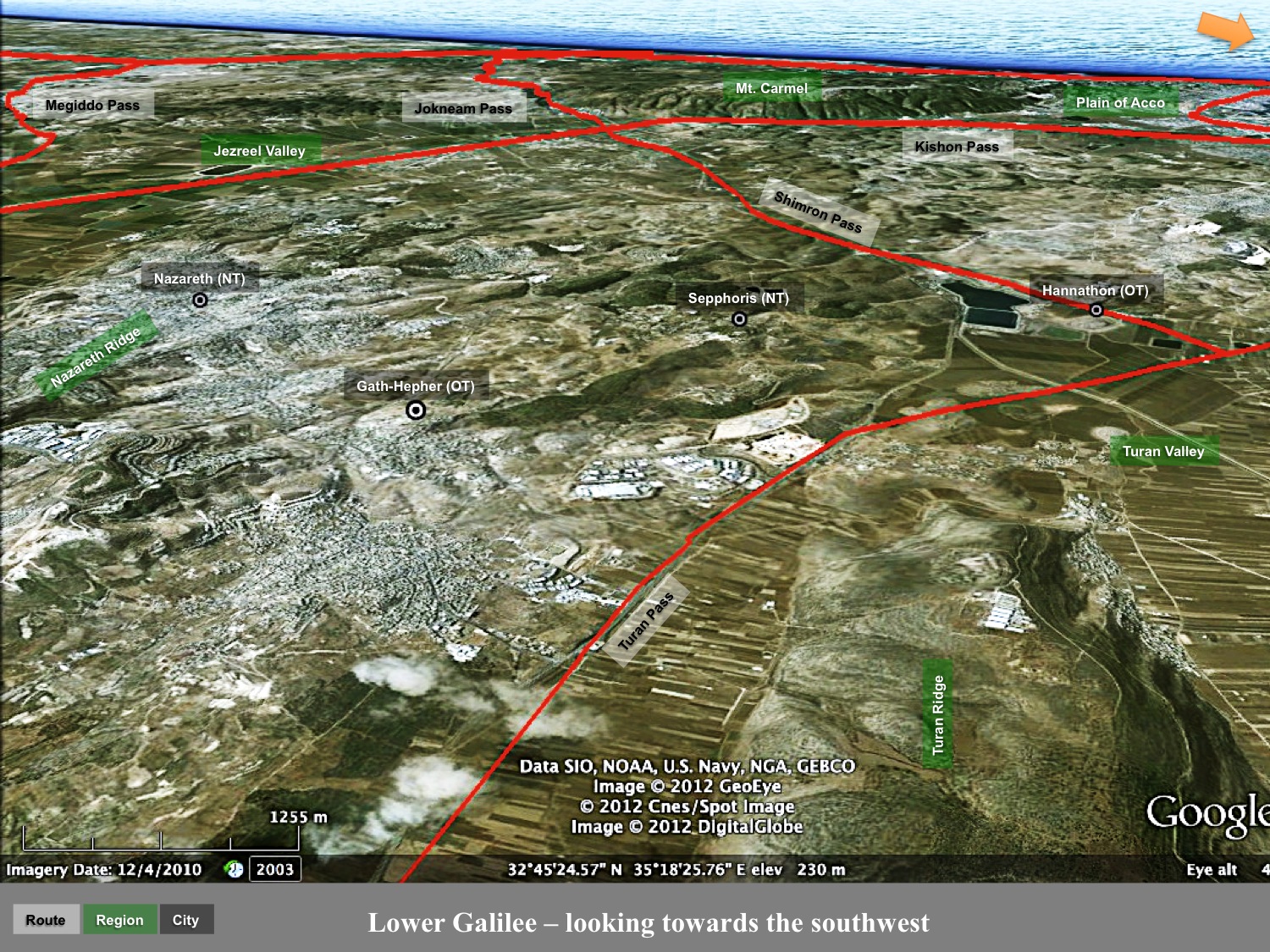
Lower Galilee. Jonah/Gath-Hepher and Jesus/Nazareth – 2 Kings 14:25; Matt.
2:23.
2. Each prophet’s ministry occurred during a time in which
Israel’s hierarchical, wealthy members “trampled upon the poor.” Jonah/“cows of
Bashan” during the time of Jeroboam II (8th cent. BCE);
Jesus/”devourers of widow’s households” – Amos 4:1-3; 5:11-12; 8:3-7; Matt. 19:23-25; Mark 12:41-44; Luke
16:19-31; 20:46-47.
3. Each prophet preached Yahweh to Gentiles despite a desire to
primarily minister to their own Israelite/Jewish population. Jonah joined
Phoenicians on their way to North Africa (i.e. Tarshish) to avoid the goyim of Nineveh (Jonah 1:1-3) and Jesus
stated that he was sent “only to the lost sheep of the house of Israel” (Matt.
15:24). However, both eventually ministered to Gentile populations – Jonah with
Nineveh and Jesus for example with the Syro-Phoenician woman (Mark 7:25-28),
Legion of the tombs of Gadera (Luke 8:26-34), and the centurion’s servant at Capernaum (Matt. 8:5-13).
4. Each prophet slept in the bottom of a ship in the midst of a
raging storm while the ship’s sailors were wracked with fear and bewilderment
due to the prophet’s slumber (Jonah 1:4-6; Mark 4:35-38). Additionally, each
prophet was the reason for the ceasing of the storm (Jonah 1:7-16; Mark
4:39-41).
5. Explicit connection (see above) Each prophet spent
“three days and three nights” in the “heart” of the earth before being “brought
up from the pit.” Compare Jonah’s prayer (Jonah 2) and Jesus’ “sign of Jonah”
(Matt. 12:38-41; 16:4; Luke 11:29-32) to Jonah’s expulsion (Jonah 3:1) and Jesus’
resurrection (e.g. Matt. 28:1-6).
6. Each prophet, despite being from northern Israel (i.e.
Israel in the 8th cent. BCE and Galilee in the 1st cent
CE), were obedient to the Law of Moses in worshipping Yahweh at his chosen
location of Jerusalem (Deut. 12:5-7; 2 Sam. 7:13; 1 Kings 5:5). Compare Jonah’s
“worship in the temple” (Jonah 2:4, 7), despite the enduring presence of the syncrestic
temples of Dan and Bethel, to Jesus going up to Jerusalem for various feasts
(e.g. Luke 2:41; 22:1).
7. Each prophet proclaimed coming destruction upon his
audience’s capital city. Compare Jonah’s proclamation to Nineveh (Jonah 3) and
subsequent, vengeful grief over their repentance (Jonah 4:1-4) to Jesus’
prophecy of doom to Jerusalem (e.g. Matt. 24) and subsequent, knowing grief over
their rejection (Matt. 23:37; and especially Luke 19:41-44). As an aside, I
find Jonah’s statement in Jonah 4:3 to be an ironic double entendre in the vein
of Caiaphas’ statement in John 11:49-50.
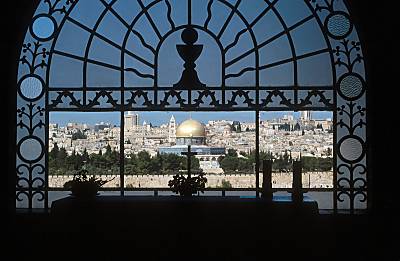
Dominus Flevit – looking at Temple Mount (copyright BiblePlaces) 

8. Each prophet left the city that they had just preached in
and went to the east of the city and prayed. Compare Jonah’s selfish,
languishing prayer concerning the loss of his shade east of Nineveh and
Yahweh’s response (Jonah 4:5-11) to Jesus’ selfless, anguish-filled plea to
“let this cup pass” in Gethsemane and Yahweh’s silence (e.g. Luke 22:39-44).
More could be said about the typology of Jonah in relation
to Jesus, especially with regards to the notable differences between the two.
Nevertheless, in my opinion the above similarities undergird the connection between
Jonah and early Christian motifs (see for example Jensen’s post which mentions 4th cent. CE depictions in Rome). Whether, the Talpiot ossuary is
the first known example of this connection is an open, debatable question, but in
either case it seems clear that the motifs derive from a clear typology that is
rooted in the Gospels. 
Share:

I’ve seen bad exchange rates, but this must set a record. From ArtDaily:

The first silver shekel struck in Jerusalem by Jewish forces rebelling against Roman oppression in the first century CE, one of only two specimens known, will be auctioned as part of The Shoshana Collection of Ancient Coins of Judea, March 8-9, at the Fletcher-Sinclair Mansion (Ukrainian Institute of America) at 2 East 79th St (at 5th Ave.). The auction begins on March 8 at 6 p.m. ET. The Shoshana Collection, assembled over the course of four decades by an American collector of Judaean coins, is perhaps the greatest assembly of ancient coins related to the foundation of ancient Israel ever offered, with more than 700 coins spanning more than 11 centuries. Auction estimates on the coins range from $200 to $950,000. “This Year 1 silver shekel, struck shortly after the Jewish War began in May of 66 CE, is the prototype for all subsequent shekels,” said Cris Bierrenbach, Executive Vice President of Heritage Auctions. “Only a handful of coins were struck from this first set of dies before the design was radically changed. Only two ‘prototypes’ have survived to the present day, with the only other known specimen in the Israel Museum’s collection.” In fact, the Israel Museum has stated that it would like to acquire many of the coins from The Shoshana Collection and has a “wish list” available to potential bidders interested in purchasing coins from the auction and donating them to the museum’s collection, or in making them available on long-term loan. This can be done through the American Friends of the Israel Museum, a tax-exempt organization.

The full story is here. James Davila would like to know of any who purchase in order to donate so that the Israel Museum can display the coins to the public.

Share: