Turkey is refusing to lend artefacts to leading British and American museums until the issue of disputed antiquities is resolved. The ban means Turkey will not lend artefacts to the Metropolitan Museum of Art in New York, and London’s British Museum and Victoria and Albert Museum (V&A). The British Museum had asked for 35 items for the exhibition “Hajj: Journey to the Heart of Islam” (until 15 April). Although Turkish museums were agreeable to the loans, the ministry of culture blocked them, leaving the British Museum to find alternative artefacts at short notice. As part of the growing Turkish campaign, loans have been blocked to museums with disputed objects in their collections. The Met has confirmed that a dozen antiquities are now being claimed by Turkey, but would not identify the individual items. A museum spokeswoman says: “The matter is under discussion with the Turkish authorities.” This month, the Met is due to open “Byzantium and Islam” (14 March-8 July). Many loans are coming from the Benaki Museum in Athens, with none requested of Turkish museums.
The full story is here. For previous reports of a similar nature, see here and here.
In light of the current discussion concerning the so-called “Jesus Discovery” of the depiction of a Jonah/resurrection motif on a 1st century CE ossuary (see here) it is probably prudent to re-examine the typological relationship between the two prophets of Jonah and Jesus.
Besides the explicit connection of “the sign of Jonah” mentioned in Matt. 12:38-41; 16:4; Luke 11:29-32 there are several probable connections that can be derived through comparing the Gospels to the book of Jonah and 2 Kings 14:25 (i.e. the only Old Testament mention of the prophet outside of the prophetic book of Jonah).
Consider the following suggested similarities/parallels:
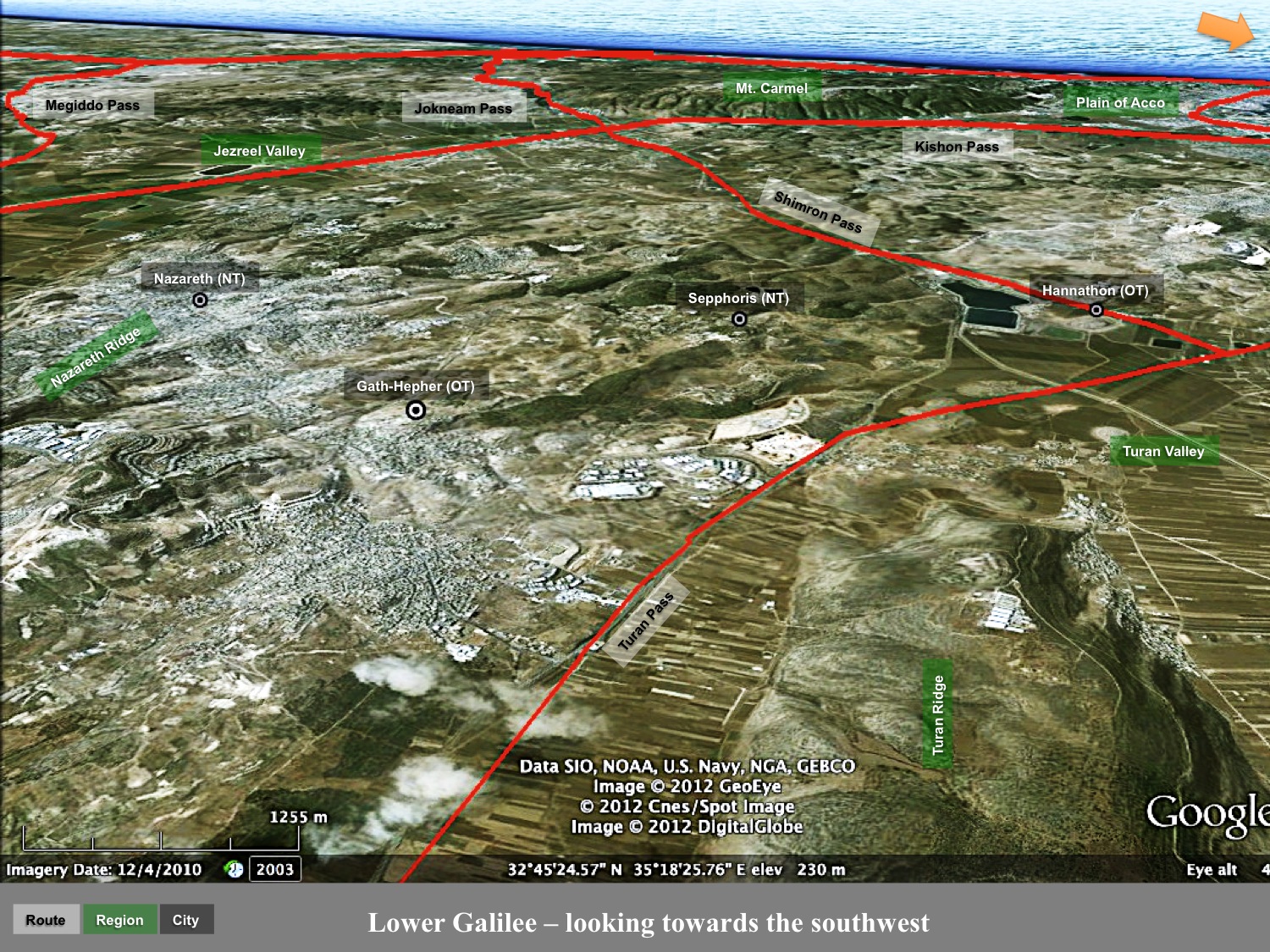
1. Each prophet heralded from and began his ministry in Lower Galilee. Jonah/Gath-Hepher and Jesus/Nazareth – 2 Kings 14:25; Matt. 2:23.
2. Each prophet’s ministry occurred during a time in which Israel’s hierarchical, wealthy members “trampled upon the poor.” Jonah/“cows of Bashan” during the time of Jeroboam II (8th cent. BCE); Jesus/”devourers of widow’s households” – Amos 4:1-3; 5:11-12; 8:3-7; Matt. 19:23-25; Mark 12:41-44; Luke 16:19-31; 20:46-47.
3. Each prophet preached Yahweh to Gentiles despite a desire to primarily minister to their own Israelite/Jewish population. Jonah joined Phoenicians on their way to North Africa (i.e. Tarshish) to avoid the goyim of Nineveh (Jonah 1:1-3) and Jesus stated that he was sent “only to the lost sheep of the house of Israel” (Matt. 15:24). However, both eventually ministered to Gentile populations – Jonah with Nineveh and Jesus for example with the Syro-Phoenician woman (Mark 7:25-28), Legion of the tombs of Gadera (Luke 8:26-34), and the centurion’s servant at Capernaum (Matt. 8:5-13).
4. Each prophet slept in the bottom of a ship in the midst of a raging storm while the ship’s sailors were wracked with fear and bewilderment due to the prophet’s slumber (Jonah 1:4-6; Mark 4:35-38). Additionally, each prophet was the reason for the ceasing of the storm (Jonah 1:7-16; Mark 4:39-41).
5. Explicit connection (see above) Each prophet spent “three days and three nights” in the “heart” of the earth before being “brought up from the pit.” Compare Jonah’s prayer (Jonah 2) and Jesus’ “sign of Jonah” (Matt. 12:38-41; 16:4; Luke 11:29-32) to Jonah’s expulsion (Jonah 3:1) and Jesus’ resurrection (e.g. Matt. 28:1-6).
6. Each prophet, despite being from northern Israel (i.e. Israel in the 8th cent. BCE and Galilee in the 1st cent CE), were obedient to the Law of Moses in worshipping Yahweh at his chosen location of Jerusalem (Deut. 12:5-7; 2 Sam. 7:13; 1 Kings 5:5). Compare Jonah’s “worship in the temple” (Jonah 2:4, 7), despite the enduring presence of the syncrestic temples of Dan and Bethel, to Jesus going up to Jerusalem for various feasts (e.g. Luke 2:41; 22:1).
7. Each prophet proclaimed coming destruction upon his audience’s capital city. Compare Jonah’s proclamation to Nineveh (Jonah 3) and subsequent, vengeful grief over their repentance (Jonah 4:1-4) to Jesus’ prophecy of doom to Jerusalem (e.g. Matt. 24) and subsequent, knowing grief over their rejection (Matt. 23:37; and especially Luke 19:41-44). As an aside, I find Jonah’s statement in Jonah 4:3 to be an ironic double entendre in the vein of Caiaphas’ statement in John 11:49-50.
8. Each prophet left the city that they had just preached in and went to the east of the city and prayed. Compare Jonah’s selfish, languishing prayer concerning the loss of his shade east of Nineveh and Yahweh’s response (Jonah 4:5-11) to Jesus’ selfless, anguish-filled plea to “let this cup pass” in Gethsemane and Yahweh’s silence (e.g. Luke 22:39-44).
More could be said about the typology of Jonah in relation to Jesus, especially with regards to the notable differences between the two. Nevertheless, in my opinion the above similarities undergird the connection between Jonah and early Christian motifs (see for example Jensen’s post which mentions 4th cent. CE depictions in Rome). Whether, the Talpiot ossuary is the first known example of this connection is an open, debatable question, but in either case it seems clear that the motifs derive from a clear typology that is rooted in the Gospels.
I’ve seen bad exchange rates, but this must set a record. From ArtDaily:
The first silver shekel struck in Jerusalem by Jewish forces rebelling against Roman oppression in the first century CE, one of only two specimens known, will be auctioned as part of The Shoshana Collection of Ancient Coins of Judea, March 8-9, at the Fletcher-Sinclair Mansion (Ukrainian Institute of America) at 2 East 79th St (at 5th Ave.). The auction begins on March 8 at 6 p.m. ET. The Shoshana Collection, assembled over the course of four decades by an American collector of Judaean coins, is perhaps the greatest assembly of ancient coins related to the foundation of ancient Israel ever offered, with more than 700 coins spanning more than 11 centuries. Auction estimates on the coins range from $200 to $950,000. “This Year 1 silver shekel, struck shortly after the Jewish War began in May of 66 CE, is the prototype for all subsequent shekels,” said Cris Bierrenbach, Executive Vice President of Heritage Auctions. “Only a handful of coins were struck from this first set of dies before the design was radically changed. Only two ‘prototypes’ have survived to the present day, with the only other known specimen in the Israel Museum’s collection.” In fact, the Israel Museum has stated that it would like to acquire many of the coins from The Shoshana Collection and has a “wish list” available to potential bidders interested in purchasing coins from the auction and donating them to the museum’s collection, or in making them available on long-term loan. This can be done through the American Friends of the Israel Museum, a tax-exempt organization.
The full story is here. James Davila would like to know of any who purchase in order to donate so that the Israel Museum can display the coins to the public.
And I thought the days of archaeological treasures was long past…
The Megiddo Expedition have recently discovered a collection of gold, silver and bronze jewelry, wrapped in fabric, hidden in a vessel at Tel Megiddo. The vessel was found in a domestic context that was dated to the Iron Age I (around 1100 B.C.). This vessel was actually excavated during the 2010 season, but remained uncleaned while awaiting for a molecular analysis of it’s [sic] content (soil). When it was finally emptied during the summer of 2011, the pieces of jewelry appeared.
Both the textile and the jewelry itself were sent to analysis that should tell us more about the origins of this exceptional collection.
According to the biblical record, Megiddo was held by the Canaanites during the period of the judges (Judg 1:27).
The official website for “The Jesus Discovery” is now up. And down (bandwidth limit exceeded). An interview with the authors is here, when the site is back up.
The Jesus Discovery book by James Tabor has skyrocketed to #1 in all of its categories at Amazon and an overall rank of #174.
More than a dozen photos from the press conference are online. (HT: Joseph Lauer). Apparently
James Charlesworth, lead academic consultant to the team, skipped the show.
In a comment on Eric Meyers’ post, Tabor advances the view that Jesus’ body was first buried at the Holy Sepulcher site and then moved to the Talpiot tomb.
Robert Cargill suggests that the “fish” is a tomb nephesh and he claims (in the comments) that two photos supplied by the authors have been doctored or of different “fish.” (I’m not convinced.)
James Tabor confirms Gordon Franz’s observation that everyone has the fish turned the wrong way. If so, why were all of the photos released as horizontal shots?
Jodi Magness is chagrined to see archaeology “hijacked in the service of non-scientific interests.” In a comment, Tabor disagrees that such is the case and he writes of the fish etching that “at least half a dozen art historians have agreed with the Jonah interpretation.” Stephen Goranson notes that none of them have been quoted and he wonders if “signed non-disclosure agreements help scholarship.”
Michael Heiser explains why the process of using the “clueless archaeo-media” is rejected by scholars as a pursuit for cash and not for accuracy. “It’s the methodological equivalent to using mainstream media connections to announce a cure for cancer without clinical trials, or presenting one’s off-the-radar conspiratorial theory (the academic word would be avant garde) about Zionism instead of getting critical feedback from field experts first. But that’s boring and doesn’t generate sales.”
James Davila is pleased with the scholarly response to the announcement and that the media appears to be heeding it (unlike in times past).
Gordon Franz was at today’s press conference and has written a short piece on the experience and his amazement at some of the responses he has read. He writes:
I was at the press conference at Discovery Times Square on Tuesday, February 28, 2012 for the unveiling of the new book The Jesus Discovery by James Tabor and Simcha Jacobovici.
I am not a supporter of Simcha’s ideas, in fact, I have critiqued some of them on my website (see the Cracked Pot Archaeology section at www.lifeandland.org). But what I have found amusing is the misstatements and misunderstanding on some of the blogs by leading scholars. First of all, you should get the book and read it before you comment, or at least look at the pictures! It will save you some embarrassment.
Simcha had an exact replica of both ossuaries in question made by the museum staff at Discovery Times Square. This was accomplished by the measurements and photographs taken with the impressive robotic arm. I am grateful for Walter Klassmen for showing me how it worked. This tool will have many applications in the archaeology of Israel and Simcha should be commended for working closely with this expert to produce such a valuable tool.
The first thing that struck me on the ossuary is the orientation of the “fish.” On all the blogs and news articles I have read, the picture of the “fish” is facing the wrong way. Sometimes it is horizontal, either facing left or right, and made to look like a swimming fish. Or the “fish” has the round ball (Jonah, according to Simcha) facing upwards, thus making the “fish” look like a funerary monument.
Usually pictures of Absalom’s Pillar are shown to bolster the case for this view. The fact of the matter is that the “fish” is facing down! So we should orient the picture correctly before we continue the discussion.
My initial impression is that the “fish” looks like an ornamental glass vessel, perhaps a pitcher or flask of some sort. The Ennion vessel found by Prof. Avigad in the Jewish Quarter comes to mind (page 108 in Discovering Jerusalem). Perhaps some glass expert might suggest a better parallel from this period than the Ennion vessel, but this is worthy of consideration.
Ossuary etching compared with Ennion pitcher, both from Jerusalem. Left image: Associated Producers Ltd./Haaretz; Right: Avigad, Discovering Jerusalem, p. 108.
The BiblePlaces Blog provides updates and analysis of the latest in biblical archaeology, history, and geography. Unless otherwise noted, the posts are written by Todd Bolen, PhD, Professor of Biblical Studies at The Master’s University.