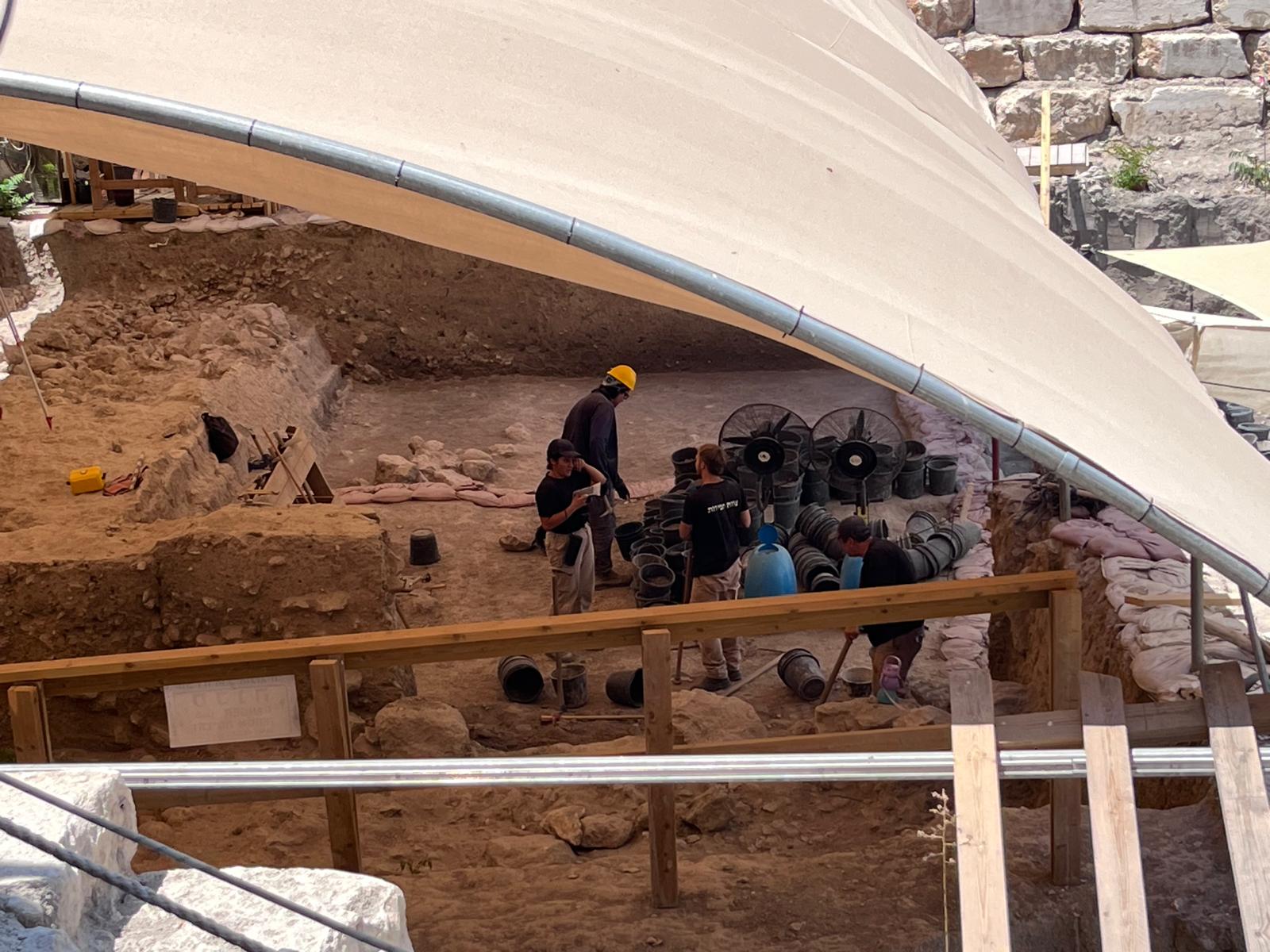
“The Egyptian Ministry of Tourism and Antiquities on Monday announced the discovery of 33 archaeological tombs, dating back to the . . . the Greek and Roman eras near the Aga Khan Mausoleum in Aswan governorate.”

Mohy-Eldin E. Abo-Eleaz writes about foreign visitors to Egypt depicted in tombs in the reign of Thutmose III.

The Smithsonian Magazine has a feature article on the discoveries at Berenike on the shore of the Red Sea.

A new study shows that ancient Egyptian scribes suffered occupational bone damage.

The new study of radiocarbon dates from Jerusalem is the subject of the latest episode of This Week in the Ancient Near East.

Jodi Magness is on the Great Books podcast, produced by National Review, to discuss the Dead Sea Scrolls.

The latest issue of the Israel Exploration Journal includes articles on the Millo in Jerusalem, unique figurines from Judah, and forgotten papyri of the Judean desert. You can see the full table of contents here.

The May issue of BASOR has been released. The table of contents is online, but most of the articles require subscription.

New release: Eretz-Israel: Archaeological, Historical and Geographical Studies, volume 35, The Hillel Geva Volume (Israel Exploration Society, 775 pages, ₪400). The IES website has posted the table of contents, but the Hebrew articles are listed in Hebrew and I haven’t found an online listing in English (but here’s a text file). A few of the Hebrew articles I searched for were previously published in English. Geva’s contribution has been immense, and he is rightly honored by a whole host of scholars. 

The Bible in Its Traditions is a website created by the École Biblique et Archéologique in Jerusalem that intends “to create the most extensive and helpful set of notes for the entire Bible” with “significant differences between different versions of the text of the Bible in the text itself, rather than in footnotes.”
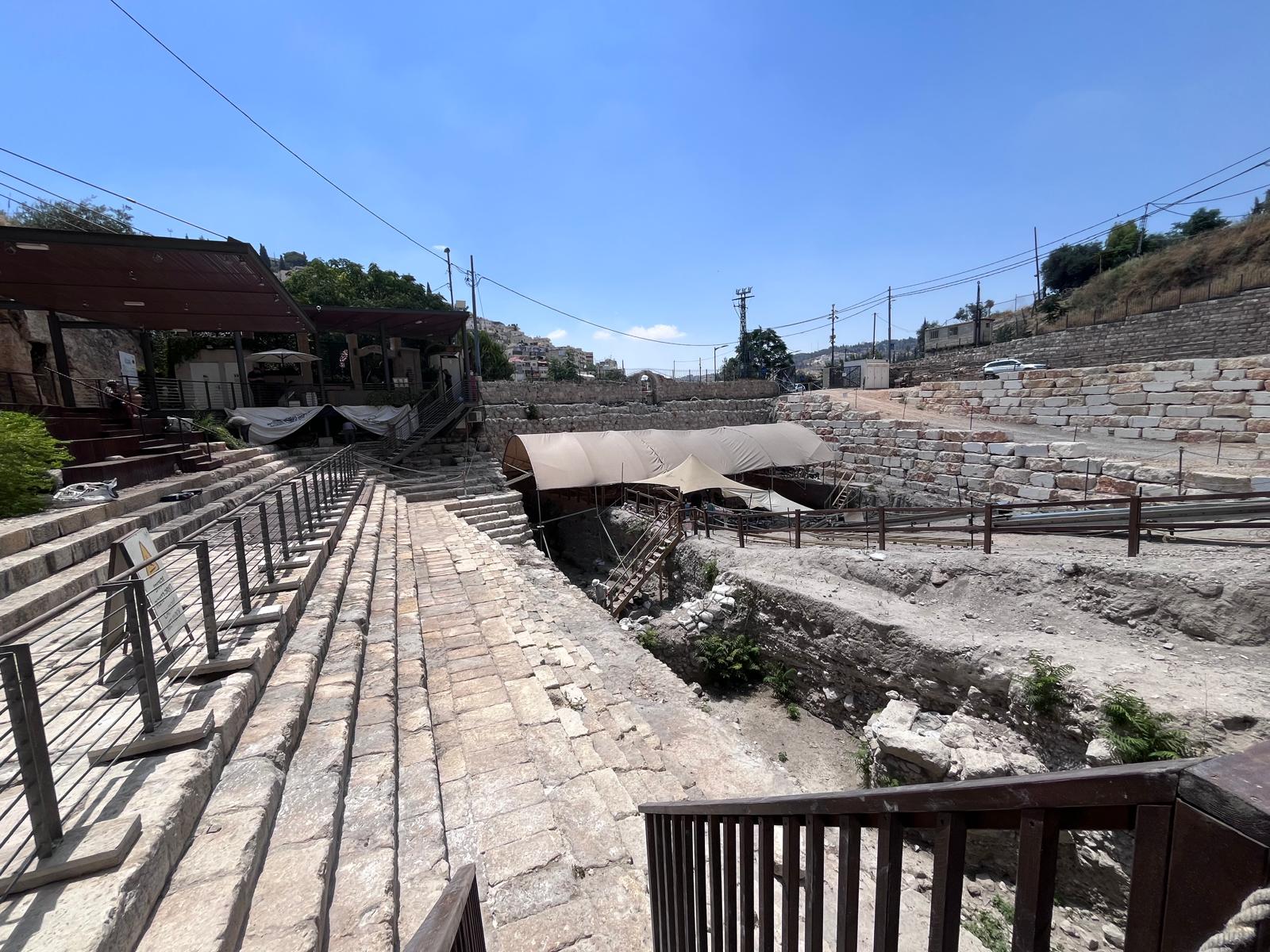
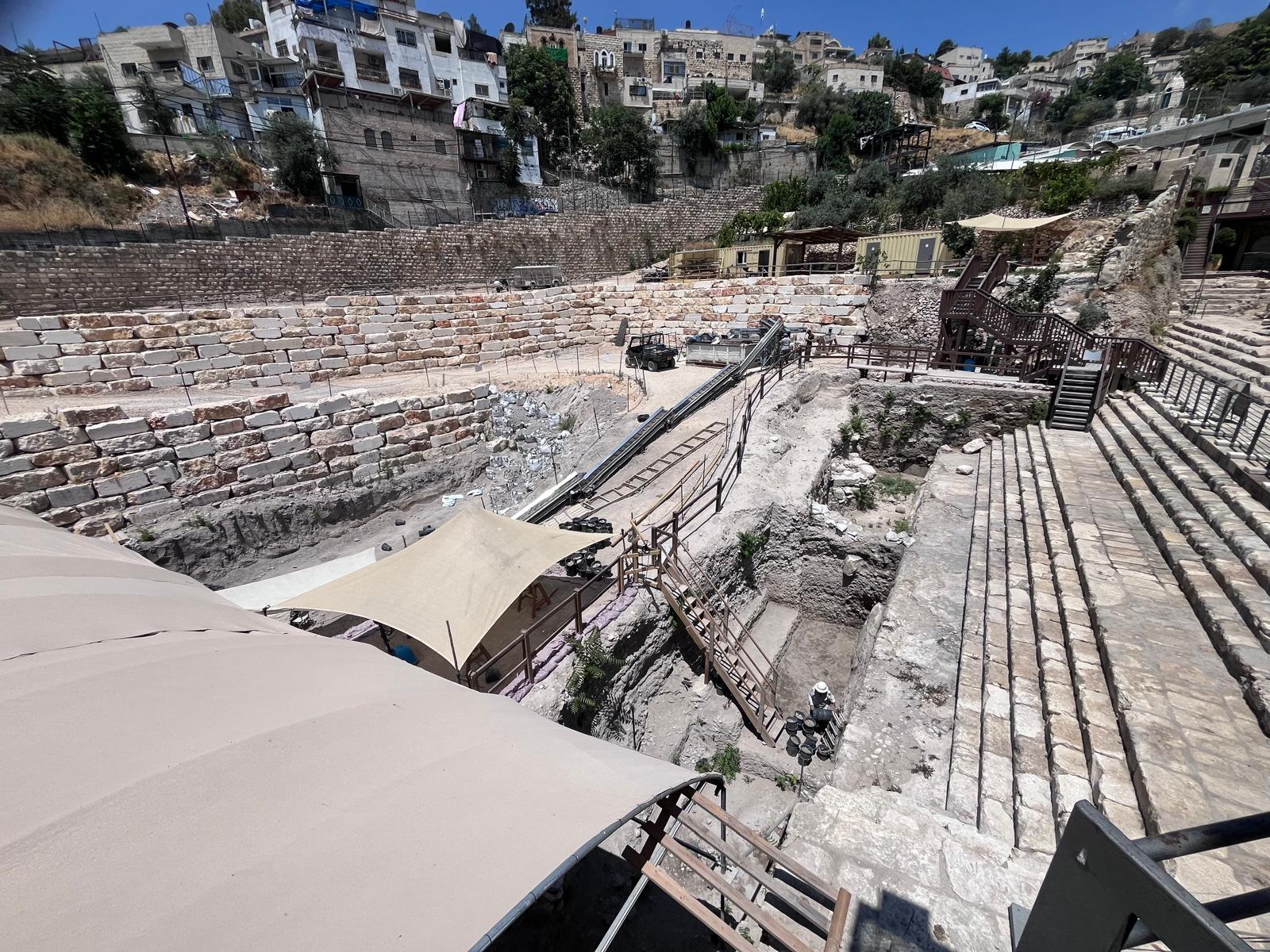
Pool of Siloam, taken on June 23, 2024 by John Black

There will be no roundups in the month of July.

HT: Agade, Arne Halbakken, Keith Keyser, Ted Weis, Gordon Franz

A Canaanite shipwreck from the 14th-13th centuries BC was discovered off Israel’s northern coast in a natural gas company’s survey, making it the oldest shipwreck ever found in deep seas. “Its body and contents have not been disturbed by the human hand, nor affected by waves and currents, which do impact shipwrecks in shallower waters.”

A hoard of coins discovered in Lod provides evidence for a little-known Jewish revolt against Rome in the 4th century AD.

Jerusalem University College has posted its online fall course offerings, including classes on Egypt, Jerusalem, the Shephelah, and life and times of Paul.

Raphael Golb has written The Qumran Con: A Dead Sea Scrolls Memoir.

The Times of Israel interviews George S. Blumental about Israel Archaeological Proof, his new website “that compiles archaeological and historical documentation that shows the millennia of Jewish presence in the Holy Land.”

On the Biblical World podcast, Chris McKinny and Kyle Keimer “respond to listener questions about how to raise your kids to be like Chris and Kyle, prophetic practices, 1 Cor 11, chambered gates, Pharisees, forgery scandal, the Coliseum and Jerusalem Temple, and much more.”

Stephen Compton believes he has identified Sennacherib’s siege camps at Lachish and other sites including Jerusalem. The primary article is published in Near Eastern Archaeology magazine (subscription required) and is more wide-ranging. The popular accounts focus on the Jerusalem camp, including Compton’s article at Popular Archaeology and reports at the Daily Mail and Ancient Origins. Live Science’s report includes some brief responses from top scholars. I’ll add two things: Ammunition Hill is a logical place for an invader’s camp, but it does not meet the criteria for Nob. Second, my analysis of the historical evidence is that Sennacherib never laid siege to Jerusalem. But the NEA article has much else of interest.

HT: Agade, Arne Halbakken, Gordon Franz, Ted Weis, Alexander Schick

A huge, circular monumental structure from the Minoan period has been discovered on Crete.

“A trove of perfectly preserved ceramics, burnt animal bones and a wooden chalice have been pulled up from a well in Ostia Antica,” the port city of ancient Rome.

“Polish archaeologists have discovered over 200 graves of monkeys, dogs and cats in an animal cemetery from the 1st and 2nd centuries in Berenike, Egypt.”

A fragment of the Infancy Gospel of Thomas dating to about AD 400 has been discovered in a library in Germany.

“A large study of plant, animal and human remains from an ancient site on the Syrian coast has shed light on what people ate more than 3,000 years ago and how they managed to survive through climate changes that brought periods of protracted drought.”

Owen Jarus identifies 32 significant shipwrecks from around the ancient world.

The latest issue of Archaeology Magazine includes a well-illustrated article on the “Assyrian renaissance.”

Hebrew Union College in Cincinnati denies claims that it is planning to sell rare books from the library’s collection.

If you woke up this morning looking for a way to save $595, you can do that by downloading the latest volume in the Medinet Habu publication reports.

Oliver Hersey explains why the Sinai Covenant is best understood in light of ancient marriage customs on the latest episode of the Biblical World podcast.

Walking The Text’s recommended resource of the month is A Week in the Life of Corinth, by Ben Witherington.

HT: Agade, Joseph Lauer, Gordon Franz, Wayne Stiles, Arne Halbakken, Mark Hoffman

“A new room with painted blue walls, a very rare colour in Pompeian spaces, has emerged in Pompeii during recent excavations in the central area of the ancient city.”

A new study considers how an expansion in the floodplain near Luxor around 2000 BC affected Egyptian history.

Erica Scarpa has written a very helpful primer of the Ebla archives.

Hybrid lecture on June 11: “Political Ecology of the Levant during the Iron Age,” by Canan Çakirlar

Zoom lecture on June 19: “The Trojan War: The Epic in Art,” by Renee Gondek ($10)

A free “study day” at the British Museum on July 20 will feature a number of speakers addressing various aspects of the library of Ashurbanipal.

“A collection of exceptional sculptures from Egypt’s 26th Dynasty (664–526 BCE) is currently on view at the Getty Villa of the J. Paul Getty Museum in Los Angeles.”

Jews are much less interested in the location of Mount Sinai than Christians.

Carl Rasmussen shares his experience and some photos of local Turkish cuisine.

HT: Agade, Gordon Franz, Wayne Stiles, Arne Halbakken

Archaeologists excavating in the Givati parking lot in the City of David discovered a gold ring inset with a red garnet that was extremely well-preserved.

The Times of Israel has more information on the Iron Age Canaanite cemetery in the Jezreel Valley.

After two years and $5 million in renovations, the Herodian Quarter in the Jewish Quarter of Jerusalem’s Old City is reopening.

In a new study, Nadav Na’aman argues that there was only one place in the Bible named Gilgal and it has nothing to do with the five footprint-shaped sites identified by Adam Zertal.

The “University of Haifa’s School of Archaeology and Maritime Cultures (SAMC) has recently launched a new international Master’s program, offering an MSc in Archaeological Sciences.”

New release: The Ancient Water System of Sepphoris (Land of Galilee 6), by Tsvika Tsuk (322 pages, $70, via Mordechai Aviam)

Jeffrey Chadwick is on the Biblical World podcast to talk about his excavations at Hebron.

Now online: Mapping the Holy Land: The Foundation of a Scientific Cartography of Palestine, by Haim Goren, Jutta Faehndrich, and Bruno Schelhaas.

Ora Negbi, longtime professor of archaeology at Tel Aviv University, died recently.

John Boardman, a classical archaeologist at Oxford, died last week.

The Bible Mapper Atlas continues to release free maps. Here are the latest:

HT: Agade, Frank McCraw, Gordon Franz, Gordon Dickson, Arne Halbakken, Ted Weis, Keith Keyser

“Excavations at a Byzantine-era church in the northern Negev desert have revealed 1,500-year-old wall etchings of ships, likely left by Christian pilgrims who had arrived by sea to the Holy Land.”

The Times of Israel has a follow-up article on the major carbon-14 study of Jerusalem that was recently published.

John Drummond pulls together the archaeological evidence for the reign of Solomon.

The latest issue of Biblical Archaeology Review includes articles on Solomon’s royal complex at Gezer, the large Moabite site of Kh. Balu’a, and the dawn of the Iron Age in Israel.

Israel21c identifies the top seven archaeological sites in Israel related to Jewish history as the Western Wall, Masada, Caesarea, Tiberias, Megiddo, En Gedi, and the City of David.

The Qumran Digital Project Lexicon has a new website.

Archaeologists have identified the original sarcophagus of Ramesses II from a fragment discovered in 2009 at Abydos.

The “Hazael and His World: Commemorating the 30th Anniversary of the Discovery of the Tel Dan Inscription” conference will be held in Tel Aviv and Jerusalem on June 5 and 6.

The 100th issue of Syria: Archéologie, Art et Histoire has been released (open-access).

Online lecture on June 2 in the BAS Scholars Series: “Paul on Cyprus: Crossing the Divide,” by Thomas Davis.

Paul’s hometown of Tarsus is not on the itinerary of most tourists to Turkey, but it has much to offer. Jason Borges identifies ten sites within the city and five sites in the vicinity that are worth seeing.

The Institute of Biblical Culture is giving away hundreds of books related to the Old Testament.

In light of a recent conference celebrating William Dever, Glenn Corbett reflects on the future of biblical archaeology.

HT: Agade, Gordon Franz