From World Bulletin:

What could be the largest discovered inscribed tablet (stele), dating to the reign of Babylonian king Nebuchadnezzar II between 605-562 BC, has been discovered in the Turkish city of Karkamis on the military zone along the Turkey-Syria border. […] Excavations this year also unearthed a cuneiform tablet at the palace of Carchemish king Katuwa dating to 800 BC, as well as over 300 sculptures, a Luwian hieroglyphic inscription and a mosaic.

The rest of the article includes more information on the excavations but unfortunately nothing about the major discovery. For previous posts on the excavations at Carchemish, see here, here, and here.

A life-size statue of Ramses II was uncovered this week in Tell Basta in Egypt. The article does not note that Tell Basta is likely the site of biblical Bubastis (Ezek 30:17).

Israel has halted the auctioning of stolen Egyptian artifacts.

Ferrell Jenkins reports on recent vandalism in the Protestant Cemetery on Mount Zion.

Mark Hoffman has now shared his Google Earth Exercise for Biblical Geography (see here for the Google Maps Exercise).

The Encyclopedia of Ancient History (13 vols.) is reviewed by John Vanderspoel.

“In Israel, Dig Beneath the Headline for Archaeological Truth.” There are important things to be said concerning the sensationalism of archaeology and the truth of the Bible, but you won’t find them in this article at The Media Line.

Lucas L. Schulte will be lecturing on “Archeology of the Lands of the Bible: Illuminating Nehemiah” on Oct. 22, 4:30 p.m. at the Dumke Commons of Occidental College.

Wayne Stiles explains why you should send your pastor to Israel.

Aren Maeir reviews The Archaeology of Israelite Society in Iron Age II, by Avraham Faust.

“The British Museum and US-based Penn Museum are collaborating on the creation of a web
resource to display archaeologist Leonard Woolley’s Mesopotamian excavations from 1922-34.”

An op-ed in the LA Times argues that if you want to protect Syria’s antiquities, don’t buy them.

Today you can purchase the HCSB Study Bible on Kindle for just $2.99. The work includes several of our photos.

HT: Jack Sasson

Haaretz profiles the late archaeologist Nahman Avigad on the anniversary of his birthday. Leen Ritmeyer shares some personal reflections.

Mark Hoffman shares a Google Maps Exercise for Biblical Geography.

Many ancient leopard traps have been discovered in Israel’s Negev.

What if Cyrus had not freed the Jews? The Jewish Journal asks the question.

Adam Zertal’s theory about Gilgal is detailed in Israel HaYom.

Lior, the lion king of Jerusalem, has died at the age of 16.

HT: Charles Savelle, Jack Sasson

Excavations on Mount Zion this summer revealed a Early Roman period mansion that archaeologists suggest belonged to the family of a priest in the first century. The story is also reported by livescience.

A summary of this year’s excavations of Tel Yafo (Jaffa) is now online. The work focused on the only Egyptian gate known in Israel.

There’s another article on the alleged discovery of Dalmanutha.

Why was Samaria made the capital of the Kingdom of Israel? Norma Franklin argues from her archaeological research that it was the city’s economic potential.

The University of Pennsylvania is celebrating a century since it received the Sphinx.

Logos Bible Software is looking for a Bible Map Designer.

“Explorations in Antiquity in LaGrange will soon open its Biblical Life Artifacts Gallery.”

Philologos explains why Sukkot is a harvest holiday, even though there’s little to harvest. For those beginning the joyous celebration of Sukkot tonight, we say hag sameah!

HT: Mark Hoffman, Jack Sasson, Joseph Lauer

Sphinx, red granite, 19th Dynasty, from Memphis, tb072311783
The Sphinx of the University of Pennsylvania

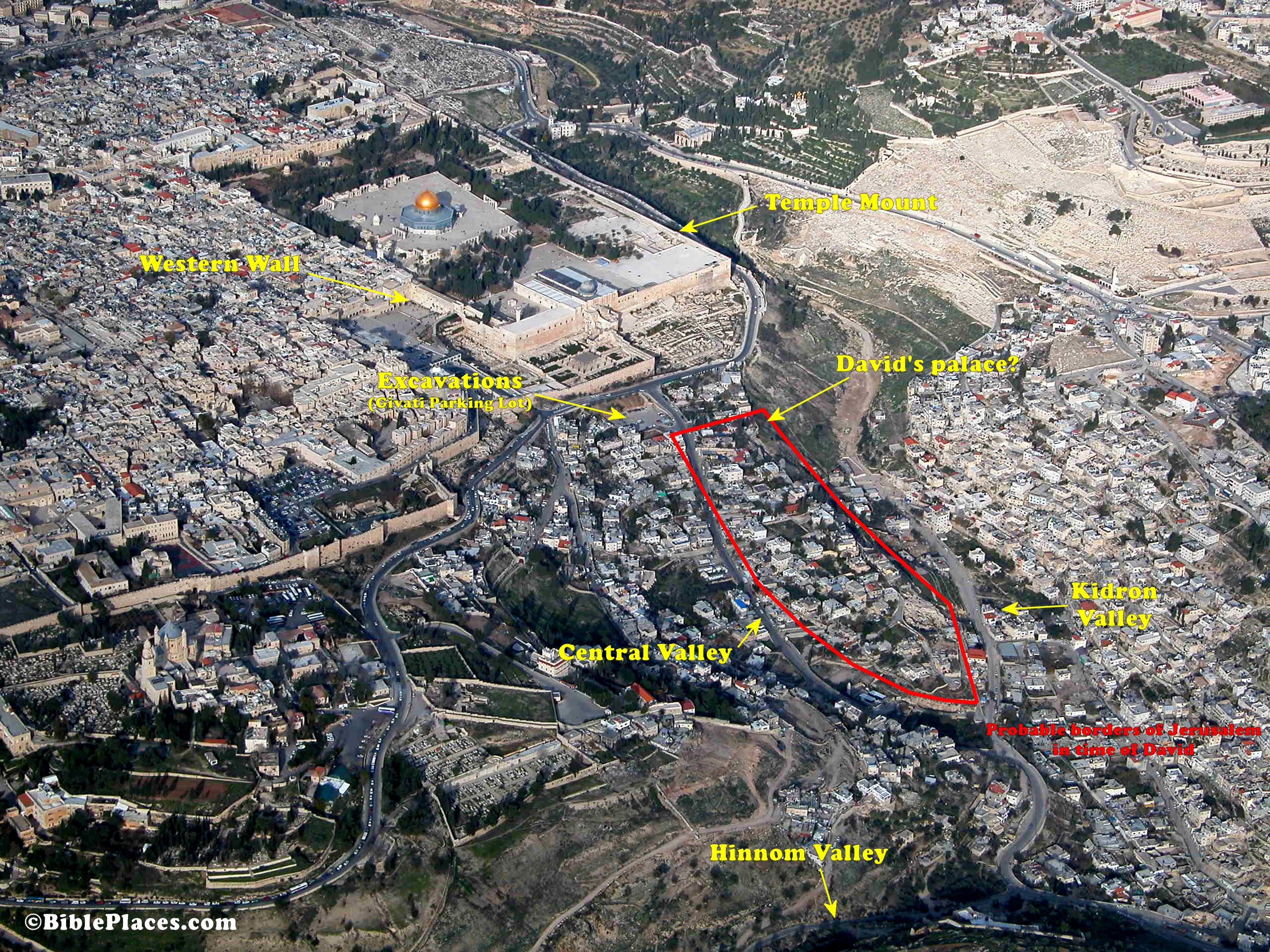
In the summer excavations of Eilat Mazar south of the Temple Mount, two collections of gold and silver were discovered, including one golden medallion depicting a menorah, shofar and Torah scroll.

From the press release:

A third-generation archaeologist working at the Hebrew University’s Institute of Archaeology, Dr. Mazar directs excavations on the City of David’s summit and at the Temple Mount’s southern wall. Calling the find “a breathtaking, once-in-a-lifetime discovery,” Dr. Mazar said: “We have been making significant finds from the First Temple Period in this area, a much earlier time in Jerusalem’s history, so discovering a golden seven-branched Menorah from the seventh century CE at the foot of the Temple Mount was a complete surprise.”

hu130909_mazar2

Golden medallion with depiction of menorah, shofar, and Torah scroll

The discovery was unearthed just five days into Mazar’s latest phase of the Ophel excavations, and can be dated to the late Byzantine period (early seventh century CE). 

The gold treasure was discovered in a ruined Byzantine public structure a mere 50 meters from the Temple Mount’s southern wall.

The menorah, a candelabrum with seven branches that was used in the Temple, is the national symbol of the state of Israel and reflects the historical presence of Jews in the area. The position of the items as they were discovered indicates that one bundle was carefully hidden underground while the second bundle was apparently abandoned in haste and scattered across the floor.

hu130909_mazar4

View of Jerusalem’s Temple Mount from the south, with area of discovery marked. Photo by Ouria Tadmor.

Given the date of the items and the manner in which they were found, Mazar estimates they were abandoned in the context of the Persian conquest of Jerusalem in 614 CE.

After the Persians conquered Jerusalem, many Jews returned to the city and formed the majority of its population, hoping for political and religious freedom. But as Persian power waned, instead of forming an alliance with the Jews, the Persians sought the support of Christians and ultimately allowed them to expel the Jews from Jerusalem.

Hanging from a gold chain, the menorah medallion is most likely an ornament for a Torah scroll. In that case it is the earliest Torah scroll ornament found in archaeological excavations to date. It was buried in a small depression in the floor, along with a smaller gold medallion, two pendants, a gold coil and a silver clasp, all of which are believed to be Torah scroll ornamentations.

“It would appear that the most likely explanation is that the Ophel cache was earmarked as a contribution toward the building of a new synagogue, at a location that is near the Temple Mount,” said Dr. Mazar. “What is certain is that their mission, whatever it was, was unsuccessful. The treasure was abandoned, and its owners could never return to collect it.”

The Ophel cache is only the third collection of gold coins to be found in archaeological excavations in Jerusalem, said Lior Sandberg, numismatics specialist at the Institute of Archaeology.  “The thirty-six gold coins can be dated to the reigns of different Byzantine emperors, ranging from the middle of the fourth century CE to the early seventh century CE,” said Sandberg.

hu130909_mazar3

36 gold coins from the Byzantine period

Found with the coins were a pair of large gold earrings, a gold-plated silver hexagonal prism and a silver ingot. Remnants of fabric indicated that these items were once packaged in a cloth purse similar to the bundle that contained the menorah medallion.

hu130909_mazar1

Archaeologist Eilat Mazar holding medallion affixed to necklace

The finds are also announced on a rather dramatic 2-minute video.

The story is reported by the Jerusalem Post, Haaretz, Ynetnews, and many others.

The Trumpet has an exclusive interview with Eilat Mazar.

A new study by a team from Tel Aviv University concludes that the copper mines at Timna, near Eilat, were in operation during the reign of Solomon. The new dating is based upon Carbon-14 studies which shift the peak of copper production down three centuries from the 13th century to the 10th.

Because of close similarities between the mines at Timna and those at Feinan (biblical Punon) further north, the scholars believe that the Timna mines were operated by the Edomites but not by Solomon.

Perhaps this is correct. Another possibility is that Solomon controlled both. The biblical texts do not identify either site as Solomonic, but the Israelite king did control territory as far south as Eilat.

1 Kings 9:26–28 (NIV) “King Solomon also built ships at Ezion Geber, which is near Elath in Edom, on the shore of the Red Sea. And Hiram sent his men—sailors who knew the sea—to serve in the fleet with Solomon’s men. They sailed to Ophir and brought back 420 talents of gold, which they delivered to King Solomon.”

During David and Solomon’s reigns, the Edomites were subject to Israel (2 Sam 8:11-14; 1 Kgs 11:14). Perhaps they operated the mines to pay the annual tribute.

If I had time, it would be interesting to go back through the literature and review the statements of those who used the absence of evidence at Timna from Solomon’s time as evidence against the biblical account. Once again we see why we should hold to the assured results of archaeological research lightly.

The full BASOR journal article is online as is a summary in Haaretz. A video from this year’s excavations is posted at YouTube.

HT: Joseph Lauer

Timna Solomon's Pillars, tb010612876
Solomon’s Pillars near the copper mines of Timna
Photo from Negev and the Wilderness