Construction in Nazareth required a salvage excavation, and the presence of graves required quick action in order to minimize protests of ultra-orthodox.  From the Jerusalem Post:

In one day of intense work, the Israel Antiquities Authority (IAA) completed on Sunday the excavation of ancient burial caves, uncovered at a construction site on Paulus Road in the center of Nazareth.
Groups of haredim, who arrived at the site in the early morning hours, protested what they considered disrespect to  the dead. Police detained 49 of them for disturbing the peace and trespassing on the private property of the entrepreneur who is erecting a commercial center there.
A variety of bronze tools and bones, some of them human, were found in a series of caves from two periods in the Middle Bronze Age (2,200 BCE and 2,000 BCE), and in a series of caves from the Iron Age (1,000 BCE).

The story continues here.  For some reason, the photo posted is the same as that from yesterday’s story of the Tel Kasis excavation.  My guess is that the photo belongs here and not to the Kasis story.

I do not recall any previous evidence for Iron Age settlement in Nazareth.  The city is first mentioned in the New Testament, and even then ignored by all other contemporary sources.

The Ashkelon Excavations Blog has had a number of posts on the practicalities of archaeology as they gear up for the start of their season next week.  If you’ve thought of joining any archaeological team, you’ll get a better sense for what it’s like from “A Day in the Life of an Archaeologist.”

By 5:10 we are at the Pottery Compound where we one and all race to grab our tools. We do this by the light of the florescent moon which pierces the still dark morning. Honestly, it is still dark! Then, tools in hand we strike off in the direction we believe will lead us to our designated excavation areas. (We haven’t lost anyone yet and, fingers crossed, we won’t this year.)
By 5:30 we are usually hard at work even though we can’t really see anything. We work using a range of tools from dental picks and tiny paint brushes on up to full size pick axes and shovels (although they have a more fancy name). We dump all the dirt we dig up into buckets called gufas and then haul it away.

The post continues here.

If you’re interested in more of the logistics, the Gath team has also made available the excellent packet of materials that they provide to volunteers. 

City of David excavation with danger of slippery sign, tb112503932

Excavation in City of David, Jerusalem

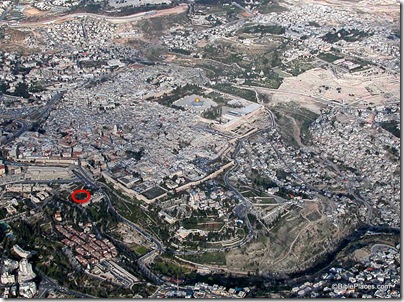
Tom Powers has written and posted photos on a new excavation in the Hinnom Valley, just north of “Artists’ Lane.”  The salvage dig is being carried out in advance of the construction of a park to honor former Jerusalem mayor Teddy Kollek.  The hole is deep and there appears to be a lot of architecture, but the workers were less than happy to be the subject of the paparazzi and quickly chased Tom away. 

It’ll be interesting to learn what they find.  Historically this area has always been outside the walls of Jerusalem.  Somewhere in the Hinnom Valley lies ancient Topheth, where the kings of Judah made sacrifices to foreign gods (2 Kgs 23:10; Isa 30:33; Jer 7:31-32; Jer 19:6-14).  I’ve always pictured that being further to the south.  When more becomes available, I’ll note it here.

The Israel Antiquities Authority has uncovered an arched bridge in the Hinnom Valley that was built in the 14th century as a replacement of the Lower Aqueduct bridge from the 1st century.  From Arutz-7:

Two of the bridge’s original nine arches have now been excavated to their full height of about three meters.
In actuality, the newly-discovered bridge was built in 1320 C.E. by the sultan Nasser al-Din Muhammed Ibn Qalawun, as evidenced by its dedicatory inscription. However, it was apparently constructed to replace an earlier bridge dating to the time of the Second Temple period that was part of the original aqueduct.
Yechiel Zelinger, excavation director on behalf of the Israel Antiquities Authority, said, “The bridge, which could still be seen at the end of the 19th century and appears in old photographs, was covered over during the 20th century. We were thrilled when it suddenly reappeared in all its grandeur during the course of the archaeological excavations.”
“The route of the Low Level aqueduct from the time of the Second Temple, beginning at Solomon’s Pools near Bethlehem and ending at the Temple Mount, is well known to scholars,” Zelinger said. “Substantial parts of it have been documented along the edge of Yemin Moshe neighborhood and on the slope adjacent to the Old City’s western wall. In order to maintain the elevation of the path along which the water flowed, a bridge was erected above the ravine.”

The story continues here.

Yesterday Tom Powers posted his observations of the excavation along with a couple of great photos. 

He wonders aloud if the earlier foundations of the bridge underlie the present one.  Perhaps the archaeologists will pursue this question.

The Global Arab Network has posted a number of articles on discoveries in Egypt, as noted by Joe Lauer.

1. A new tomb was discovered by an SCA mission at Tell el-Maskhuta [biblical Succoth] in the Ismailia governate (Egypt). The tomb dates to the 19th Dynasty (1315-1201 BC), is constructed of mud brick and consists of a rectangular room with a domed ceiling made of stone, and a deep square-shaped shaft.

2. The Head of Antiquities of Lower Egypt Mohamed Abdel-Maqsoud said that archaeological missions working in North Sinai have unearthed Tharu, an ancient fortified city, a move which stressed the importance of this area as the eastern gate of Egypt.

3. A collection of 14 Graeco-Roman tombs dating to the third century BC have been found in a cemetery in the Ain El-Zawya area of the town of Bawiti, in Bahariya Oasis.

The first and third articles have photographs of the finds.

Students from the International Academy Amman recently were given hands-on experience in excavating the ancient city of Gadara (cf. Matt 8:28).  From the Jordan Times:

Digging in trenches in northern Jordan was far from 18-year-old Aoun Jumaa’s definition of “fun”.
But after the International Academy Amman (IAA) student spent the past week excavating at Um Qais as part of his school’s community action and service programme, he said he has gained appreciation of the Kingdom’s “exciting” archaeology.
“I have been to Um Qais, but I have never seen it like this before,” he said.
The programme offers students the unique opportunity to explore their past and open up avenues for their futures.
The 20-odd students quickly learned that an archaeologist’s day is by no means an easy one. Starting at dawn, the students were in the trenches digging, cleaning and shovelling all morning, and after a short lunch break, they sorted and washed pottery shards and attended evening sessions on pottery identification and cultural interpretation.
Meanwhile, they devoted their evening hours to research projects, interpreting their finds and writing down their analysis, according to IAA teacher and programme coordinator Andy Daily.

The full article is here.

HT: Joe Lauer

Gadara nymphaeum, tb060503129

Gadara nymphaeum with Sea of Galilee in distance