The Ketef Hinnom Archaeological Garden has now opened, no longer requiring passage through the Begin Center to visit the First Temple period tombs.

An agreement was signed to carry out renovations in the Church of the Holy Sepulcher by the Eastern Orthodox, Roman Catholic, and Armenian Apostolic churches. There is no word on whether the ladder will be moved.

Some are claiming that Muslims have turned the Golden Gate into a mosque.

The IDF carried out a simultaneous detonation of 900 landmines in the region of Qasr el-Yehud near the Jordan River.

A number of wildfires have been set this week in the region of Samaria.


The Times of Israel runs a story on the relaunch of the Temple Mount Sifting Project.

I can’t tell which part of this “10th-century gate discovered at ‘Bethsaida’” wasn’t reported last year, but the Jerusalem Post is running it as news.

A Turkish archaeologist discovered a stone with a Greek inscription embedded in a wall during roadwork near Cnidos.

Carl Rasmussen shares photos of Roman-period anchors piled up in a corner of the Malta Maritime Museum.

Glenn C. Altschuler reviews Jodi Magness’s new book, Masada: From Jewish Revolt to Modern Myth. I would expect the book to be a worthwhile read for anyone interested in Masada.

Charles Savelle reviews David Dorsey’s classic, The Roads and Highways of Ancient Israel (now back in print).

HT: Joseph Lauer, Agade, Keith Keyser
Share:

“Life Lessons from Israel: Gezer” is the latest in the devotional video series by Biblical Israel Ministries and Tours.

BYU Magazine features a story about the Huqoq synagogue mosaics, with several photos and videos.

Dina Shalem explains the Peqi‘in Cave—A Unique Chalcolithic Cemetery in the Southern Levant (with many photos).

The W. F. Albright Institute of Archaeological Research is celebrating Albright’s 128th birthday on 5/24 by seeking 524 gifts of $128 each.

“The Book of Psalms” is the newest course at the Institute of Biblical Culture.

Wayne Stiles goes to Egypt’s Valley of the Kings to understand better the tension between God’s sovereignty and our choices.

In a new article published Thursday in the Tel Aviv journal, Israel Finkelstein, Nadav Na’aman and Thomas Römer argue that the Mesha Stele records the name of “Balak,” king of Moab (see Num 22) and not the “house of David,” as proposed by André Lemaire. Lawrence Mykytiuk considers the Balak reading dubious because it is anachronistic. Ronald Hendel says they are guessing and the word could be “Bilbo.” Michael Langlois is preparing a new study based on Reflectance Transformation Imaging in which he strongly argues for “house of David.”

Macherus III, the final report on the Herodian citadel, is now available. Gyozo Voros has done a remarkable job in publishing his results most expeditiously. A festival is planned in 2020 to celebrate the work, and a new fence line will parallel the 2-mile-long Roman siege wall.

Megan Sauter interviews Jonathan S. Greer, John W. Hilber, and John H. Walton about the new book they edited, Behind the Scenes of the Old Testament.

Bidding has opened at $10 in the Logos’s Community Pricing model for Survey of Western Palestine: Memoirs of the Topography, Orography, Hydrography, and Archaeology (3 volumes).

Check out the new “trailer” for the Bar Ilan University Land of Israel Studies and Archaeology Department.

HT: Agade, Joseph Lauer, Ted Weis, Alexander Schick

Share:

Eggshells discovered in the City of David are the first evidence of chicken eggs used the diet of ancient Israelites.

A group of high schoolers discovered a rare gold coin from the time of Theodosius II (AD 420) on a class trip in Galilee.

A new archaeological visitor center has opened at Jokneam, at the base of Mount Carmel not far from Megiddo. The highlight is a 9th-century statue of the city’s ruler. There’s a slideshow on Facebook.

The partnership between Israel Finkelstein and Tel Aviv University physics professor Eli Piasetzky began when the latter was volunteering undercover at the Megiddo excavation.

The new Petra Museum has been inaugurated. It is located next to the main entrance to the site.

Flora Brooke Anthony provides examples of how Egyptians depicted in art their northern neighbors in the Levant.

Egypt’s Ministry of Antiquities Newsletter for March 2019 is now online.

Adriano Orsingher explains the purpose of Phoenician and Punic masks.

Salvage excavations in Larnaca, Cyprus, revealed more than 110 tombs from the Early Bronze to the Late Roman periods.

Lightning recently struck the Acropolis in Greece, closing it temporarily.

Emory University is receiving the Senusret Collection, “one of the most extensive collections of ancient Egyptian and Near Eastern artwork to be donated to a US museum.”

“Life Lessons from Israel: Dan” is the latest video produced by Biblical Israel Ministries & Tours.

Israel’s Good Name recounts his visit to Herodium.

Now is the time to register for the 2019 season at Tell es-Safi/Gath.

“The arched stone-built hall in Jerusalem venerated by Christians as the site of Jesus’ Last Supper has been digitally recreated by archaeologists using laser scanners and advanced photography.”

Carl Rasmussen’s posts this week focus on Jesus’s crucifixion, including (1) crucified man from Jerusalem; (2) bone box of Caiaphas; (3) Church of the Holy Sepulcher; and (4) the best rolling stone tomb in Israel.

Pilgrims in Jerusalem yesterday celebrated Good Friday and Passover.

Police arrested several people who were planning to smuggle two baby goats onto the Temple Mount for a sacrifice.

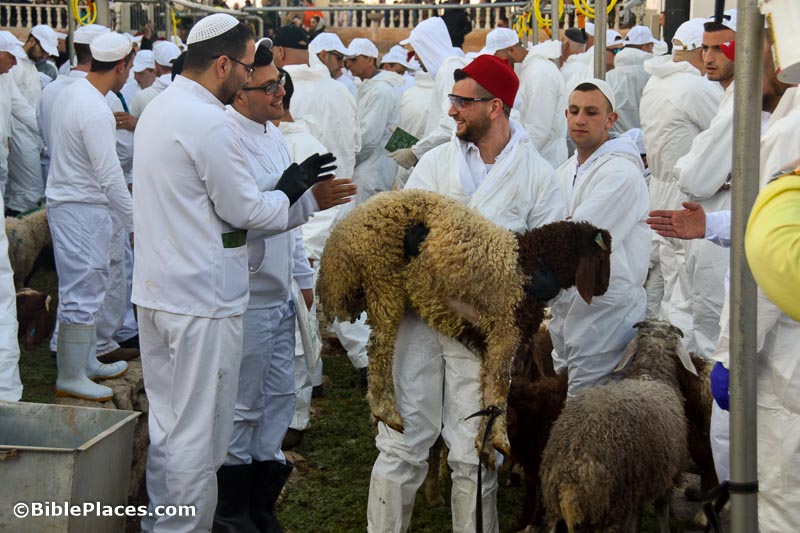
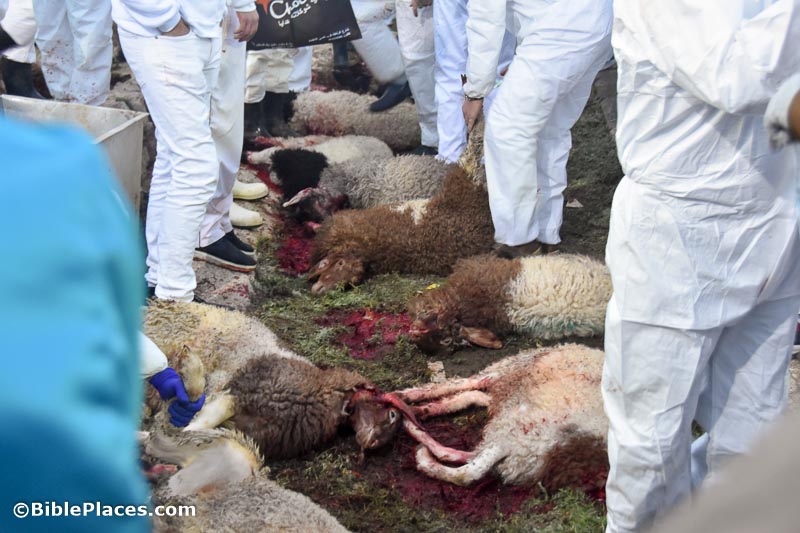
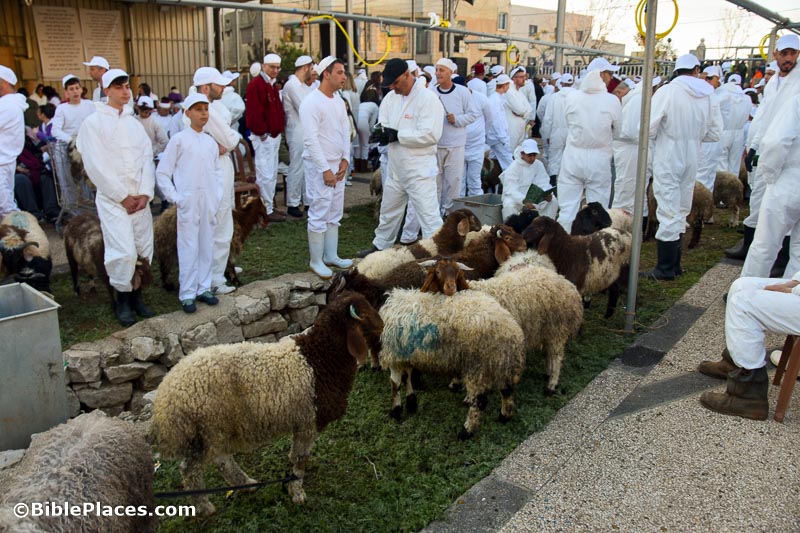
The Samaritans celebrated Passover on Thursday evening. See below for a few photos my son took at the event.

HT: Agade, Ted Weis, Steven Anderson, Chris McKinny

“He was led like a lamb to the slaughter…”

“And as a sheep before her shearers is silent, so he did not open his mouth…”

“He was cut off from the land of the living; for the transgression of my people he was stricken…”

Share:

A 1st-century Jewish settlement is now being excavated near Beersheba, and one find is an early depiction of a nine-branched menorah.

Christopher Rollston offers some reflections on the Nathan-Melek seal impression, concluding that it is “most likely” that this is the same person mentioned in the Bible.

“Excavation work carried out in Ramses II’s temple in Abydos, Sohag, has uncovered a new temple palace belonging to the 19th Dynasty king.”

Hasmonean-era tombs near Jericho have been looted recently.

Conservation work was done on the Western Wall ahead of the Passover holiday.

“Ancient Color” is “a new exhibition at University of Michigan’s Kelsey Museum of Archaeology, dives deep into the material and application of pigment in ancient Rome, and in doing so highlights a colorful, international history.”

Opening today at the Peabody Museum: “Ancient Mesopotamia Speaks: Highlights from the Yale Babylonian Collection.”

With 40 inches of rainfall so far this year, the Sea of Galilee rose 6 inches last weekend.

Recent rains caused flash flooding near the tomb of Cyrus in Pasargadae.

David Moster explains “Telling Time in Ancient Israel” in a new 9-minute video.

Wayne Stiles has just announced a tour to sites in Turkey and Greece, including a 3-night cruise to the Greek isles.

Reported on April 1: the discovery of the world’s oldest break-up letter.

If you’ve been thinking about registering for the Institute of Biblical Context conference this June, note that the early bird discount ends on Wednesday.

This video shows footage of Jerusalem one month after the Six-Day War in 1967.

HT: Joseph Lauer, Agade, Alexander Schick

Share:

A winepress from the Byzantine period was discovered at Chorazin by a team doing conservation work.

The recent discovery of a depiction of the Egyptian god Bes in the City of David Givati parking lot excavation is the first of its kind ever found in Jerusalem.

The Times of Israel features a well-illustrated story on the Beth Shemesh excavations including the controversy and the museum exhibit.

A new sound-and-light show, used advanced technologies, has been unveiled at Masada.

A shipwreck discovered in Heracleion matches the description of a Nile River boat described by Herodotus.

Excavation work at Macherus is complete after 11 years, but conservation work will continue.

Over a million people are expected between March-September to attend the Louvre exhibition of the  Egyptian pharaoh Tutankhamun. The show features the largest number of Tut items ever displayed together. As construction nears completion for the new Grand Egyptian Museum in Giza, the Egyptian Ministry for Antiquities states that after the six city world tour is completed, key pieces related to Tut will never again leave Egypt.

The Basrah Museum in southern Iraq has added three new galleries, totaling 2,000 pieces, focused on Sumer, Assyrian, and Babylonian objects.

Erin Darby will be lecturing on “The Archaeology of Women in Ancient Israel” in Oak Ridge, Tennessee, on April 2.

The History Channel has a photo essay of ten biblical sites.

Wayne Stiles recently visited the Royal Mummies Hall in the Cairo Museum.

Bible History Daily features a profile on Julia Berenice, the companion of King Agrippa II in Acts 26.

New from the Oriental Institute of the University of Chicago: The Great Hypostyle Hall in the Temple of Amun at Karnak, by Peter J. Brand, Rosa Erika Feleg, and William J. Murnane. For purchase in hardback or a free download.

“The Setting of the Assassination of King Joash of Judah: Biblical and Archaeological Evidence for Identifying the House of Millo,” by Chris McKinny, Aharon Tavger, Nahshon Szanton, and Joe Uziel, is a paper read and illustrated by Chris McKinny.

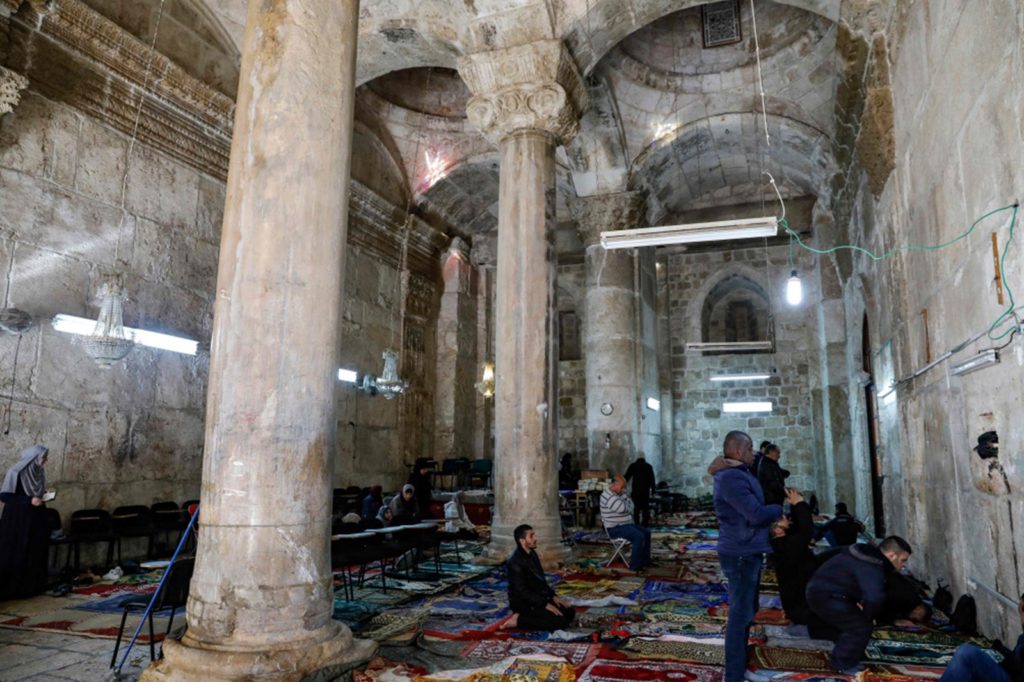
The photo below, from DerStandard, shows the interior of the Golden Gate in recent times.

HT: Ted Weis, Agade, Charles Savelle, Alexander Schick, Paleojudaica

Interior of the Golden Gate
Photo from DerStandard
Share:

Emek Shaveh is requesting that the plans for renovation in the Jewish Quarter include opening the massive Nea Church from the Byzantine period.

The controversy continues over whether the Muslims can open the Golden Gate to worshippers.

The Karaite community is concerned that the proposed Jerusalem cable car will desecrate its ancient cemetery.

Mark Barnes explains why Jesus was crucified outside Jerusalem.

Ferrell shares a favorite photo this week of the Dead Sea.

Israel’s Good Name shares nature photos from his hike along Nahal Alexander.

A clever vandal spray-painted on the ancient synagogue of Merom, “This holy place will not be desecrated.”

The water level of the Sea of Galilee has risen above the lower red line for the first time in two years.

A study of the mountain fortress of Sela confirms the importance of the site in the Iron II period.

Video: An archaeologist is using drone imagery to track tomb looting in Jordan.

The Department of Antiquities of Jordan has made some great resources available for free online, including the Annual of the Department of Antiquities of Jordan and Studies in the History and Archaeology of Jordan.

HT: Explorator, Agade, Chris McKinny, Paleojudaica

Share: