Some months ago I learned about a new Virtual Walking Tour of al-Haram al-Sharif (the Temple Mount), but being short of time, I filed it for later.  Today seems to be a slow news day and so I started it up and enjoyed the tour.  It is excellent.

Created by Saudi Aramco World, the tour focuses on the present Muslim structures at the site, but it does not deny the previous existence of the two Jewish temples.

The tour begins with a five-minute narrated introduction (which you can skip) and then includes 32 360-degree panoramic views, each of which is explained both by an audio recording and a written transcript.

The visitor starts with two views of the Temple Mount from the east and west before surveying the grounds of the complex with approximately 18 more scenes.  A particularly unique image is #25, taken atop Al-Aqsa Mosque.

Tourists to Israel today can see most of these views if they visit during the open hours of the Temple Mount (approximately Sun-Thurs, 7:30-10:00 am, 12:30-1:30 pm), but since 2000 the holy buildings have been closed to non-Muslims.  Thus the images inside the Dome of the Rock and Al-Aqsa Mosque will be especially appreciated by those who have been denied entrance.

A couple of practical comments: 1) You can turn the audio off and read the text; 2) the full-screen view is very high quality, but may be slow on your internet connection; 3) to get “inside” the Dome of the Rock, select #8 and new options will become available; 4) to get “inside” Al-Aqsa Mosque, select #26.

The creators did a fantastic job with this.  The photography is superb, the narration is helpful, and the location is one of the most religiously (and politically) important in the world.

Dome of Rock from southwest, tb122006949dxo2 Dome of the Rock from southwest
Share:

I’ve recently learned about a new website devoted solely to the city of Jerusalem.  If you are planning a trip to the city, this site has a number of pages that may help you to get the most of your time.  For instance:

Best Jerusalem Old City sites – this “top 10” list has 12 recommendations and I would basically agree with the selections.  The hours and prices are helpful as well, as long as they remain up to date. 

Some extra links reflect the extra time spent developing the website, such as the tips about appropriate attire for Hezekiah’s Tunnel and information about the Jerusalem mp3 tour.

The Museum Guide gives eight recommendations, including full pages about three of them.  The Israel Museum page gives a good summary of the major highlights, though it will be worth mentioning here that the Archaeology Wing is closed until 2010 (Middle East Time).

I’m not sure how many times I’ve had to explain how to get from Ben Gurion airport to Jerusalem, but this page gives all the details you need to know except the price for a shared taxi (about $11 or NIS equivalent).

There are some points I would disagree with – such as women in pants being required to wear skirts at the Western Wall prayer area (I’ve never seen that) – but overall the advice seems sensible and accurate.

Some sections are still under development, such as “Where to Eat,” but overall visitors will find much to help them plan their trip in the city.

Share:

A third-century A.D. Roman building has been excavated in the City of David in Jerusalem. 

Excavations in this past and future parking lot located in the Central (Tyropean) Valley have formerly revealed a first-century A.D. palace believed to have belonged to Queen Helene of Adiabene.

From the press release of the Israel Antiquities Authority:

A spacious edifice from the Roman period (third century CE) – apparently a mansion that belonged to a wealthy individual – was recently exposed in the excavations the Israel Antiquities Authority is carrying out in the ‘Givati Car Park’ at the City of David, in the Walls Around Jerusalem National Park. The excavations are being conducted at the site on behalf of the IAA and in cooperation with the Nature and Parks Authority, and are underwritten by the ‘Ir David Foundation.
According to Dr. Doron Ben-Ami, the excavation director on behalf of the IAA, together with Yana Tchekhanovets, “Although we do not have the complete dimensions of the structure, we can cautiously estimate that the building covered an area of approximately 1,000 square meters. In the center of it was a large open courtyard surrounded by columns. Galleries were spread out between the rows of columns and the rooms that flanked the courtyard. The wings of the building rose to a height of two stories and were covered with tile roofs”.
A large quantity of fresco fragments was discovered in the collapsed ruins from which the excavators deduced that some of the walls of the rooms were treated with plaster and decorated with colorful paintings. The painted designs that adorned the plastered walls consisted mostly of geometric and floral motifs. Its architectural richness, plan and particularly the artifacts that were discovered among its ruins bear witness to the unequivocal Roman character of the building. The most outstanding of these finds are a marble figurine in the image of a boxer and a gold earring inlaid with precious stones.

The full release can be found here (temporary link).

Three high-resolution photos can be downloaded from the IAA website, including photos of the earring and statue and an aerial photograph of the building.

HT: Joe Lauer

Share:

I was traveling last week when the Jerusalem Post reported on the installation of a model of the Second Temple above the Western Wall plaza, but readers who didn’t see it elsewhere may be interested.  You can see another photo of the model at Arutz-7; it looks very similar to the model at the Israel Museum (formerly Holyland Hotel).

Some 50 people gathered on Wednesday to watch the installation of a Second Temple model on the roof of a yet-unfinished Aish HaTorah yeshiva building, across from the Western Wall and just a few hundred meters from where the real thing once stood.
With the Dome of the Rock and the Aksa Mosque standing conspicuously in the background, a crane lowered the 1.2-ton model onto the roof.
It took about a year for Michael Osanis, an immigrant from the former Soviet Union who has built a number of other Temple models, including one in the Temple Institute, also in the capital’s Jewish Quarter, to complete this model, which is made from gold, silver, wood and Jerusalem stone.
The model will sit on a new educational building for Aish HaTorah’s short-term outreach programs, which is set to open in December.
Aish, which provides a network of educational programs for Jews around the world, is also building a new “Exploratorium” – an interactive museum on Jewish history, which it expects will host 300,000 visitors annually after it opens in two years.
“What could be more appropriate than to have here, as people are standing looking out over our holiest place, the Temple Mount, a sense of what it was really like to have the Temple here?” asked Ephraim Shore, director of Aish’s programs in Jerusalem.
The yeshiva hopes that this model will help people to visualize the Temple and therefore forge a stronger connection with Judaism and Jewish history.
“It is hard for us to imagine a Temple and to feel that we are praying inside the Temple,” said Rabbi Hillel Weinberg, the head of Aish’s Jerusalem yeshiva.
“But now, everyone who comes and sees this Temple model, it will be much easier for them to connect to the Temple and to direct their prayers to the Holy of Holies.”
As the crane lowered the model into place, an argument broke out about which direction it should face. Should it mirror the way the actual Temple sat in relation to the Temple Mount, or sit the opposite way, making it easier for large crowds to see it?
Osanis swiftly decided that ease of access was more important, and positioned the model accordingly. Not everyone in the crowd was happy with the decision.

The story continues here.

HT: Joe Lauer

Share:

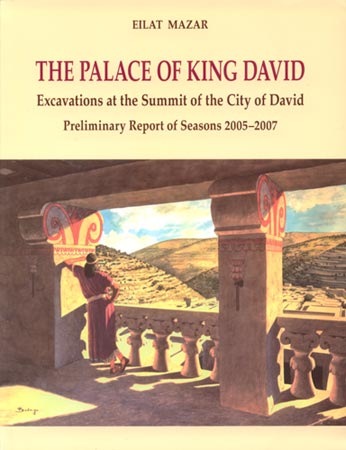
The first preliminary report of Eilat Mazar’s excavations of the City of Davidmazar_palace is provocatively entitled, The Palace of King David.  The cover art shows an artist’s reconstruction of the palace, based on far more than what Mazar has excavated in her first three seasons.  The 100-page work is subtitled Excavations at the Summit of the City of David: Preliminary Report of Seasons 2005-2007, and it is to be published by Shoham Academic Research and Publication in 2009.  Eisenbrauns has it available for pre-order for $22.50.

The publisher’s description is as follows:

The preliminary report of the excavations at the top of the City of David hill in 2005-2007 summarizes the main findings from the Chalcolithic (the 5th millenium [sic] BCE) through the early Islamic (the 11th century CE) periods and presents initial conclusions of great importance to the study of the ancient history of Jerusalem.

UPDATE (8/10): The book is now shipping.

Share:

Years ago I would say that no city had been excavated more than Jerusalem.  Today I think it’s also true to say that no city is currently being excavated more than Jerusalem.  Peter Wong has shared a few photos that he took last week.

Mount Zion excavations, by Peter Wong 7014

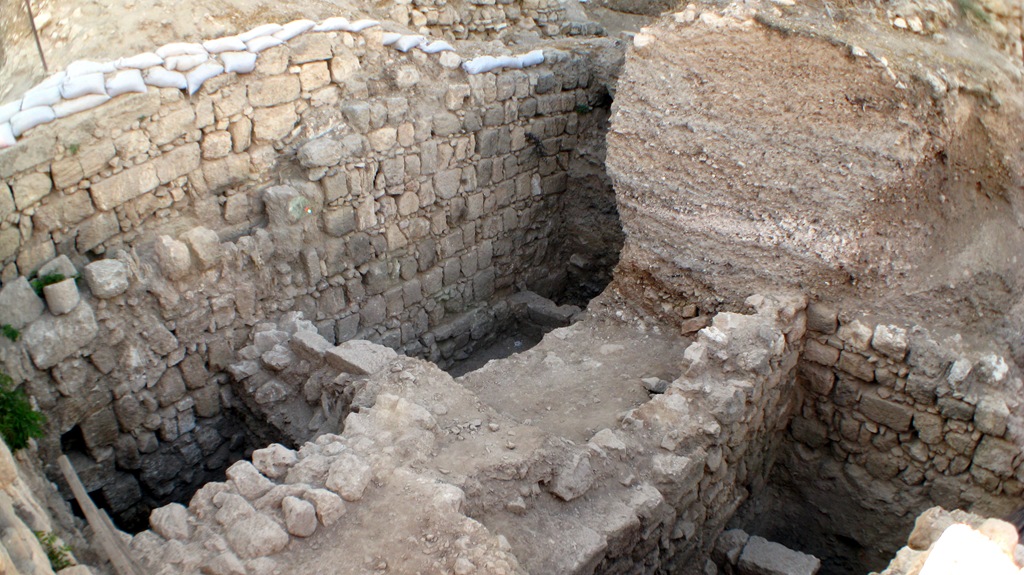
Excavations on Mount Zion. See here for more information about the summer’s discoveries.
Tyropoean Valley excavations, by Peter Wong 6524
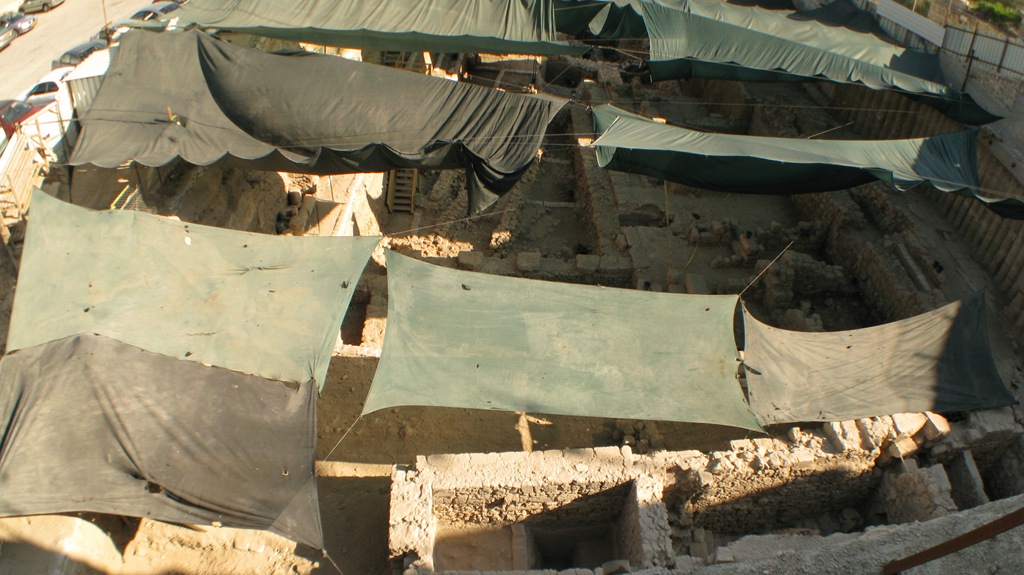
Excavations in the Central (Tyropoean) Valley. See here for the report of the discovery of Queen Helene’s palace in this area.

Western Wall excavations, by Peter Wong 6097

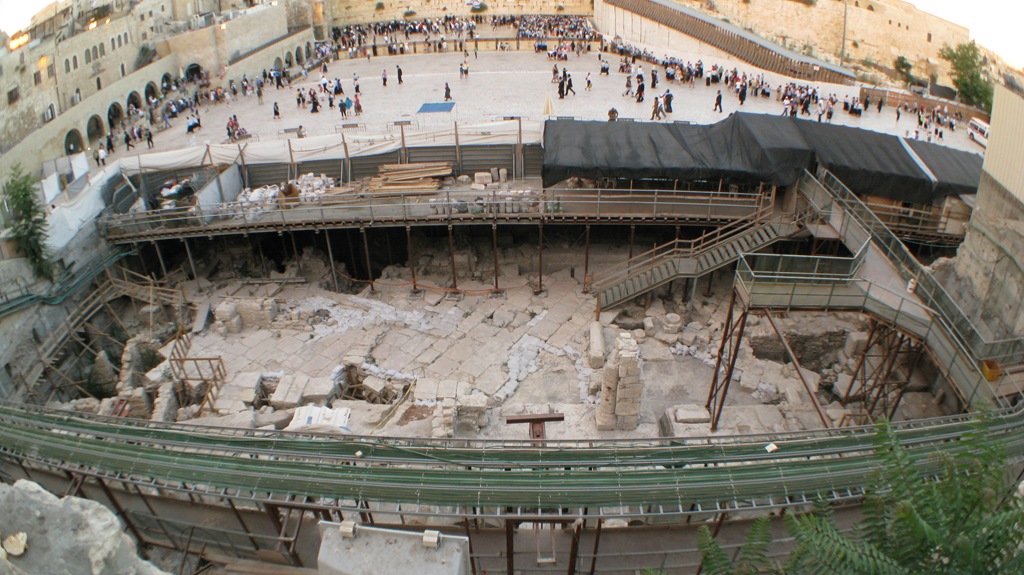
Excavations in the Western Wall plaza.  See here and here for earlier photos.
Share: