I was talking with a scholar the other day about the general lack of archaeological material in Israel from the Persian period (530-330 B.C.).  This is especially true for the city of Jerusalem.  Then today I learned this from a reliable source:

Just yesterday, Eilat Mazar found a Persian period layer with much pottery and bullae, mostly fragments, but one with a beautiful 5th century B.C. inscription from the Persian Period.

Mazar is excavating in the City of David, above Shiloh’s Area G, on the summit of the hill in an area where she believes she is excavating the palace of David.  When I know more, or when this is reported in the media, I’ll mention it here.

Share:

The Jerusalem Post story on the on-going saga of “excavations” on the Temple Mount is here.  The abbreviated version follows:

Genius #1: Shmuel Dorfman

“There was no damage to the remains of buildings or artifacts.”

Sir, can you tell me if you excavated with a tractor?

“They were under time pressure.”

It’s good to know that you can excavate with a tractor and cause “no damage” to ancient remains. 

This guy wouldn’t pass Archaeology 101.  Unfortunately he is the Director-General of the Israel Antiquities Authority.

Genius #2: Meir Ben-Dov, retired archaeologist

“There were no archeological findings in the ground,” Meir Ben-Dov told the committee. “They dug
a total of 50 cm. [18 inches] deep and all of it was fill-in from the earlier infrastructure that had been installed.”

Somebody should have told this guy about the Iron Age remains from an undisturbed layer that were discovered in this trench.  Ben-Dov is not an honest man.  He just expected that the Muslims would have destroyed it all so thoroughly that no one would ever be able to prove him wrong.  Fortunately somebody was watching “the excavation” between tractor scoops and not all was lost.

The good news:

“The Knesset State Control Committee on Monday decided to ask the State Comptroller’s Office to investigate procedures for allowing the Wakf Islamic trust to excavate on the Temple Mount, amid claims by archeologists that the laying of electric cables there in August endangered ancient artifacts.”

Share:

A remarkable discovery of undisturbed archaeological material from the Temple Mount and dating to the Old Testament period was announced yesterday by the Israel Antiquities Authority.  This is remarkable for a few reasons:

By all appearances, there was little apparent archaeological supervision of the Muslim digging of a trench on the Temple Mount last month.  That’s why lots of people were screaming.  It’s not that digging itself is bad, but digging without proper archaeological procedure is simply destruction.

Undisturbed layers from the First Temple period (1000-586 B.C.) are not often found anywhere in Jerusalem.  This is because of later building activities and because of current inhabitation of the city.

No undisturbed layers from any period have been excavated on the Temple Mount, ever.  This is owing to Muslim control of the site and their prohibitions against archaeological excavation.  This dates back to the earliest “archaeologists” in Jerusalem, including Charles Warren in the 1860s.

It has been expected that the construction of the present Temple Mount by King Herod in the 1st
century B.C. was so extensive and destructive that little would remain (in stratified contexts) from the previous eras.  The present discovery does not seem to constitute significant material in and of itself, but it certainly gives hope that more could be recovered should excavations be permitted.  Similar discoveries from this time period have been made by Gabriel Barkay in his Temple Mount Sifting Project, but they were not from a stratified context as this was.

Enough of the significance of the discovery, here are some details:


Items discovered: ceramic table wares, animal bones, olive pits, bowls, juglet base, storage jar rim. 


Date of items: 8th-6th century (roughly the times of Hezekiah to Josiah)


Location of discovery: southeastern corner of raised platform on Temple Mount


Archaeologist in charge: Yuval Baruch, Jerusalem District Archaeologist


Consulting archaeologists: Sy Gitin, Director of the W. F. Albright Institute of Archaeological
Research in Jerusalem, Israel Finkelstein of Tel Aviv University and Ronny Reich of Haifa University


The key statement making this an important discovery: “The layer is a closed, sealed archaeological layer that has been undisturbed since the 8th century B.C.”, Jon Seligman, Jerusalem regional archaeologist.


The skeptic: Eilat Mazar, “I think it is a smoke screen for the ruining of antiquities.”


The future: examination of the discoveries in a future seminar to be organized by the Israel Antiquities Authority


More information: Israel Ministry of Foreign Affairs (with photos), Israel National News (with wrong dates), Haaretz, Jerusalem Post, Maariv (more detailed article in Hebrew)

Share:

ABC has some photos of the quarry, or you can watch a two-minute video with relatively poor footage of the site (and two guys who can’t correctly pronounce the object of the discovery). 

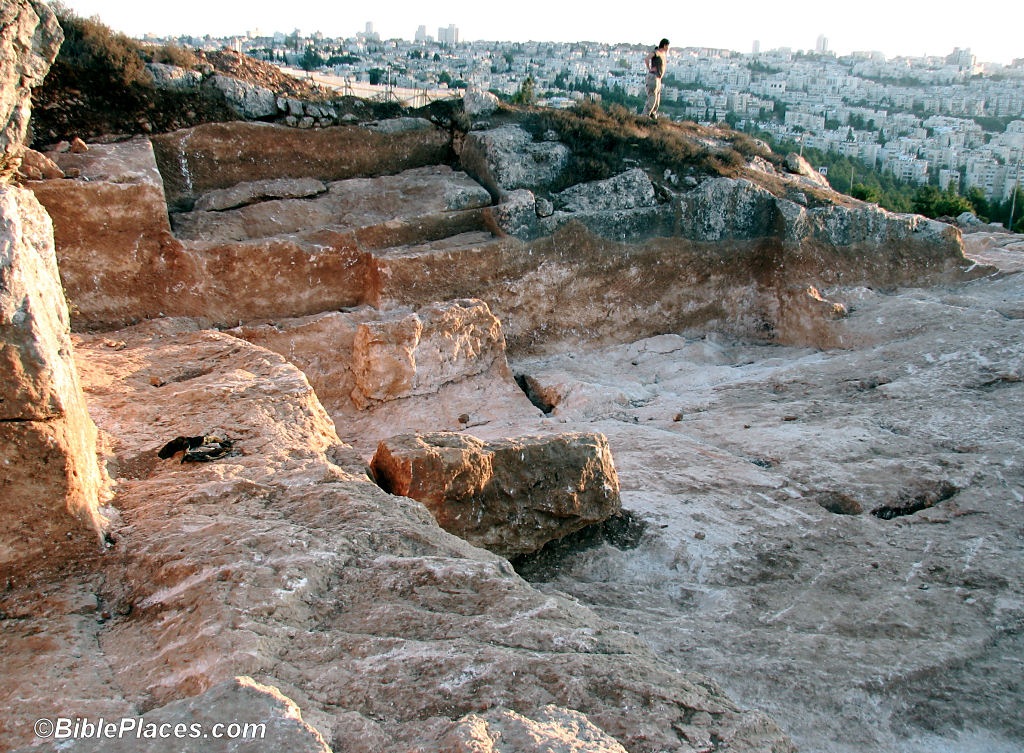
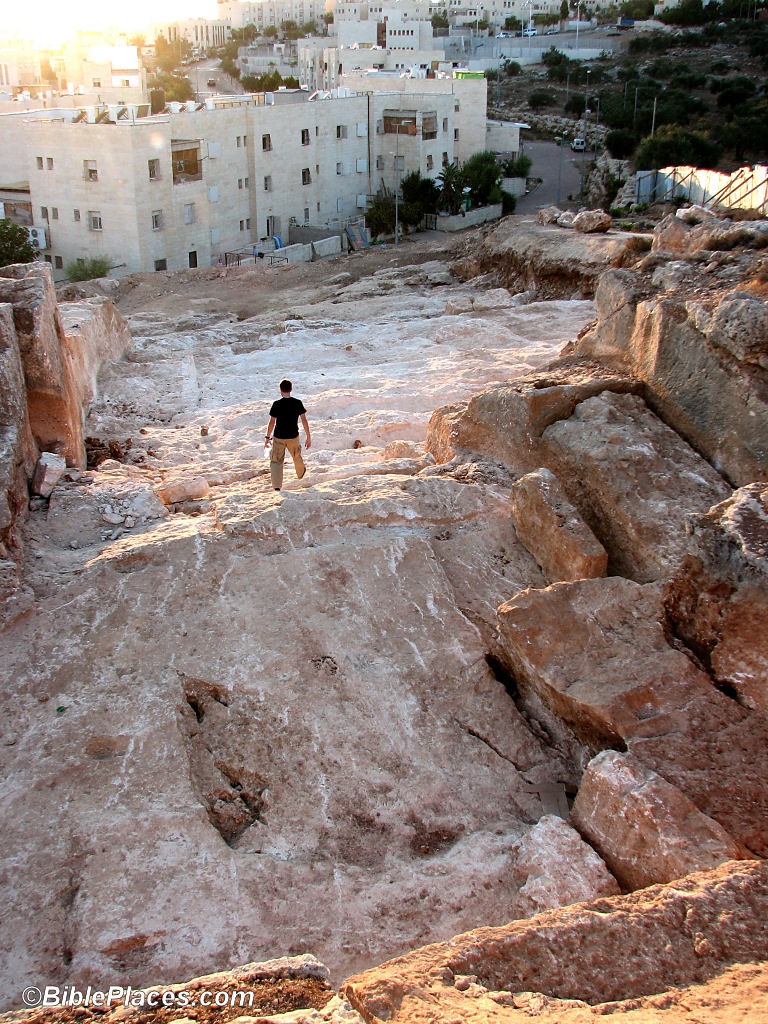
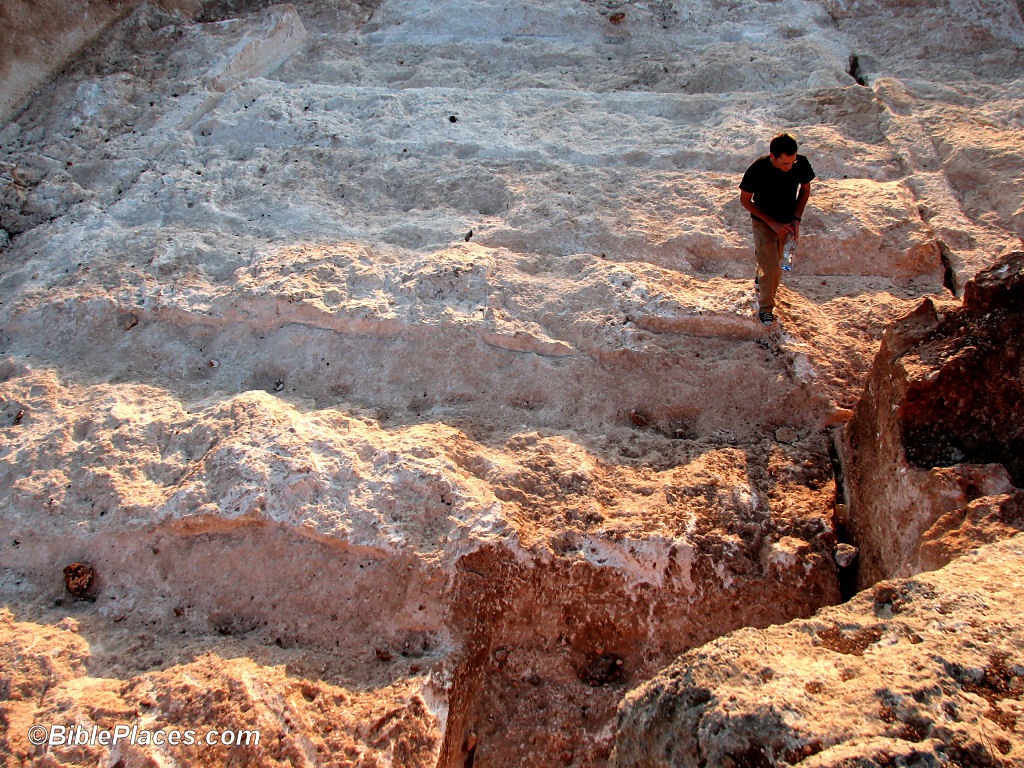
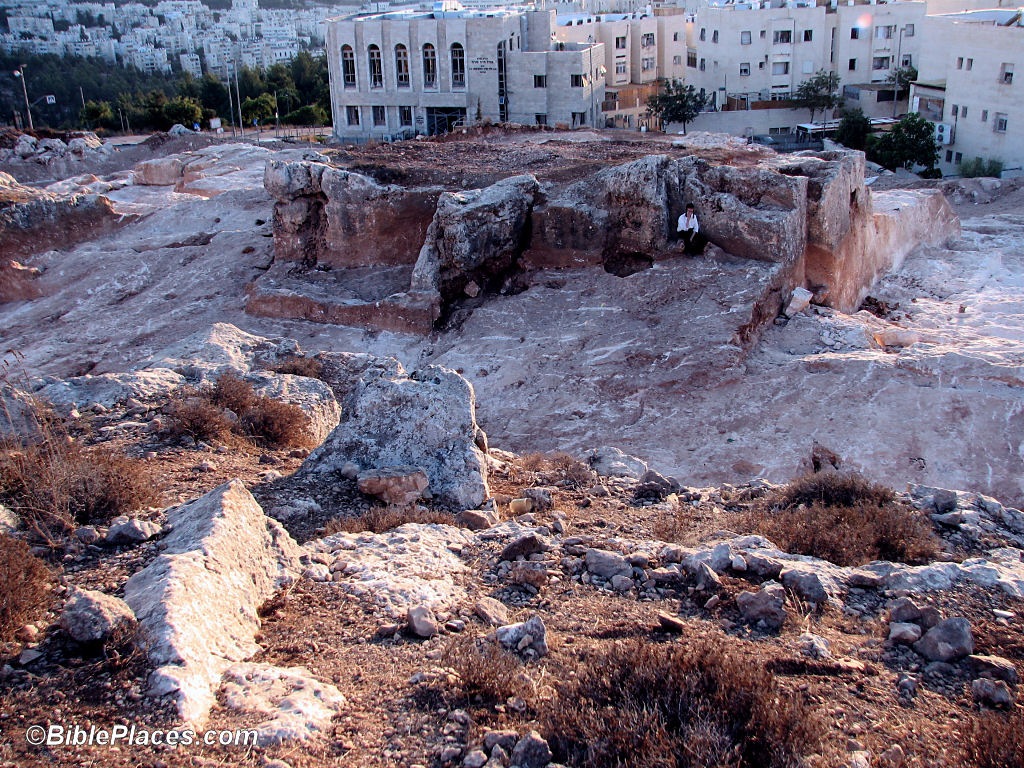
BiblePlaces.com has some exclusive photos of the quarry area, with thanks to Aubrey Laughlin for sharing them with us.  Click on each photo for a higher-resolution version, which you are free to use for personal and educational purposes.

Herodian quarry, al092407516sr
General view showing how the ancients cut away the mountain
Herodian quarry from north, al092407543sr
View showing the proximity of the quarry to Ramat Shlomo
Herodian quarry, al092407541sr
Showing a cross-section of the mountain and Jerusalem in the distance
Herodian quarry, al092407527sr
Notice the trenches cut in the rock in the foreground
 Herodian quarry, al092407550sr
A view showing where quarrying activity ended.
  
Herodian quarry, al092407555sr 
You can easily see where the rocks were extracted
Herodian quarry, al092407538sr
A trench made in order to extract the stone
Next challenge: Identify the stones removed from this quarry (bonus points if you can put each one back in its original location!).
Share:

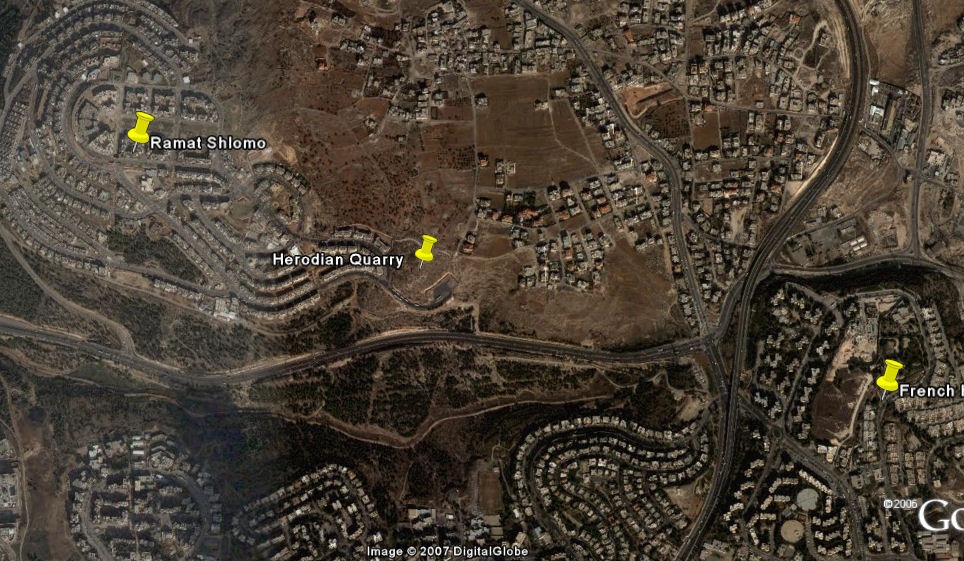
I have been asked where exactly the quarry was located.  Here are two maps from Google Earth that show the area of the quarry, about 2 miles (3 km) north of the Old City.  You can click on each for a larger view.

jerusalem_quarry
General view.  Note the highway to the east of the quarry is similar to the ancient route (known sometimes as the Central Ridge Route or the Road of the Patriarchs).
jerusalem_quarry2
Closer view, which will be helpful if you’re in the neighborhood and want to see it yourself.
Share:

Haaretz reports:

Jordan will allocate 1.113 million Jordanian Dinars ($1.5 million dollars) to the Jordan Hashemite Fund for the Reconstruction of Al-Aqsa Mosque and Dome of the Rock, King Abdullah II announced yesterday during a meeting of the trustees of the new fund… The fund will pay for a new fire detection system that will be installed in the complex of mosques, as well as a modern fire suppression system. In addition, the fund will acquire a fire truck that will be stationed near the Al-Aqsa Mosque. A team in charge of preserving mosaics and antiquities will also undergo further training at the expense of the new fund. Jordan’s decision to intensify its role in the Al-Aqsa Mosque complex stems in part from the presence of other Arab interest groups that have made increasing inroads there.

Share: