The Israel Antiquities Authority (IAA) has announced the discovery of an Iron Age seal from the excavations in the Western Wall plaza.  This is the second of two seals previously reported and it reads “[belonging] to Netanyahu ben Yaush.”  Both names are known from the Bible, but this particular person is not mentioned.  This seal was found a debris layer dating to the end of the Iron Age (c. 586 B.C.) underneath the “Eastern/Valley Cardo.”  The area of the excavations is shown in the photo below.  More information about the discovery and a photo of the seal is available in the IAA press release (and repeated by Arutz-7).
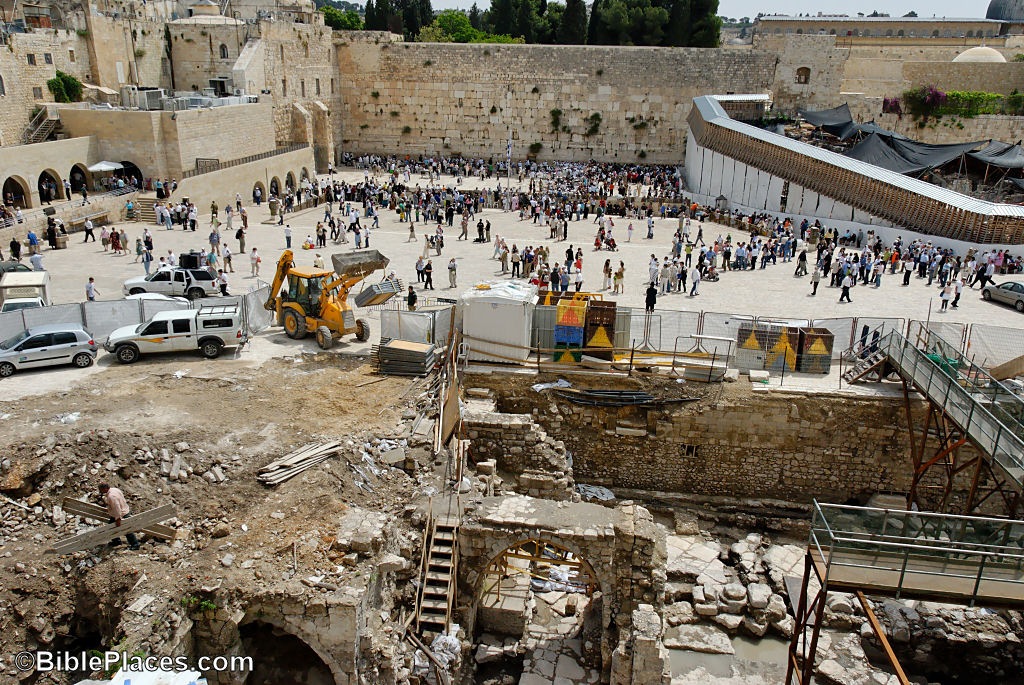
Western Wall plaza excavations, tb051707664
Excavations in Western Wall plaza, May 2007
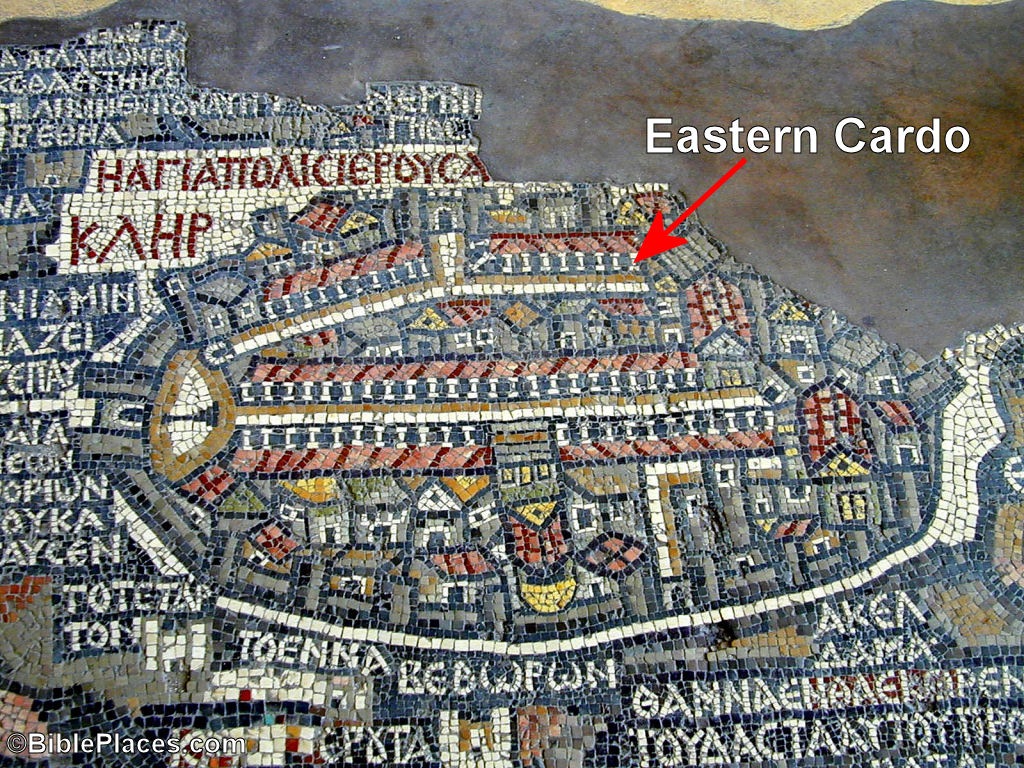
Medeba map, Jerusalem, tb031801034
Medeba Map depiction of Jerusalem, 580 A.D.

The following paragraph from the press release seems strange to me, and if it wasn’t the IAA reporting it, I’d not believe it:

In addition to the personal seal, a vast amount of pottery vessels was discovered, among them three jar handles that bear LMLK stamped impressions. An inscription written in ancient Hebrew script is preserved on one these impressions and it reads: למלך חברון ([belonging] to the king of Hebron).

My guess is that this is a standard LMLK seal impression, and it simply gives one of the four place names that are listed on LMLK seals (Hebron, Ziph, Socoh, MMST).  The place name is a royal distribution center, and is not a reference to the domain of the king.  “To the king” means that it was royal property.  “Hebron” is the place of distribution.  All of this is well-known (and you can learn more than you ever wanted to know at www.lmlk.com), which makes me wonder if this discovery is something different, or if the press report was written by a secretary.

UPDATE (3/17): The JPost now has an article on the discovery, which essentially covers the same ground, including repetition of the error of the seal “belonging to the king of Hebron.”  The article ends with details I don’t recall seeing:

The newly-found remnants of the city’s past will be preserved next to a new Western Wall Heritage Center, slated to be built at the site, and whose planning prompted the salvage dig.
The construction of the building, which is expected to take several years and is being underwritten by the American media mogul Mort Zuckerman, will include an educational center, a video conference room, a VIP lounge and a police station.
Share:

The Jerusalem Post has a couple of recent articles related to Jerusalem and archaeology.
Police stop Islamic work on Temple Mount – The police won’t stop the Muslims from digging up the ground but they’ll stop them from replacing tiles.  I wouldn’t call this progress.

Digging too deep? – A report on the political aspects of the excavations in the City of David.

As always, don’t believe everything you read.

Share:

I don’t remember seeing this published elsewhere and you might miss it under the title “What Happened to the Clerks and Merchants of the 8th Century BCE?”  Ronny Reich and Eli Shukrun have discovered more seals in the City of David, these from the 8th century (the time of kings Uzziah, Jotham, Ahaz, and Hezekiah).  These excavators had previously discovered a collection of seals from the 9th century, and these did not bear inscriptions.  But they recently found two stone seals and three bullae (seal impressions), all inscribed with Hebrew names.  The best preserved has the name “Rephaihu (ben) Shalem.”  The article is brief and includes a photo of the complete seal. 

Though they operate without much fanfare, Reich and Shukrun’s excavation in Jerusalem over the last 13 years has produced more interesting results than probably any other dig in Israel, including discovery of the two towers at the Gihon Spring, the reinterpretation of Warren’s Shaft, the discovery of the Pool of Siloam, and many other related architectural features and small finds.

HT: Joe Lauer

Share:

If you’re keeping up on the damage caused to the Temple Mount by multiple “excavations” of dubious legality, you’ll be interested in the report, “The Latest Damage to Antiquities on the Temple Mount,” published by the Jerusalem Center for Public Affairs.  The report surveys the situation since the 1990s, most of which is well-known to those who have followed the news, but this report handily summarizes the main points.  The major focus of the article is who is in control and thus who is responsible.  It concludes:

The Waqf, the Islamic Movement, and various Islamic groups have exploited the situation and have seriously damaged Temple Mount antiquities. The Israel Police plays the dominant Israeli role and its activities are coordinated with the prime minister’s office and the office of the attorney general, while the Israel Antiquities Authority and the Jerusalem municipality have only limited influence over what is done at the Temple Mount.

Share:

The AP has a nothing-else-to-report-today article about the Israeli excavations in the City of David, focusing particularly on the political aspects. The thesis of the article is summed up in this paragraph:

Israel says it’s reconnecting with its ancient heritage. Palestinians contend the archaeology is a political weapon to undermine their own links to Jerusalem.

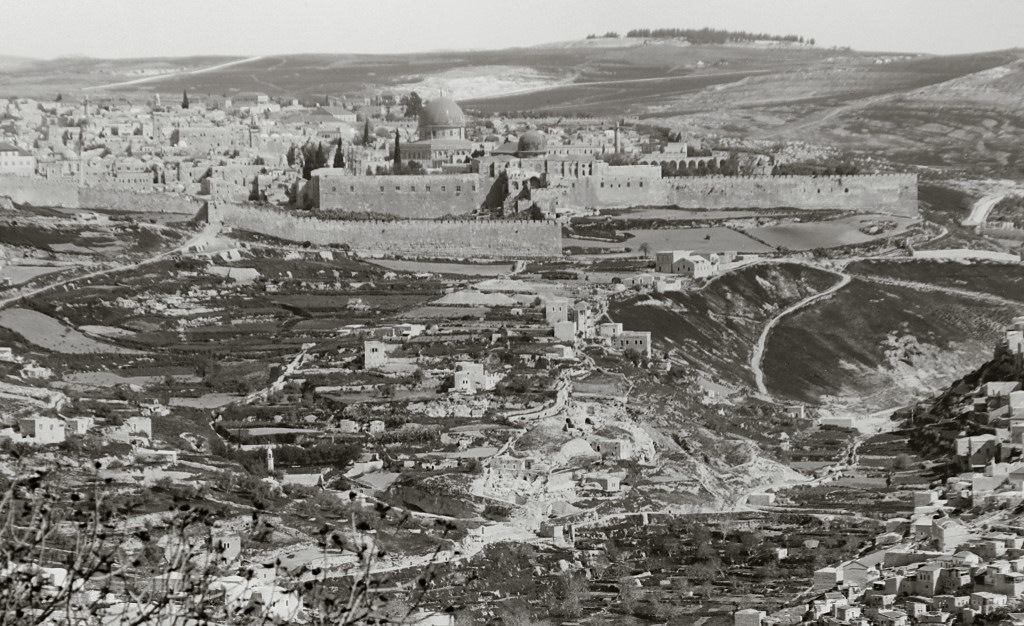
The article interviews both sides, though it’s not in-depth enough to satisfy either side. My contribution to the story is a photograph of the City of David that shows the area sometime in the first half of the 20th century, but without most of the buildings.

08433uJerusalem from south Kidron Valley, mat08433
City of David from the south
Source: Library of Congress, LC-matpc-08433
Some information and photos about ancient sites in the area can be found at these BiblePlaces.com pages: City of David, Hezekiah’s Tunnel, Warren’s Shaft, and Pool of Siloam.
Share: