The Albright Institute is hosting an exhibit entitled “Gateway to the World: Jerusalem Airport 1948-1967” from Oct 28 to Nov 28. Eldad Brin has written an article for the Jerusalem Quarterly with the same title.

The Israel Oriental Studies Annual has been relaunched after a two-decade hiatus.

Mordechai Cogan laments the closing of the Department of Bible at the Ben-Gurion University of the Negev, and especially the manner in which it was done.

“The University of Haifa is establishing the first-of-its-kind School of Archaeology in Israel, which will integrate all archaeological activities and endeavors undertaken by the university—on land and at sea.” It will be headed by Israel Finkelstein.

An antiquities dealer in New York City has confessed to manufacturing thousands of fraudulent antiquities after authorities discovered an assembly-line process in the gallery’s back rooms.

A podcast argues that a 2018 photograph of Kim Kardashian with a 1st century BC Egyptian gold coffin at the NY Metropolitan Museum of Art provided an essential clue toward determining that the coffin was looted and illegally sold.

Zoom lecture on Oct 27: “Old, but Still Topical: The Dispute Between Driver and Sayce on Biblical Archaeology,” by Hugh Williamson.

Zoom webinar on Nov 1: “Virtual Workshop: Jerusalem in Roman-Byzantine Times,” hosted by the Albright Institute with discussions in response to Jerusalem II: Jerusalem in Roman-Byzantine Times, edited by Katharina Heyden and Maria Lissek.

Author panel webinar on Nov 3, hosted by Eisenbrauns, with Seymour (Sy) Gitin, author of The Road Taken: An Archaeologist’s Journey to the Land of the Bible; Martin Heide and Joris Peters, authors of Camels in the Biblical World; and Larry G. Herr, Douglas R. Clark, and Lawrence T. Geraty, authors of The 2004 Season at Tall al ‘Umayri and Subsequent Studies.

Zoom lecture on Nov 4: “Guarding Archaeology: Everyday Labour in the British Mandate Department of Antiquities,” by Sarah Irving.

Zoom lecture on Nov 11: “Work and Worth: Women’s Household Activities in Ancient Israel,” by Carol Meyers.

Robert Mullins is interviewed on Patheos about his archaeological work in Israel and his new book, Atlas of the Biblical World.

Ferrell Jenkins writes about his “longest trip,” the 66-year journey with his wife that ended earlier this month.

Do all roads lead to Rome? It’s a little complicated.

ASOR has dozens of digital maps of the ancient world available for free use.

HT: Agade, Joseph Lauer, Arne Halbakken, Ted Weis, A.D. Riddle, Paleojudaica, Explorator, BibleX
We have more stories this weekend than perhaps ever before for a single week (nearly 50), so expect a third installment of the roundup on Monday.

The first-ever ancient depiction of the balm of Gilead was discovered on an amethyst seal found by volunteers sifting soil from near the Temple Mount. There’s a 3-minute video here.

Excavations at el-Araj (Bethsaida?) have wrapped up for the season, and the archaeologists discovered a large apse and two partial inscriptions in the mosaic floor of what they believe is the Church of the Apostles.

A diver found a Crusader-era sword in perfect condition off the coast of northern Israel. There is a short video here.

Not only the Crusader sword but much more has been discovered because of a once-in-a-century storm that occurred in December 2010.

Archaeologists discovered a hoard of silver coins from the Hasmonean era in Modiin.

Daniel Master is a guest on the Book and the Spade to discuss the recent excavations at Tel Shimron.

An organization is calling on the Israeli government to excavate and open to tourists the site of ancient Gibeah of Saul, more recently home to King Hussein’s unfinished palace.

“Members of the Samaritan faith gathered at sunrise on Wednesday to mark Sukkot, a month after Jews celebrated the festival.” The short story includes a brief video.

NY Times: “Rameh, a Palestinian town [in Galilee] surrounded by olive groves, has long had a reputation for producing especially good oil.”

Megan Sauter writes about the importance of three purple textile fragments from the time of David recently discovered in the Central Timna Valley Project.

Andrew Califf writes about seven lesser-known archaeological sites in Israel (Haaretz paywall).

The Museum of the Bible is offering virtual tours of Masada and Megiddo on November 10 and 17, “using advanced images combined with an online interactive classroom to create a rich, immersive experience.”

A new exhibition by the Israel Antiquities Authority at the Yigal Allon Center in Kibbutz Ginossar offers a glimpse of the centuries when Jewish sages managed to rebuild a community in the Galilee.”

Kyle Keimer and Chris McKinny discuss Cabul in the days of Solomon in the latest episode of OnScript’s Biblical World.

When children volunteering at the Temple Mount Sifting Project stole some of the artifacts, the director used the opportunity to instruct them on the community’s responsibility.

On sale for Kindle: A Week in the Fall of Jerusalem, by Ben Witherington ($3.99)

HT: Agade, Joseph Lauer, Arne Halbakken, Ted Weis, A.D. Riddle, Paleojudaica, Explorator, BibleX

A huge complex of 1,500-year-old winepresses capable of producing some two million liters of wine a year has been uncovered by archaeologists in the city of Yavne, south of Tel Aviv.”

Margreet L. Steiner looks at the elusive Persian archaeological evidence in Jerusalem in order to determine what the city was like when the Jews returned from exile.

Meital Sharabi recommends visits to two interesting locations in the Judean hills west of Jerusalem.

Makhtesh Ramon in southern Israel is home to a crew simulating a colony on Mars.

Zoom lecture on October 17: “Family, food and health in the Bronze Age Aegean: Novel bioarchaeological insights into Mycenaean and Minoan societies,” by Philipp W. Stockhammer

Zoom lecture on October 20: “The City of Babylon from c. 2000 BC to AD 116,” by Stephanie Dalley. Her book on this subject was released earlier this year.

Zoom lecture on November 4: “Under Jerusalem: The Buried History of the World’s Most Contested City,” by Andrew Lawler, author of a forthcoming book with the same title.

The Florence Scroll, a 14th-century parchment depicting holy sites from Egypt to Lebanon, is now on display in the Israel Museum as part of the “Painting a Pilgrimage” exhibit.

Bible Mapper has created several new maps, available in high-res for free non-commercial use:

HT: Agade, Arne Halbakken, Joseph Lauer, Charles Savelle, Ted Weis

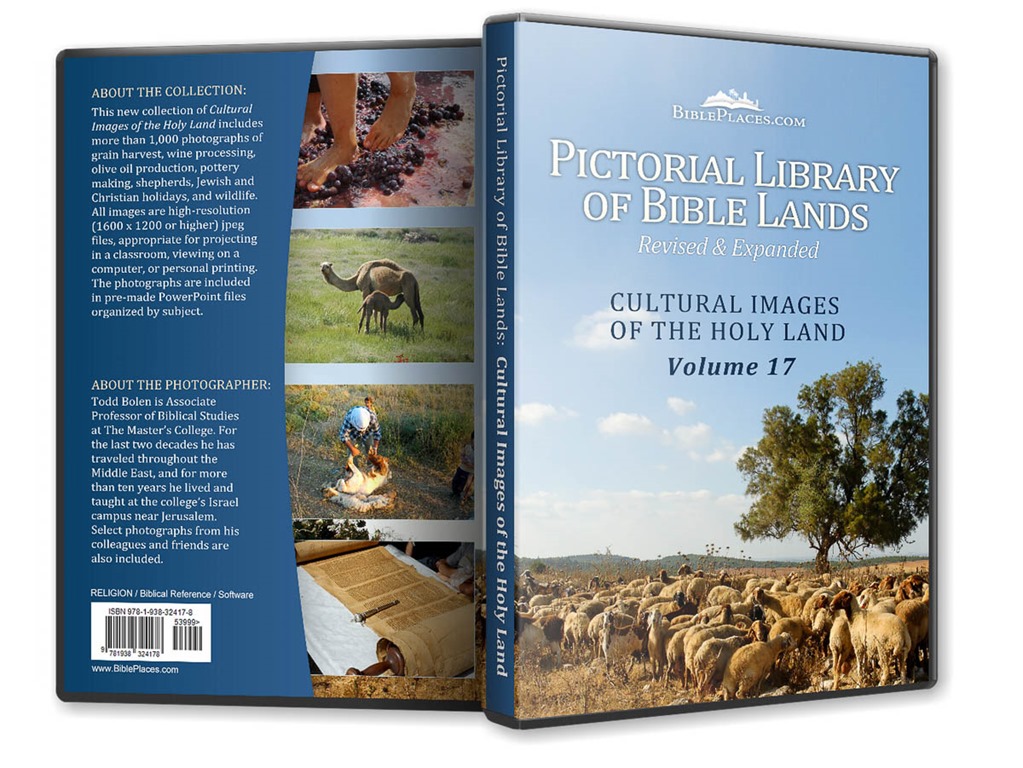
Weekend Sale: Cultural Images of the Holy Land – only $20 with coupon HARVEST

17-Cultural-Images

Archaeologists have discovered a private toilet in Jerusalem that dates approximately to the time of Manasseh or Josiah.

Archaeologists have identified the first-known Crusader army camp in Israel near ancient Sepphoris.

“Jewish heritage sites in Judea and Samaria are being systematically vandalized and destroyed by local Arabs, according to a watchdog group which monitors archeological sites in the area.”

Amihai Mazar has prepared a list of publications by the late Eilat Mazar that are available for order from the publishing house.

Aren Maeir’s MOOC (Massive Open Online Course) on Biblical Archaeology will run again beginning on November 1.

In the second episode of the Special Texts of the Ancient Near East series, Mary Buck and Chris McKinny discuss the Mesha Stele.

The latest subject in Bryan Windle’s archaeological biography series is Hoshea, the last king of Israel.

The 24th Annual Bible & Archaeology Fest is only one week away, and the complete list of speakers and topics is online.

“The Institute of Biblical Culture is pleased to announce the David Marcus Giving Library, which will provide more than 2,000 scholarly books to the general public free of charge, aside from shipping. The first of six subject areas is Assyriology. To view the collection and request any of the hundreds of books, visit the Institute of Biblical Culture website.”

HT: Agade, Joseph Lauer, Arne Halbakken, Explorator

The location of the biblical Red Sea is the subject of a recent book by Barry Beitzel, and he provides a sample of the evidence in a new post for the Ancient Near East Today.

The City of David YouTube channel has a new 5-minute video about the excavation of the “Pilgrimage Road” leading from the Pool of Siloam to the Temple Mount.

Related: Helene Machline recounts some exciting moments in recent excavations in the City of David (1.5 min video in Hebrew with subtitles).

Susan de la Fuente writes about water sources of Jerusalem over the millennia.

Sergio and Rhoda give a 15-minute video overview of the discoveries at Tel Burna, including the recently revealed 10th century BC destruction layer.

On the Biblical World podcast, Mary Buck and Chris McKinny begin a new series on “Texts from the Ancient Near East” with an introduction to languages and writing in the ancient world.

The top 3 reports in biblical archaeology in September include “the building of a city, the destruction of a city, and everyday life in a city.”

Oct 4: Webinar on Orientalist photography, in celebration of the opening of the “Between Science and Art: Early Photography in the Middle East” exhibition at the Heritage Library.

Oct 12: Online lecture: “Excavating Abila: Past, Present, and Future,” by David Vila

HT: Agade, Arne Halbakken, Charles Savelle, A.D. Riddle

Excavations at Itamar in the West Bank have uncovered a sealed cistern with tools and vessels from the Second Temple period, an olive press, a mikveh, and a coin with the image of Mount Gerizim.

A new study claims that Tall el-Hammam was destroyed by a cosmic airburst circa 1650 BC. Biblical archaeologists are not convinced that this proves the site is Sodom.

Rossella Tercatin interviews Yuval Gadot about recent archaeological discoveries in the Jerusalem area in a 25-minute Zoomcast.

Archaeology sheds light on how Jews celebrated the Feast of Tabernacles in the 1st century.

Mark Janzen and Kyle Keimer interview Eric Cline on the Biblical World podcast.

Isabel Cranz surveys royal illness in the Bible and the ancient Near Eastern texts.

ASOR members in the US can purchase several recent archaeological publications for $25 each through the end of the month.

The purpose of HIERAX software is “to enhance the legibility of papyri for text edition and publication. It consists of an image processing tool and an image viewer.”

I predict that Bryan Windle’s “Top Ten Discoveries Related to Moses and the Exodus” will become one of his blog’s most popular posts.

The early bird discount for the Infusion Bible Conference ends on Thursday.

HT: Agade, Ted Weis, Arne Halbakken, Joseph Lauer, Explorator, Charles Savelle