Archaeologists working at el-Araj (Bethsaida?) discovered a lioness relief in a pile of debris.

A mosaic from a Georgian church or monastery has been excavated in Ashdod-Yam, leading archaeologists to believe they may have finally discovered the Roman-Byzantine city of Ashdod-Yam.

“Rock art in Saudi Arabia showing what appears to be Israel’s national breed depicts vivid scenes of man’s earliest known use of canines in taking down prey.” Science shares a video.

Three Roman shipwrecks were discovered this week near Alexandria.

A ancient temple of Isis was discovered in excavations in Banha City in Egypt.

A new video shows an ancient fortress under the waters of Turkey’s Lake Van.

A new study of the cemetery of Qumran strengthens the argument that the site was inhabited by celibate men.

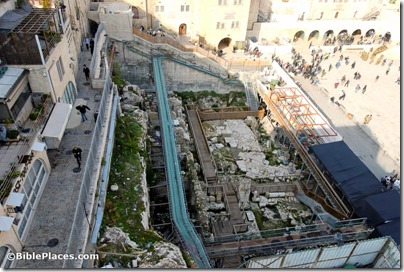
Elad has been granted the right to run the Davidson Center archaeological park south of the Temple
Mount (Haaretz premium).

Tourists can now enjoy virtual reality experiences when visiting  Caesarea, Acco, and the underwater observatory in Eilat.

A colleague visited the Museum of the Bible for its opening weekend and offers some initial impressions.

If you’re looking for a unique gift for a lover of the ancient world, check out the Museum Shop (The Suq) at the Oriental Institute.

HT: Charles Savelle, Lois Tverberg, Joseph Lauer, Agade

Share:

Noam Chen has produced a photo essay of the “hidden gems of Jerusalem,” including the Kishle, Siebenberg House, the Italian Synagogue, Jason’s Tomb, Helena’s Well, Little Western Wall, Church of St. John the Baptist, and the Mamluk Halls inside the Western Wall Tunnels.

Israel’s Good Name recently participated in an excavation of the Upper Aqueduct south of Jerusalem.

“More than half a dozen lost Bronze Age cities have been tracked down in Turkey through a mathematical analysis of the accounts left on 12,000 clay tablets by ancient Assyrian traders.” (Registration required.)

“An international seminar about the recently discovered gap in the Great Pyramid of Giza will be held in the upcoming period.”

Golden sheets from Tutankhamun’s tomb will be on display for the first time ever at the Egyptian Museum in Cairo. There are more photos here.

An exhibition of the photographs of the excavation of King Tut’s tomb has opened at The Collection in Lincoln, UK.

Michael Press challenges the notion that Palestine was “desolate” in the 19th century. (I observe that his essay does not include any photos.)

For those who have long been wondering: eggplant arrived in Jerusalem just over 1,000 years ago.

Excavations at Ein Hatzeva, home of the “Biblical Tamar Park,” are summarized.

What can we learn from the cities of refuge?

The Museum of the Bible is now open and The Times of Israel gives some highlights. The Washington Post calls it “an up-to-date version of an old-fashioned museum.” World Magazine reviews some of the controversy associated with the museum.

New release: Walking through Jordan: Essays in Honor of Burton MacDonald, edited by Michael Neeley, Geoffrey Clark, and P. M. Michèle Daviau (Equinox, 2017).

Accordance has a big sale going on now in conjunction with the annual meetings of ETS/ASOR/SBL.

Karl Katz, founding curator of the Israel Museum, died this week.

HT: Agade, Joseph Lauer

Share:

Seven inscriptions were discovered in three Byzantine churches excavated in Galilee this summer. Haaretz (premium) also covers the story. Archaeologists have discovered a Hellenistic-era gymnasium in the Fayoum province of Egypt. A recently discovered Assyrian tablet provides the first-known diagnosis to determine infertility. An intact sundial from the Roman period has been discovered in the excavation of a theater near Mount Cassino in Italy. A year-long mysterious excavation with high security in Tarsus ended with no explanation of what they found or why they were excavating. A gemstone discovered in Pylos, Greece, from the 15th century BC is a “masterpiece of miniature art.” Megan Sauter describes the Terra Sancta Museum, a new stop on the Via Dolorosa. Wayne Stiles’s post this week on Lachish includes some new drone video footage he shot recently. The Museum of the Bible is the topic of discussion this week on The Book and the Spade. Israel welcomed its 3 millionth tourist of 2017 this week. A new Biblical Archaeology Review Archive provides every article from 1975 to 2016 and is on sale for $130. Or you can subscribe to All-Access Membership for $35/year. HT: Jared Clark, Agade, Charles Savelle

Share:

Volume 8 of The Israel Museum Studies in Archaeology is available online. Several articles address a monumental Herodian Ionic capital from Jerusalem.

Detailed site plans and other materials from the Tell en-Nasbeh (Mizpah) excavations are now available online.

The exhibition “Nineveh – Heart of an Ancient Empire” has opened at the National Museum of Antiquities in the Netherlands.

The full lecture schedule for the Bible and Archaeology Fest XX has been posted.

Mount Nemrut in southeastern Turkey has attracted more than 50,000 tourists so far this year.

David Kennedy has identified nearly 400 mysterious ancient stone structures in Saudi Arabia using Google Earth.

“Is the Bible a True Story?” Nir Hasson wants you to think that there is “no evidence” for anything (Haaretz premium). Brent Nagtegaal responds here.

The September 2017 Newsletter of the Egyptian Ministry of Antiquities is online.

William Dever’s latest book, Beyond the Texts: An Archaeological Portrait of Ancient Israel and Judah, will be released on Friday.

Apparently there is a “Land of the Bible Park” in the Ramot forest near Jerusalem.

JewishPress.com reports on the excavations at Magdala. And Richard Bauckham is editing a book on Magdala (forthcoming fall 2018).

“Is there no balm in Gilead?” Wayne Stiles tackles this one.

HT: Charles Savelle, Agade

Share:

The Israel Antiquities Authority has arrested looters who discovered a cave in a Galilean village that was used for storage and stables in the Roman period.

Aren Maeir reports on a “mini-season” they held this week at Gath.

The “Bible Marathon” traces the route of the Benjamite who raced to tell Eli of the death of his sons.

One month before its opening in Washington, DC, the Museum of the Bible held a press conference to address questions about the museum’s practices.

The abandoned village of Lifta, possibly the site of biblical Mei Nephtoah, has been named one of 25 Endangered World Monuments.


The New York Times has an article in its dining section on the ancient Canaanite food and wine of Tel Kabri.

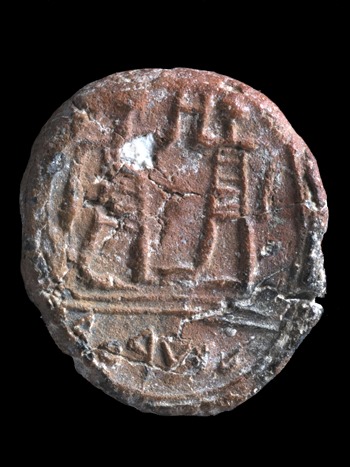
The Winter 2017 issue of DigSight reports on an exhibit on seals, a seal of “Ushna, servant of Ahaz,” and more.

Carl Rasmussen has begun a series on Paul’s shipwreck on Malta.

The Lod Mosaic will have a home when the Shelby White and Leon Levy Lod Mosaic Archaeological Center opens in 2019.

Volcanic activity may have played a significant role in the demise of the Egyptian Ptolemaic dynasty.

Israel’s Good Name describes his recent camping trip in Park HaMaayanot.

Prof. Zvi Lederman will be giving a lecture on Nov 13 at the University of Pennsylvania Museum of Archaeology and Anthropology entitled “A Lost Queen of the Sun — Tel Beth Shemesh, the Age of Amarna, and the Mysterious ‘Mistress of the Lions.’” The lecture is free and open to the public.

Matthew Suriano will be lecturing on Nov. 16 at Brandeis University on “A Tomb with a View: What can we learn about death in the Hebrew Bible from the Silwan Necropolis in Jerusalem?”

Eisenbrauns’ Deal of the Weekend is Unearthing Jerusalem, at 60% off.

The end of an era: Penn State University Press has acquired Eisenbrauns.

HT: Charles Savelle, Joseph Lauer, Ted Weis

Share:

The University of Nebraska at Omaha is hosting its 19th annual Batchelder Conference for Archaeology and Biblical Studies from November 9 to 11. Rami Arav will deliver the opening keynote address on “The First 30 Years of Excavations at Bethsaida.” Richard Freund will be the respondent. (Apparently Steven Notley is unavailable.)

The Friday evening address by David Gurevich is entitled “Water and Society: The Water Installation of Jerusalem in the Late Second Temple Period.” Twelve other scholars will speak, but the conference schedule has not yet been released.

The conference is free and open to the public.

HT: Judi King

Share: