Here’s a photo of the Temple Mount ramp that is being dismantled.

Mike Rogoff’s article in Haaretz describes the various baptismal sites on the Jordan River and gives guidance on which one is best.

Matt Glassman writes about his time excavating this summer at Khirbet el-Maqatir.

This article on “gender studies” at Tel Abel Beth Maacah is really just a piece about someone’s experience on the dig.

A conference this week in the City of David focused on gold treasures discovered in Jerusalem. The article ends with an insightful comment by Gabriel Barkay.

The re-discovery of a fragment of a lead coffin from Tyre prompted a lengthy article about the subject in Haaretz. Paleojudaica suggests its relevance for the forged lead codices.

The land of 10,000 caves is profiled in this piece on Beit Guvrin’s bell-shaped quarry caves.

Ferrell Jenkins has collected his articles related to the route of the Exodus and the location of Mount 
Sinai.

Aviva Bar-Am details the history and significance of Ashkelon, the first national park in Israel.

Wayne Stiles has all the visual aids you need for thinking about Jericho: photos, videos, and a map.

HT: Agade, Joseph Lauer

Ashkelon tell aerial from northwest, tb121704841
Tell Ashkelon from the northwest
Photo from Judah and the Dead Sea
Share:
(Post by A.D. Riddle)

The ArchéOrient blog recently posted a piece by Rocio da Riva on the inscriptions and reliefs in Lebanon belonging to the Neo-Babylonian king, Nebuchadnezzar II. (This is the king mentioned in 2 Kings 24-25; 2 Chron 36; Jeremiah; Daniel; and elsewhere in the Bible.) The original article is in French, but Google Translate does an almost-semi-respectable job of producing an English version here.

The article mentions four places in Lebanon where Nebuchadnezzar left inscriptions and/or reliefs.

  • Nahr el-Kalb
  • Wadi Brisa, aka Wadi esh-Sharbin
  • Shir es-Sanam
  • Wadi es-Saba’

Three of these sites are in the northeast of the Lebanon Mountains, oriented in the direction of Riblah, Nebuchadnezzar’s headquarters in the west (2 Kings 25; Jer 39 and 52). The inscriptions/reliefs are located along routes which lead up into the mountains and which were used by the Babylonians for felling and transporting cedars of Lebanon for construction. The locations can be viewed here in Google Maps (if I did it right).

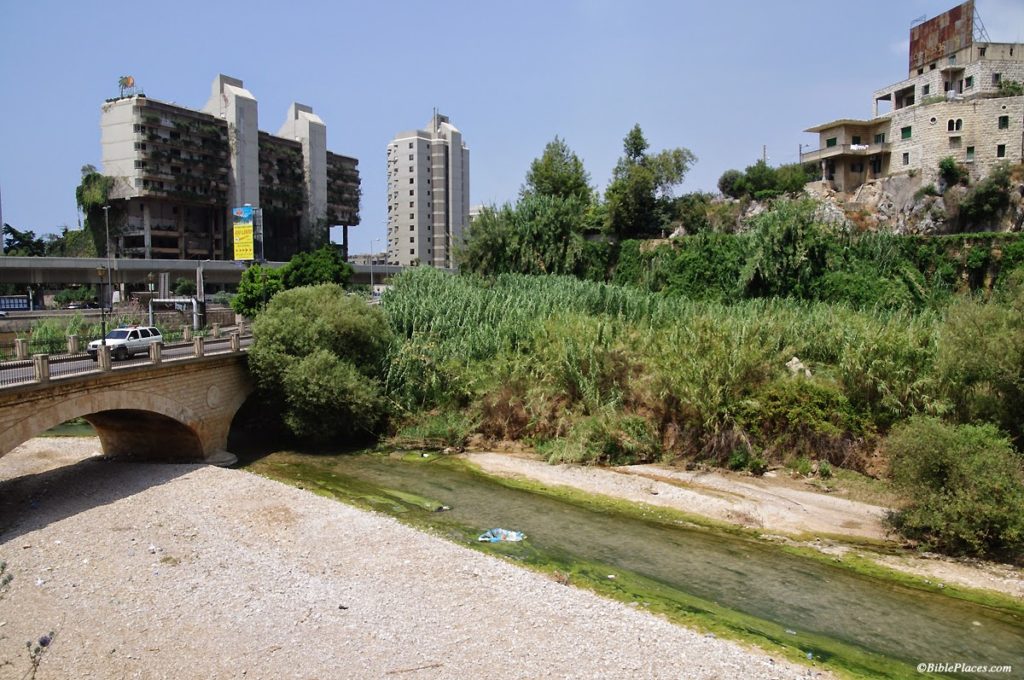
The Nahr el-Kalb inscriptions are alone on the other side of the Lebanon Mountains, at the mouth of a river named Nahr el-Kalb on the Mediterranean coast. (Well, not entirely alone, because on the opposite bank of the river is a rocky promontory where one will find nearly two dozen other stelae left by conquerers from Ramesses II in ca. 1276 B.C. to the “Liberation of South Lebanon” in A.D. 2000. See Seth’s post here.)

Nahr el-Kalb (“Dog River”).
The inscriptions of Nebuchadnezzar are secretly hidden
behind all the vegetation just right of the bridge.

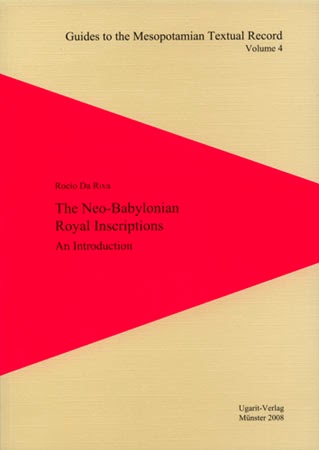
Da Riva has been working on the royal inscriptions of all the Neo-Babylonian kings. A lot of her recently-published work concentrates in particular on the Lebanon inscriptions listed above, but she has also just completed an edition of the inscriptions of Nabopolassar, Amel-Marduk and Neriglissar (cover shown below). Many of her articles are available at her Academia.edu page (sign up required).

As a prelude to her editions of the Neo-Babylonian royal inscriptions, Da Riva published a short introduction entitled The Neo-Babylonian Royal Inscriptions: An Introduction (2008). We recommend especially the first 19 pages where one will find a very nice, up-to-date, historical summary of the Neo-Babylonian period.

HT: Jack Sasson

Share:

After 31 years of hosting The Book & The Spade, Gordon Govier shares some personal reflections.

An aging Lebanese potter laments the passing of his craft.

Archaeologists have found evidence of the “plague of Cyprian.”

Satellite images from the US State Department’s Cultural Heritage Center “document the scale of destruction that looters continue to inflict on archaeological heritage sites during the ongoing conflict in Syria.”

Identifying a complete set of Edward Robinson’s Biblical Researches in Palestine at archive.org is a bit confusing, but David Stark has posted links to volumes 1 and 2 (3 volumes from 1841 in a 2-volume set, 2nd/11th eds.) and volume 3 (the 1856 volume, Later Biblical Researches, 11th ed.).

Now on pre-pub for Logos Bible Software: Near East Archaeological Society Bulletin (1958–2013) (78 issues) – $99.95.

ASOR’s Archaeology Weekly Roundup has more.

I’ll be traveling the better part of the next two weeks and will not be posting much. If they discover an archive at Hazor, Gezer, or Gath, I’m sure that one of my fellow contributors will let you know.

HT: Charles Savelle, Jack Sasson, Joseph Lauer, Ted Weis

Share:

Aren Maeir reports on the highlights of the 2013 excavation season at Gath (Tell es-Safi).

A statue of a Phoenician priest dating to the 6th century BC has been discovered in Sidon.

The Pope has arrived in Jordan and heads to Israel soon.

Some religious Jews are afraid that if Catholic mass is permitted in the Upper Room that they will be unable to pray at the Tomb of David downstairs.

A new study suggests that some of Petra’s structures were intended to align with the solstices and equinoxes.

Archaeological work in Jerusalem indicates that it was the Roman construction of Aelia Capitolina that triggered the Bar Kochba Revolt (and not the other way around).

Have you ever wondered how Jonathan defeated the Philistines by climbing the cliff of Michmash?

Wayne Stiles explains it all with maps and photos.

Ferrell Jenkins and Leon Mauldin are traveling in eastern Turkey. They have recently visited Haran
and the Zeugma Mosaic Museum.

Muslims in eastern Syria have apparently destroyed a statue from the Neo-Assyrian period looted from Tell Ajaja.

The 2014 excavation season has begun at Tel Jezreel.

The PACE (Project on Ancient Cultural Engagement) online database has moved.

Judith McKenzie’s black and white photographs taken in 1982-1986 for The Architecture of Petra
(1990) are now all available online at the Petra Digital Archive. Other collections are also online, in high-resolution and free for use in educational and academic publications and research.

HT: Joseph Lauer, Jack Sasson

Share:

Gordon Franz reports on his time at the “International Noah and Judi Mountain Symposium” in Sirnak, Turkey. He also provides a summary of a number of the presentations.

On The Book and the Spade this week: “Discovering Dalmanutha” with Ken Dark (direct link).

Norma Franklin believes the Megiddo water system was built during the Middle Bronze Age.

George Athas asks, “What’s New in Biblical Inscriptions?” and he suggests a cautious approach in announcing new discoveries.

An enormous Corinthian capital has been excavated at a temple of Hadrian in western Turkey.

A report in the Belfast Telegraph provides details about the ongoing excavations at Sidon.

Aviva and Shmuel Bar-Am provide a tour of Gezer.

Before there was writing, there were clay balls. Scholars are trying to decipher the code from objects found in Iran.

Dove Booksellers reports that the retail price is jumping up to $395 for The Oxford Encyclopedia of the Bible and Archaeology. It’s on sale for $257 until Tuesday (cheaper than Amazon).

HT: Jack Sasson, Joseph Lauer, Explorator

Mount Cudi from west, adr1005222380
Cudi (Judi) Dagh, possible location of Mount Ararat, from west
Photo from Eastern and Central Turkey
Share:
(Post by A.D. Riddle)

The answer to yesterday’s challenge is Nabi Yoûnis (or Nebi, Neby, Yunus, Younes, Yunas—there are a variety of English spellings. I will use the spelling “approved” by the U.S. Board on Geographic Names). It was answered correctly and quickly in the comments, so maybe next time, we should leave out the Google Earth view. The name Nabi Yoûnis is Arabic for Prophet Jonah, and the site commemorates the location where the great fish spit Jonah out onto dry land. It is located in Google Earth at 33.660894°, 35.418515°.

At 8:10 am on Tuesday, June 26, 1838, Edward Robinson passed by Khan Nabi Yoûnis on his way from Sidon to Beirut. He mentions that nearby was “Wely Neby Yunas, with a white dome, marking the place where, according to the Muhammedan legend, the prophet Jonas was thrown up by the fish” (Biblical Researches 3: 430-431). A nearly identically-worded description is found in Picturesque Palestine 3: 40. 

Drawing of Nabi Yoûnis from Picturesque Palestine, vol. 3.

Today, the Muslim shrine described by Robinson is surrounded by the Shiite village named Nabi Yoûnis and bears little resemblance to the drawing above. Also, the dome is now green.

Modern Nabi Yoûnis. 

The Muslim shrine occupies the site of an earlier Byzantine church which was apparently destroyed by earthquake. Some remains from this church can be seen in reuse inside the shrine. During the Mamluk period, the structure was rebuilt and converted into a Muslim shrine.

Nabi Yoûnis, Corinthian capital from Byzantine church reused in modern Muslim shrine.

I have no way for evaluating whether or not this tradition is historically accurate, that Nabi Yoûnis is the place where Jonah was spit out. It is interesting to note that according to 2 Kings 14:25, a prophet named Jonah son of Amittai lived during Jeroboam II’s reign. This verse explains that Jonah announced large territorial gains for the kingdom of Israel in the time of Jeroboam II. For a brief moment in history, the boundary of the kingdom extended north to Lebo-Hamath, identified with modern Labwe in Lebanon. The Aramean kingdoms of Damascus and Hamath were also subjected to Israel. Nothing is said concerning the Phoenician coastal cities, so I do not know if Nabi Yoûnis would have been under some kind of Israelite control or not at this time as well.

Further note: a small side room in the Nabi Yoûnis shrine supposedly houses the tomb of Jonah. As with Noah, there are apparently multiple sites that are believed to be Jonah’s burial place. Another such tomb of Jonah is located in el-Meshhad, Israel, the site identified with Jonah’s hometown, Gath-hepher (see Picturesque Palestine 2: 61, illustration on 56).

References

Harb, Antoine Khoury.
2008     The Roots of Christianity in Lebanon. Beirut: Lebanese Heritage Foundation.

Share: