A cache of 13,000 inscribed potsherds from the Roman and Byzantine eras have been discovered in Sohag, Egypt.

New discoveries have come to light at Pompeii in the House of the Library.

An article in Haaretz contrasts an ancient Roman doll with the modern Barbie.

A team of scientists believe they have a new understanding of the Antikythera mechanism.

The US has returned 200 antiquities stolen from Italy, including items seized from the Fordham Museum and the Getty Museum.

A new museum of Roman antiquities opened in Narbonne, France last week.

Lonely Planet names their 10 ten museums in Istanbul.

Online exhibit: Mesopotamia: An Intimate Look at Some Extraordinary Objects from an Exhibition at the Getty Villa

Clay tablets from the library of Ashurbanipal reveal an ancient Assyrian remedy for hair loss (subscription req’d).

The recorded presentations are now online for the conference on “Perspectives on the Ramesside Military System.”

Dirk Obbink owes Hobby Lobby a full refund for the $7 million of ancient papyri that he sold them.

Nearly a million tourists have visited the ancient city of Dara in southeastern Turkey this year.

New release: Edgar J. Goodspeed, America’s First Papyrologist, by Todd M. Hickey and James G. Keenan

Glenn Corbett is leading a Jordan Seminar at the Dead Sea in April.

Carl Rasmussen has begun a series on the shipwreck of Paul on Malta. He is also leading a trip to Malta, Sicily, and Italy in the spring.

HT: Agade, Joseph Lauer, Arne Halbakken, Alexander Schick, Keith Keyser, Explorator
Remains discovered at Herculaneum have led an archaeologist to compare the eruption of Mount Vesuvius to the WWII bomb at Hiroshima.

A large Roman villa complex with a mosaic depicting scenes from The Iliad has been uncovered in Britain.

Two Late Bronze tombs excavated in Hala Sultan Tekke in Cyprus have revealed more than 500 objects, including gold jewelry and gemstones.

A 1,600-year-old steelyard weight has been discovered during the ongoing excavations in the ancient city of Hadrianopolis” in northern Turkey.

Carl Rasmussen recently visited Sardis and photographed some of the changes being made to the site.

Underwater archaeology is thriving in Turkey, with 10 underwater excavations carried out this year alone.

The Greek Reporter has a story on Veria (Berea in the New Testament) which is also known as “Little Jerusalem.”

The latest episode on the Greece Declassified podcast considers whether the Hittites were an influence on Homer.

Now online: The Karkemish 3D Visualization Project

A new exhibition entitled “Child-friendly: Growing up in ancient Rome” opened recently in Florence, Italy.

Carolyn Wilke has written “a brief scientific history of glass” for Smithsonian Magazine.

Owen Jarus explains why the Egyptians stopped building pyramids.

Gil Davis provides a short history of the rise of silver coinage.

The world’s largest brick-built arch, the sixth-century Arch of Ctesiphon in Iraq, is now being restored.

The Nineveh Medical Encyclopaedia “represents the world’s first standardised, structured and systematised handbook on therapeutic medicine.”

HT: Agade, Joseph Lauer, Arne Halbakken, Explorator, Ted Weis

“The ancient Egyptians were carrying out sophisticated mummifications of their dead 1,000 years earlier than previously thought.”

“A shipwreck carrying Greek ceramics from the 7th century BC, discovered in Italy in 2019, sheds new light on Magna Graecia, the area of southern Italy that was settled by the Greeks.”

The Roman theater of Ankara has been rediscovered in recent years.

Excavations have revealed the largest Byzantine mosaic structure in central Turkey.

Over 100 seal impressions dating to the Hittite Empire were found at Carchemish. Most of the impressions belong to a female administrator named Matiya. Other finds included a seal impression of Piradu from the Middle Assyrian kingdom, an Iron Age cemetery from the 8th-7th centuries BC, and a tomb stela dating to the reign of King Kamani from the 8th century BC.

Archaeologists have discovered a large Assyrian wine factory from the time of Sargon II and Sennacherib. The associated discovery of royal reliefs was previously announced last year.

“Analysis of DNA from ancient remains on the Greek island of Crete suggests the Minoans were indigenous Europeans.”

Smithsonian Magazine posts an account of Montague Parker’s shenanigans in Jerusalem, adapted from Andrew Lawler’s new Underground Jerusalem: The Buried History of the World’s Most Contested City.

The Museum of Fine Arts in Boston is using technology to enhance the visitor’s experience, including the creation of an animated film to explain the significance of the shift from black figure vase painting to red figure vase panting circa 500 BC.

New from Eisenbrauns: Camels in the Biblical World, by Martin Heide and Joris Peters. Save 30% with code NR21.

New release: The Prophets of Israel: Walking the Ancient Paths, by James K. Hoffmeier, with many of our photos as well as beautiful maps created by A.D. Riddle.

Logos Bible Software users might be interested in the addition of pronunciation to Biblical Places and Biblical Things in the Factbook resource.

HT: Agade, Joseph Lauer, Arne Halbakken, Charles Savelle, Daniel Wright, Paleojudaica, Ted Weis, A.D. Riddle

A huge complex of 1,500-year-old winepresses capable of producing some two million liters of wine a year has been uncovered by archaeologists in the city of Yavne, south of Tel Aviv.”

Margreet L. Steiner looks at the elusive Persian archaeological evidence in Jerusalem in order to determine what the city was like when the Jews returned from exile.

Meital Sharabi recommends visits to two interesting locations in the Judean hills west of Jerusalem.

Makhtesh Ramon in southern Israel is home to a crew simulating a colony on Mars.

Zoom lecture on October 17: “Family, food and health in the Bronze Age Aegean: Novel bioarchaeological insights into Mycenaean and Minoan societies,” by Philipp W. Stockhammer

Zoom lecture on October 20: “The City of Babylon from c. 2000 BC to AD 116,” by Stephanie Dalley. Her book on this subject was released earlier this year.

Zoom lecture on November 4: “Under Jerusalem: The Buried History of the World’s Most Contested City,” by Andrew Lawler, author of a forthcoming book with the same title.

The Florence Scroll, a 14th-century parchment depicting holy sites from Egypt to Lebanon, is now on display in the Israel Museum as part of the “Painting a Pilgrimage” exhibit.

Bible Mapper has created several new maps, available in high-res for free non-commercial use:

HT: Agade, Arne Halbakken, Joseph Lauer, Charles Savelle, Ted Weis

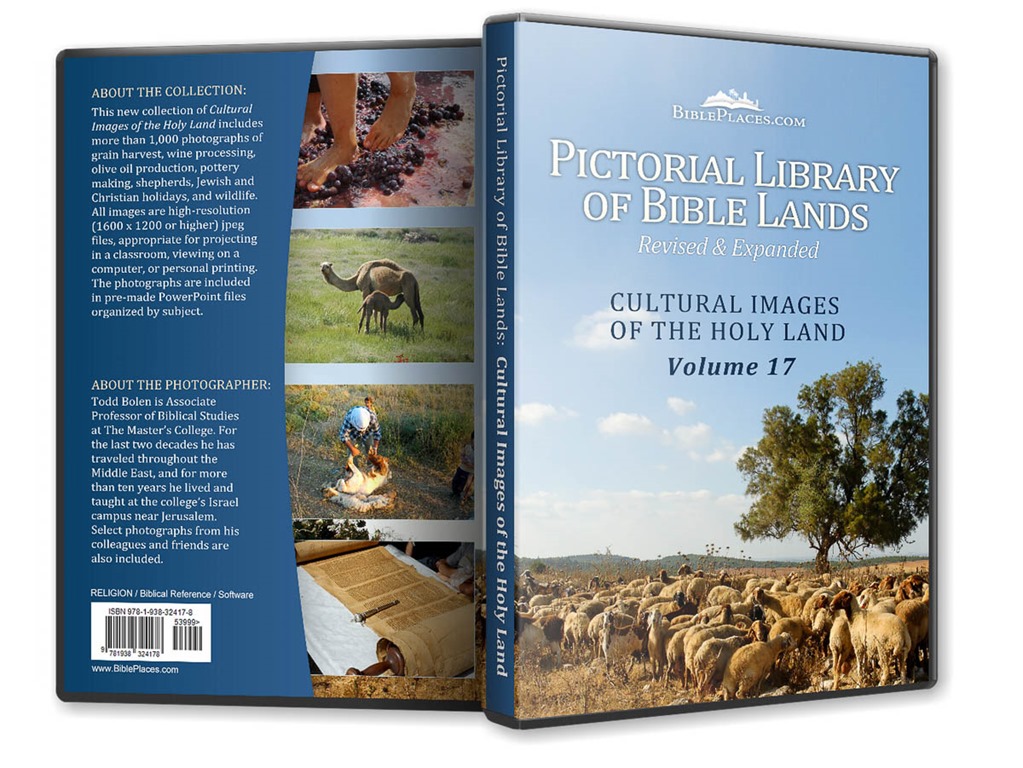
Weekend Sale: Cultural Images of the Holy Land – only $20 with coupon HARVEST

17-Cultural-Images

“Archeologists have uncovered a 3,500-year-old mosaic in central Turkey that could be one of the oldest in the world.”

Life-size camel sculptures discovered in Saudi Arabia are now believed to date not to the Roman period but to the Neolithic.

The best preserved shipwreck in the Adriatic Sea dates to the 2nd century BC and was discovered at a depth of only 8 feet.

Archaeologists are planning to excavate a Hittite temple in Kayalıpınar in Central Turkey.

“An ambitious effort to revive Izmir’s Jewish heritage is paying off as the Turkish city vies for a place on the UNESCO heritage list.”

The Times of Israel tells the story of two Israeli engineers who traveled to Iraq to restore the ancient tomb of the prophet Nahum.

Researchers are hoping that AI will one day speed up the translation of Egyptian hieroglyphs.

AramcoWorld has a well-illustrated feature story on Mohammedani Ibrahim, one of the first Egyptian archaeological photographers.

The Berlin State Museums have a new searchable blog page, “Museum and the City,” which includes blog posts on the ancient collections.

After a long COVID-enforced sabbatical, some tour groups are returning to the Middle East. John DeLancey has been posting daily summaries and photos of his Greece-Turkey-Italy tour, now through Day 13.

New release: The Story of the Apostle Paul, by J. Carl Laney

HT: Agade, Charles Savelle, Joseph Lauer, Arne Halbakken, Explorator

1Samuel-DVD-3d-800_thumb[1]

Weekend Sale: Photo Companion to the Bible: 1 Samuel – only $49 with coupon SAMUEL

The latest skeleton discovered at Pompeii sheds remarkable light on an individual named Marcus Venerius Secundio.

“A team of Polish researchers has discovered evidence of a well-planned Christian settlement dating to the sixth century in the ancient Egyptian port city of Marea.”

“Archeologists in northwestern Turkey discovered a relief on Monday depicting a war between the Greeks and Persians from the fifth century B.C.” (No photo)

A gouge in the eyes of a coin of Julian the Apostate may have been an intentional “act of erasure.”

Here are much better photos to go with the previously mentioned story abut Egyptians struggling to keep alive their craft of making papyrus.

The theater at Ephesus is reopening to visitors after being closed for the last three years.

Malta is planning to bury ancient cart ruts in order to build a new roundabout.

Jesse Millek asks, “Why did scholars choose 1200 BCE . . . as the year when civilization collapsed in the Eastern Mediterranean?”

The Getty Research Institute interviews Waleed Khaled al-As’ad, director emeritus of antiquities and museums at Palmyra and son of the site’s longtime director, Khaled al-As’ad. They also have a story about the history of Palmyra.

HT: Agade, Arne Halbakken, Andy Cook, Ted Weis, Explorator