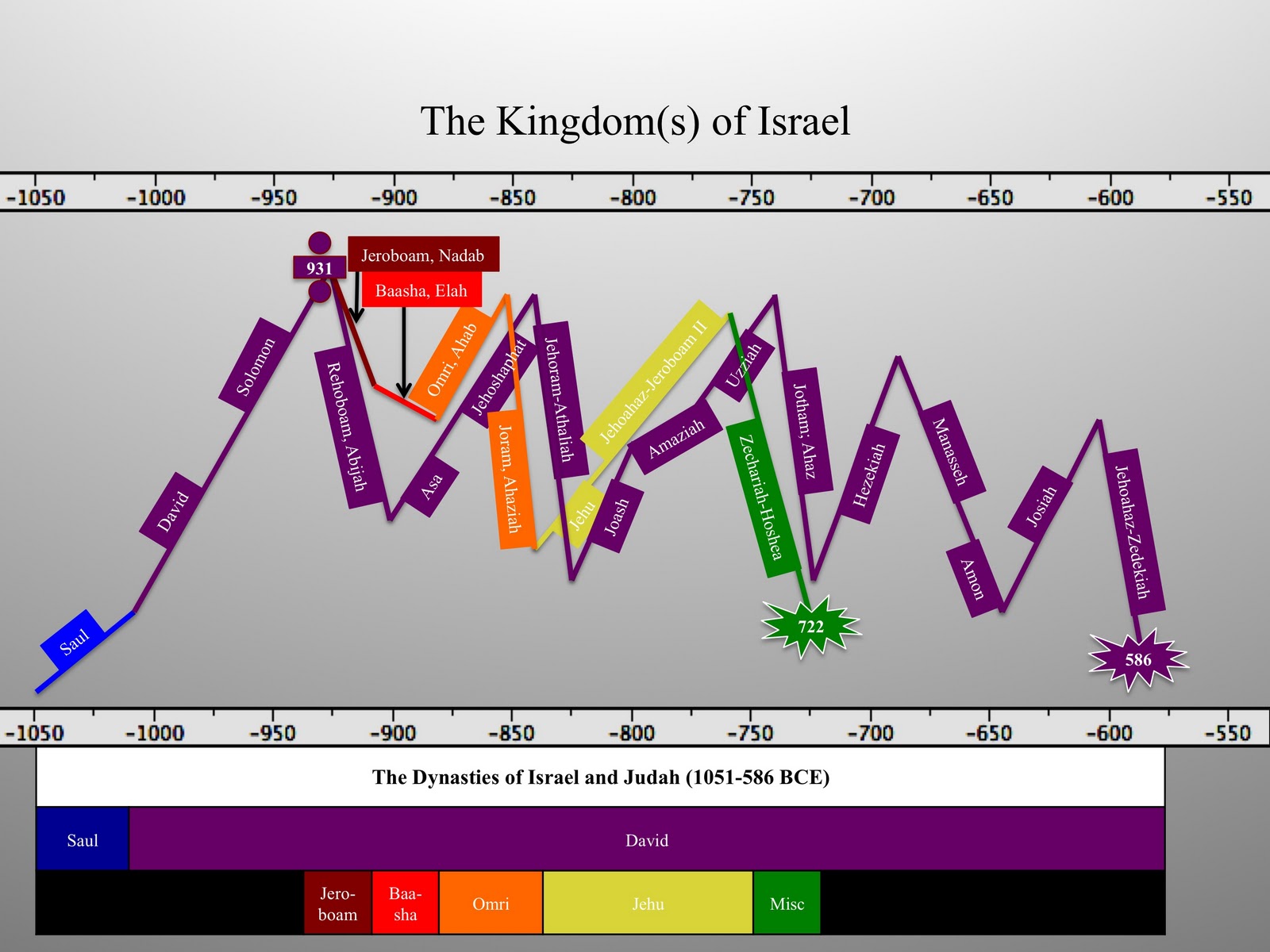
Israel Finkelstein has written a brief article explaining why he believes conclusions based on the lack of archaeological evidence trumps the biblical text every time. “Archaeology as a High Court in Ancient Israelite History: A Reply to Nadav Na’aman” (pdf) is published in the Journal of Hebrew Scriptures.

James Tabor has posted an update on the Mount Zion excavation project, including news that the 2011 dig season will be conducted at Suba (“Cave of John the Baptist”) instead of on Mount Zion.

Ferrell Jenkins explains why you should check out his extensive collection of links to Biblical Studies resources, especially the Bible Places and Scholarly categories.

Aren Maeir has posted the schedule for the Aharoni Symposium, to be held on February 17 at Tel Aviv University.

In response to the recent story about the “Small Kotel,” Leen Ritmeyer observes:

It is ironic to see that Haaretz is worried about a strong reaction from the Waqf (the Muslim religious trust), while the praying Jews are apparently oblivious to the fact that they are touching stones laid by Muslims, which may have been taken from a destroyed Christian church, in order to repair the ancient Jewish Temple Mount walls.

Western Wall, Kotel HaQatan, tb102903595

The “Small Kotel”
Share:

Readers here are likely familiar with the American Colony in Jerusalem, a “a non-denominational utopian Christian community founded by a small group of American expatriates in Ottoman Palestine in 1881.”  Their photographic enterprise was a thriving industry serving tourists for the first half of the 20th century.  The original glass negatives were donated by the heir of the collection to the Library of Congress in the 1970s and the digitized versions were posted online about five years ago.  That formed the basis of a series of specialized collections that we created here.

Last week the Library of Congress announced the online publication of a new collection of historic documents from the American Colony.

The materials presented in the new American Memory site were donated to the Library in December 2004 by Valentine Vester and the board of directors of the American Colony of Jerusalem, Ltd. The bulk of the collection—received by the Library between 2005 and the present—comprises more than 10,000 items and is housed in the Library’s Manuscript Division.

Many of these items were collected by Bertha Spafford Vester as she wrote her memoir Our Jerusalem: An American Family in the Holy City. The digitized version includes a selection of the full collection, namely that which was displayed in a 2005 Library of Congress exhibition. The full press release is here.  The full collection is described as follows:American Colony, April 1, 1925 entry page, opening of Hebrew University

The physical collection focuses on the personal and business life of the colony from the waning years of the Ottoman Empire, through World War I and the British Mandate, and into the formation of the state of Israel.  It includes draft manuscripts, letters, postcards, telegrams, diaries or journals, scrapbooks, printed materials, photographs, hand-drawn maps and ephemera. Most collection items are in English, with some material in Arabic, Hebrew, Turkish, and Swedish.
Items in the collection begin in 1786 and date to 2006. The bulk of the materials date from 1870 to 1968.  Included are items related to the leadership of the colony by members of the Spafford, Vester, and Whiting families.  There is information as well pertaining to the colony’s Swedish members and other residents, as well as neighbors, friends, diplomats, dignitaries, associates in Jerusalem and sponsors in the United States.

This is akin to finding an old chest in the attic full of precious heirlooms, except that in this case there are many such chests and they are available to anyone with a computer.  I look forward to rummaging through this treasure trove of fascinating information about some momentous years in the history of the holy land. 

The doorway to the attic is here, and the browse and search features will get you where you want to go quickly.  You can read more about the collection and its origin here.  The catalog record is here.

Share:

For the year that just concluded, this blog had 331 posts.  We have now blogged here for five full years.  The blog categories with the most posts are:

#1: Jerusalem

#2: Discoveries

#3: Resources

Yesterday we listed the top stories related to discoveries and technology.  Today we conclude with three additional categories.  Yesterday’s disclaimers apply here as well.


Significant Stories in 2010:

Cyrus Cylinder Loaned to Iran

Fishing Banned in Sea of Galilee

Hurva Synagogue Dedicated (and photos)

Israel Imported Honeybees from Turkey (and here)

Jaffa Gate Restored

Noah’s Ark Discovered

Qeiyafa Inscription Translation by Galil

Renovated Archaeology Wing of Israel Museum Reopens


Noteworthy Posts:

Qumran Caves 1 and 2

New Paleo-Hebrew and Greek Fonts

Rachel’s Tomb: The Bible vs. Tradition

Palestine Park, Chautauqua, New York

The Dating of Mazar’s Wall (also here and here and here)

My Favorite (Old) Travel Resources

How “Top 50” Lists Work

2010 Excavation Blogs


Favorite Resources in 2010:

Zondervan Atlas of the Bible

Biblical Turkey: A Guide to the Jewish and Christian Sites of Asia Minor

A Visual Guide to Gospel Events

The Holy Land Revealed

ESV Bible Atlas

The Dead Sea Scrolls: A Full History

Carta Collection for Accordance

Review of the American Colony Collection


My Essays Elsewhere:

A New Theory on the Death of Herod Agrippa I

Does the Merneptah Stele Contradict Archaeology?

The Palace of David: A Flawed Proposal

As 2011 begins, we wish you all the best in the coming year.

Share:

Most tourists see Israel through a bus window.  The advantages of modern transportation are obvious, but the drawbacks are more apparent after a day on the trail.  Some trips incorporate a small amount of walking, but time factors often preclude a half-day, a full day, or more seeing the land as Abraham and David did. In my experience, the land “looks different” when your legs are aching and your canteen is getting low.

Israel is crisscrossed with many well-marked trails, but various logistical challenges prevent most tourists from ever enjoying them.  The short-term visitor to Israel may have difficulty finding a hiking map (especially in English) and determining a safe and appropriate route.

A new opportunity now exists which eliminates a number of these hurdles.  The “Jesus Trail” provides a convenient path through a beautiful and historically significant area.  While I wish that the developers had chosen a different name (such as the “Nazareth to Capernaum Trail”), I am impressed with how much careful work has been done to make this a viable option for many future tourists.

I’ve noted the existence of the trail before (here and here and here and here), but I was unaware of a website that provides numerous resources for the future visitor.  There is too much to mention here, but I would suggest a few sections as of interest to all, whether potential hikers or not.

Start with the map showing the points of interest. From there you can visit individual sites.  I went immediately to the “Roman Road,” but you might prefer the Sea of Galilee or Arbel National Park

From there I would head over to the blog, which has a number of interesting entries, including one with a free flyer with a map showing historical features and visitor facilities.  If you want to see more detail, check out the day hikes and stage maps.  As I said, this is a very well thought-out program and resource.  There is also a new guidebook (see sample chapters here).  If anything is missing, it must be the adventure that comes from not knowing where you are going.

If you’ve not been to Israel before, you may want to consider a trip that incorporates time on a trail such as this one.  If you have been to Israel, this may be the impetus to get you back for a return trip. 

There’s no reason to do the same thing twice!

Plain of Gennesaret from Arbel, tb052000207

Sea of Galilee from Mount Arbel.  The view certainly was more enjoyable to me after hiking 70 miles from Dan to the Sea of Galilee on the Israel Trail.
Share:

This week’s free item is the Archaeological Study Bible, published by Zondervan in 2005.  This resource has a website of its own, with lots of information and extra features.  If you haven’t done so already, check out the maps page, with 14 free medium-resolution images for free download.

The Bible is available for purchase from Amazon for $31.49, but when I went to verify the price, I was surprised to see that it is available for the Kindle for only $4!  You don’t need to have a Kindle to read it, as software is now available for the PC, Mac, BlackBerry, iPad, and iPhone.  If you wonder how it works, you can download the “first chapter” free.  (I’m assuming by that they don’t mean Genesis 1.)  In the interest of serving you, I just bought the Kindle version myself, but I am not impressed.  I’ve never used a Kindle book before, so my expectations may be flawed, but you may want to test the free chapter before spending your money.  Among other things, navigating seems quite difficult.  Maybe a Kindle reader can weigh in below if I’m missing something.

For the give-away, shipping is limited this week to US addresses.  All names and email addresses will be deleted after the drawing on Sunday, at 5 pm.  Those reading this by email will need to click through to the post to enter.  Two winners will be chosen.

UPDATE (12/12): Congratulations to winners Jess and Ronald.

Share:

What would you expect from a book entitled A Visual Guide to Gospel Events?  This new work certainly does not disappoint in the area of illustrations.  Every two-page spread has at least four images.  But while I enjoy good photos, maps, and artwork, the quality of a book really hangs on the text.

The work is subtitled Fascinating Insights into Where They Happened and Why.  Indeed this is what makes the book most valuable to me. 

There are plenty of Bible atlases, but it is the nature of reference works to present the “straight facts.”  Authors usually do not have a lot of room to present their new theory or exciting discovery. 

This book, like its predecessor, has no such restraints.A Visual Guide to Gospel Events That is particularly noteworthy when the authors are James Martin, John Beck, and David Hansen.  These scholars are well known for their creative insights and helpful interpretations of Scripture.

It is not easy to capture an argument in a few words, but as I read I marked a few observations that are characteristic of the contribution that this book makes.

From the section entitled, “Magi Follow the Star”:

The star functioned in much the same way as the pillar of cloud and the pillar of fire that guided Moses and the children of Israel to the Promised Land (Exod. 13:21-22).  In a similar way the star led the Magi to the Promised Land and to the very house of its promised King” (28).

From the section entitled, “Jesus Becomes a Rabbi in the Southern Jordan Valley”:

On his fourth attempt to curse Israel, Balaam spoke of a special child of Jacob….What the Lord had spoken through Balaam was now being fulfilled at Bethany beyond the Jordan with the baptism of Jesus….And so it was that Jesus was publicly proclaimed rabbi and Messiah in this place where the promise of his coming had been proclaimed” (41).

One more, from “The Problem with Pilate’s Quarters”:

This palace of Herod the Great, the one who had tried to kill Jesus as a child, became the setting for the trial that led to Jesus’s execution as an adult” (164).

The book has eight parts, each of which consists of about ten two-page sections:

  • The Birth and Early Years of Jesus
  • Jesus Reveals His Legitimate Authority
  • Jesus’s Parables and Teaching
  • Jesus in the World of the Gentiles
  • Jesus in and around Jerusalem
  • Jesus Faces the Cross
  • The Arrest and Trials of Jesus
  • The Crucifixion, Resurrection, and Ascension of Jesus

I cannot list all of the sections in each part (but Amazon will let you look inside), but in “Jesus in the World of the Gentiles” you’ll find:

  • Jesus, Jonah, and the Nazareth Ridge
  • Jesus Has to Travel through Samaria
  • Crossing Enemy Lines to the Other Side
  • Great Faith Found in Phoenicia
  • Seven Baskets in the Decapolis
  • Jesus Visits the Region of Caesarea Philippi
  • Fire from Heaven on a Samaritan Village
  • Ten Lepers on the Road to Dothan
  • Did Jesus Visit Sepphoris or Tiberias?

There is a lot to like about this book, including the easy-to-follow format, the scholarly research, and the high regard for Scripture.  This is not a book to buy to sit on your shelf, but it’s one that you’ll want to read through from cover to cover.  The lavish illustrations and the two-page sections make it a very easy work to pick up and read when you have a few extra minutes.  I recommend it to all who believe that history, geography, and archaeology can better help us to understand the Bible.  At only $20, it would make a great Christmas gift for a friend, pastor, or teacher.

Share: