How quickly one’s legacy can be re-defined.  In his day, William Foxwell Albright was regarded with the highest esteem by scholars in biblical and archaeological studies.  In recent decades, his approach is usually dismissed with an disparaging, how-could-anybody-be-so-naive elevation of the nostrils. 

The “Albright School” is equated with everything wrong in biblical archaeology.  Even the term “biblical archaeology” is rejected.  Albright certainly made significant mistakes, but I surmise that fifty years hence, the hindsight of time will prove less gracious to Albright’s critics than to the man himself.

It’s thus refreshing to read a recent appreciation of Albright’s work by Thomas Levy and David Noel Freedman, published at Bible and Interpretation.  Freedman was a student of Albright, and he co-wrote a biography of his teacher in 1975.  The current piece looks like it was prepared for publication, and its copyright attribution to the National Academy of Sciences suggests that it may have been written in connection with Levy’s induction into the academy last year.
I recommend reading the biography, but this article is a good, brief summary of his life and scholarly achievements.  The article includes a chronology of his life and a selected bibliography.  I note some interesting facts from the article to stimulate your interest:

  • Albright’s left hand was crippled in a childhood farm accident.
  • When he was ten years old, he received as a present the History of Babylonia and Assyria, by Professor R. W. Rogers.
  • Albright spent 18 hours a day for three days writing terrifying exams for the Thayer Fellowship on Syriac, Arabic, Hebrew, Greek, Latin, French, and German; Hebrew Bible Literature and Criticism; geography; archaeology; history; and epigraphy.
  • He mastered more than 26 ancient and modern languages.
  • He translated and published a text from the time of the Dead Sea Scrolls ten years before the Qumran scrolls were discovered.
Tell Beit Mirsim, excavating house at east gate, mat05732Albright’s excavations at Tell Beit Mirsim, 1926
Source: Library of Congress, LC-matpc-05732
From a forthcoming collection from
www.LifeintheHolyLand.com
Share:

Eisenbrauns, a favorite among many academics working in biblical and Ancient Near Eastern studies, has recently begun a “deal of the day.”  Typically the price reductions are outstanding (60-90% off!), and often the book is of interest.  Today’s offer is The Excavations at Bethel (1934-1960), regularly $35 (or used, $21), today $2.50, which is 93% off.  (Plus $5 shipping.)

For such a deal, there are a few hurdles to overcome.  First, to learn about these daily offers, you should subscribe to the RSS feed.  Unfortunately, the link never seems to work in my (Google) reader.  But when you see a title of interest, you can go to the Eisenbrauns home page and navigate from there.  Second, the description of the volume as related to the excavations of Beth-Zur should be ignored.  Third, the author is not Julie Kelso, but William F. Albright and James L. Kelso.  And fourth, there’s a real question that the excavations are even of Bethel!  Other that that, as they say, everything’s perfect.

I am not trying to provoke an argument about the location of Bethel.  I am not advocating for another location.  I simply suggest that if you read this excavation report you will not find any compelling archaeological evidence that indicates that this site is biblical Bethel.  And in fact, there are serious deficiencies with what was found.  But I am not going to argue against this identification on the basis of the absence of evidence.  I am willing, however, to point out that if this was one of the greatest cities of the northern kingdom and the home of one of the major shrines, one would expect to uncover much more than they did.

A related note.  This is related both to the Bethel/Ai debate and to the incorrect first name of the author of the title.  A few days ago I came across a reference in Richard Hess, Israelite Religions, to two entries in the New Encyclopedia of Archaeological Excavations in the Holy Land.  He cited the author of the Ai article as Joseph A. Callaway, but the author of the article of nearby Khirbet Raddana as James A. Callaway.  Unfortunately, his citation follows the original; NEAEH “misspelled” Callaway’s first name.  As far as I can tell, the new Volume 5 does not include an errata.

Speaking of typos, here’s an embarrassing one, on the packaging of the esteemed Anchor Bible Dictionary, no less!  (For non-Hebrew readers, the text on the CD design has the first two words from Genesis, but the letters read from left to right.)

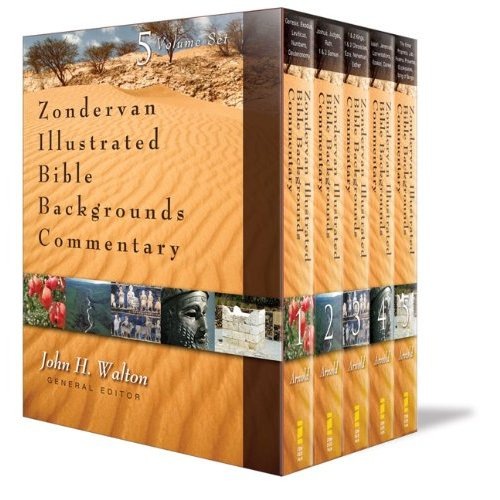
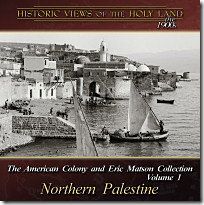
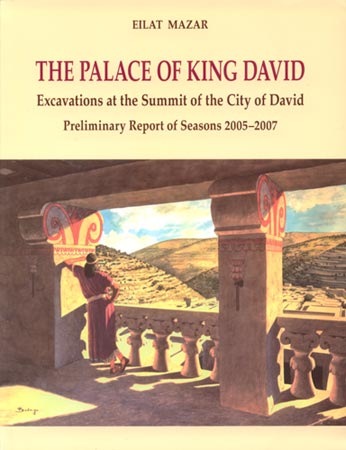
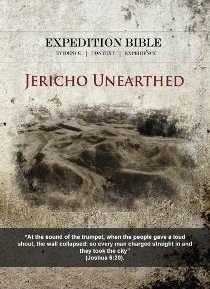
Quibbles aside, every book mentioned in this post is worth buying if these are subjects of interest to you.

Share:

In 1967 the University Museum of the University of Pennsylvania filmed a 27-minute movie about archaeological work in Jordan and the West Bank.  “The Book and the Spade” gives a general introduction to the value and discipline of archaeology, which includes footage of important biblical sites that are not usually on the itinerary of visitors today, including Hebron, Shechem, and Samaria. 

The film naturally focuses more on the excavations sponsored by the University of Pennsylvania, Gibeon and Tell es-Saidiyeh.  The latter site is the subject of the second half, and the one who is patient is rewarded with shots of the on-going excavations and an interview with the archaeologist James B. Pritchard.  Pritchard is probably best known today for his three editions of Ancient Near Eastern Texts, but he made significant contributions in his excavations of Gibeon (1956-62) and Tell es-Saidiyeh (1964-67). The film also documents the construction of a mudbrick house.  Though the movie was slow-moving by today’s standards, I enjoyed seeing many sites the way they were 40 years ago.  You can see the contrast of the excavations in the film with a recent photo below.

Tell es Saidiyeh view of Rift Valley to nw, tb110503948Excavation area of Tell es-Saidiyeh, 2003

Other University of Pennsylvania films that may be of interest to readers of this blog include:
Athens (1939)

Ancient Earth: Making History Everlasting (1940)

Iran (1963)

Windows on the Past (1967)

Turkey (1967)

Jordan (1969)

Cyprus (1969)

And more

HT: Ferrell Jenkins and Gordon Govier

Share:

A friend recently wrote to ask if I knew how to get higher resolution digital images of the maps and reconstruction diagrams for the new ESV Study Bible. Upon investigating, I realized that he missed one crucial step (see below). But in the process, I was struck by the wealth of visual resources that are available to all who own a copy of this Bible. With the steps below, registered owners can get (what I’d call) medium-resolution images of everything in the Bible. For instance, you get:

  • The City of Nineveh
  • Jerusalem in the Time of David
  • The Tabernacle (about 6 beautiful reconstructions)
  • Solomon’s Temple
  • Jerusalem in the Time of Solomon
  • The City of Jericho
  • Jerusalem in the Time of Hezekiah
  • Zerubbabel’s Temple
  • Jerusalem in the Time of Nehemiah
  • The City of Babylon
  • The Temple Mount in the Time of Jesus
  • Galilean Fishing Boat
  • Herod’s Temple in the Time of Jesus
  • The Tomb of Jesus
  • Herod’s Temple Complex in the Time of Jesus
  • Plus a couple hundred maps and charts.

All you have to do is select the image and right-click to save.

The drawings seem to be 1200 pixels wide and the maps are approximately 1000 pixels on the long side. That’s excellent for computer or projector use. Here are the steps to access them (for registered users):

1. Go to http://www.esvstudybible.org/online

2. Select “Maps and Charts” on the top bar.

3. Scroll down and select desired image.

4. Within popup window, click graphic. This opens up the image by itself in a larger size. (If you skip this step, you’ll end up with a much lower-resolution image.)

5. Right-click image; “save image as” (or equivalent in a browser other than Firefox).

Then you can view the image on your screen, drop it into a PowerPoint, or print it for your wall. I checked with the publisher to make sure what I’m telling you is allowed and they stated that you may use these images for personal use (i.e., saved on your computer) or ministry use (i.e., projected for teaching purposes), but not reprinted in other materials or posted onto websites or blogs. (For questions or permissions, email Crossway.)

If you don’t own the Bible, you can see and download some free drawings, a map, and a city plan on their blog, plus a few at Amazon.

So for $32, you not only get a really fat book, you also get electronic access to 40 reconstruction diagrams plus 200 full-color maps. I know the market pretty well in this area and I’d suggest that you’re getting your money’s worth just from the digital images. It’s like the printed Bible is thrown in for free.

I use the printed Bible and the online Bible every week for reasons entirely other than what is listed above. You can see more of what keeps me coming back (print and digital) even though I have two shelves of other Bibles.

Share:

If you’ve been looking for photos of Iran/Persia, you won’t find any in the Pictorial Library of Bible Lands.  Maybe one day I’ll make it there, but I don’t have any plans in the near future.  In the meantime, Stephen Jones has sent a link to a terrific collection of photos on flickr, including Susa, Persepolis, and some from the Iranian National Museum.  The photos include helpful historical descriptions.

Share:

Leen Ritmeyer mentions that the current (December) issue of National Geographic includes a poster supplement of the Temple Mount.  He includes a picture of the poster and tells a little bit about his role in its creation.  He links to the NG website, but I cannot find a way to buy just a single issue.  My guess is that a newstand copy would not include the poster, and that a subscription ($15/year) ordered now would not include this issue.  But if you already have a subscription, don’t discard the poster insert before realizing what a resource you have.

Share: