Jerusalem Perspective has published “Treasures New and Old (Matt. 13:52): Celebrating 35 Years of Jerusalem Perspective.” The 35 articles are organized under the following sections: “Who Was Jesus?,” “The Sermon on the Mount, “Second Temple Jewish Sects,” Bible Languages and Translation,” “Second Temple Jewish Life and Thought,” “The Land of Jesus,” and “A New Solution to the Synoptic Problem.” Highlights include:

“Was Jesus a Rabbi,” by David N. Bivin

“The Appearance of Jesus: Hairstyles and Beards in Bible Times,” by Marvin R. Wilson

“Jesus’ Devout Jewish Parents and Their Child Prodigy,” by Chana Safrai

“Lilies of the Field,” by Gloria Suess

“Jesus and the Essenes,” by David Flusser

“Spoken Languages in the Time of Jesus,” by Shmuel Safrai

“That Small-fry Herod Antipas, or When a Fox Is Not a Fox,” by Randall Buth

“Let Down Your Nets,” by Mendel Nun

“Six Stone Water Jars,” by Ronny Reich

“‘Shake the Dust from Your Feet’: What Did the Apostles’ Action Signify?” by Joshua N. Tilton

“The Search for Bethsaida: Is It Over?,” by R. Steven Notley

“A Farewell to the Emmaus Road,” by David N. Bivin

These fascinating studies are written by the best scholars in their fields, and I’m thankful that Jerusalem Perspective has made them so easily accessible and affordable. The early bird price of $19.95 for the e-book ends soon.

Share:

The Gaziantep Castle, first built in the Roman period and expanded in the Byzantine period, was severely damaged in Turkey’s earthquake (before and after). The citadel of Aleppo also sustained significant damage. The epicenter appears to have been on the northern end of the Syro-African Rift (that includes the Sea of Galilee and Dead Sea).

Antioch on the Orontes, modern Antakya, was devastated. This article has many photos. The Turkish authorities announced that “the earthquakes did not cause any damage to the Kahramanmaraş, Elbistan, Adıyaman, and Malatya museums, but that a part of the Hatay Archeology Museum [in Antakya] was damaged.” The Antioch Seminar on Paul and Peter will be postponed until 2024.

Sarah Kaplan investigates possible causes for the collapse of the Hittite empire.

Turkish Archaeological News has a roundup of archaeological stories in the month of January.

“An amateur archaeologist in Romania has discovered a unique ancient Roman parade mask.”

The ancient stadium at Nemea has reopened to visitors.

On the ASOR Blog, Robin Derricourt writes about “Absences, Archaeology, and the Early History of Monotheistic Religions in the Near East.”

New from Oxford University Press: Ancient Greek Athletics: Primary Sources in Translation, by Charles H. Stocking and Susan A. Stephens. Reviewed here.

“Ancient Roman ruins at Pompeii have been fitted with invisible solar panels, in a move that will contribute to the archaeological site’s sustainability efforts and cut costs.” CNN has photos of the solar panels that look like terracotta tiles.

HT: Agade, Arne Halbakken, Explorator

Share:

A rare gold bead was discovered by a teenage volunteer in excavations on the “Pilgrimage Road” leading from the City of David to the Temple Mount.

Israel’s driest winter in 60 years ended with a week of heavy rainfall throughout the country. The recent rains filled Herod’s pools at the Tower of David Museum in Jerusalem. If you look at the photos, you’ll see that “filled” is a bit generous, but there is water where there usually is not.

“An extraordinary physical reconstruction of a Nabataean woman who lived in the Arabian peninsula more than 2,000 years ago has gone on display to the public.”

“Inside el-Janab Cave near Nablus, archaeologists have found first-ever solid evidence of Muslims fleeing Mongol forces sweeping through the Levant in 1260.”

The Book & The Spade is celebrating a remarkable 40-year run with an anniversary celebration in a live webinar on Wednesday, featuring Scott Stripling, a reflection back on the last four decades of biblical archaeology, and some prize giveaways.

Chandler Collins has posted the second issue of the Jerusalem Tracker, with an extensive roundup of news publications, and media related to Jerusalem from the last six months.

King Jehoram of Israel, the son of Ahab and victim of Jehu, is the subject of Bryan Windle’s latest archaeological biography.

In part 3 of Teaching The Text’s series on Ruth, Brad Gray explores the early encounters between Ruth and Boaz.

Volume 14 of the open-access e-journal Negev, Dead Sea and Arava Studies has been published. The articles are in English, Hebrew, and French.

New release: The Bible and Music, by James F. McGrath. Free download in several formats.

HT: Agade, Arne Halbakken, Explorator

Share:

Archaeologists have now finished a chronological mapping of Megiddo, with radiocarbon dates for the two dozen layers of habitation from the Early Bronze Age to the end of Iron II.

Archaeologists excavating a deep rock-hewn moat along the northern side of Jerusalem’s Old City walls have discovered a handprint carved into the stone.

Not all scholars agree that the name of David is on the Mesha Stele.

The Technion and the University of Haifa’s School of Archaeology and Maritime Cultures have launched a joint initiative to support cooperation between the two institutions in archaeological sciences, especially microarchaeological research.

“Benjamin Netanyahu reportedly promised King Abdullah II that the status quo on the Temple Mount in Jerusalem will be preserved.”

“Jerusalem’s Tower of David was never built to be accessible.” The Times of Israel gives the backstory on the ingenuity required to make the ancient fortress accessible to those with disabilities.

Chandler Collins writes about a significant geographical feature in Jerusalem that he calls the “Fortress Saddle.” This was the city’s most vulnerable area on its most vulnerable side.

The Mardigian Museum has opened in Jerusalem’s Armenian Quarter, documenting the community’s history and serving as a memorial to the Armenian Genocide.

“A riveting new exhibition, titled ‘Peace and War: The Assyrian Conquest of Lachish,’ will open on January 30 in the Lynn H. Wood Archaeology Museum on Southern Adventist University’s campus.” I’m not sure how much “peace” was involved in the Assyrian conquest.

Excavations at ancient Capitolias, a city of the Decapolis in modern Jordan, are shedding light on the production of glass in the Roman, Byzantine, and Umayyad periods.

A former director of the Citadel Museum in Amman, Jordan, was convicted of stealing 6,000 ancient coins and replacing them with forgeries.

Oded Lipschits will be giving a series of lectures in the UK in honor of the Anglo-Israel Archaeological Society’s Diamond Jubilee between February 20 and March 6. One of them will be online: “New Light on Jerusalem and its Surroundings during the Reign of King Manasseh,” on March 2. Registration required.

Preserving Bible Times has released The Bible: Its Land and Culture, Session 4, including Galilee aerial videos, cultural vignettes, and biblical culture.

Nathan Steinmeyer gives advice on finding the right archaeological dig to join. This is also the topic of an OnScript Biblical World podcast with Steinmeyer, Chris McKinny, and Kyle Keimer.

HT: Agade, Joseph Lauer, Arne Halbakken, Ted Weis, Explorator

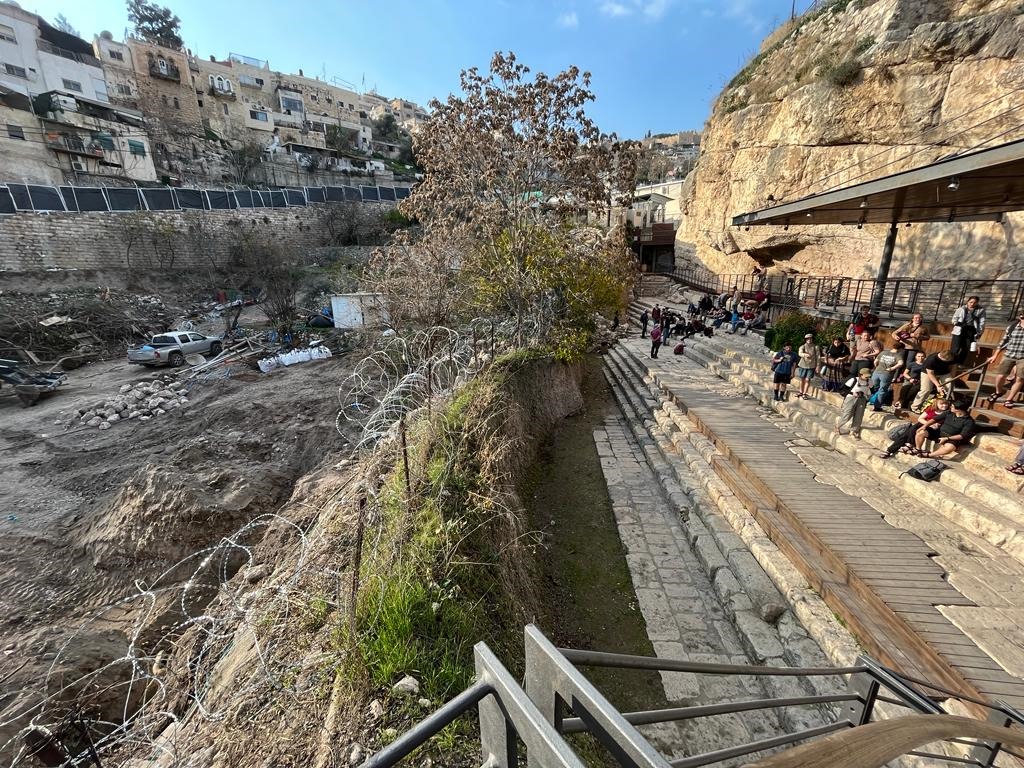
Pool of Siloam excavations Jan 2023

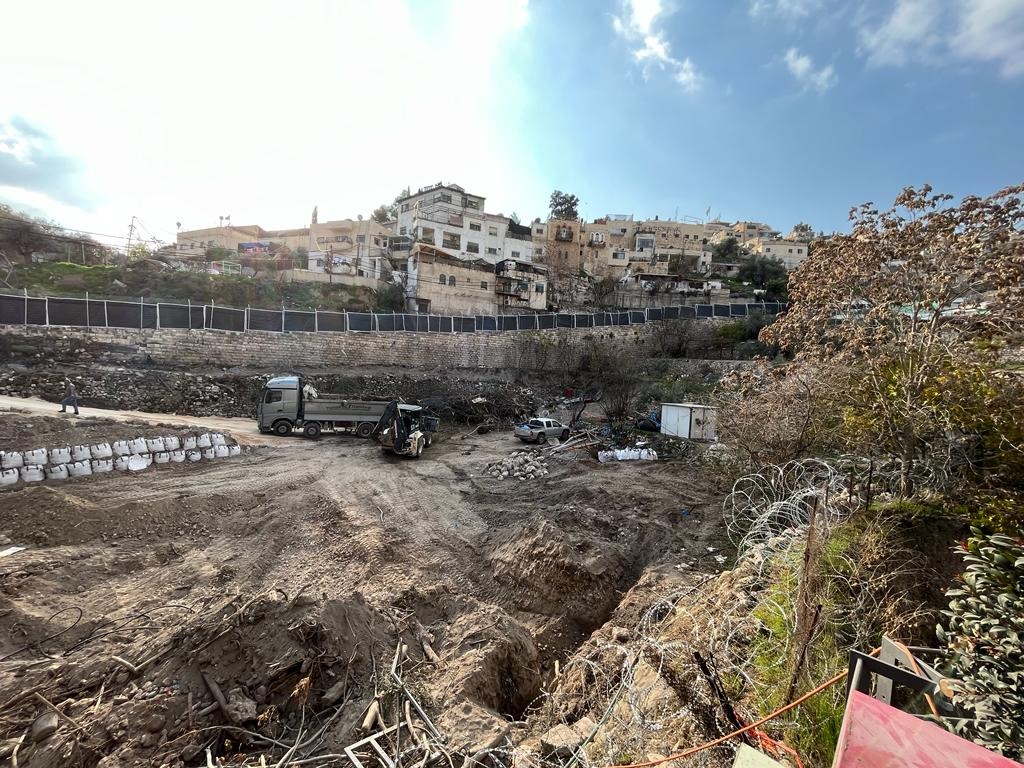
Pool of Siloam excavations Jan 2023b

Excavations at the Pool of Siloam this week; photos by John Black

Share:

Two 3,800-year-old cuneiform tablets found in Iraq give first glimpse of Hebrew precursor.”

Asshur, the ancient religious capital of Assyria, will be flooded once construction is completed on a dam on the Tigris River.

Arab News looks at evidence of early Christianity in the Arabian Peninsula.

Mohy-Eldin Elnady Abo-Eleaz looks at how kings of the Late Bronze Age dealt with various kinds of “fake news.”

A Greek blacksmith is creating replicas of ancient armor for display in museums. I saw about a dozen of these last week in the Museum of Ancient Greek Technology in Athens.

Mark I. Pinsky reviews Eric M. Meyers’s autobiography, An Accidental Archaeologist: A Personal Memoir. Only $9.99 on Kindle.

Eric Meyers is interviewed by Eve Harow on the Rejuvenation podcast.

Alex Joffe grew the readership of ANE Today from zero to 42,000 over the last decade, and now he is stepping down. This provides him with the occasion to reflect on the challenge of getting archaeologists to write for normal people.

The Met has closed its galleries for Ancient Near Eastern and Cypriot Art for a two-year, $40 million renovation project.

The H.A.P.S. summer scholarship is possibly the first crowd-funded grant aimed at helping humanities Ph.D. students – specifically, those studying the Ancient Near East.”

New release: City of Caesar, City of God: Constantinople and Jerusalem in Late Antiquity, edited by Konstantin M. Klein and Johannes Wienand (De Gruyter, 2022; $127; free download).

New release: Naming and Mapping the Gods in the Ancient Mediterranean, edited by: Thomas Galoppin, Elodie Guillon, Max Luaces, Asuman Lätzer-Lasar, Sylvain Lebreton, Fabio Porzia, Jörg Rüpke, Emiliano Rubens Urciuoli, and Corinne Bonnet (De Gruyter, $196; free download)

New release: The Scribe in the Biblical World: A Bridge Between Scripts, Languages and Cultures, edited by Esther Eshel and Michael Langlois (De Gruyter, $100)

New release: The Solid Rock Hebrew Bible – “this edition prints the entire Hebrew text (in a traditional two-column layout and an easy-to-read 13-point font, with vowel points included for readers’ convenience) and includes adjustments made to the base text (the Leningrad Codex) in over 2,500 places.” $35 per printed volume, and free download.

ASOR webinar on Jan 26: “Antiquities Trafficking in the Age of Social Media: How Big Tech Facilitates and Profits from the Digital Black Market,” featuring Katie A. Paul and moderated by Eric Cline ($12).

Video recordings from the “Yahwism under the Achaemenid Empire” conference are now available (also on YouTube).

Speakers at the online Spring Bible & Archaeology Fest 2023 include Erez Ben-Yosef, Shimon Gibson, James Hoffmeier, Chris McKinny, Gary Rendsburg, Sarah Parcak, and others.

Amélie Kuhrt died on January 2.

HT: Agade, Joseph Lauer, Arne Halbakken, Gordon Dickson, Ted Weis, Wayne Stiles, Mondo Gonzales, Alexander Schick, Charles Savelle, Keith Keyser, Explorator
Share:

“Accumulated disquiet among Israeli archaeologists over the widespread publication of sensational claims regarding ostensibly newly deciphered, once-in-a-lifetime biblical inscriptions in Jerusalem has spilled over into an open letter.”

A recent episode of This Week in the Ancient Near East discusses the way in which new alleged inscriptions in Hezekiah’s Tunnel were announced.

Israeli archaeologists discovered the oldest hoards of silver, attesting to its use as currency some centuries earlier than previously thought. The underlying journal article is here.

Excavations at Khirbat el-Masani revealed the remains of a Byzantine monk whose neck, hands, and feet bore heavy iron rings, perhaps as a symbol of his ascetic lifestyle.

“Newly uncovered remains of fabrics from the Far East dating to some 1,300 years ago in Israel’s Arava region suggest the existence of a previously unknown ‘Israeli Silk Road.’”

The United States has returned an 8th century BC cosmetic spoon, probably taken from the region of Hebron, to the Palestinian government. This the first such repatriation of an antiquity by the US to the Palestinian Authority.

The Palestinian Authority is apparently planning to construct homes on the area of the altar on Mount Ebal.

Walking The Text has begun a mini-series on Ruth, with a number of helpful maps and illustrations.

El-Araj, possibly Bethsaida, is the latest site featured in the “Digging In” series of the Biblical Archaeology. The article includes a 6-minute video taken on location.

Hybrid lecture on Jan 26: “Byzantine Bethsaida and the House of St. Peter,” by R. Steven Notley and Mordechai Aviam, at the Museum of the Bible.

New from Eisenbrauns: Yotvata: The Ze’ev Meshel Excavations (1974–1980) The Iron I “Fortress” and the Early Islamic Settlement, by Lily Singer-Avitz and Etan Ayalon

Aaron Demsky provides a extensive discussion of the location of Rachel’s tomb, concluding that it was near the border of Benjamin and Ephraim.

GTI Tours is offering a study tour specifically designed for those who have visited Israel before, with a variety of experiences most tourists don’t have.

The BAS Scholars Series includes four lectures, with a discount for purchase of all four:

  • Mar 5: “Holy City Hotspot: Exploring Jerusalem’s Acropolis,” with Andrew Lawler
  • June 4: “A Wise Woman and a Bearded Man: Ten Seasons of Excavation at Tel Abel Beth Maacah,” with Nava Panitz-Cohen
  • Sept 28: “Free Health Care Is a Miracle: Psalm 8, Jesus, and the Jerusalem Temple,” with Amy-Jill Levine
  • Dec 6: “The Life of Jesus Written in Stone: The Earliest Commemorative Churches in Roman Palestine,” with Jordan Ryan

HT: Agade, Joseph Lauer, Arne Halbakken, Gordon Dickson, Ted Weis, Wayne Stiles, Mondo Gonzales, Alexander Schick, Charles Savelle, Keith Keyser, Explorator

Share: