The discovery of a cuneiform fragment at Tel Mikhmoret recorded a slave sale and revealed physical evidence of the presence of Babylonians in biblical Samaria.”

Authorities have recovered from antiquities thieves a Neolithic stone ritual mask that comes from the Hebron hills.

Archaeologists have found evidence for trephination in a Late Bronze tomb at Megiddo (Haaretz premium).

“In one of the largest tombs ever found in Luxor, Egypt, archaeologists have discovered a sarcophagus holding the mummy of a woman named Pouyou who lived during the 18th dynasty.”

Egyptian officials announced that treasures from the tomb of Tutankhamun will tour ten cities in the world prior to the 2020 opening of the Grand Egyptian Museum in Giza. The exhibit is currently in Los Angeles and then heads to Paris. The other cities have not yet been announced.

“Inside the Cloak-and-Dagger Search for Sacred Texts” is in this month’s issue of National Geographic. As you would expect, the text is engaging and the photos beautiful.

“National Geographic has commissioned leading British indie production company, Caravan to produce The Bible from Space, a two-part documentary special which reveals the truth behind the biggest, most incredible stories from the Old Testament.” You can be sure that any TV production which promises to “reveal the truth” does not.

Carl Rasmussen is having second thoughts about the route of Paul’s ship from Chios to Miletus.

Luke Chandler is leading a tour of Israel in June, with the option to stay longer and join an archaeological excavation.

SourceFlix has released a 4-minute video about Tel Dibon, including footage of an early-morning fly-over. Ferrell Jenkins writes about the same site and provides some nice photographs.

A board game dating to the time of Abraham, the Royal Game of Ur, is making a comeback in Iraq.

The online Massive Open Online Course (MOOC) entitled “Biblical Archaeology: The Archaeology of Ancient Israel and Judah” begins on Wednesday.

The Institute of Biblical Culture is offering your choice of a free class.

If you’re not a subscriber to the BiblePlaces Newsletter, you can sign up in a few seconds. We send about three issues a year, with one coming next week.

HT: Agade, Ted Weis, Charles Savelle

Share:
(Post by A.D. Riddle)

In 2011, Routledge published Wall Maps for the Ancient World, a series of seven maps which were created by the Ancient World Mapping Center (University of North Carolina, Chapel Hill).

According to the center’s blog, the maps have gone out of print and now the rights have reverted back to the Ancient World Mapping Center. Yesterday, they announced they are making digital versions of the maps available to download. Most of the maps will be of interest to Bible students and readers of this blog. The announcement noted additionally that the digital version of map 6 “World of the New Testament” incorporates some minor corrections.

You can read more about the maps and download them here.

[UPDATE: Yesterday, we experienced troubles trying to download the maps. We contacted AWMC and they are working to resolve the issues. In the meantime, AWMC has removed their blog post about release of the maps. You can continue to read the same information on this other page, but to download the maps, you might want to use this temporary link we have created.]

[UPDATE 2: AMWC has reposted their original announcement, but now it includes instructions to email [email protected] and they will send a link to download one or more files.]

The seven maps are:

1.  Egypt and the Near East, 3000 to 1200 BCE. Scale: 1:1,750,000.
2.  Egypt and the Near East, 1200 to 500 BCE. Scale: 1:1,750,000.
3.  Greece and the Aegean in the Fifth Century BCE. Scale: 1:750,000.
4.  Greece and Persia in the Time of Alexander the Great. Scale: 1:4,000,000.
5.  Italy in the Mid-First Century CE. Scale: 1:775,000.
6.  The World of the New Testament and the Journeys of Paul. Scale: 1:1,750,000. Inset “New Testament Palestine” (Scale 1:350,000).
7.  The Roman Empire around 200 CE. Scale: 1:3,000,000.

Share:

Appian Media has released a trailer for their new series, “Searching for a King.” They have some impressive footage. They also are asking for some quick help with a survey.

“At the annual meeting this week of the American Schools of Oriental Research in Denver, Colorado, scholars will discuss whether to rechristen the 118-year-old society on the grounds that its moniker is irrelevant and racist.” There’s more here.

Mary Shepperson recounts the “turbulent life” of the British School of Archaeology in Iraq. The article includes some interesting photos.

Iraqi technicians are restoring ancient Babylon under a U.S.-funded project, with the goal of making the site worthy of UNESCO World Heritage Site status.

New book: Archaeogaming: An Introduction to Archaeology in and of Video Games, by Andrew Reinhard.

Mosaics looted from Turkey and sold to Bowling Green State University are now being returned.

Lawrence Schiffman explains how Dead Sea Scroll forgeries were exposed by high-tech tests.

Yosef Garfinkel’s recent lecture at the Lanier Theological Library is now online, and Carl Rasmussen recommends it. The library has also made available many seminar videos from 2012 to present.

Artofthe.Bible is a new catalog of 5,800 works of art from wikimedia arranged in 116 Bible stories.

“A Biblical Spice Rack” was published in Bible Review in 1997 and is now available online through Bible History Daily.

Robert Alter has completed his translation of the entire Hebrew Bible. It will be released in time for
Christmas. (An Amazon coupon code good through today will save $5 off purchase of $20 or more: NOVBOOK18.)

HT: Joseph Lauer, Agade, Ted Weis, Mark Hoffman, Charles Savelle, Chris McKinny

Share:

Mosaics from the synagogue of Huqoq have been published in full for the first time, including scenes of Jonah and the fish, the tower of Babel, Noah’s ark, the parting of the Red Sea. The scholarly publication is forthcoming in BASOR.

Mark Hoffman mentions a new project that maps Paul’s missionary journeys. It looks quite impressive, though if the pop-ups don’t work for you on one browser, you might try another. You can support further development of the project here.

Onomasticon.net is a new website that provides “a comprehensive collection of personal names and their various characteristics from the Iron II Southern Levant.”

The controversy over the plan to construct a cable car to Jerusalem’s Old City continues.

A conference commemorating the 150th anniversary of the discovery of the Mesha Stele will be held on Nov. 29 in Jerusalem.

Israel’s Good Name describes his latest field trip to Megiddo and Hazor, guided by Aren Maeir.

Registration has opened for the free MOOC taught by Aren Maeir: “Biblical Archaeology: The Archaeology of Ancient Israel and Judah.”

The new courses for December at The Institute of Biblical Culture are “Assyria and the Bible” and
“The Bible and the Dead Sea Scrolls.”

In a clip from this summer’s Institute of Biblical Context conference, Doug Greenwold explains the significance of Psalm 23’s reference to “still waters.”  All of the conference DVDs are now available for a very good price.

HT: Agade, Joseph Lauer

Share:

The nymphaeum in downtown Amman has reopened to the public.

A Palestinian was caught trying to smuggle 70 ancient coins from Jordan into the West Bank.

Another man was arrested for trying to smuggle two tetradrachm from the time of Alexander the Great out of Gaza.

The Guardian posts a review of the “I am Ashurbanipal” exhibit that opened this week at the British Museum.

The British Museum Shop offers a number of interesting items related to the Ashurbanipal exhibit.

The Vatican Museums are considering putting a daily cap on the number of visitors.

A new festschrift honors Aren Maier: Tell it in Gath: Studies in the History and Archaeology of Israel.

Ada Yardeni’s final book, The National Hebrew Script, is now available for pre-order at Carta.

New from Baylor University Press: Magdala of Galilee: A Jewish City in the Hellenistic and Roman Period, edited by Richard Bauckham.

The Land and the Book audio program visits the Oriental Institute Museum.

Scott Stripling, Scott Lanser, and Henry Smith discuss “Relating the Bible to Archaeology” in the latest episode of Digging for Truth.

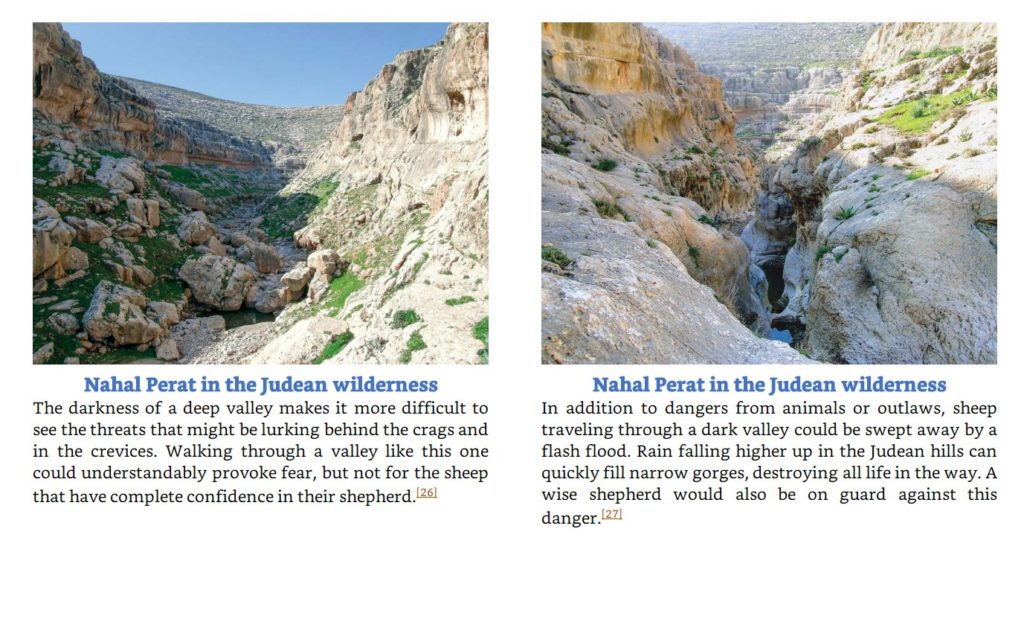
Flash floods in Jordan killed 12 and forced the evacuation of 4,000 in Petra. Here’s another video and several more showing the deadly torrent.

HT: Agade, Joseph Lauer, Explorator, Charles Savelle, Ted Weis, Paleojudaica, Alexander Schick

Share:

An intact 2,400-year-old ancient Greek shipwreck, believed to be the world’s oldest, has been found at the bottom of the Black Sea.

The Museum of the Bible in Washington D.C. announced that independent testing revealed that five of its Dead Sea Scroll fragments “show characteristics inconsistent with ancient origin and therefore will no longer be displayed at the museum.” Kipp Davis, who initially questioned their authenticity, thinks that more fragments held by American institutions will be proven to be forgeries.


Haaretz (premium) has an article on the new excavations at Tel Shimron, a biblical site that is three times larger than Megiddo.

At least 19 people were killed when a flash flood swept away a group of students touring on the Jordanian side of the Dead Sea.

The Smithsonian magazine looks at the work of Virtual Wonders in using drone and other advanced technology to create extremely detailed 3D models of Petra. The article includes a video preview of their work.

“For a video game that includes bloody mercenaries, extraterrestrial beings, and time travel, Assassin’s Creed: Odyssey is shockingly faithful to our contemporary historical understanding of what Ancient Greece looked like during its golden age.”

Leon Mauldin shares photos and descriptions of Troas and Gamla.

Two new books on ancient Israel:

HT: Ted Weis, Keith Keyser, Charles Savelle, Agade

Share: