The Israel Prize for the Land of Israel, Geography, and Archaeology “will not be given because the prize committee attempted to award it to two candidates, in violation of ministry rules which state that each prize may be given to only one winner.”

The Garden Tomb is now suggesting a $5 donation.

The Bible Lands Museum Jerusalem is recommended for children, according to this article in Haaretz.

A couple of Russian tourists climbed to the top of the Great Pyramid and took some photos.

Ted Weis (Living the Biblios) has written a Garden of Gethsemane Devotional and illustrated it with a number of helpful photos.

New excavations at Ur in southern Iraq have revealed a palace or temple.

David Amit, deputy director of the Excavations and Surveys Department of the Israel Antiquities
Authority, died last week.

The Vatican has asked Israel’s Chief of Police to protect Christians in Israel after criminals halted restoration work of the chapel in Nain.

Jerome Murphy-O’Connor’s new book, Keys to Jerusalem: Collected Essays, is reviewed by Joshua Schwartz in the Review of Biblical Literature.

The commercial heart of the ancient city of Thessalonica is in the way of a new subway station and
that’s a big problem.

Give SourceFlix two minutes and they’ll give you “Passion Week Archaeology.”

HT: Jack Sasson, Explorator

Garden Tomb at night, tb123005430
The Garden Tomb in Jerusalem
Photo from the Pictorial Library of Bible Lands
Share:

The Times of Israel recommends five places to visit on your next trip to Jaffa (Joppa).

National Geographic is calling all adventurers and explorers for a new adventure series.

Yes, locusts are kosher. They’re apparently good pickled, dried, smoked, boiled, roasted, barbecue grilled, fried, and stir fried.

No, locusts are not kosher. The problem is that the biblical locust may not be the same as the modern ones.

In an op-ed at the Los Angeles Times, John J. Collins provides a brief history of controversy surrounding the Dead Sea Scrolls and concludes with a summary of why the scrolls are important.

Eisenbrauns’ Deal of the Weekend is Ugarit at Seventy-Five, edited by K. Lawson Younger Jr. (Reg. $39.50; now $15.80).

ASOR’s Archaeology Weekly Roundup links to 14 other stories.

HT: Charles Savelle, Jack Sasson

Joppa ocean view with minaret, tb101806997
View of the Mediterranean Sea from Jaffa (Joppa)
Photo from the Pictorial Library of Bible Lands, volume 4
Share:

The Mustard Tree is the latest video from SourceFlix.

This post has some inspiration for those interested in mapping historical events using Google Earth.

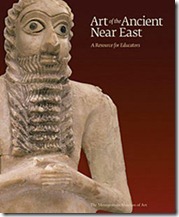
The example he uses here is the parting of the Red Sea, though I think he’s way off on the location.Art_of_the_Ancient_Near_East_A_Resource_for_Educators

A swarm of one million locusts moved from Egypt into Israel before spraying halted the invasion. Some Israelis gathered up sackfuls of the locusts to eat.

Ten years after its looting, the National Museum of Iraq is still not open to the public.

Art of the Ancient Near East: A Resource for Educators is available as a free download.

HT: BibleX, ANE-2, Jack Sasson

Share:

Fifty important artifacts and discoveries are listed in chronological order at www.bibleandarchaeology.com. The collection includes photographs from a variety of sources. If I only had time to teach ten to a class, I would choose these:

  • #2: Merneptah Stele
  • #3: Ten Dan Inscription
  • #6: Kurkh Monolith
  • #7: Black Obelisk
  • #8: Mesha Stele
  • #13: Hezekiah’s Tunnel
  • #16: Lachish Reliefs
  • #20: Ketef Hinnom Amulets
  • #28: Cyrus Cylinder
  • #43: Pool of Siloam
  • #46: Gallio Inscription

Alternately, you can just pass on the link to your class (or friends or pastor) and they can get a quick study in the world of biblical archaeology.

Hezekiah's-Tunnel,-tb051803206-bibleplaces
Hezekiah’s Tunnel
(photo source)
Share:

Some environmentalists are not happy with a plan to save the Dead Sea with a pipeline from the Red Sea.

Archaeology in Egypt has suffered from the political turmoil and resulting loss of tourist dollars.

Residents of Modi’in are protesting plans to build where someone else used to live a long time ago.

Seth Rodriquez provides insight into the Broken Wall of the Sluggard.

Rubén Gómez has a new website for his Spanish-speaking tour of Israel later this year.

The History Channel shares six “secrets” of King Tut.

In honor of Ehud Netzer, the Biblical Archaeology Society has made a collection of Ehud Netzer’s articles available for free, including the recent “In Search of Herod’s Tomb.” Click on each title to read.

The ASOR Blog provides a weekly roundup of stories in the broader world of archaeology.

HT: Jack Sasson

Share:

After seven dry years, Israel’s water crisis is over, according to Israel’s Water Authority. Nearly half of Israel’s drinking water needs is supplied by the country’s three desalination plants. That number will go up to 75% in two years.

Aren Maeir has prepared a photo essay on Gath of the Philistines. The 16 photos capture well the exciting history of the site.

The maternal origin of cultivated olives is the Middle East, according to a new study.

Wayne Stiles recommends 5 Holy Land Blogs You Should Follow.

The One Hundred Most Important Cuneiform Objects” is now posted on a wiki managed by staff and students at the University of Oxford. Many high-res photos are included.

Now free online: The Royal Inscriptions of Sennacherib, King of Assyria(704-681 BC), Part 1, by A. Kirk Grayson and Jamie Novotny.

The Deal of the Weekend at Eisenbrauns is Ancient Damascus, by Wayne T. Pitard. List $45; sale: $18.

A Visual Guide to Bible Events, by James C. Martin, John A. Beck, and David G. Hansen is on sale this weekend at Christianbook.com for $15 (Amazon: $26). I’ve recommended it before here.

HT: Jack Sasson, David Coppedge

Share: