Robert Deutsch is suing the Israel Antiquities Authority for $3 million.

Leen Ritmeyer points to a Washington Post article and detailed graphic of the Temple Mount.

Seth Rodriquez shares an animated map that shows who controlled the Middle East from 3000 BC to present.

The story of Eilat Mazar’s discovery of gold coins and medallion near the Temple Mount and how she kept it secret is recounted by Israel HaYom.

The Egyptian Museum is open, but King Tut is all alone, according to an update in the Washington Post.

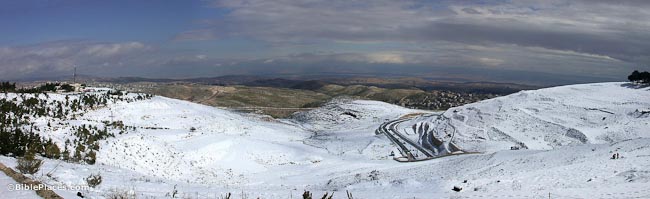
The first winter storm in Israel brought snow to Mount Hermon and a rise in the level of the Sea of Galilee.

HT: Jack Sasson

Graphic from The Washington Post
Share:

After seven dry years, Israel’s water crisis is over, according to Israel’s Water Authority. Nearly half of Israel’s drinking water needs is supplied by the country’s three desalination plants. That number will go up to 75% in two years.

Aren Maeir has prepared a photo essay on Gath of the Philistines. The 16 photos capture well the exciting history of the site.

The maternal origin of cultivated olives is the Middle East, according to a new study.

Wayne Stiles recommends 5 Holy Land Blogs You Should Follow.

The One Hundred Most Important Cuneiform Objects” is now posted on a wiki managed by staff and students at the University of Oxford. Many high-res photos are included.

Now free online: The Royal Inscriptions of Sennacherib, King of Assyria(704-681 BC), Part 1, by A. Kirk Grayson and Jamie Novotny.

The Deal of the Weekend at Eisenbrauns is Ancient Damascus, by Wayne T. Pitard. List $45; sale: $18.

A Visual Guide to Bible Events, by James C. Martin, John A. Beck, and David G. Hansen is on sale this weekend at Christianbook.com for $15 (Amazon: $26). I’ve recommended it before here.

HT: Jack Sasson, David Coppedge

Share:

For photos of Jerusalem in the snow, check out the Jerusalem Post and Shmuel Browns’ post. Aren Maeir has some night photos of the city in the snow. SourceFlix has a 30-second time-lapse from the Mount of Olives. The Sea of Galilee rose 30 inches last week, with 20 more expected as rivers drain into the lake.

Biblical Archaeology Society posts its Top 20 Biblical Archaeology Events and Discoveries of 2012.

Archaeologists in Egypt have found ancient tombs underneath the mortuary temple of Amenhotep II.

Excavations are revealing ancient Myra, a city famous for St. Nicholas, but also visited by the apostle Paul (Acts 27:5). If The New York Times had looked the verse up, they might have avoided an error.
Haaretz has two “Tourist Tip” stories that are not restricted to subscribers. One is about Muhraqa on Mount Carmel and the other the City of David.

If you’ve never heard of Lake Jerusalem, you might check out Arutz-7’s story and find out why it was a bust. (It’s in the news this week because the storm filled it up.)

For stories in the broader world of archaeology, check out the roundup at the ASOR Blog.

Faithlife Tours is giving away a free tour of Israel.

HT: Jack Sasson

Myra, Santa Claus statue, tb062406394
Town square in Myra, the home of St. Nicholas. Photo from the Pictorial Library of Bible Lands.
Share:

The Times of Israel is reporting that Muslim authorities moved tons of illegally excavated earth from the Temple Mount into a city dump.

Aren Maeir posts an astounding video of a flood in the Harod Valley this week.

Frankincense has returned to Israel after 1,500 years.

More tourists visited Israel in 2012 than in any year before.

An Israeli committee will review modern prohibitions against mixed prayer at the Western Wall.

Jean Perrot died this week. Among other things, Perrot excavated several Chalcolithic sites near
Beersheba.

Marked down to $1.99 for Kindle: The Aleppo Codex: A True Story of Obsession, Faith, and the 
Pursuit of an Ancient Bible, by Matti Friedman. These sales are brief.

HT: Jack Sasson, Joseph Lauer

Western Wall prayer area from south, amd042108530
Segregated prayer areas at Western Wall.
Photo by Austen Dutton (source).
Share:

The Nash Papyrus is now online, thanks to the University of Cambridge. The Jerusalem Post article gives a new meaning to the word “second”: “It is the world’s second oldest known manuscript containing a text from the Hebrew Bible. The oldest are the Dead Sea Scrolls.”

This Jerusalem Post article suggests the Top 5 Christmas activities in Jerusalem.

The traditional King David’s tomb has been vandalized by a man desperate to get married.

If you missed last week’s Christmas broadcast of the Land and the Book radio program, you can listen to it in the archives.

Simcha Jacobovici is suing Joe Zias in an Israeli court because the warnings of the latter led the Discovery Channel and National Geographic to cancel the broadcast of films of the former. (Note: this article, like many cited on this blog, is on the Haaretz website. Free access to 10 articles per month is available with an easy registration.)

Mark Goodacre notes the publication of Archaeology, Bible, Politics, and the Media and he shares his article “The Talpiyot Tomb and the Bloggers.”

The Huffington Post has a slideshow of the year’s archaeological highlights. None are related to the biblical world.

The full-size replica of Noah’s Ark floats.

Officials are optimistic about the rainfall in Israel this winter. Amir Givati: “To see the Jordan River flowing at this time of year – that’s a phenomenon that takes place once every 20 years.”

Smuggling gangs in Iraq are using satellites to locate antiquities.

HT: Jack Sasson

Tomb of David, exterior, mat00855-001
A view of David’s Tomb taken ca. 1900 before the construction of the Dormition Abbey. Photo from the American Colony and Eric Matson Collection.
Share: