The Times of Israel recommends five places to visit on your next trip to Jaffa (Joppa).

National Geographic is calling all adventurers and explorers for a new adventure series.

Yes, locusts are kosher. They’re apparently good pickled, dried, smoked, boiled, roasted, barbecue grilled, fried, and stir fried.

No, locusts are not kosher. The problem is that the biblical locust may not be the same as the modern ones.

In an op-ed at the Los Angeles Times, John J. Collins provides a brief history of controversy surrounding the Dead Sea Scrolls and concludes with a summary of why the scrolls are important.

Eisenbrauns’ Deal of the Weekend is Ugarit at Seventy-Five, edited by K. Lawson Younger Jr. (Reg. $39.50; now $15.80).

ASOR’s Archaeology Weekly Roundup links to 14 other stories.

HT: Charles Savelle, Jack Sasson

Joppa ocean view with minaret, tb101806997
View of the Mediterranean Sea from Jaffa (Joppa)
Photo from the Pictorial Library of Bible Lands, volume 4
The Mustard Tree is the latest video from SourceFlix.

This post has some inspiration for those interested in mapping historical events using Google Earth.

The example he uses here is the parting of the Red Sea, though I think he’s way off on the location.Art_of_the_Ancient_Near_East_A_Resource_for_Educators

A swarm of one million locusts moved from Egypt into Israel before spraying halted the invasion. Some Israelis gathered up sackfuls of the locusts to eat.

Ten years after its looting, the National Museum of Iraq is still not open to the public.

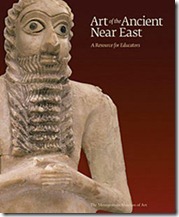
Art of the Ancient Near East: A Resource for Educators is available as a free download.

HT: BibleX, ANE-2, Jack Sasson

At Petra, LiDAR (Light Detection and Ranging laser) scanning and balloon-based 35mm photography are being used with other technologies to facilitate research and conservation.

Exploring Bible Lands is doing a series on the travels of the Ark of the Covenant, beginning at the Plains of Moab, crossing the Jordan River, and continuing on to Jericho, Mount Ebal and Mount Gerizim, and now Shiloh.

JPost: “Wild animals will soon be able to safely cross bustling Route 1 when the Israel National Roads Company completes work on an ecological corridor at the Sha’ar Hagai interchange.”

This 40-second video clip with Eilat Mazar describing her discovery of the seal impression of a biblical figure could be a good way to get attention at the start of a lesson. The Jehucal bullae was discovered in 2005.


Popular Archaeology has a lengthy feature this month on the Egyptian fortress in Joppa.

Some very well-preserved leather shoes worn 2,000 years ago were recently discovered in Egypt.

Egyptian officials have rejected a proposal to rent out five of the country’s archaeological sites to international tourism companies.

For the broader world of archaeology, see the Archaeology Weekly Roundup at the ASOR Blog.

HT: Jack Sasson

10.5 Million Visits to the Western Wall in 2012 – The increase in tourism requires a doubling in restroom capacity.

Archaeology in Israel Update—February 2013 – Stephen Gabriel Rosenberg selects the top five stories of the month.

48 hours in the Negev – Onnie Schiffmiller provides a two-day itinerary beginning at Beersheba and moving south.

How to Prepare for a Holy Land Tour – Wayne Stiles recommends ways to prepare mentally, practically, physically, and spiritually.

8 Tips to Maximize Your Holy Land Tour – Stiles follows up his preparation post with suggestions on what to do once you’re in Israel, including what photos to take and not take, how to keep up, and why you should ask lots of questions.

Men praying at Western Wall during Sukkot, tb100906912
A “full house” at the Western Wall prayer plaza during the feast of Tabernacles. Photo from the Pictorial Library of Bible Lands, volume 3.

Some environmentalists are not happy with a plan to save the Dead Sea with a pipeline from the Red Sea.

Archaeology in Egypt has suffered from the political turmoil and resulting loss of tourist dollars.

Residents of Modi’in are protesting plans to build where someone else used to live a long time ago.

Seth Rodriquez provides insight into the Broken Wall of the Sluggard.

Rubén Gómez has a new website for his Spanish-speaking tour of Israel later this year.

The History Channel shares six “secrets” of King Tut.

In honor of Ehud Netzer, the Biblical Archaeology Society has made a collection of Ehud Netzer’s articles available for free, including the recent “In Search of Herod’s Tomb.” Click on each title to read.

The ASOR Blog provides a weekly roundup of stories in the broader world of archaeology.

HT: Jack Sasson

A cave above En Gedi is revealing well-preserved artifacts from the first century AD.

Luke Chandler has word that Yosef Garfinkel plans to follow his Khirbet Qeiyafa dig with excavations at Lachish.

The Daily Mail has photos of the newly opened exhibit of King Herod at the Israel Museum. Shmuel Browns has more.

Some are claiming that the Waqf is destroying more antiquities on the Temple Mount.

Gordon Franz evaluates Robert Cornuke’s use of a computer model to predict the location of Paul’s shipwreck on Malta.

A website for the excavations of Tel Abel Beth Maacah is now online.

En Gedi and Nahal David aerial from northwest, tb010703272
Aerial view of Nahal David and En Gedi