A rush shipment of a series of fantastic new products has just arrived at the BiblePlaces.com International Distribution Center.  All of these items are available for immediate shipment.

Bag of Rocks: Authentic specimens from a hill in Israel.  You can plant these in your garden, and before you know it, your garden will be full of them.

Basket of Authentic Potsherds: Unwashed, unsorted. May include EB through Ottoman period artifacts. Your basket might contain an ostracon!

Biblical Archaeologist Swimsuit Calendar: Featuring 12 of the world’s most renowned excavators on exotic tells that they dig.

Packet of Mud: Wet soil possibly washed off by the blind man at the Pool of Siloam.

Ossuary: Inscriptions of famous biblical people added for an extra charge.

Private Lecture: A dramatic presentation for you and your friends by Charles Gadda on the true origin of the Dead Sea Scrolls and expert techniques on how to convince the world that you’re right.

“I Deny” T-Shirts: You fill-in-the-blank.  Popular options include: the existence of the Jews in the Holy Land before 1948, David and Solomon, maximalism, minimalism, antiquities sales, the James Ossuary, Bible thumpers, Q, Ai, the “BAR crowd”, biblioblogs.

Archaeologist Trading Cards: Watch the value of these go up when one of their discoveries is sensationalized.kenyon_trading_card

Tour Pass: Good for a one-day tour of the archaeological sites of the Gaza Strip, personally hosted by Khaled Mashaal and his friends.


The Truth About Archaeology DVD: Dozens of volunteers explain the realities of excavation, including stories of grime, sunstroke, hospitalization, and slavery-like conditions that they paid for.

Fibers from the rope around the high priest’s ankle

Ashes from the destroyed city of Sodom.  Well-preserved.  From the Sodom of your choice.

Television Special, 60 Minutes (DVD): Breaking report that reveals how a Jewish temple never existed in Jerusalem.  Features extensive research and interviews with two three smart locals.

Postcards of Jerusalem: Only one dollah.  The top one looks nice.

Payment may be made in darics, denarii, drachmas, or dileptons.  All orders must be received not
later than 11:59 p.m., April 1st.
Share:

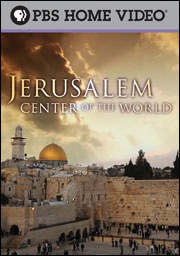
The 2-hour movie narrates the history of the city. Beginning at 9pm Eastern/Pacific, the documentary is narrated by Ray Suarez, Senior Correspondent, The News Hour with Jim Lehrer. Susan Wunderink of Christianity Today reviews the film:

The film starts with Abraham leaving Ur at a time when Jerusalem was already settled by Canaanite tribes. The documentary embellishes biblical history, adding in traditions that say, for example, that Jerusalem is also where God created Adam. jerusalem_pbs Suarez goes into the details of the destruction and rebuildings of the Jewish Temple. Jesus’ short life is given about 15 minutes of the two-hour run time. For viewers who know what happens up to 70 A.D.—and then nothing—it will fill in some big gaps. The second half of the film explains how the city came to look as it does today, if you can keep up. Toward the end, the pace picks up as Suarez lists how “the world’s most contested piece of real estate” changes hands among multiple Christian and Muslim rulers. Christians, Muslims, Jews, and others fought, came, and went, sometimes leaving Jerusalem little more than a tourist trap. Mark Twain found it an unappealing, sleepy place when he visited. The Romans, after nearly wiping out the Jewish population, expelled the rest; Saladin’s Muslims let them re-settle.

The full review is here. The producer’s website includes a trailer.

Share:

From Arutz-7:

The ancient crevices of the Western Wall, filled with prayer notes tearfully tucked inside by tens of thousands of worshippers during the course of the year, underwent their twice-yearly cleaning-out on Sunday, under the watchful eye of the Rabbi of the Holy Sites, Rabbi Shmuel Rabinovich.
The notes are emptied out of the Wall just before Passover and just before Rosh HaShanah. The purpose is to make room so that people can “insert their prayer notes at the Wall without fear that the notes will fall out and be trampled upon,” Rabbi Rabinovich explained.
The notes, many of which contain the full names of family members, as well as requests for health, sustenance, a spouse, solutions for personal problems, and more, are treated with great respect by the workers.  The workers even immerse themselves in a mikveh (ritual bath) before beginning the holy work of removing the notes.
The notes are removed without the use of metal bars or utensils – which stand for warfare and the taking of life (see Exodus 20,22) – but rather with wooden rods.  Following their removal, the notes are taken to the nearby ancient Mt. of Olives cemetery for burial.

Western Wall men cleaning out prayers, tb090402207 Removing prayer notes from Western Wall
Share:

From the press release of the Israel Antiquities Authority (with link to photos, and direct link to photos):

One of the Most Spectacular Mosaic Floors Ever Discovered in Israel was Restored and Renovated and Can Now be Seen by the General Public (30/3/09) 
The 1,500 year old (!) mosaic is in the ancient synagogue at Ma‘on-Nirim The mosaic, which is decorated with a seven-branched candelabrum and images of different animals, was conserved and returned to its original location. The site is now open to the general public and admission to it is free.
The site of the mosaic floor, which is part of a synagogue from the Byzantine period (fifth and sixth centuries CE), is located in the settlement of Ma‘on-Nirim, in the western Negev, and will be open to the public this week. This mosaic originally measured 3.70 x 7.80 m but was damaged when the road to Kibbutz Nir Oz was paved in 1957. The mosaic floor and the remains of the synagogue were discovered during salvage excavations that were undertaken on behalf of the Department of Antiquities in 1957. The mosaic’s state of preservation has deteriorated in recent years as a result of the unsuitable conditions in which the mosaic was kept and a lack of maintenance. Therefore, in 2006, it was removed from the site and transferred for treatment to the Conservation Laboratories in the Rockefeller Museum in Jerusalem….
According to the archaeological findings the northern wall of the synagogue’s sanctuary was breached in the middle of the sixth century CE and an apse, which is a circular niche that protrudes outward, was installed in the opening. The level of the earlier floor was raised and a breathtakingly beautiful mosaic floor surrounded by marble columns was constructed on top of it in the northern part of the sanctuary. The synagogue had a basilica plan in which there was a nave with a mosaic floor that was flanked by two aisles paved with stone tiles. The ceiling was built of wooden beams and clay. The decoration on the mosaic floor consists of a vine tendril that stems from an amphora to form a trellis of medallions that are adorned with scenes of everyday life from the vineyard and from wine production and with different animals. The images portrayed in the upper rows include a seven-branched candelabrum that stands on three legs shaped like lion’s feet, and near them etrogim, a shofar and a lulav, and alongside the candelabrum – palm trees and lions, which are symbols of Judah. An Aramaic inscription is incorporated in the mosaic. The upper part of the inscription blesses all of the community followed by a dedication to three individuals who donated generous contributions.

The complete press release is here.

HT: Joe Lauer

Share:

If you’ve thought about learning biblical Hebrew or Greek—or really learning it after seminary, you should consider the Biblical Language Center in Israel.  The uniqueness of this program is that you learn Hebrew (or Greek) as a living language.  That means that you learn it by living it. 

BLC’s goal is for students to fluidly read the Bible with a natural and instant comprehension. Therefore, BLC immersion courses use living language methods in teaching Biblical Hebrew and Koine Greek. This means that more than 90% of classroom time is filled with the spoken biblical language. The result is an internalization of the languages which speeds the pace of learning and improves the reading of the biblical text.

You can read more about it on their website, noting especially the methodology description.  I have not had the privilege of participating, but friends who have give the highest recommendation.

Course offerings this summer:


Greek

Beginning Koine Greek (4 weeks):

“Introduction to the Parables of Jesus”

June 7-July 3, 2009

Intermediate Koine Greek (2 weeks):

“More Parables, Papyri, and Aesop’s Fables”

July 5-17, 2009


Hebrew

Beginning Biblical Hebrew (4 weeks):

“Jonah”

June 21-July 17, 2009

Intermediate Biblical Hebrew (2 weeks):

“Ruth the Moabitess: Ruth 1-4, Gen 19, Num 25”

June 21-July 3, 2009

Intermediate Biblical Hebrew (2 weeks):

“Samson, Shfelah, and Philistines, Judges 13-16”

July 5-17, 2009

Intermediate Biblical Hebrew (2 weeks):

“In the Beginning: Genesis 1-3”

July 19-31, 2009

Intermediate Biblical Hebrew (2 weeks):

“Psalms: Selected Coronation, Ascent and Canaanite Psalms”

July 19-31, 2009

All courses are offered in a quiet community near Jerusalem.  You can learn more about it at
www.biblicalulpan.org.

Share:

The Israel Antiquities Authority reports in a press release:

A bathhouse that dates to the Byzantine period was exposed in an archaeological excavation undertaken by the Israel Antiquities Authority near Kibbutz Gevim (at the site of Horvat Lasan) and underwritten by the Israel Railways, prior to laying a railroad track from Ashkelon to Netivot.
According to archaeologist Gregory Serai, director of the excavation on behalf of the Israel Antiquities Authority, “The bathhouse, which covers an area of 20 x 20 m, was apparently destroyed in a cave-in and was later used as a rubbish dump that was filled with household refuse. It was ascertained in the excavation that the furnace (hypocaust) was dug into the natural soil and its ceiling was built of a cement-like material that was lined with ceramic tiles. The ceiling was supported by means of one meter high colonnades built of mudbricks. The bathers entered the changing room (apodyterium) and passed from there into a room with cold water (frigidarium) where there were probably stepped tubs. From there they continued into the room with warm water (tepidarium) and on to the room with hot water (caldarium – comparable to today’s sauna). The floor of the caldarium was paved with marble flagstones, some of which were as big 1 x 1 m. Evidence of the ceiling’s destruction is attested to by the manner in which the hypocaust columns were toppled in different directions”.
Following its destruction, the structure served as a source of building material as evidenced by the stone walls that were robbed. Secondary use of the stones was noted in the center area of the excavation. A number of residential buildings were discovered in this part of the site and they contained storage jars that were still in situ.
The village’s buildings and bathhouse join the finds that were revealed in a previous excavation that was conducted on the other side of the road. In the opinion of Gregory Serai, “We are dealing with a village whose economy was based on the production of wine and the manufacture of pottery vessels. The site was situated on a road that linked Beer Sheva with Gaza and probably began as a road station in the Roman period.

There’s a brief article about Kibbutz Gevim, including its location, at Wikipedia.  Eight photos of the excavations can be found with the article at this temporary link, or directly here (zip).

HT: Joe Lauer

Share: