Arutz-7 reports:

An oil drilling consortium which includes companies that found billions of dollars in natural gas off the Haifa coast will begin in October to look for black gold in an area along the Dead Sea, according to Delek Group chief executive officer Yitzchak Tshuva. He said that the Society for the Protection of Nature in Israel (SPNI) has consented to the drilling after the consortium agreed to invest half a million dollars to protect the rich nature reserves in the area from damage during the exploration. Investors’ hopes of finding oil in Israel are based on seismic surveys that estimate that Dead Sea oil reserves are worth nearly half a billion dollars. Delek heads the consortium that earlier this year discovered rich gas reserves approximately 50 miles west of Haifa, and estimates of the value of the gas have more than doubled since the first reports. Tshuva said last month that he foresees Israel becoming self-sufficient in energy in the near future, with the Jewish State possibly becoming an exporter of gas.

The complete article is here.
Share:

The previously-reported discovery of a stone cup with an inscription dating from the 1st century A.D. is covered by National Geographic.  The inscription is proving quite difficult to decipher.

“These were common stone mugs that appear in all Jewish households” of the time, said lead excavator Shimon Gibson of the University of North Carolina.
“But this is the first time an inscription has been found on a stone vessel” of this type.
Deciphering the writing could provide a window into daily life or religious ritual in Jerusalem around the time of Jesus Christ.
Working on historic Mount Zion—site of King David’s tomb and the Last Supper—the archaeologists found the cup near a ritual pool this summer. The dig site is in what had been an elite residential area near the palace of King Herod the Great, who ruled Israel shortly before the birth of Jesus.
[…]
What sets the newfound cup apart is its inscription, which is still sharply etched but so far impossible to understand.
Similar to intentionally enigmatic writing in the Dead Sea Scrolls, the cup’s script appears to be a secret code, written in a mixture of Hebrew and Aramaic, the two written languages used in Jerusalem at the time.
“They wrote it intending it to be cryptic,” Gibson said.
In hopes the script can be deciphered, Gibson’s team is sharing pictures of the cup with experts on the writing of the period. The researchers also plan to post detailed photos of the cup and its inscriptions online soon.
One thing the team is sure of, though, is that whoever inscribed the cup had something big in mind—and didn’t want just anyone to know.
“They could be instructions on how to use [the cup], could have incantations or curses. But it’s not going to be something mundane like a shopping list.”

The complete article is here and it includes a nice photograph (enlarged here).  A friend of mine dug this cup out of the dirt, but as with all excavations, the credit goes to the archaeologists, not to the laborers, and you’ll never see his name in print.  The official excavation website is here.

HT: Paleojudaica

Share:

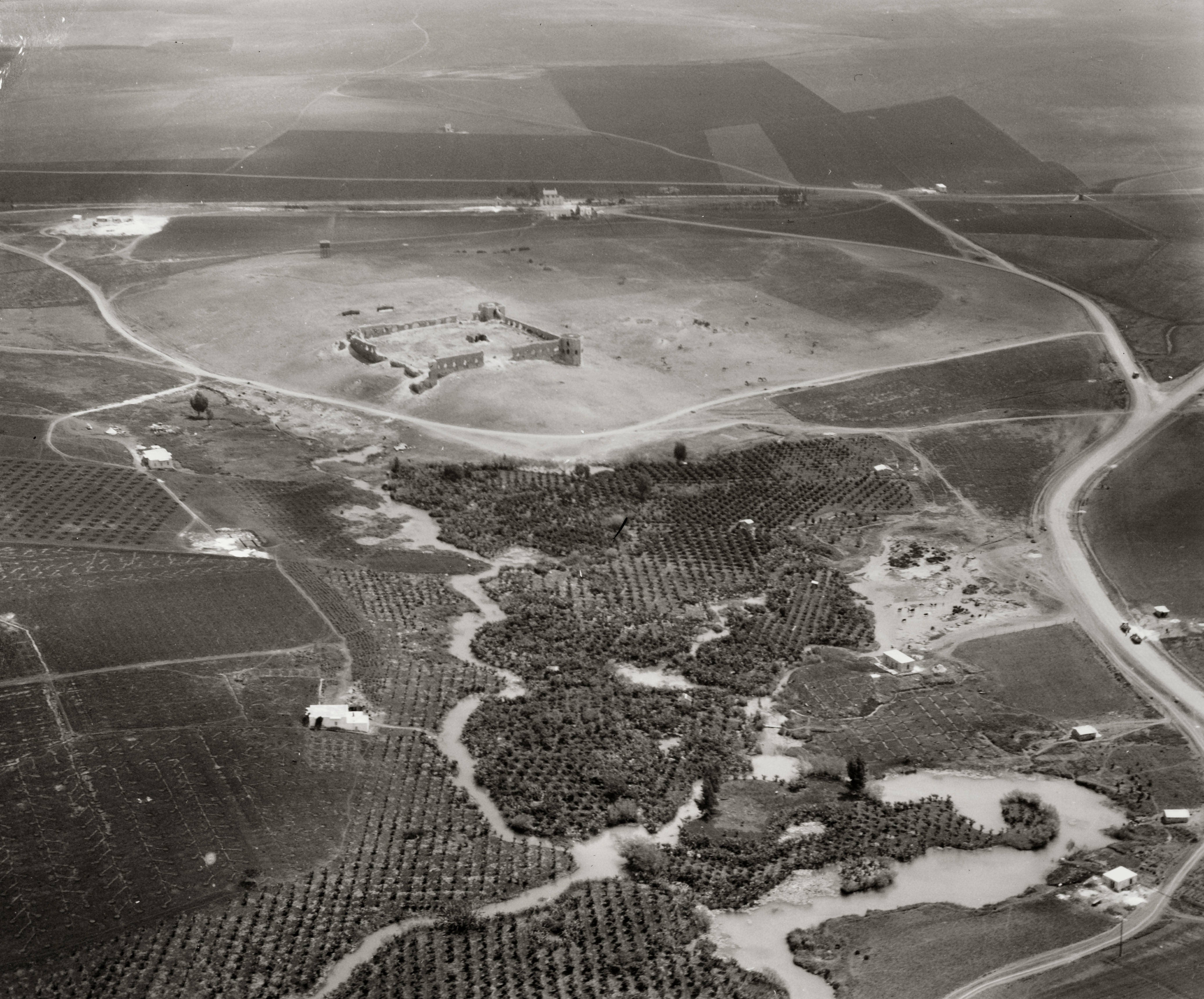
Let’s do this post a little differently than the previous ones, with a little reader interaction.  Instead of me describing the photo, I’ll give you the opportunity.  Write in the comments below as much as you can about this picture, including its name(s), major features visible, and anything else that indicates why this photograph is useful today for understanding the geography and history of ancient Israel.

Aerial photo with stones, dirt, trees, water

The answer I deem best wins the Northern Palestine CD, volume 1 of The American Colony and Eric Matson Collection, with 600 high-resolution photos of Acco, Benjamin, Caesarea, Caesarea Philippi, Capernaum, Ephraim, Galilee Hill Country, Haifa, Huleh, Jaffa, Jezreel, Mount Carmel, Mount Hermon, Mount Tabor, Nazareth, Samaria, Sharon, Shechem, Sea of Galilee, Tabgha, Tel Aviv, and Tiberias.

P.S. Searching on the Library of Congress website won’t really help you, because the name of this place is not given in the description.

Share:

A press conference by Hebrew University is being reported at GNews, with beautiful photographs of the finds.

The largest cache of rare coins ever found in a scientific excavation from the period of the Bar-Kokhba revolt of the Jews against the Romans has been discovered in a cave by researchers from the Hebrew University of Jerusalem and Bar-Ilan University.
The coins were discovered in three batches in a deep cavern located in a nature reserve in the Judean hills. The treasure includes gold, silver and bronze coins, as well as some pottery and weapons.
The discovery was made in the framework of a comprehensive cave research and mapping project being carried out by Boaz Langford and Prof. Amos Frumkin of the Cave Research Unit in the Department of Geography at the Hebrew University.

The discovery included 120 gold, silver, and bronze coins, many in excellent condition. You can read the rest of the article here. As other news sites prepare stories, you can find them via this Google News link.

As for the “Cave Research Unit,” when word gets out about that, I bet they get lots of applicants!

UPDATE: The story is now covered by the Jerusalem Post, Haaretz, and Arutz-7.

UPDATE (9/16): Joe Lauer notes a link with interviews (mp3) of the archaeologists who discovered the coins.

Share:

Video from the Plenary Session of the Fifteenth World Congress of Jewish Studies (August 2-6, 2009) is now online.  The session was entitled, “Israel, Aram and Assyria: Between Bible and Archaeology,” but as moderator Mordechai Cogan notes at the beginning, the papers are more about Aram and Israel (not Assyria), especially in the 9th century BC.  Each presentation is in English and is 30 minutes long.

Tallay Ornan, Northern Inspiration: Aramean and Neo-Hittite Finds in Ninth–Eighth Century BCE Israel

Aren Maeir, Hazael in Southern Israel: The Campaign to Philistia and the Conquest of Philistine Gath

Amihai Mazar, Israel, the Arameans and Assyria: A View from Tel Beth-Shean and Tel Rehov

Doron Ben Ami and Nili Wazana, Enemy at the Gates: The Phenomenon of Fortifications in Israel and Judea Reexamined

HT: Aren Maeir

Share:

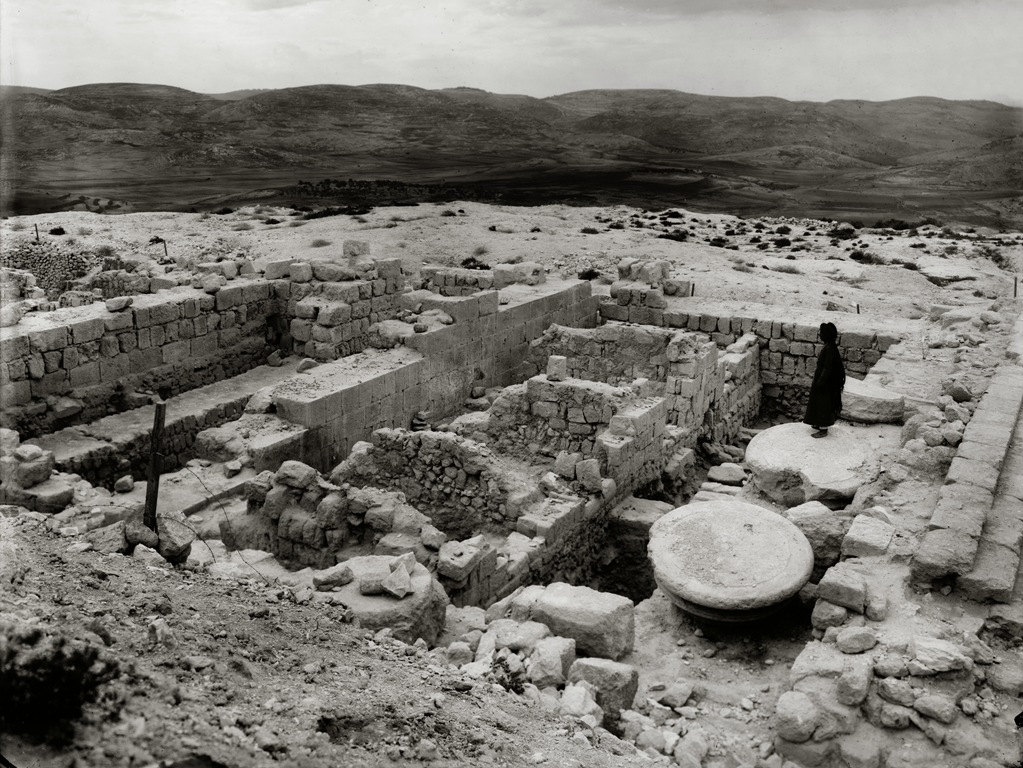
King Herod built a magnificent temple in Jerusalem, but not as many people are aware that he built three other temples in the land of Israel, all to Gentile deities.  The ancient capital of the northern kingdom, Samaria, was renamed Sebaste by Herod in honor of Emperor Augustus, and he constructed a temple here dedicated to the emperor. 

Samaria/Sebaste was first excavated by Harvard University from 1908 to 1910 under the direction of George Andrew Reisner.  The photo below shows the foundations of Herod’s temple shortly after those excavations.

Samaria, Herodian temple remains, mat07375Remains of Herod’s Temple at Samaria/Sebaste.  Photo taken between 1908 and 1914.

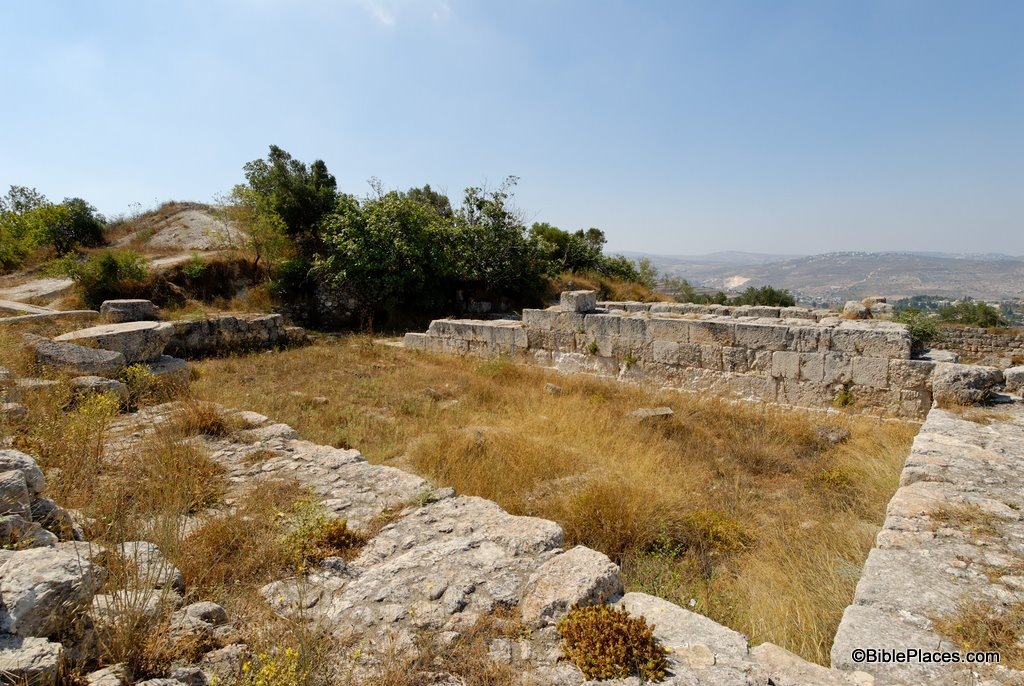
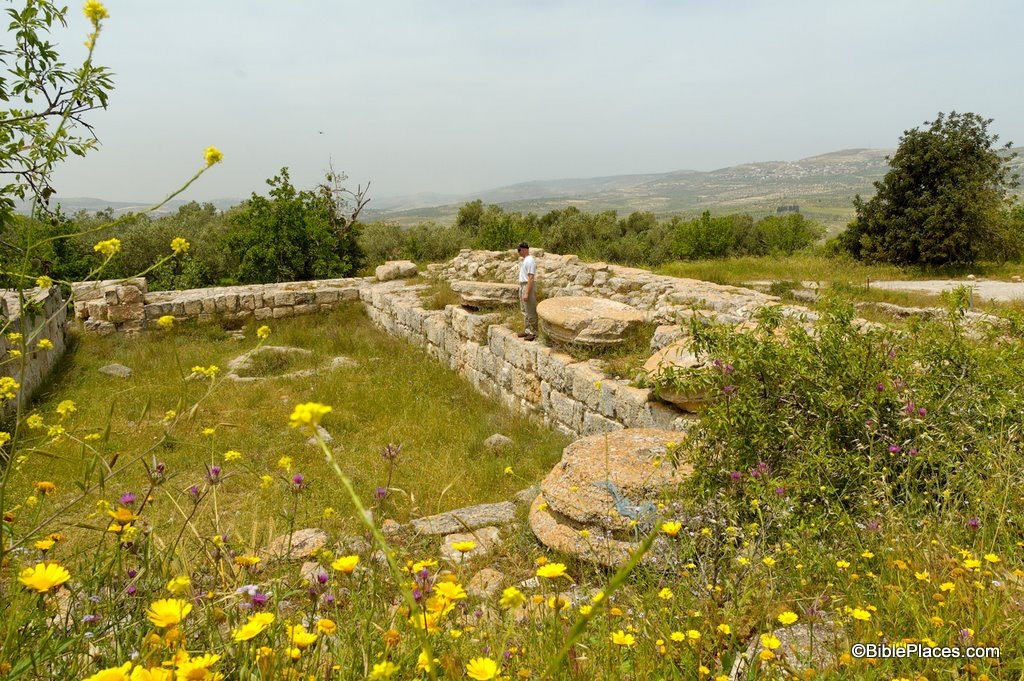
Today this area is largely filled in and overgrown, with only a few walls and pillar bases visible.  The political situation today makes it difficult for most tourists to visit the site.

Samaria Herodian temple, tb070507748dxo

Herod’s temple foundations, view from northwest

Samaria Herodian temple, tb050106512ddd

Herod’s temple foundations, view from southeast

The first photograph is one of 600 high-resolution images in the newly released Northern Palestine CD, volume 1 of The American Colony and Eric Matson Collection. Photo: Library of Congress, LC-matpc-07375.

Share: