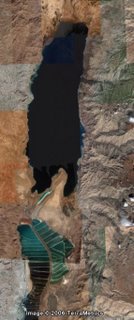
Yes, it’s true – the Dead Sea’s falling threatens the environment and the roads, and the Dead Sea’s rising threatens the hotels. How one sea can be both rising and falling at the same time is best explained this way: there are two Dead Seas.

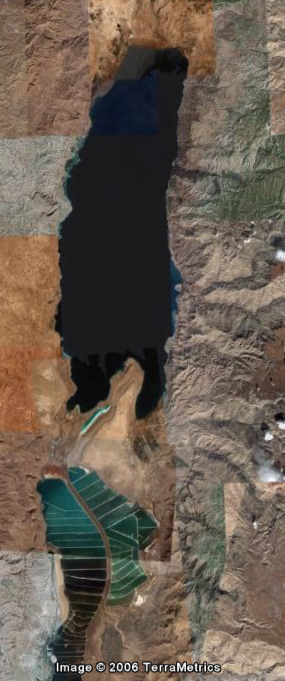
Until modern times, the Dead Sea was a 50-mile (78-km) long body of water, with a piece of land sticking out from the eastern side. Because it apparently looked like a tongue, it was called that in Hebrew (lashon) and Arabic (lisan).

With the damming of the Sea of Galilee and the use of water that formerly flowed down the Jordan River into the Dead Sea, the level of the Dead Sea dropped in the 20th century until the tongue reached all the way across the lake. The southern end is shallow and would have completed dried up if not for the channeling of water by the company that extracts minerals from the Dead Sea waters. So the southern end today is essentially an artificial evaporation basin, connected to the northern end only by manmade channels.

Today the northern end continues to drop because the limited inflow of water from the Jordan River. The southern end, however, is rising, because of the activities related to the mining of minerals. The rise of approximately 8 inches a year (20 cm) is now threatening the tourist resort of Ein Bokek and its many hotels.

Hotels of Ein BokekAccording to Haaretz, the Supreme Court of Israel has ordered the government to come up with a plan to solve this problem.

At present, there are three options: building a new lagoon with walls that will prevent flooding of the reservoirs, removing the extra salt from the bottom of the reservoirs or demolishing all hotels on the Dead Sea shore and rebuilding them in alternative locations.

In the meantime, expect the Dead Sea to continue to rise and fall simultaneously.

The media is reporting the discovery of oil near the Dead Sea. Expected yield is very low, but it raises hopes that there might be more in the area. From All Headline News:

A nationally-held Israeli exploration company announced Wednesday that it had discovered oil near the Dead Sea.

Speaking on Israel’s Channel 10 News, Dr. Eli Tenenbaum of Genco said that after drilling to a depth of 1.2 miles, “we noticed that the pressure in the area was very high and when we opened the tap, oil started flowing freely for several minutes.”

Dr. Tenenbaum said the reserve could contain as much as six million barrels of oil, giving it an estimated commercial value of $300 million.

“We hope it was the first of many [such discoveries],” he added.

Genco started its work 10 years ago, but was forced to stop due to the high costs of its operations. But with oil prices soaring, the government recently gave the company the go ahead to resume exploratory drilling.

Infrastructure Minister Binyamin Ben-Eliezer told The Jerusalem Post that the government is now ready to back any company that wants to try to find oil inside the borders of Israel.

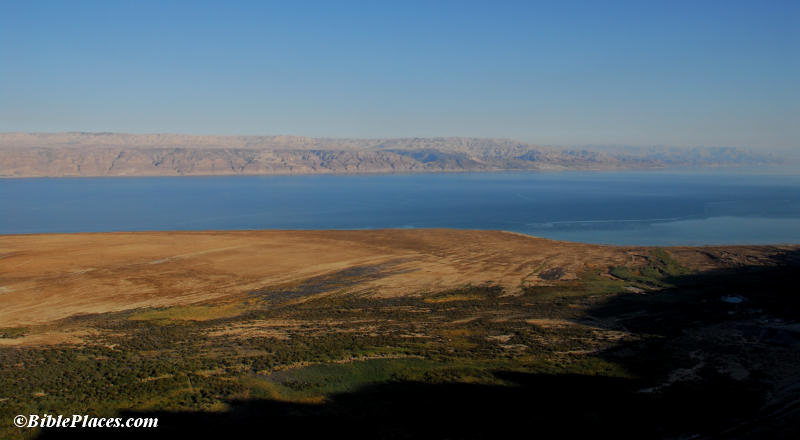
Dead Sea from west, Sept. 27, 2006

UPDATE (10/11): The Jerusalem Post has more details, including a major new investor.

You could be forgiven for thinking that a new problem has been discovered and a rapid response is underway from the Sunday Times article, “Race is on to save the Dead Sea.” In fact, a Red Sea-Dead Sea aqueduct has been considered by Israel and Jordan for at least a decade. Whether or not the current discussions are more serious is difficult to know. The article notes that the flow of the Jordan River into the Dead Sea is 7% of what it was before the countries began diverting its flow. The declining level (cited at 1 meter/3 feet per year) is certainly causing problems with sinkholes and unstable terrain.

The article suggests that Jordan is most interested in the project because the bulk of it would be done on their side, with outside financing. Despite the hopes that a joint Arab-Israeli project would increase peace prospects, the way that this project stands the best chance of succeeding is if it is largely constructed by one country or the other.

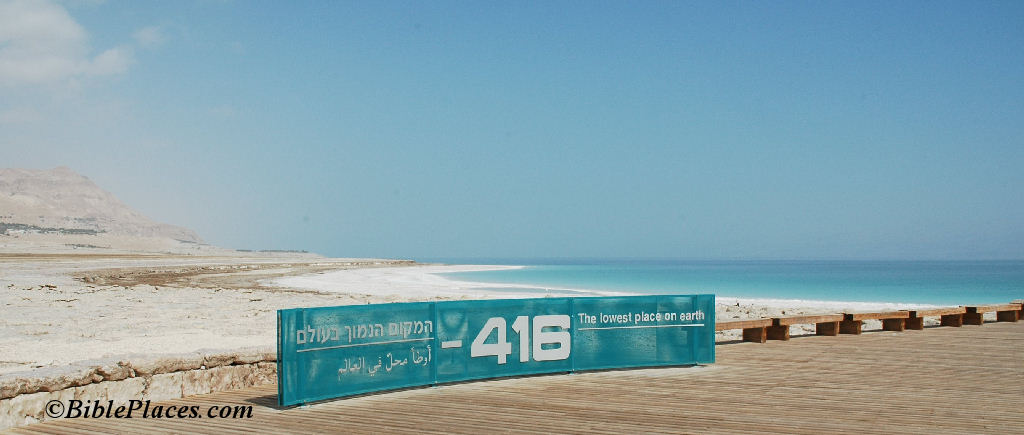
Dead Sea: the shoreline just keeps getting farther and farther away.


There’s always something new to see in Israel. This is one of those things that I’ve driven (or rode) past dozens of times over the years, but never was aware that it existed. Well, I knew in theory that there are warm, salty springs that contribute to the salinity of the Dead Sea, but I didn’t realize that there are a couple that are not built over and are accessible today. This spring is hot, smelly, and shallow, but it’s also good for your skin and it’s free.