Yahoo has a photo that shows the alleged sarcophagus of Paul underneath the altar.  Something we didn’t see before:

Filippi said the decision to unearth the sarcophagus was made after pilgrims who came to Rome during the Roman Catholic Church’s 2000 Jubilee year expressed disappointment at finding that the saint’s tomb — buried under layers of plaster and further hidden by an iron grate — could not be visited or touched.

All we need now are some pilgrims who want to see inside the sarcophagus and our questions will be answered.

In Jerusalem, Western Wall Rabbi Shmuel Rabinovitch and others are unhappy with the delay in building a new bridge for non-Muslim access to the Temple Mount.  The pile of earth likely is not very important archaeologically, but Muslims claim its removal will damage the Al Aqsa Mosque. 

The rabbis want the temporary bridge removed because it is cutting into the women’s prayer area at
the Western Wall.

The removal of the earthen embankment will not only allow more of the Western Wall to be seen, but the large lintel stone of Barclay’s Gate will be visible in its entirety for the first time in modern history.  This is the second of four monumental entrances to the Temple Mount on the western side.

We’ve commented on the ramp before here and here, and the sarcophagus here.  These posts have photos.

Share:

Excavations at the Western Wall have proceeded and now remains from the Herodian period have been discovered.

Excavations at the Western Wall have uncovered the remains of Jewish homes from the Second Temple period as well as a Herodian water conduit and arches from various eras, Army Radio reported (JPost).

I suspect that the water conduit mentioned is part of the Lower-Level aqueduct that brought water from Solomon’s Pools to the Temple Mount.

See this previous post for photos of the excavation area.

UPDATE (12/21): New photos here.

Share:

Some who think of me as a tradition-basher have asked me to comment on the recent discovery of the sarcophagus of St. Paul.  Personally, it’s of less interest to me because I don’t foresee much helpful information coming from it, unless, as Paleojudaica jokes, there’s an airtight container with a copy of his letters inside.

Here’s the straight scoop:

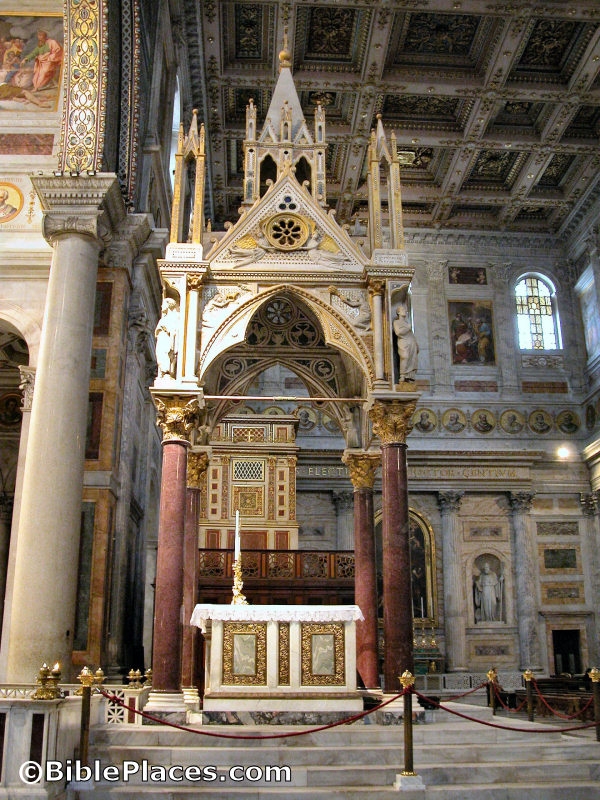
1. The sarcophagus was not found in a random location, but was located in the very place that tradition said it was.  Several years ago after a visit to the church, before they started digging, I noted that this altar is built over the traditional tomb of Paul.  That is where this sarcophagus was discovered.


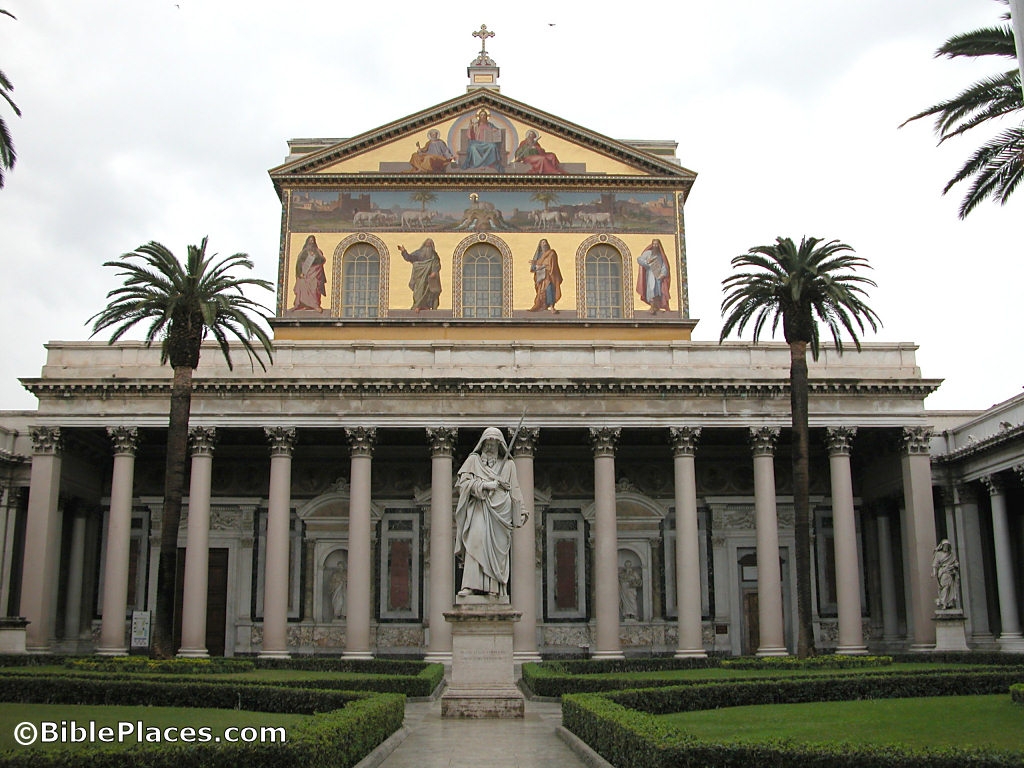
Church of St. Paul Outside the Walls

2. Constantine built the first church over the site in the 4th century.  That means that the tradition is a very old one.

3. After three years of digging underneath the altar, they found a sarcophagus.  That sarcophagus was found underneath a tombstone which had written, in Latin, “Apostle Paul, Martyr.”  This means that whoever wrote the tombstone (presumably in the 4th century, but I can’t be sure from the news reports) believed this was Paul’s tomb.


The sarcophagus was found below this altar.

4. So instead of connecting the dots from the 20th century back to the 1st, we simply have to evaluate the potential accuracy that the site was preserved correctly from the 1st century to the 4th.  This is the typical situation of holy sites in Israel as well; the earliest traditions usually date to the earliest Christian presence, which is in the 4th century.   How reasonable is it to assume that the memory of a site was preserved for up to 300 years?  My answer is that it depends upon the nature of the tradition. 
For the tradition of the place of Jesus’ crucifixion, I doubt that Christians would have failed to pass this on accurately.  For the tradition of the place of Jesus’ birth, I have a little more trouble imagining Jesus pointing the site out to his disciples.  Sometimes our knowledge shows that a traditional site cannot be correct, as in the case of the feeding of the 5,000 or the Transfiguration.  In the case of Paul’s tomb, I am unaware of any evidence that rules the church out as a possibility.  Would early Christians have remembered the site of Paul’s beheading?  My guess is that they would.  It’s also important to note that there was the continuous presence of a believing community in Rome from the time of Paul’s death until Emperor Constantine’s construction of a basilica.

I think it’s quite possible that curiosity is going to push Vatican officials to open the sarcophagus. 

When they do, it will be interesting to see if 1) Paul’s head is missing, and 2) they can determine what sort of malady he suffered from (cf. Gal 4:13-15).

 
Interior of Church of St. Paul Outside the Walls
For more information about the discovery, see the National Geographic news article or the story in the Telegraph.
All photos from the Pictorial Library of Bible Lands, Rome volume (Kregel, 2003); used with permission.
Share:

Two things frequently bother me about news stories: what they say and what they don’t say. An example of this is the recent story about the Byzantine church discovered at Shiloh. The Telegraph has the only report of this discovery I’ve seen.
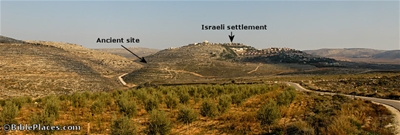

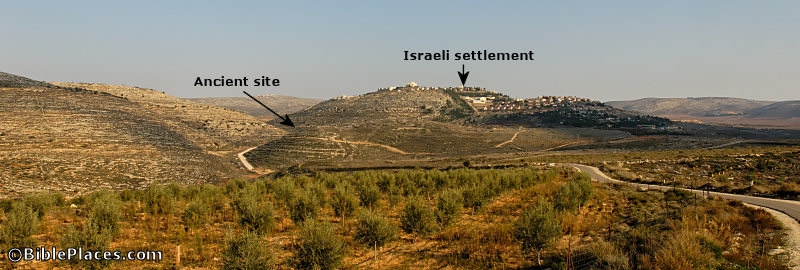
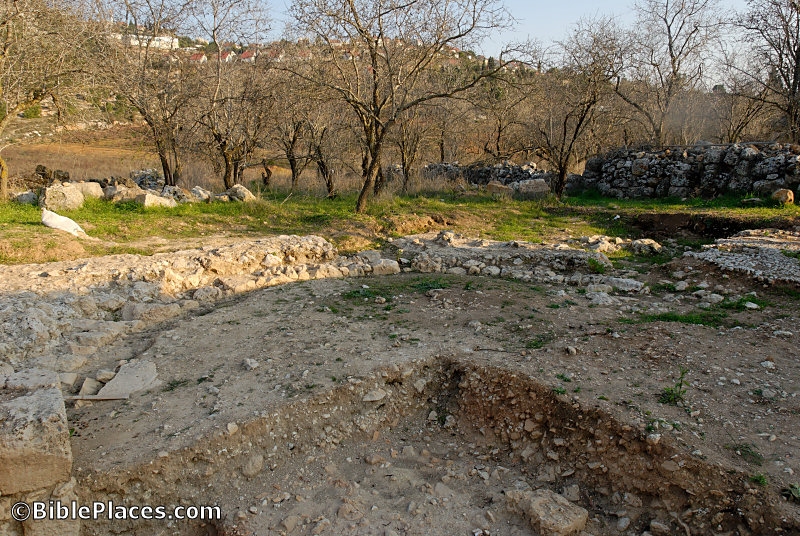
Shiloh from west

I wish they had not said:

Headline: ‘Church of the Ark’ found on West Bank

That’s a fine name, I suppose, except that there is no evidence that the ark was ever in this church or associated with this church. Yes, the ark of the covenant was at the same city where the church was found, but that was about 1,400 years before the church was built.

“The church dates to the late 4th century, making it one of Christianity’s first formal places of worship.”

I guess someone fears that this story will have no interest if it’s not labeled the “first” or “one of the first.” But it’s nonsense. Byzantine Christians built many churches in the Holy Land before this one, including the Bethlehem Church of the Nativity, the Jerusalem Church of the Holy Sepulcher, and the Mt. of Olives Eleona church. If you count last year’s “earliest church ever found” at Megiddo, the best the Shiloh church can claim is that it was built in the first hundred years of church building in the the Holy Land. I guess that doesn’t sound as exciting.
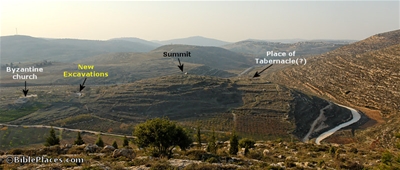

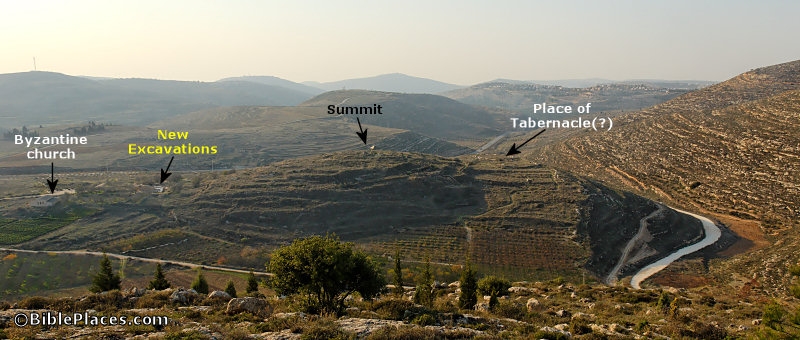
Shiloh from east

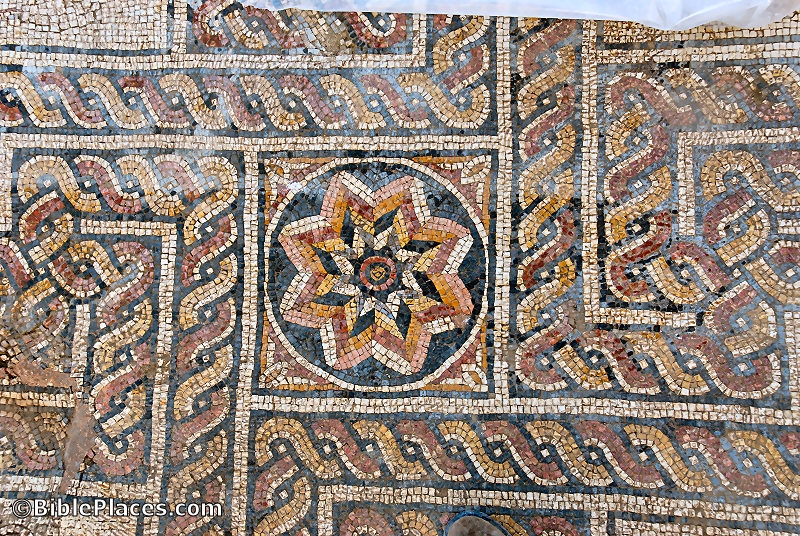
“The team at Shiloh is considering whether to dig under the beautiful mosaics that they have uncovered, in order to find traces of the Ark.”

You’ve got to be kidding me. No one, and I mean no one, thinks that traces of the ark are underneath that church. Maybe, and that’s a very unlikely maybe, there are traces of the tabernacle underneath the church. But most scholars who have ventured to guess believe that the tabernacle was located on the north side of Shiloh, while this church is on the south side.

“We have to decide whether to fix the mosaics here or take them to a museum,” said Mr Aharonovitch.

There are two problems with taking the mosaics to a museum: 1) The mosaics lose much of their significance to the visitor because they are ripped out of their context. It is much better to allow the visitors to Shiloh to see the mosaics where they were discovered. 2) It’s unlikely any museum visitor would ever see them anyway, because museum space is very limited and mosaic floors are very common.
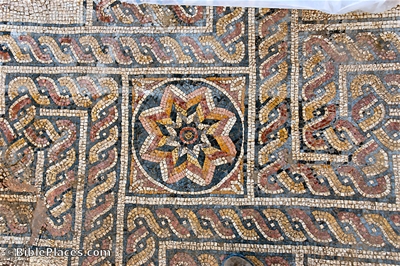

Mosaic from newly discovered church

David Rubin, a former mayor of Shiloh, said: “We believe that if they continue to dig they’ll reach back to the time of the Tabernacle.”

This implies that archaeologists haven’t already discovered remains at Shiloh from the time of the Israelites. Indeed, they uncovered much from this time in the excavations of Israel Finkelstein in the 1980s.

I wish they had said:

This isn’t the first Byzantine church discovered at Shiloh. I suppose that it takes some of the drama away when you learn that about 50 yards away a Byzantine church sits that was excavated 80 years ago. A third church is less well-preserved but is known as the “Pilgrim’s Church.” It’s quite possible that there are other churches yet unexcavated.
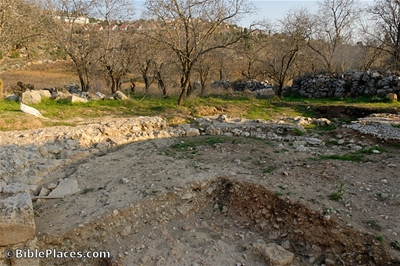

Apse of Byzantine church, mostly unexcavated

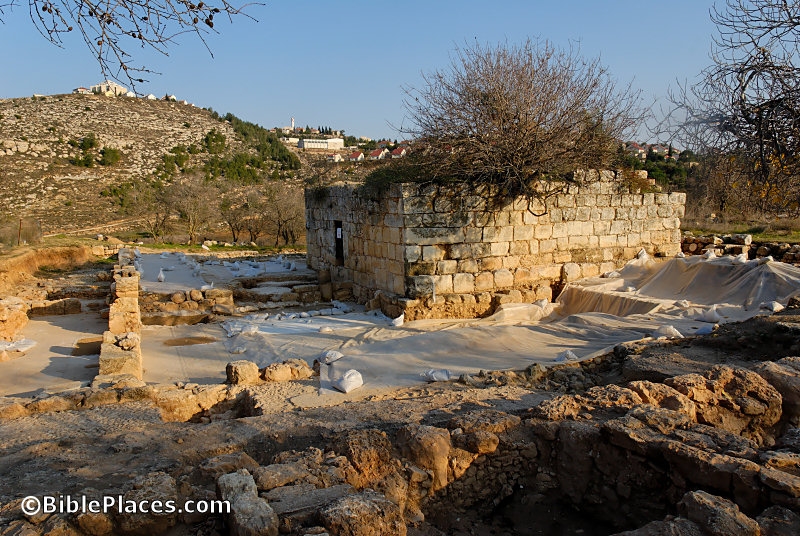
The church is located next to and underneath the “Mosque of the Orphans” (Jame Yetim). This would help the knowledgeable reader to know the precise location of the church. The long-abandoned mosque appears to be untouched, but I wonder if there was some political motivation to not publicize the specific location of the excavation.
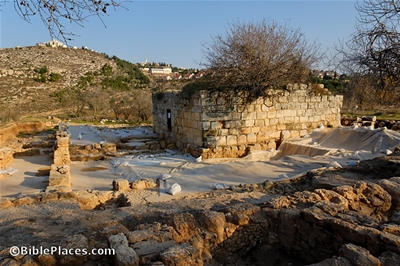

Excavation of Byzantine church around “Mosque of the Orphans”

The inscription that mentions Shiloh is important evidence in confirming the identification of the site.
A translation, even tentative, of the inscription would be helpful. (Is this the inscription in question? 

UPDATE: Theoblogian has begun a translation of it. UPDATE Jan-2: Dr. William Varner and Brian Gee have provided this translation: Lord Jesus Christ, remember and consider worthy in your kingdom Eutonius your bishop and Germanus your holy regional bishop. Draw near to Him and be enlightened.)

There are some nice photos of the excavation by Eyal Dor Ofer here.
Share:

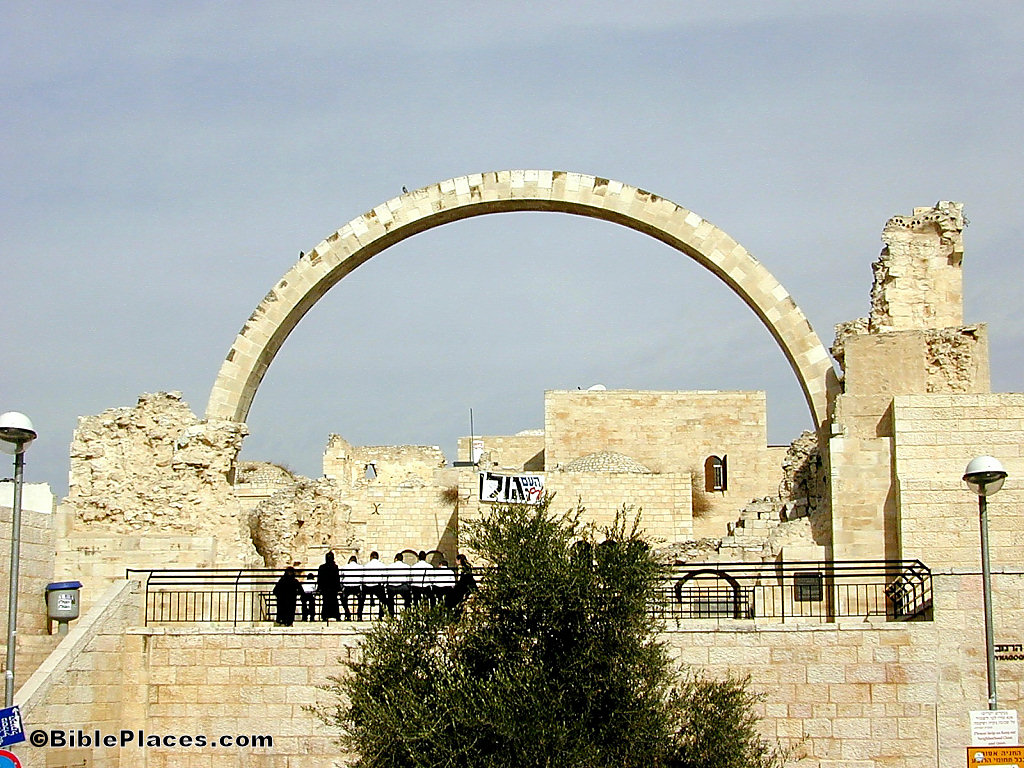
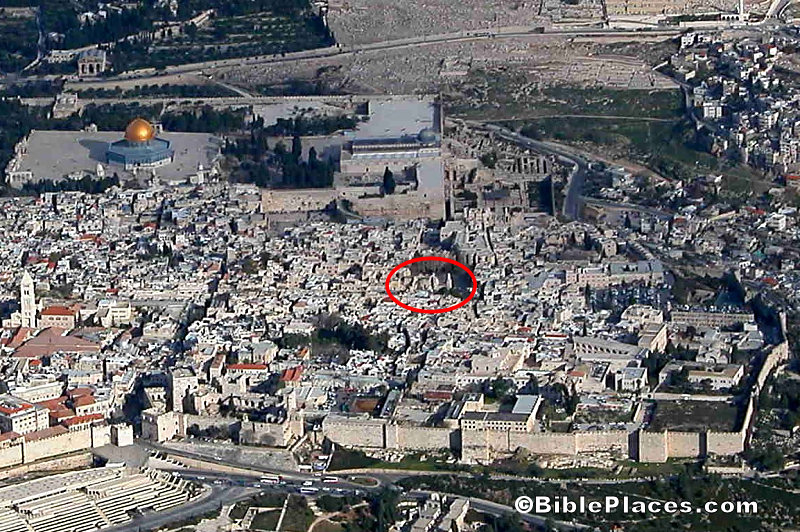
Plans to reconstruct an important synagogue in the Jewish Quarter of the Old City of Jerusalem have given archaeologists the opportunity to excavate. The Hurvah synagogue was the largest and most beautiful in the city before its destruction in the 1948 War of Independence. Following the restoration of the Jewish Quarter since 1967, the location of the synagogue has been marked by a single arch.

Hurvah Synagogue arch before removal

Haaretz reports on some of the discoveries made by archaeologists Hillel Geva and Oren Gutfeld. 

The most significant find is an intact Byzantine arch which apparently served as a gate for a street leading from the Cardo. They have also found buildings from earlier periods.

Hurvah synagogue during renovation

The excavations, which began in 2003, also unearthed structures and pottery from the First Temple period, remnants of rooms from the Herodian period (Second Temple), burnt wooden logs (evidence of fire that took place after the destruction of the Second Temple), and three plastered ritual baths carved in rock from the Second Temple period.

Old City from west; location of synagogue is circled in red
Share:

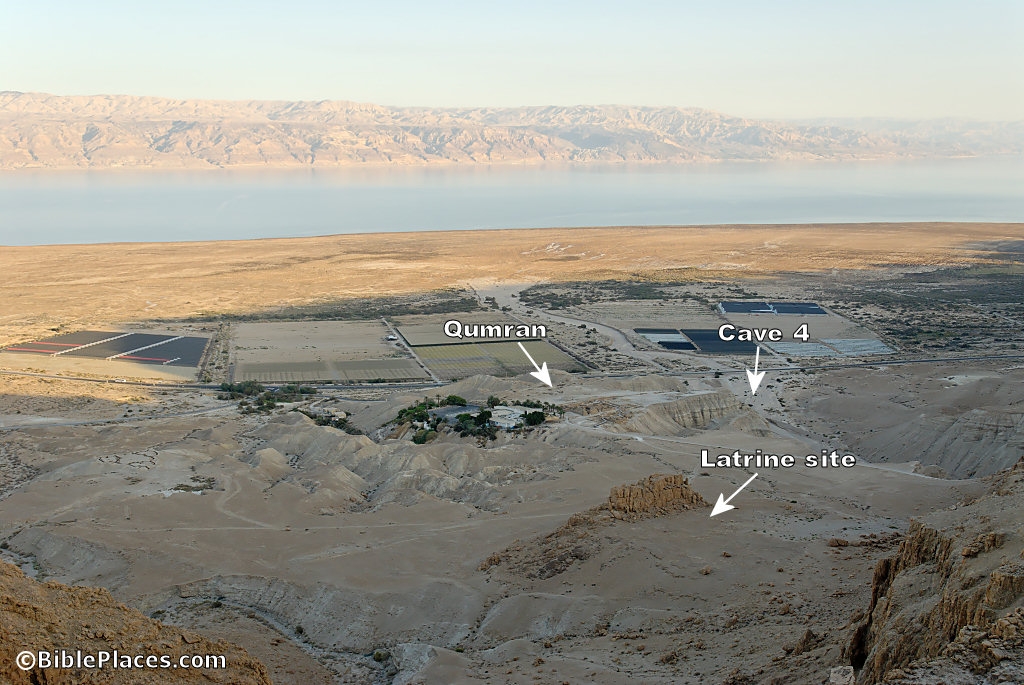
James Tabor, who made the initial suggestion to study a certain area for bathroom activity at Qumran, comments on the discovery on his Jesus Dynasty blog.  He includes an aerial photo showing the location of the latrine area.  Here is another photo which also shows the area of the latrines in relation to the site.  The rocky outcropping would have provided privacy from anyone in the vicinity of the settlement.

HT: Paleojudaica

Share: