Archaeologists believe they have found a villa belonging to Emperor Augustus near Mount Vesuvius.

The city of Anqa is said to be “a near mirror image of Dura-Europos, of the same size, comparable composition, and potentially equal value to scholars of the region.”

A new study suggests that “wine produced around the Mediterranean during the Roman era may have been just as complex and flavorful as wine produced today, in contrast to what is commonly assumed.”

“Egypt welcomed home a 3,400-year-old statue depicting the head of King Ramses II after it was stolen and smuggled out of the country more than three decades ago.”

We don’t know much about Shalmaneser V, but Bryan Windle still managed to create a pretty extensive illustrated archaeological biography.

Webinar on May 9: “Sensing the Past: Sensorial Experiences in Ancient Mesopotamia,” by Allison Thomason

The Albright Institute posts videos of their special lectures on their YouTube channel. Recent lectures include:

Chris McKinny and Kyle Keimer conclude their series of the best archaeological finds of 2023 on the Biblical World podcast.

HT: Agade, Arne Halbakken, Gordon Franz, Paleojudaica

Share:

Jerusalem University College is offering three online courses this summer, and I am teaching one of them. I’d love to have you join me on a six-week study of “The History of Israel’s United Monarchy.”

We’ll meet every Monday from 8:00 to 9:30 pm Eastern Time, from May 13 to June 17. The lectures will be recorded, so you can review them later or watch for the first time if you’re unable to attend some/all of the sessions live. This is a Summer Institute course that is offered for $189 per study, and no credit is offered. No homework will be required either, but I will providing you with some recommended readings, including some of my own research, both published and (yet) unpublished, along with some free photo resources.

My goal is to help you understand what was going on in Israel when Saul, David, and Solomon reigned over the twelve tribes. Our primary source is the biblical text, but we can learn a lot from extrabiblical texts, geographical studies, and archaeological excavations. I will bring lots of charts, maps, and photos to help make sense of it all. I have been teaching this subject for (exactly) 25 years, and I love it. (I’m teaching it at my university right now, but you get it at a much cheaper cost, and without having to write a research paper!) This course will be the first I have ever taught that is open to the public, and I’m looking forward to the adventure!

The JUC Summer Institute includes two other excellent courses that meet at other times, so you don’t have to choose between them:

Chandler Collins, “Edible Landscapes of the Biblical World,” Tuesdays, 8:00-9:30 pm Eastern

Wave Nunnally, “Jesus the Galilean,” Thursdays, 7:00-8:30 pm Eastern

You can get all the details and register here.

Share:

Scholars are trying to understand four clay tokens discovered near the Temple Mount and unlike any known elsewhere in the Roman world.

The Hamas War has resulted in damage to many archaeological sites in Gaza, though some treasures have been protected in Switzerland for years.

“Nahal HaShofet, one of central Israel’s most popular outdoor destinations, reopened this week after extensive renovations costing 25 million shekels.”

A new project at Hazor is seeking to understand the transition from the Late Bronze Age to the Early Iron Age based on archaeological discoveries and biblical texts.

After Roman-era mosaics was discovered at Moza (Emmaus/Colonia) near Jerusalem and then removed by the authorities, nearby residents came together to create a replica of one of them to place in the center of their community.

On April 21, 1:00 pm Eastern, “The Megiddo Expedition invites you to a webinar: Megiddo: News from the Iron Age. In this webinar, the Megiddo Expedition Team Members will update you on the latest news from the Iron Age, including the Iron Age Gates, the search for the Iron Age Administrative Building, the time of Josiah, and our secret plans for the 2025 Season.” Register here; a recording will be available here.

The subject of the latest issue of ‘Atiqot is “Wine Production, Trade and Consumption in the Southern Levant.” All articles are posted online.

Available for pre-order: Capernaum: Jews and Christians in the Ancient Village from the Time of Jesus to the Emergence of Islam, by Wally V. Cirafesi (Fortress; Amazon $45; Logos $25).

Edward Lipiński, scholar of Aramaic and Phoenician studies, died last week.

Andy Cook has been in Jerusalem, and he filmed a video of the important excavations on the south side of the Temple Mount.

HT: Agade, Ted Weis, Arne Halbakken, Gordon Dickson, Gordon Franz

Share:

Some newly discovered frescoes inspired by the Trojan War are among the finest ever to have been found at Pompeii.

Archaeologists working on the Greek island of Aegina have discovered a Mycenean building from the time of the kingdom’s decline.

Cats were known and domesticated in ancient Egypt, Greece, and Rome, but are absent from the Bible and Second Temple literature. The Persians despised cats, but the Talmud tolerates them.”

For the occasion of last week’s solar eclipse, Carl Rasmussen brings back an explanation of how “the solar eclipse of June 15, 763 B.C. holds the key to the chronology of the Old Testament.”

Logos has some archaeology books available for pre-order:

Ferrell Jenkins shares a photo of three milestones taken at the Museum of Mediterranean Archaeology at the Gan Hashlosha (Sachne) park.

John DeLancey has released a bonus session in his Life of Christ in Context series focused on “Jesus in Jerusalem.” His talk includes many photos and illustrations.

HT: Agade, Arne Halbakken, Gordon Franz, Ted Weis

Share:

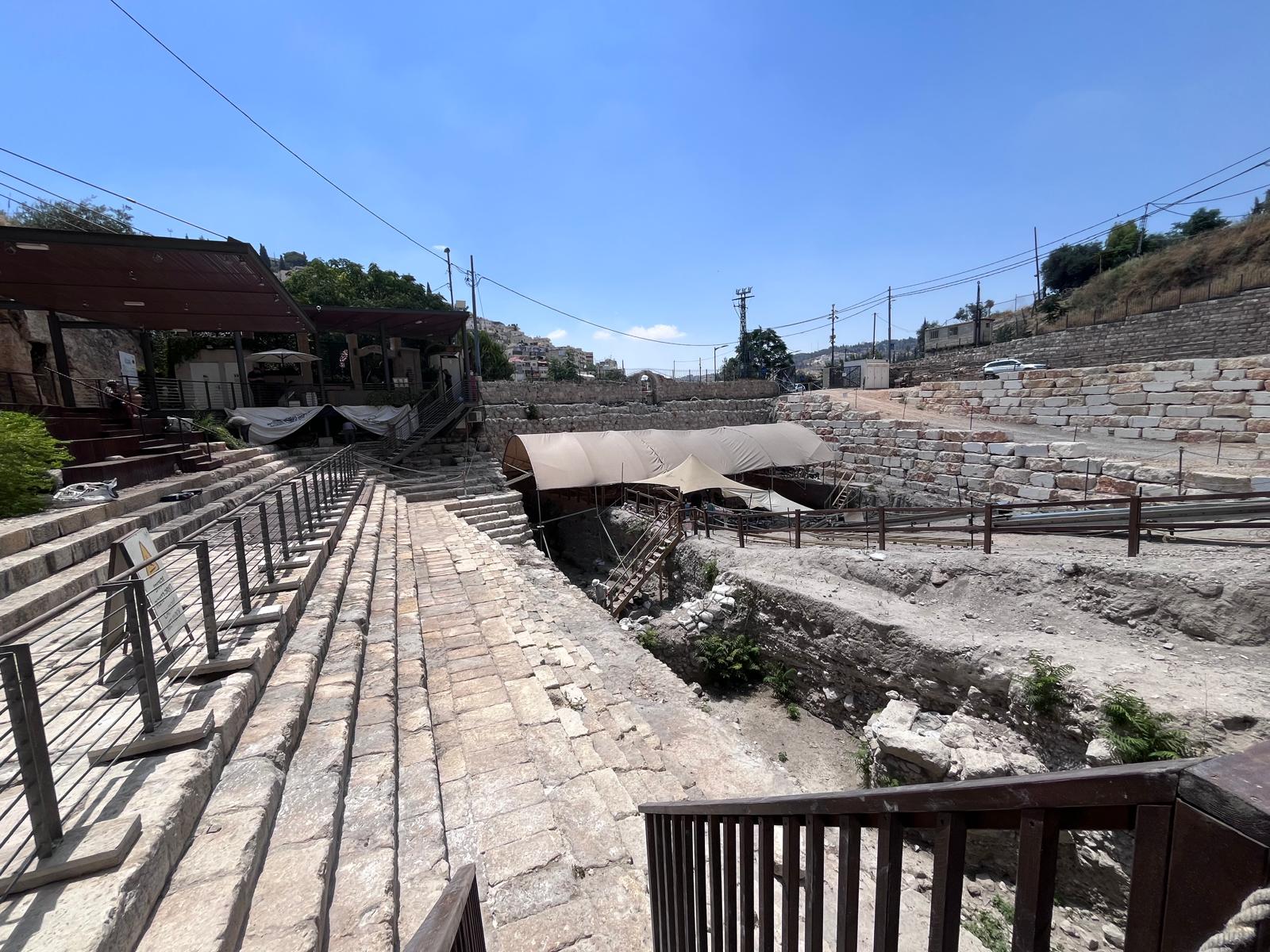
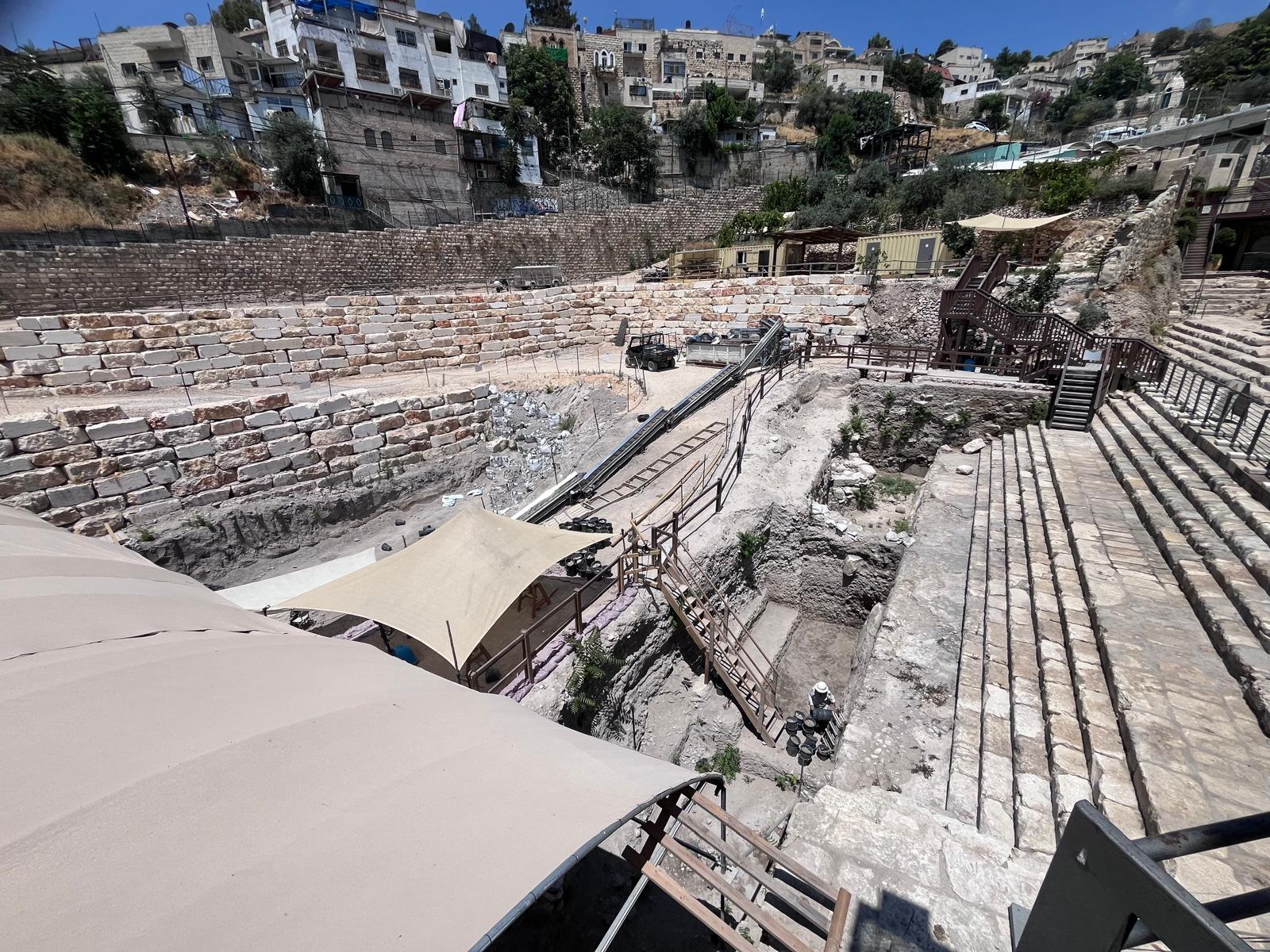
Andy Cook was at the Pool of Siloam this week and he recorded a video showing the site now with the news that they have apparently discovered the eastern wall of the pool.

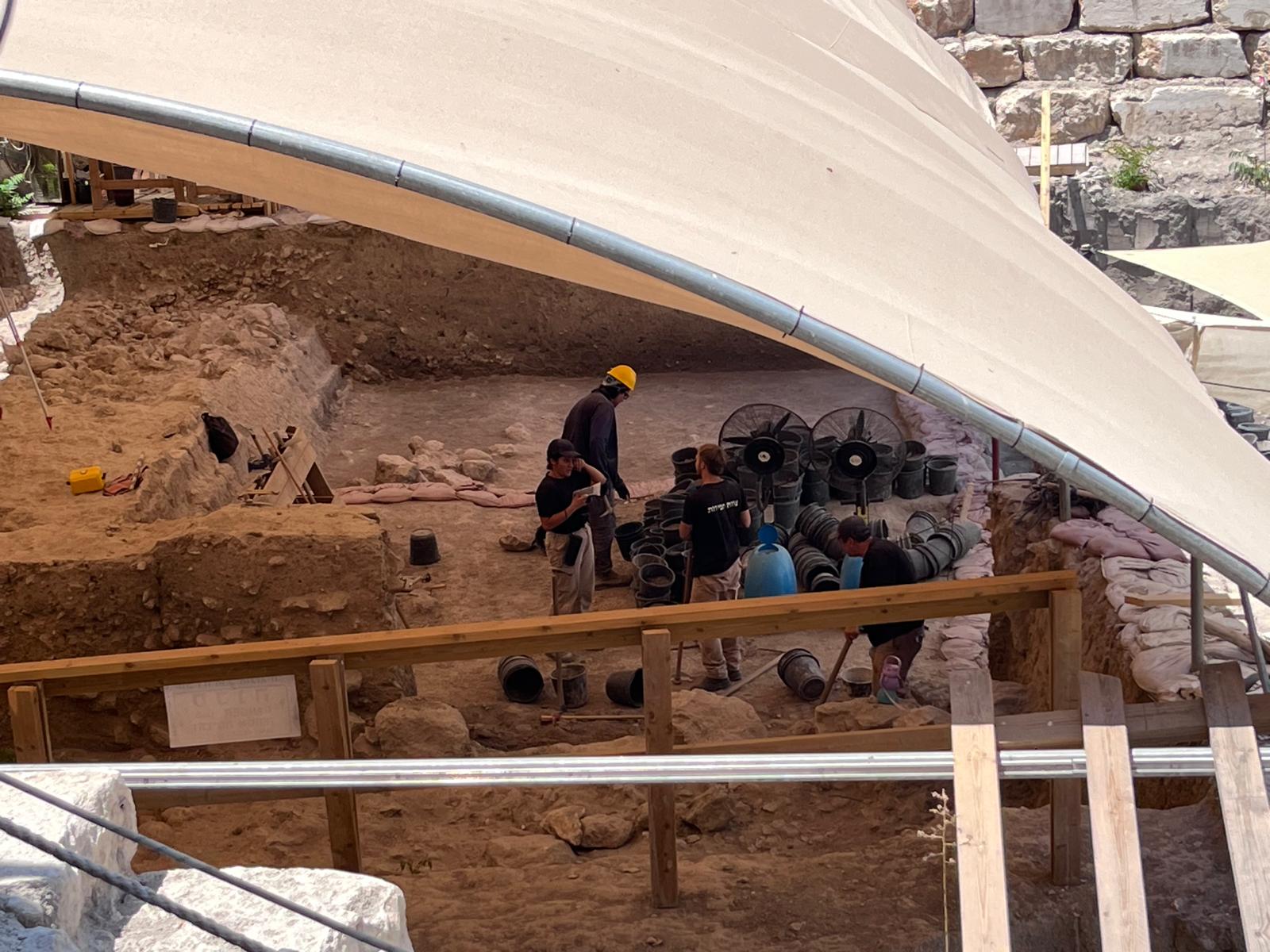
Sifting at the Pool of Siloam excavation revealed a gaming die dating from the 13th century AD.

The find of the month (from before the war began) at the Temple Mount Sifting Project is a piece of a Byzantine stone chancel screen. What was that doing on the Temple Mount?

“Israeli archaeologists have reconstructed a 6,000-year-old vessel made of elephant ivory, which had been shattered in antiquity and preserved inside a basalt stone container for millennia.”

Bible History Daily gives a summary of an article in the latest issue of BAR on a wealthy Iron Age house discovered in Jerusalem with hundreds of ivory fragments.

The latest issue of Jerusalem in Brief reports on a tomb from the time of Judah’s monarchy that was discovered near the center of the Old City. “This is the only undisputed Iron Age II tomb that has been revealed within the confines of the Old City.”

Israeli university students are using AI to read corrupted inscriptions in Hebrew and Aramaic.

“A rare six-legged mountain gazelle has been spotted in Israel. The male gazelle has an extra pair of legs growing from its back, but wildlife experts say it seems to be managing fine with the extra appendages.”

Bible Land Passages has just released a docuseries entitled “The Temple: Then and Now.” The five episodes feature on-location footage, beautiful drone imagery, and brand-new reconstructions. Each episode is 10-15 minutes long, and you can read a description for each and view them all at the Bible Land Passages website.

A new student academic journal that I oversee was published this week. The topics are mostly related to Isaiah, not biblical archaeology, but if that’s an interest, you can take a look. I’m very impressed with their work.

HT: Agade, Arne Halbakken, Gordon Franz, Ted Weis

Share:

“An archaeological site in the Jordan Valley that experts at the Israel Antiquities Authority (IAA) call a ‘prehistoric Garden of Eden’ was dedicated and opened to the public on Thursday.”

Israel has declared 42 acres surrounding the Herodium to be “state land.”

An unknown Hebrew letter was discovered in a Dead Sea Scroll, according to an announcement of the Academy of the Hebrew Language on April 1.

Abigail Leavitt describes her experience at the Church of the Holy Sepulcher on Easter morning.

Biblical Backgrounds has posted James Monson’s “The Way of the Cross” handout, used in teaching the Passion Weekend in Jerusalem forty years ago.

The top three reports in biblical archaeology in the month of April are a statue of Rameses II, discoveries at a temple at Azekah, and a Phoenician gold pendant found in Jerusalem.

The Times of Israel interviews Martin Goodman about his new book, Herod the Great: Jewish King in a Roman World.

The Spring 2024 issue of Biblical Archaeology Review includes articles on the Jerusalem Ivories, Azekah’s Canaanite temple, a wealthy residence in Jerusalem in the Iron Age, and the possible tomb of one of Jesus’s disciples.

“The twisting turning tales of Jerusalem, particularly of the environs of Agron Street, make for intriguing, compelling, and entertaining listening and viewing.”

Israeli tour guide Shmuel Browns talks about what he has been doing since the Hamas war largely shut down tourism in Israel.

Zoom lecture on April 17: “Searching for Solomon’s City: Recent Excavations at Tel Gezer,” by Steven Ortiz

New release: Kinneret II: Results of the Excavations at Tell el-ʽOrēme, 1994–2008 / Vol. 1: The Bronze Age, Iron Age II, Post-Iron Age Periods, and Other Studies, edited by Wolfgang Zwickel and Juha Pakkala (Ägypten und Altes Testament 120; Zaphon; 160 €)

I will be speaking this Wednesday in Jerusalem University College’s Culture Counts online lecture series on the topic of “The Psalms of David and Solomon.” This is one of my favorite subjects, and I’ll share some of my discoveries both from historical background as well as from the canonical arrangement of the Psalms. The lecture begins at 12:00 Eastern Time and will be followed by a Q&A. Registration is free and includes access to a recording of the lecture.

HT: Agade, Arne Halbakken, Gordon Franz

Share: