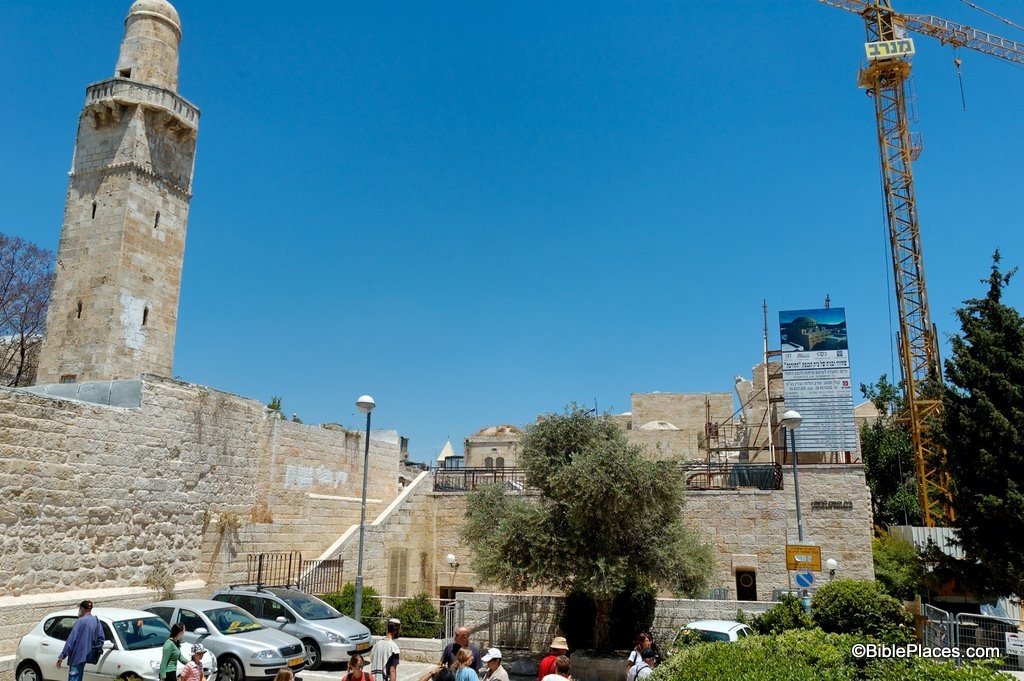
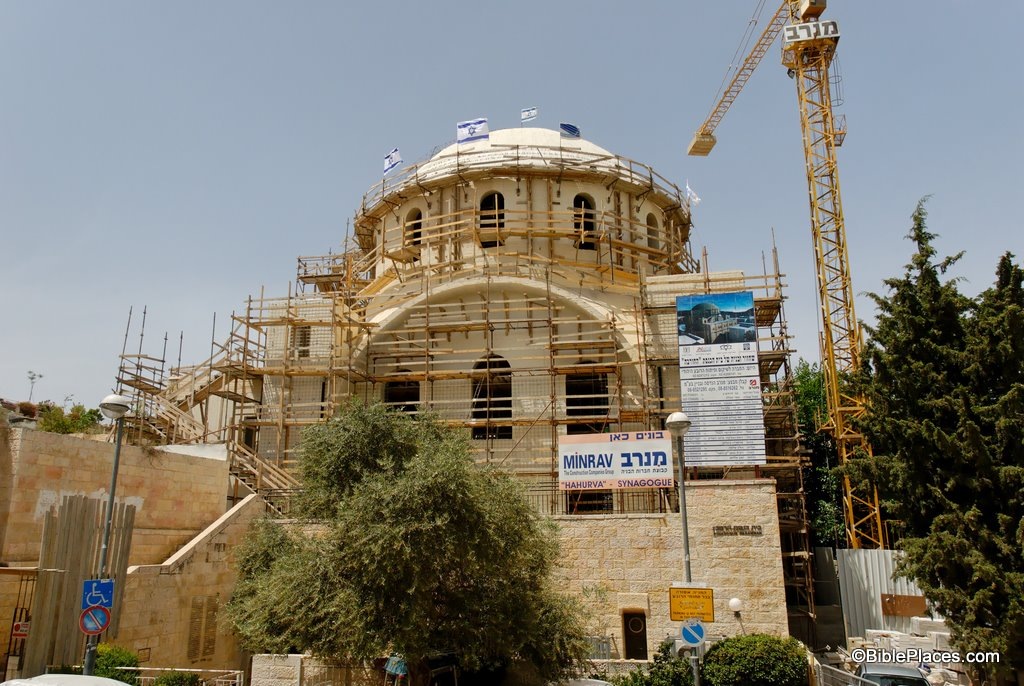
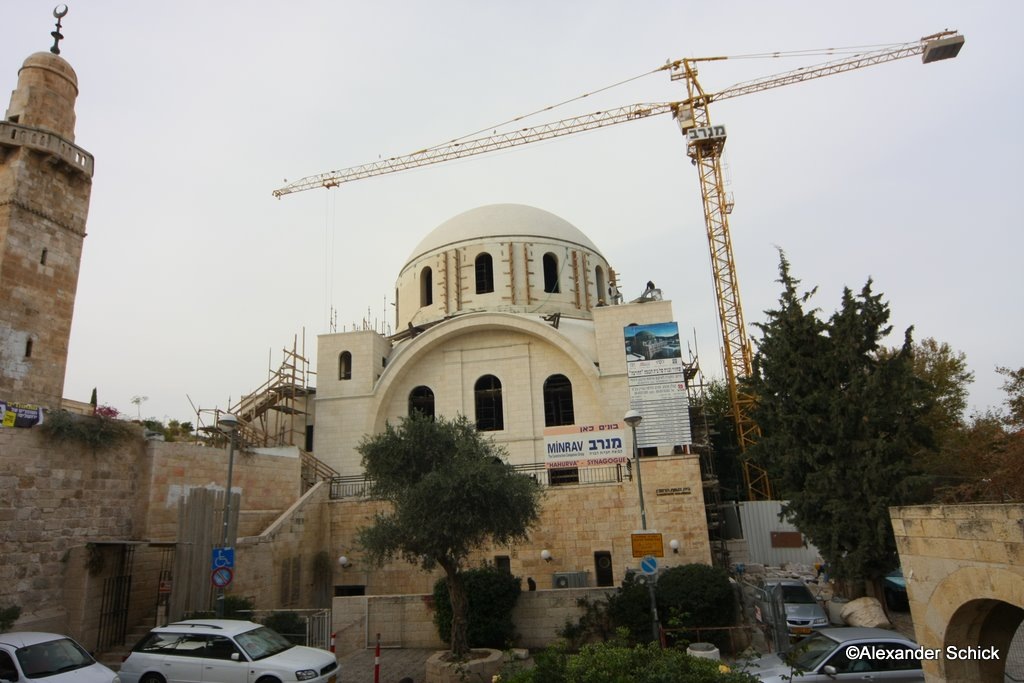
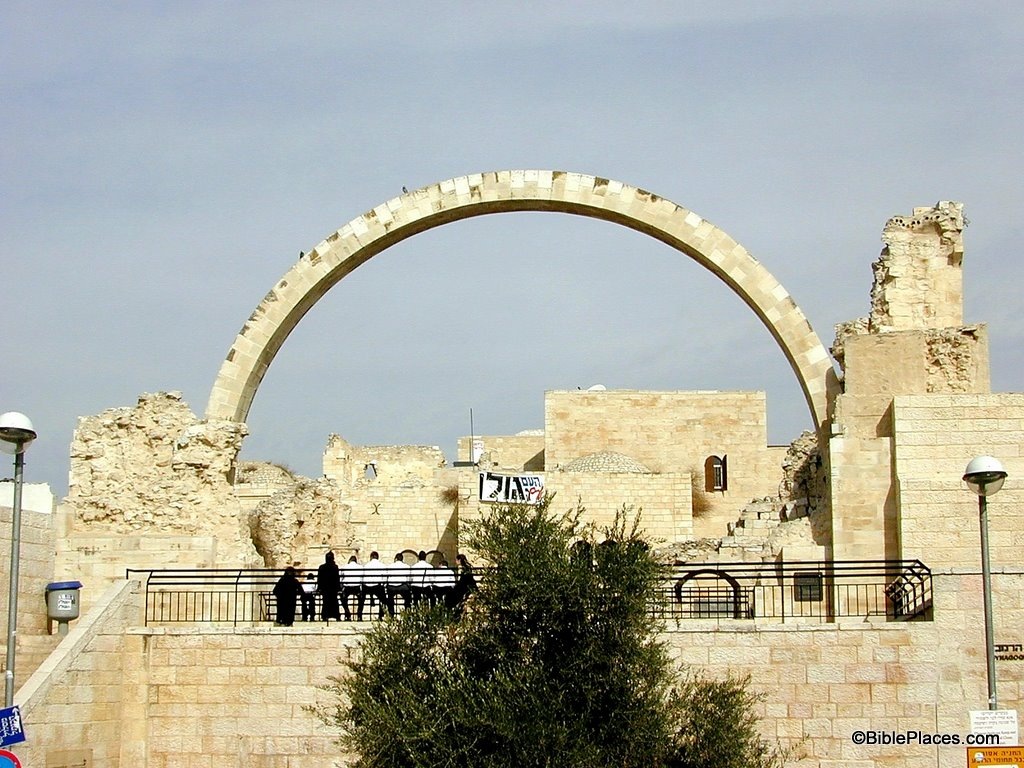
Until 1948, one of the largest and most important Ashkenazi synagogues in the Old City of Jerusalem was the Hurva Synagogue.  Fighting in May 1948 left the building in ruins, but following the city’s capture by Israel in 1967, plans were discussed to reconstruct the synagogue.  The interested parties could not agree on a solution, and so in 1977 a memorial arch was erected.  In 2000, plans were approved to rebuild the synagogue following its original design, and in 2005, work commenced.

Hurvah Synagogue arch, tb010200207 Memorial Arch, January 2000
Hurvah synagogue under construction, tb051906304ddd Arch removed, May 2006
Hurvah synagogue under reconstruction, tb051508004dxo Reconstruction underway, May 2008
Hurva synagogue in construction, as111808042 November 2008 (Photo courtesy of Alexander Schick)

For more about the Hurva Synagogue, see the Wikipedia article or these Google links.

Share:

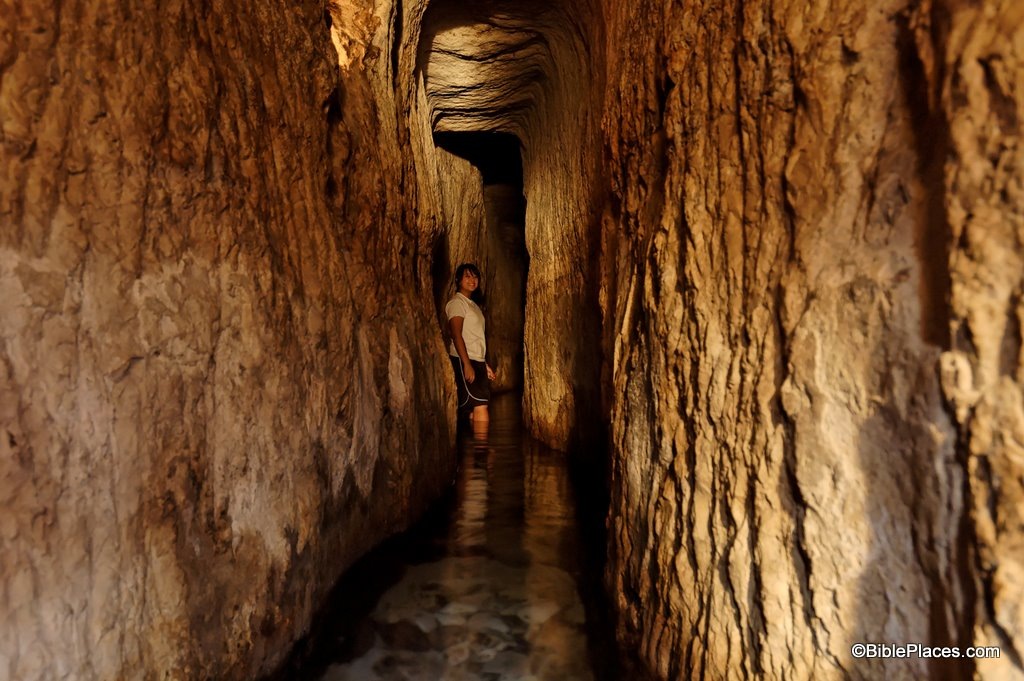
The Sept/Oct 2008 issue of Biblical Archaeology Review carried an intriguing article that suggested that workers used sound signals from above in determining direction while carving Hezekiah’s Tunnel.  The apparent “consensus” theory that they followed a natural crack always seemed implausible to me, and thus I am interested in learning of other possibilities. 

A number of readers sent questions about the article and one of the scientists of the study responds in an online-only article.  Questions that he answers include:

  • How does Hezekiah’s Tunnel compare with the water tunnels of Megiddo and Hazor?
  • How could sound signals pinpoint direction through more than 100 feet of bedrock?
  • Did water flow uphill from the Gihon Spring to the Pool of Siloam?
  • How were the workers supplied with oxygen?
  • Isn’t there really a natural crack that the workers followed?

Ayreh Shimron has some good insights into these and other matters.

Hezekiah's Tunnel, tb110705532 Hezekiah’s Tunnel
Share:

2008 was a good year for archaeology.  You can read about the top ten archaeological discoveries in the world this year, but my goal here is simply to suggest what I perceive to be the most significant discoveries for understanding the Bible and its world.  Both the selection and the ranking is purely subjective; there were no polls, editorial committees, or coin tosses.  For another opinion, take a look at the list of Dr. Claude Mariottini

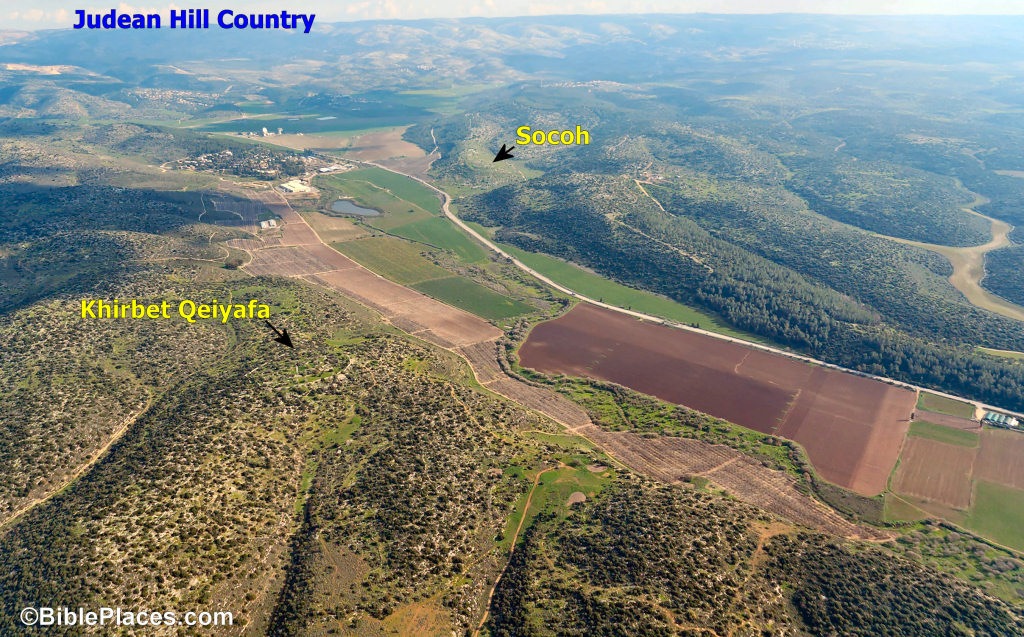
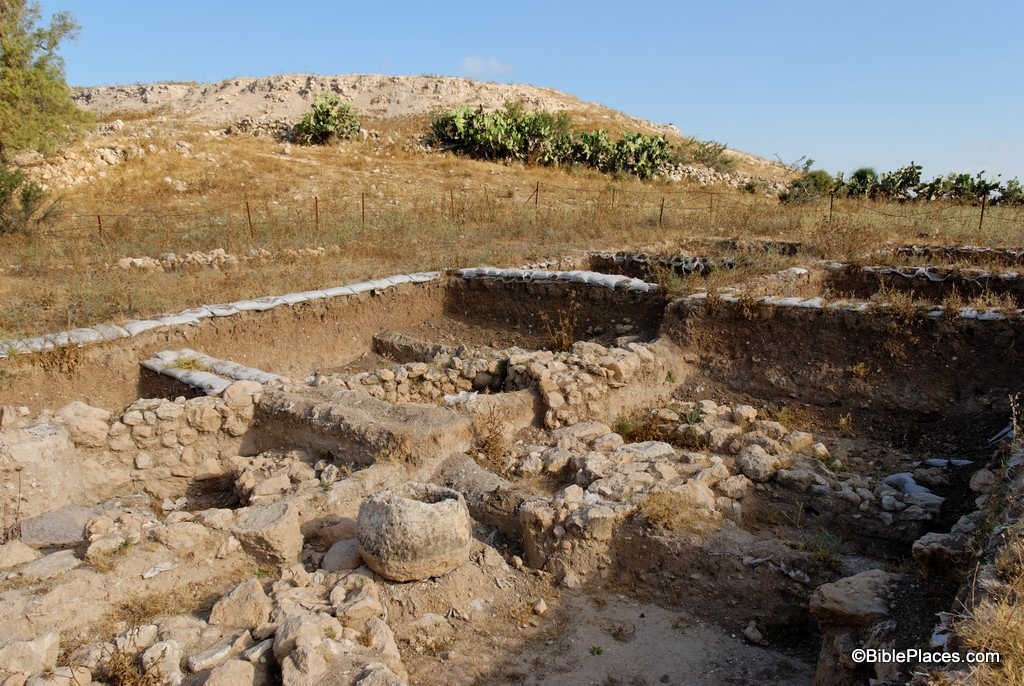
1. Khirbet Qeiyafa (and inscription).  The new excavations of this fortified site in the Shephelah ranks as #1 for the following reasons:

1) The site was occupied for only a limited time during the reign of King David.

2) The site is located near the battle location of David and Goliath.

3) A strongly fortified site is indicative of a strong central government, at a time when scholars
question the existence of such. 

4) A early Hebrew inscription discovered this summer points to the site’s owners (Judeans) and the state of literacy in this period. 

5) These discoveries will certainly shed light on what is currently the most debated issue in biblical archaeology: the nature of Israel/Judah during the 10th century.
Elah Valley aerial from west, tb011606779 marked Elah Valley from the west

2. Gath excavations.  It’s not a single discovery that puts the excavations of this Philistine city in the number two spot, but rather the cumulative results of a very profitable season.  This includes possible early Iron IIA material (see above debate), a 10th century seal impression, two Assyrian destruction layers, methodological advances, as well as other significant remains from the Early, Middle, and Late Bronze Ages.
Gath, Tell es-Safi, Area E excavations from east, tb060906085dddGath excavations, Area E, Summer 2006

3. New discoveries at Herod the Great’s tomb.  The tomb was discovered and identified in 2007, but on-going excavation in 2008 revealed additional coffins, including one that may belong to one of Herod’s wives and another to one of his sons.  They also found a theater that sat 750 people and included a VIP room with beautiful wall paintings.  All of this further confirms the previous identification that Herod’s tomb was located on the slope of the Herodium.

4. The “First Wall” of Jerusalem.  A well-preserved portion of the Hasmonean wall (2nd century B.C.) was uncovered on the south side of Jerusalem.  While parts of this wall have been excavated previously, there are two advantages to the current excavation:

1) It is being carried out with the latest in archaeological knowledge.

2) The remains will be preserved and visible to visitors.

5. Alphabetic Inscription from Zincirli. The Kuttamuwa Stele is a large well-preserved funerary inscription from the 8th century B.C. city of Sam’al (modern Zincirli) that sheds light on the beliefs of the afterlife of one of Israel’s northern neighbors.  For more on the content of the inscription, see this.  This is the only discovery on this list which is also on Archaeology Magazine’s Top 10 Discoveries of 2008.

6. Iron Age Seals from Jerusalem.  Many inscriptions were found in Jerusalem at different times this year, including the Seal of Shlomit (aka Temah), the Seal of Gedaliah, the Seal of Netanyahu, and the Seal of Rephaihu.  The first two were discovered in Eilat Mazar’s excavation of the potential area of “David’s palace,” and the other two were found relatively close by (Western Wall and Gihon Spring).  Gedaliah is mentioned by name in Jeremiah 38:1, and Shlomit may be mentioned in 1 Chronicles 3:19.  Some might rank these discoveries higher in the list, but I have not because so many have already been found, including many in this area and many that mention other biblical figures.

7. Pre-8th century B.C. neighborhood in the City of David.  This report received little notice, as far as I could tell, but could be quite significant in our understanding of the growth of Jerusalem in the earliest centuries of Judean rule.  While these discoveries were made in 2007, they were only publicized in 2008 (thus qualifying them for this list).  In short, the archaeologists found five Iron Age strata which included a group of houses that dated “earlier than the 8th century.”  Excavators rarely uncover houses in Jerusalem, and these would be the earliest I know of from the Iron Age.

8. Philistine temple near Gerar.  I heard very little of this discovery, but it makes the list because Philistine temples are both rare and of biblical interest (see Judges 16:23-30 and 1 Samuel 5:2-5). 

Other Philistine temples have been excavated at Tel Qasile and Ekron (and Aren Maier has teased that he may have another at Gath).

Other discoveries that did not make the top 8 include the sarcophagus fragment of the son of the High Priest in Jerusalem, the “Christ Inscription” in Egypt, and a Jerusalem quarry found in Sanhedria. 

The on-going Temple Mount sifting project deserves mention (and support).

Other finds that did not make the list are the perfume bottle that Mary Magdalene used to anoint
Jesus’ feet and the water tunnel that David used to conquer Jerusalem.  Perhaps more information or discoveries will convince me that these are more than attempts to gain publicity.
Share:

The excavations south of the Dung Gate, where previously an announcement was made of the discovery of the palace of Queen Helene of Adiabene, is the site of a cache of Byzantine coins.  A Byzantine tourist volunteering at the dig made the find yesterday.  CNN reports:

Some Israeli archaeologists are having a particularly happy Hanukkah.
The Israel Antiquities Authority reported a thrilling find Sunday — the discovery of 264 ancient gold coins in Jerusalem National Park.
The coins were minted during the early 7th century.
“This is one of the largest and most impressive coin hoards ever discovered in Jerusalem — certainly the largest and most important of its period,” said Doron Ben-Ami and Yana Tchekhanovets, who are directing the excavation on behalf of the Israel Antiquities Authority.
Researchers discovered the coins at the beginning of the eight-day Jewish holiday of Hanukkah, which started at sunset on Sunday.
One of the customs of the holiday is to give “gelt,” or coins, to children, and the archaeologists are referring to the find as “Hanukkah money.”
The 1,400-year-old coins were found in the Giv’ati car park in the City of David in the walls around Jerusalem National Park, a site that has yielded other finds, including a well-preserved gold earring with pearls and precious stones.
They were in a collapsed building that dates back to the 7th century, the end of the Byzantine period. The coins bear a likeness of Heraclius, who was the Byzantine emperor from 610 to 641.

Usually archaeologists do not want to publicize the discovery of gold during an ongoing excavation, as it can lead to unwanted attention.  Perhaps word got out before they could swear everyone to secrecy.

The rest of the story is here.  You can also read about it at Arutz-7, Jerusalem Post, and the government press release.

Share:

Many interesting finds have been made from the pile of “trash” that was removed from the Temple Mount and dumped in the Kidron Valley.  The Jerusalem Post reports the latest discovery.

Two ancient coins, one used to pay the Temple tax and another minted by the Greek leader the Jews fought in the story of Hanukka, have been uncovered amid debris from Jerusalem’s Temple Mount, an Israeli archeologist said Thursday.
The two coins were recently found in rubble discarded by Islamic officials from the Temple Mount. It is carefully being sifted by two archeologists and a team of volunteers at a Jerusalem national park.
The first coin, a silver half-shekel, was apparently minted on the Temple Mount itself by Temple authorities in the first year of the Great Revolt against the Romans in 66-67 CE, said Bar-Ilan University Professor Gabriel Barkay, who is leading the sifting operation.
One side of the coin, which was found by a 14-year-old volunteer, shows a branch with three pomegranates, and the inscription “Holy Jerusalem”; the other side bears a chalice from the First Temple and says “Half-Shekel.”
In the Bible, Jews are commanded to contribute half a shekel each for maintaining the Temple in Jerusalem. At the time of the Temple’s construction in the sixth century BCE, every Jew was ordered to make an obligatory symbolic donation of a half-shekel. This consistent yet small payment allowed all Jews, irrespective of socioeconomic position, to participate in building the Temple.

You can read the full story here.

In related news, the archaeologists in charge of this project face a significant funding shortfall.  A recent letter from Gabriel Barkay and Zachi Zweig concludes:

The Temple Mount Sifting Operation is not a project for an elite group of archaeologists. It is now the property of the entire Jewish people, including the tens of thousands of volunteers who have helped us sift through the rubble over the years. Many times throughout history the most important projects are adopted by private donors who have the privilege to make a significant difference well before the state steps in to help. The Temple Mount Sifting Project is just such an opportunity. Please take part in this effort to save the Temple Mount Antiquities and help us to continue the educational programming which is having an immeasurable impact on thousands of visitors from all walks of Jewish life.

You can read more about this important project and learn how to make a contribution here

HT: Joe Lauer

Share:

From the Caspari Center Media Review:

A column in the Calcalist (December 3) surveyed the "Most popular sites in Israel visited by Christians." In first place, rather surprisingly, came the Western (Wailing) Wall: "Despite the fact that Christians have no religious connection to the Wall, its proximity to the Church of the Holy Sepulchre and the Via Dolorosa has made it one of the four sites everyone has to visit in Jerusalem." The Church of the Holy Sepulchre was second: "Although not all Christian denominations concur that Yeshu was buried here, this church in the heart of the Christian Quarter is of great importance . . ." Third was the Via Dolorosa, "along which Yeshu passed on his way to his crucifixion, stopping at nine places . . ." The fourth site was the Mount of Olives – "mentioned in the New Testament as the place whence Yeshu ascended to heaven and to which he will also return in the end times." In fifth place was Capernaum, where "after he left Nazareth, Yeshu transferred his activities . . . and also chose his apostles." The information was credited to the Ministry of Tourism, the statistics to the first half of 2008. Tourists visiting Kibbutz Ein Gev on the eastern shore of the Sea of Galilee will now be able to experience a "reconstruction" of one of Jesus’ miracles, according to a report in Israel HaYom (December 4). Having caught an enormous St. Peter’s fish (musht), the kibbutz’s veteran fisherman has decided to "preserve" it, put a gold coin in its mouth, and present it to tourists as a visual aid to Jesus’ catch of a "huge" fish, the proceeds from the sale of which he used to pay the border tax owed by his disciples.

Share: