Eilat Mazar announced yesterday that the seal of a government official was discovered in her excavations in the City of David.  The story was covered by several media outlets (JPost, the Trumpet), and here’s my summary with a few thoughts.


What: The clay seal impression, about 1 cm (.4 inch) in diameter, has the name Gedaliah, son of Pashur.


Who: Gedaliah was a government official mentioned in the book of Jeremiah as serving the last king of Judah, Zedekiah.  Gedaliah was among those who intended to kill the prophet Jeremiah.  The relevant passage is Jeremiah 38:1-5.

Now Shephatiah the son of Mattan, Gedaliah the son of Pashhur, Jucal the son of Shelemiah, and Pashhur the son of Malchiah heard the words that Jeremiah was saying to all the people, 2 “Thus says the Lord: He who stays in this city shall die by the sword, by famine, and by pestilence, but he who goes out to the Chaldeans shall live. He shall have his life as a prize of war, and live. 3 Thus says the Lord: This city shall surely be given into the hand of the army of the king of Babylon and be taken.” 4 Then the officials said to the king, “Let this man be put to death, for he is weakening the hands of the soldiers who are left in this city, and the hands of all the people, by speaking such words to them. For this man is not seeking the welfare of this people, but their harm.” 5 King Zedekiah said, “Behold, he is in your hands, for the king can do nothing against you” (ESV).


Note: The man mentioned immediately after Gedaliah is Jucal the son of Shelemiah.  His seal impression was found nearby in Mazar’s excavation three years ago. 


Where, specifically:  Trumpet reports:

”We found the bulla of Jehucal inside the palace structure,” Mazar told theTrumpet.com yesterday. “This time, we found the bulla of Gedaliah outside the wall, just at the foot of the same spot we found Jehucal.” The two must have been connected somehow, she said.


When: Zedekiah was king from 597-586 B.C.  The date of the seal impression’s discovery is not given, as far as I can tell.  With the last discovery of a seal impression, Mazar announced it so fast that later she had to go back and apologize for mis-reading the inscription (backwards).


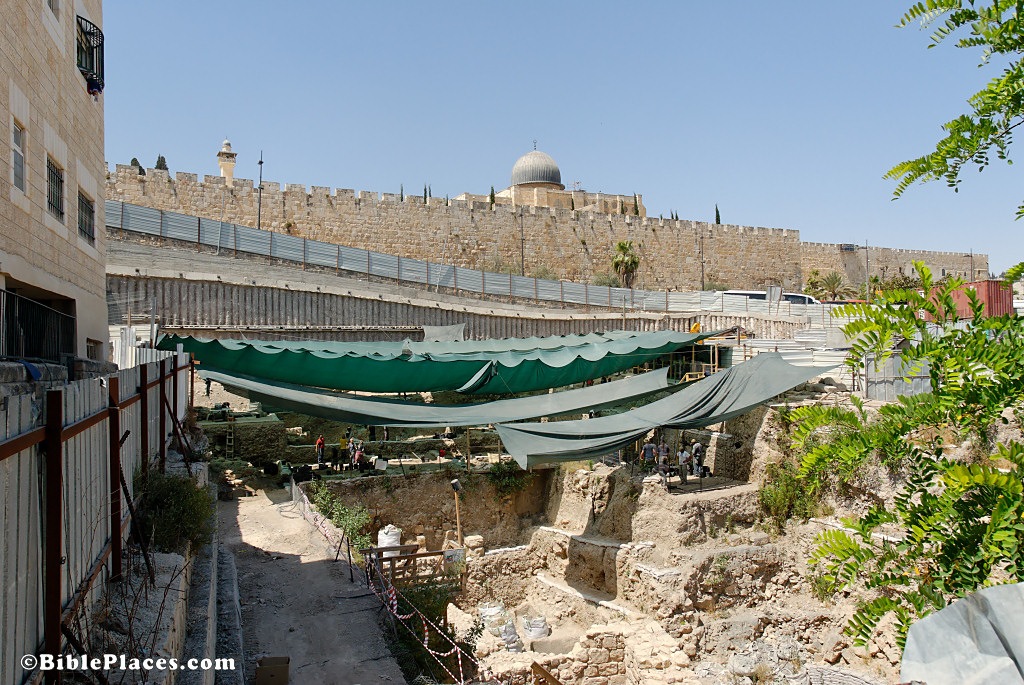
Photos: For photographs of the seal impression, see theTrumpet.com.  For some excellent line drawings of the inscription by G. M. Grena, see the files posted at biblicalist. For a general photo of the excavation area, see my photo here.


A few additional comments on the JPost article:

The excavation at the history-rich City of David, which is located just outside the walls of the Old City near Dung Gate, has proven, in recent years, to be a treasure trove for archeologists.

Actually, on the whole, I’d say that the discoveries have been minimal.  This is a central area of the City of David and after three years of excavation, three seal impressions and two controversial building identifications is not what I’d call a “treasure trove.”  A few meters down the slope Yigal Shiloh found an archive of more than 50 seal impressions, including one belonging to a government official more friendly to Jeremiah, Gemariah the son of Shaphan (Jer 36).  Of course, it is altogether possible that Mazar has made other significant finds but is choosing to publicize them in the future.

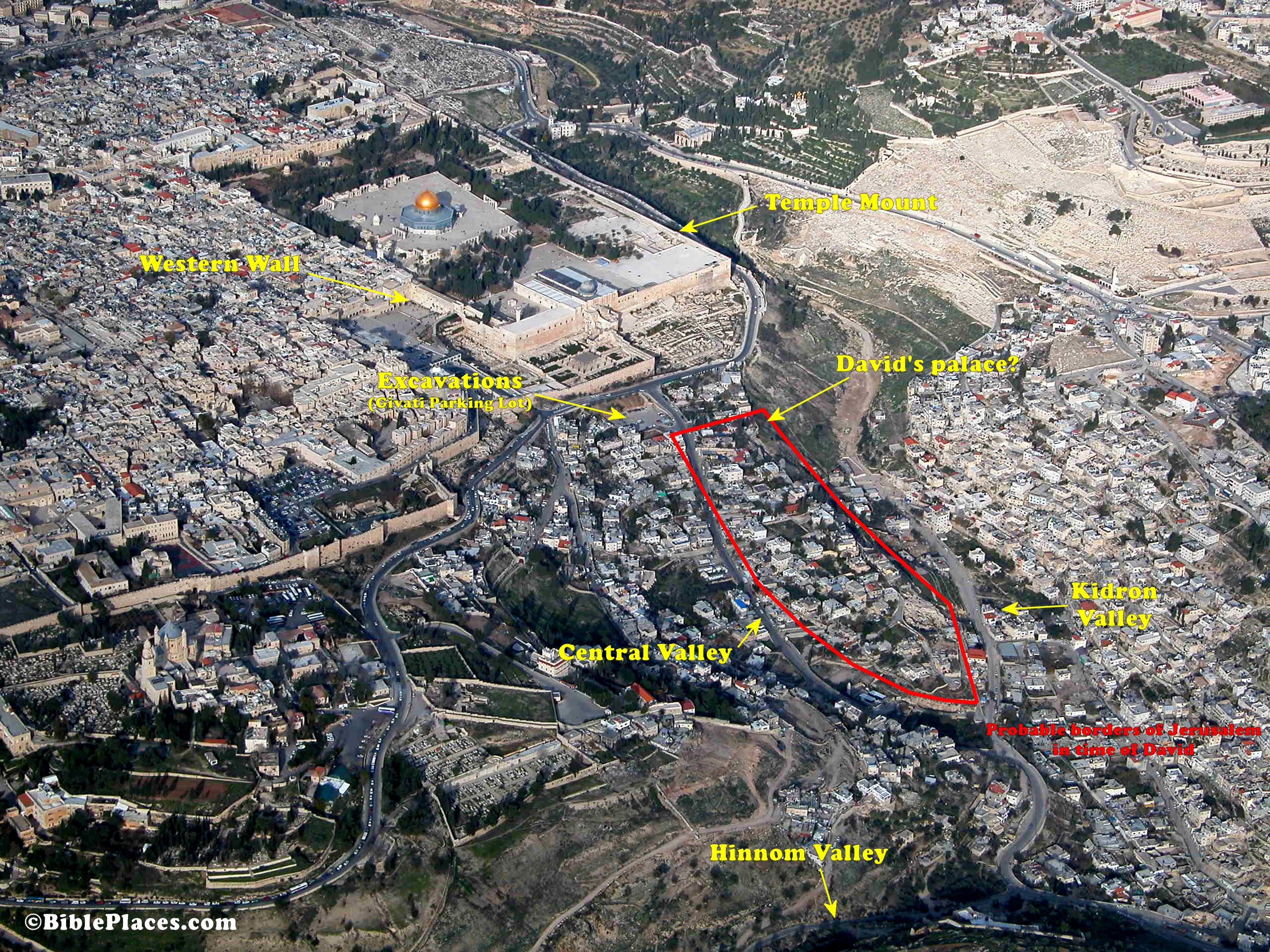
The archeologist, who rose to international prominence for her excavation that may have uncovered the Biblical palace of King David nearby, has been at the forefront of a series of back-to-back Jerusalem archeological finds, including the remnants of a wall from the Biblical prophet Nehemiah, also in the area.

It seems to me that there’s a problem here when an archaeologist can “rise to international prominence” on the basis of a couple of sensationalistic identifications without peer review.  If those identifications prove untenable (and there is significant discussion among archaeologists about both of the above issues), will she still be internationally prominent?  Should an individual scholar be so elevated on the basis of his/her own unconfirmed claims?  I would note here that lots of Bible skeptics would say the same thing; I am not among them, but still am uneasy about some of the ways these matters have been handled.  Of course, this new seal impression is not part of the debate.

The current dig is being conducted on behalf of the Shalem center, a Jerusalem research institute, and the right-wing City of David Foundation, and was carried out under the academic auspices of the Hebrew University of Jerusalem.

Is there relevance to the fact that the City of David Foundation is “right-wing”?  Is the JPost suggesting that this discovery or its interpretation is affected by the political views of a funding organization?  Should the identity of the the financial supporter have priority over the identity of the academic authority?  Would the JPost have identified another institution as “left-wing”? 

UPDATE (8/3): In an email, the City of David Foundation includes this additional information:

Dr. Eilat Mazar completed the third phase her excavation of what she believes to be Kind [sic] David’s palace at the City of David site a month and a half ago and is currently sifting through the remains of that excavation. It was in this material that she found the seal. Much of the rubble from the dig has yet to be sifted and it is likely that more discoveries will be made.

Share:

Justin Taylor at Between Two Worlds has posted a two-part interview with Leen Ritmeyer.  Ritmeyer served as the archaeological and architectural reconstruction editor for the forthcoming ESV Study Bible, of which Taylor is the managing editor. 

Part one of the interview focuses on what theGolgotha and Jerusalem, ESV Study Bible place of Jesus’ crucifixion looked like.  It includes a stunning, high-resolution reconstruction of the Temple Mount as it may have looked in the time of Jesus.

Part two of the interview concerns what the tomb of Jesus looked like.  It features a high-resolution image of what the “new tomb” may have looked like.

I have had the privilege of having an preview of dozens of graphics and hundreds of full-color maps that will be included in the ESV Study Bible and I concur with Ritmeyer’s assessment:

It is vital for Bible students to have a correct knowledge of the background of the Bible, and I am sure that the Study Bible will be of tremendous help for those who love to study the Word of God. With its many exquisitely rendered reconstruction drawings and accurate maps, a new standard has been set for biblical illustration, raising the bar for many years to come.

Share:

Leen Ritmeyer has a posted (with a follow-up) on his identification of several stones in the eastern wall of the Temple Mount that are clearly pre-Herodian.  Ritmeyer dates them to the time of King Hezekiah, suggesting that he was the one to build the 500-cubit square Temple Mount that Ritmeyer has previously identified.  He includes some helpful illustrations and photos.

A review of current excavations in Turkey is given at Today’s Zaman.  New Testament sites being excavated include Alexandria Troas, Miletus, Hierapolis, Sardis, Smyrna, and Laodicea.  There are many other sites as well.  Many of these cities have very impressive remains, unlike many sites in Israel.  Today’s Zaman also has an article on recent discoveries at Sardis.

NASA has a photo of a street of Ephesus at night, with (the planet) Jupiter illuminating the way.
Across the way in Greece, the ancient hippodrome of Olympia has been discovered.  This is a good story that counters the myth that everything to be found has already been found.

A couple fragments of the Dead Sea Scrolls have now been published by James H. Charlesworth. 

One of the fragments may be from the Samaritan Pentateuch, and the other appears to be from Nehemiah, making it the first portion of that book to be found among the DSS.  Paleojudaica gives more info and links.

If you’re a tourist in Israel and have a question, you can now call the 24-hour tourist hotline.  It’s easy (dial *3888), but it’s not a toll-free number.

Share:

A Byzantine cemetery has been discovered in construction work at the hospital of Ashkelon (JPost).

An arsonist set several fires in the Tel Dan nature reserve, burning half of the 120-acre park.  They hope to re-open the park later this week (JPost).

A rare marble discus was discovered underwater at Yavne-Yam.  The disk, 8 inches in diameter, was used to ward off the evil eye in the 5th and 4th centuries B.C. (IAA; Arutz-7; Haaretz; JPost).

The hotel where Mark Twain stayed in Jerusalem has been identified (Haaretz).

Israeli, Palestinian, and German scholars will be studying bones unearthed at Jericho by Kathleen Kenyon in order to study the DNA so as to identify genes that made the ancient inhabitants more or less susceptible to tuberculosis (Guardian).

Stephen Gabriel Rosenberg discusses two Jewish temples known from Egypt, one at Leontopolis (Tell el-Yehudiyeh) and the other on Elephantine Island (Yeb, Aswan) (JPost).

Share:

Some years ago Zondervan released a educational game on CD called “Get Lost in Jerusalem.”  The goal of the game was to navigate through the Old City of Jerusalem with the help of clues.  shabanMany American students were particularly delighted to find that “home base” in the game is the shop of the famous Shaban (photo at right).  The copyright on the game has now reverted to its creator, Ted Hildebrandt, and he is making it available for free download.  So if you’re hankering for a stroll down the historic narrow alleyways of Christian Quarter, minus the odors, you’re in luck.  You can check out Hildebrandt’s page with the download (and lots more), get more information at Amazon, or take a look at Biblical Studies and Technological Tools to get some helpful instructions before downloading and installing the 550 MB file.

lost
Share:

Last month I was in Israel when a friend called and said that one of the students in a group he was leading found a jar handle with a LMLK seal impression laying on the ground at Ramat Rahel (two miles south of the Old City of Jerusalem).  I’ve led student groups around Israel for 15 years and none of them has ever found a LMLK handle and my friend is three days into his first trip when one is found.  Within a day or so, he had sent a photo of the seal impression to “Mr. LMLK” (who immediately published an analysis of it here) and got the expert opinion of Dr. Gabriel Barkay. 

Yesterday, the story made it into the newspaper.  If you’re recruiting for next year’s tour, you can try enticing your students with the hope of such a discovery.  And you might take a closer look at that next potsherd before you toss it.

Lemelek, found by Sanchez
LMLK seal impression; photo by Steven Sanchez
Share: