Tucked away in Jerusalem’s Old City, between the entrance to the David Street market and the Armenian Quarter is one of Jerusalem’s unsung treasures – a small room chock full of books, letters and documents in the historic Christ Church complex. Many of the documents are hand-written in the flowery style of the 19th century or earlier, written by Europeans, particularly the British, who lived and worked here. Coming to the documents’ hopeful rescue is a recently initiated project that applies a combination of cutting edge technology and devotion to history to set them on their way toward digitalization as a means of preserving the stories they tell for future generations…. To explain what the library is all about, Arentsen’s supervisor and Christ Church’s new rector, Rev. David Pileggi pulls out one of the thousands of glass slides the library also owns. He holds it up, illuminating it in the afternoon Jerusalem sunlight streaming though the windows from the Christ Church courtyard. This one depicts nurses standing next to the beds of patients on a ward of the first hospital in Jerusalem, founded by the missionaries. “Life is complicated,” Pileggi says, using the slide to segue into what is obviously a pet subject of his–dispelling the notion that nineteenth-century European Christians “were only interested in converting Jews to hasten Jesus’ second coming.” Pileggi, an affable and talkative Floridian who has lived in Israel for 28 years broaches an issue that raises hackles in Jewish and Israeli society. He concedes the hospital’s missionary purpose, but seems intent on getting across that it was “mixed with a deep sympathy for the Jews that came from reading the Bible. When you read the Bible and immerse yourself in its culture, as they did in places like England, Holland, and parts of Germany, you begin to identify with the main characters. That’s certainly part of what these people were doing…. The precious documents found in the rare holdings closet put the Conrad Schick Library on a list of over 50 priceless collections whose preservation and digitalization is the goal of the Historical Libraries and Archives Survey, a project under the wing of the Institute of Historical Research at the University of London. Along with the Conrad Schick Library, the survey aims to preserve and digitize collections throughout Jerusalem – from the Afeefi family’s 43 Arabic manuscripts on astronomy and other science kept in their Jerusalem home to the library in the ancient Syriac Orthodox St Mark’s church with at least 300 manuscripts, the Al Aqsa Mosque repository with about 1,000 manuscripts and hundreds of ancient Korans, and the collection of the Admor of Karlin with more than 800 manuscripts, some centuries old. Dr. Merav Mack, 35, a Cambridge University-educated medieval scholar and a fellow at the Van Leer Jerusalem Institute, is a consultant on the project along with colleague Peter Jacobsen. “We think the project is important because the city’s written treasures are of such enormous educational and cultural value to our global heritage.”
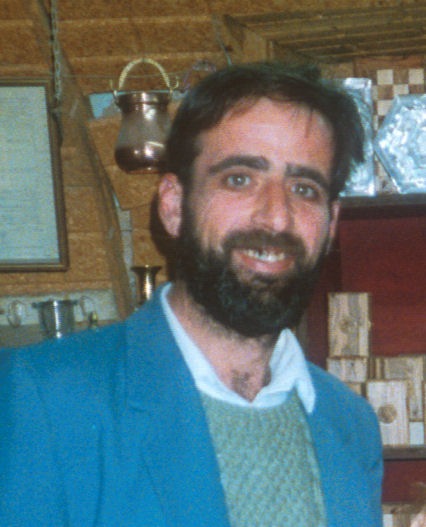 Many American students were particularly delighted to find that “home base” in the game is the shop of the famous Shaban (photo at right). The copyright on the game has now reverted to its creator, Ted Hildebrandt, and he is making it available for free download. So if you’re hankering for a stroll down the historic narrow alleyways of Christian Quarter, minus the odors, you’re in luck. You can check out Hildebrandt’s page with the download (and lots more), get more information at Amazon, or take a look at Biblical Studies and Technological Tools to get some helpful instructions before downloading and installing the 550 MB file.