One of my favorite scholars on matters related to biblical archaeology is Leen Ritmeyer.  I am impressed not only by his scholarship but by his gracious and humble spirit.  As architect for the Jerusalem excavations of Benjamin Mazar and Nahman Avigad, Ritmeyer has sketched many of the reconstruction drawings that you see in books and on posters.  He’s done significant work on sites outside of Jerusalem as well.  I am happy to recommend his work whenever I get the chance.  His latest work is his magnum opus, The Quest: Revealing the Temple Mount in Jerusalem.  I’ve been recommending it to students for years, though it only was published last year.

Ritmeyer now has a blog in which he intends to address matters related to the Temple Mount and biblical archaeology.  His first post is a brief response to the new theory by Joseph Patrich which locates the temple facing the southeast on the basis of a cistern.  Ritmeyer’s blog is welcome and recommended!

Share:

So much is going on in Jerusalem these days with protests over excavations that I’m not even trying to keep up with it on this blog.  Paleojudaica stays right on top of it with his “Temple Mount Watch” so that’s the place to go for twice-daily doses.  Instead, I offer a few brief comments.

The Washington Post on Sunday had a pretty balanced article concerning Jewish construction in the Old City.  Of course, there are things I think could have been said better, but overall it’s a helpful read on a controversial subject (which is going to get even more heated in months/years to come, I predict).

Today’s Jerusalem Post has an article on “finds” already from the Temple Mount ramp excavation. 

There’s no real content to the article; mostly it is what they expect to find, which is pretty obvious to anyone who knows about the excavations to the south.  I think the article is an archaeologist’s attempt to try to stem the increasing tide of those calling for the excavation to stop.  BTW, they’ve been digging for about a week and have already dug down three meters?  That makes me wonder if R. A. S. Macalister is in charge of this project.

The reason why the excavation should not be stopped: it gives Muslims de facto sovereignty over the Western Wall area.

Some articles are quoting Meir Ben Dov as a Jerusalem archaeologist claiming the excavation is unnecessary and provocative.  In the newspaper to those not familiar with Jerusalem politics, Ben Dov could be any average scholar.  In fact, he is widely scorned by those in his profession.  He’s the one archaeologist the journalists can find to give them an “alternate viewpoint.”

Would you rather learn something useful about Jerusalem instead of spending lots of time on endless controversies which will all pass?  Here are three great books about archaeology around the Temple Mount:

Leen Ritmeyer, The Quest: Revealing the Temple Mount in Jerusalem.  Very new, very good.  $60, and worth it.

Eilat Mazar, The Complete Guide to the Temple Mount Excavations.  (Out of print; used ones here).

Ronny Reich, Jerusalem Archaeological Park.  (1 at Eisenbrauns; used ones here.)

The best book on Jerusalem overall is still Hershel Shanks, Jerusalem: An Archaeological Biography.  Twelve years old, but most is still accurate and you can’t beat the illustrations.

Elsewhere, I am working on a phenomenal collection of old materials on the Temple Mount and Jerusalem by early explorers in the 1800s.  I hope to have that available later this year.
Share:

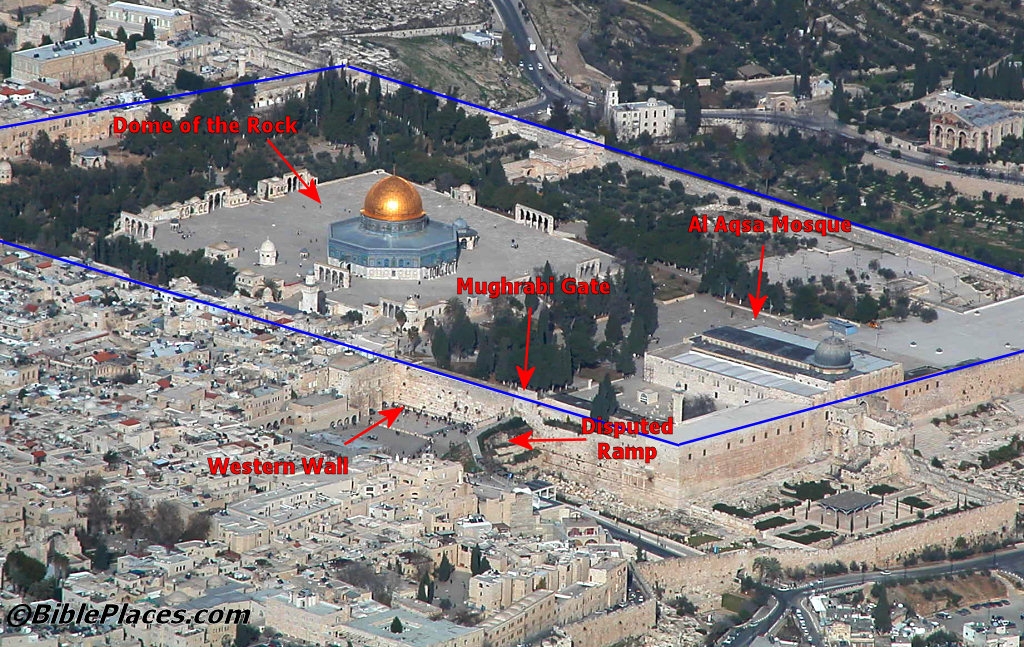
I’ve been thinking about how to respond to the latest Palestinian violence against Israel because of the ramp removal near the Western Wall.  A BBC article does a good job of explaining things and so I’m going to save some time and quote from it.  The first half of the article details the history of the Temple Mount.  I have highlighted some key statements.

 
The blue lines mark the limits of the Temple Mount, which is controlled by the Muslim religious authority.  One of the gates providing access to the Temple Mount is the Mughrabi Gate, and it is the earthen ramp leading to this gate which is the basis for claims that the Israelis are undermining Al Aqsa Mosque.  Any viewer can see, however, that the ramp is outside of the Temple Mount, has no bearing on the structure of the Temple Mount, and is immediately adjacent to the Jewish prayer area of the Western Wall.

Picking up the BBC story from 1967:

Israel allowed the Muslim religious authority known as the Waqf to administer the whole compound. But the Israelis claimed the right to enter it at will to keep security control. They enforce this claim regularly.
They do so by entering the compound through a small gate known as the Mougrabi or Moors’ Gate.
It is this gate that is at the centre of the current controversy.
Because the gate is high up in the wall (it overlooks the Western Wall,) it has to be reached by either an earth mound or a walkway.
Last year [actually three years ago], the earth mound collapsed after a rainfall [actually a snowfall]. So a temporary wooden structure was put up. The current work is designed to replace this with something stronger and more permanent.
This entails removing the remains of the earth mound down to bedrock in order that there can be secure foundations for the new walkway or bridge.
An independent observer, Father Jerome Murphy-O’Connor, from the French institute the Ecole Biblique in East Jerusalem, said that the work was “completely routine”.
“This work is not inside the Haram. It is outside, leading to the Moors’ Gate. The earth ramp fell down and has to be replaced,” Father Murphy-O’Connor, author of an Oxford University guide “The Holy Land”, told me.
“I do not know why the Palestinians have chosen to make an issue out of this. It is a recognised Jewish area under the arrangements that prevail in the Old City.
“One can contrast this to the extensive excavations just round the corner in a Muslim area where huge pilgrim hostels from the 8th Century were revealed, with no protest. There has also been no protest over digs at the City of David nearby.
“There is absolutely no danger to the foundations of the al-Aqsa mosque since that is built on the huge Herodian blocks that are still there.”
The reason for the protest does not really have much to do with archaeology in fact. It is a protest about presence. The Palestinians and the wider Muslim world have an objection to anything the Israelis do that touches on the Haram.
Such work is seen as symbolising a threat to Palestinian and Muslim identity and a rallying point for Palestinians to express their desire for their own space, their own state.
In this atmosphere, the arguments of the archaeological academics do not carry much force.
The Moors’ Gate is perhaps even more sensitive than other sites, as it is the only gate to the compound for which the Israelis hold the key. They do so, Father Murphy-O’Connor said, under an agreement reached in 1967 between General Moshe Dayan and the Waqf.
In 1996, the Israelis tunnelled further along the Western Wall, prompting riots and unrest. Again, the issue was not so much the actual dig as the concept.

There’s a little more, including a nice diagram at the bottom of the article that shows the relation of the ramp to the Temple Mount and Al Aqsa Mosque.  The Jerusalem Post has an article explaining the “Intimidation Tactics” at work.

HT: Paleojudaica

Share:

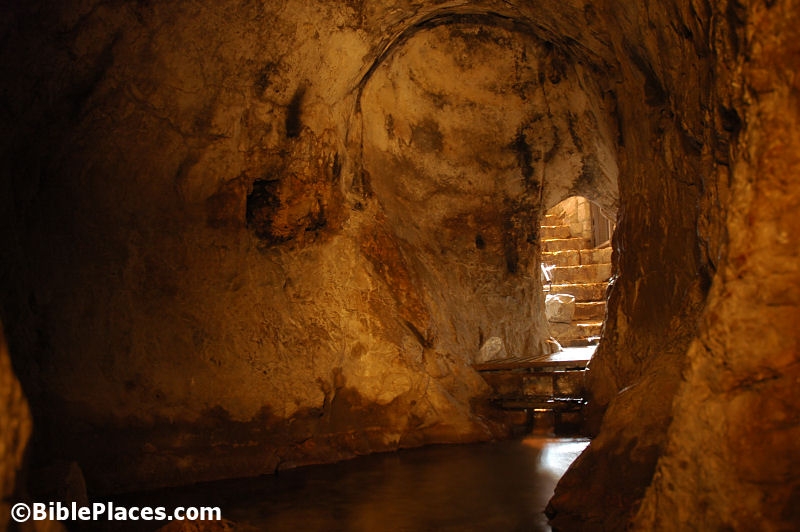
Last month, for the first time in 100 years, Hezekiah’s Tunnel was emptied of water so that repairs could be made.  According to the City of David’s press release, the tunnel would be closed “for two weeks for ongoing maintenance work and restoration of the plaster on the floor of the tunnel.”  Work finished earlier this week and the waters of the Gihon Spring are once again flowing through the ancient tunnel.  What the press release didn’t say was that significant alterations were made to the tunnel.  At the entrance of the tunnel, a large metal platform was installed in the cave where the Gihon Spring emerges.  It may ease passage for old tourists, but it destroys the original look and feel.


The Gihon spring cave, as it was a year ago.  Today imagine a large metal platform with guard rails filling the photo.

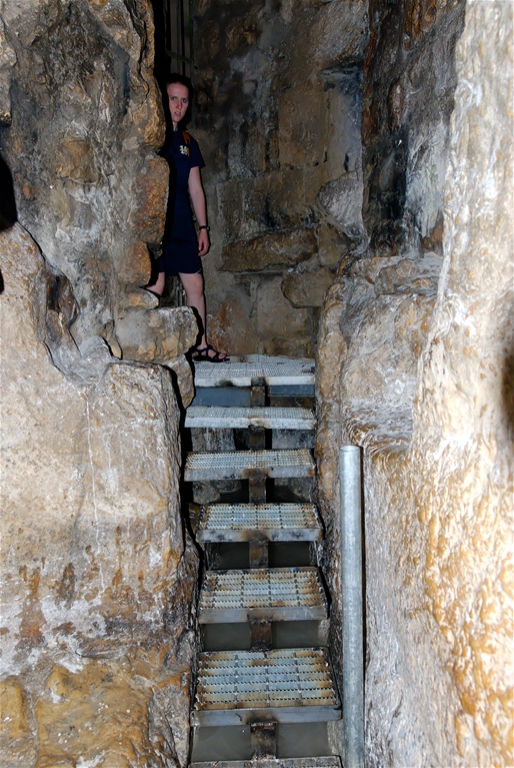
At the end of the tunnel, metal steps were installed to make exit from the tunnel easier for people who have trouble walking.  Is such modernization necessary?  Do we really want 70-year-old grandmas trying to traverse the tunnel?  The past is getting further away at an alarming pace.  Fortunately, they have not yet installed a state-of-the-art lighting and sound system.


Steps at the exit of the tunnel

Forgive us for yearning for the days of Edward Robinson, the first Westerner to go through the tunnel in 1838.

Repairing one afternoon (April 27th) to Siloam, in order to measure the reservoir, we found no person there; and the water in the basin being low, we embraced this opportunity for accomplishing our purpose. Stripping off our shoes and stockings and rolling our garments above our knees, we entered with our lights and measuring tapes in our hands. The water was low, nowhere over a foot in depth, and for the most part not more than three or four inches, with hardly a perceptible current….At the end of 800 feet, it became so low, that we could advance no further without crawling on all fours, and bringing our bodies close to the water. As we were not prepared for this, we thought it better to retreat, and try again another day from the other end. Tracing therefore upon the roof with the smoke of our candles the initials of our names and the figures 800, as a mark of our progress on this side, we returned with our clothes somewhat wet and soiled” (Biblical Researches 1: 501-2).

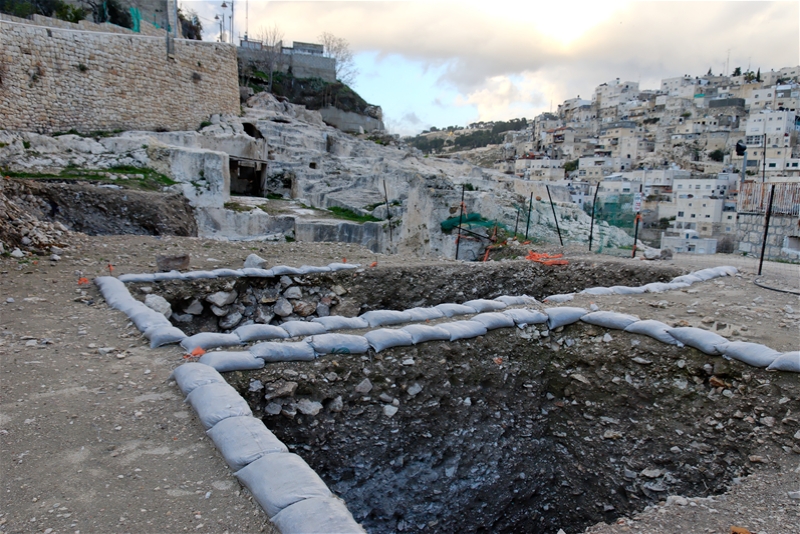
Up the hill a bit, there are new excavations underway not far from the so-called “tomb of David.”


New excavations near the “tomb of David”

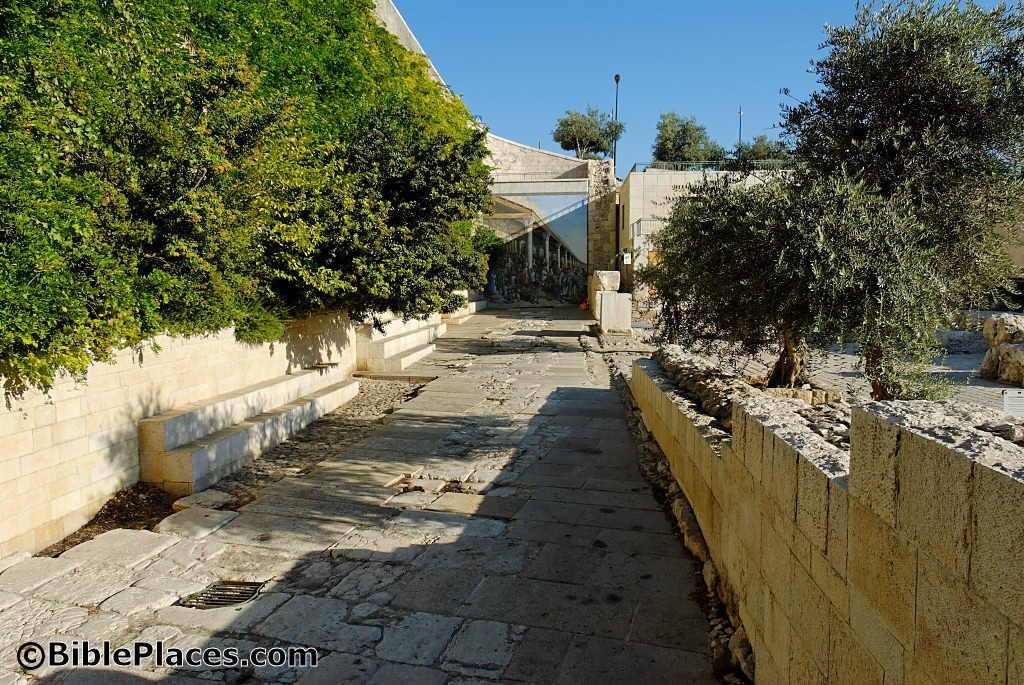
And, if you missed it, archaeologists last week announced the discovery of a main 1st-century street which runs from the Pool of Siloam to the Temple Mount.  The Hebrew version of the article includes a photo and a diagram.  The archaeologist told me a few days ago that excavation of this street is just beginning and is especially tricky because it’s all being done in a tunnel underground (reminiscent of Charles Warren’s excavations).  The street is a continuation of the one visible underneath Robinson’s Arch. 


First-century street next to Temple Mount
Share:

The Jerusalem Post reports on the finds that we speculated on before (with photos).  While they certainly uncovered some new things in the dig, the article does not mention any surprising finds.  In short, any archaeologist could have predicted that digging in this place would reveal:

The Valley Cardo (aka Eastern Cardo): the full 35 foot (11 m) width of the street was uncovered. 

This same street was uncovered about 150 feet (50 m) to the south.

A ritual bath (mikveh) from the Second Temple period.  They have found 150 of these all over the city.

A portion of the Lower Aqueduct which brought water from Solomon’s Pools to the Temple Mount. 

Numerous remains of this aqueduct have been found elsewhere, including slightly to the south outside the Old City wall.

An escarpment.  The article suggests that this a significant discovery, but scholars have long believed that the natural defenses of the Western Hill made it more difficult for the Romans to capture in 70 A.D.  Any casual observer can see the steep drop-off as one approaches the Western Wall from the west.  For a while, some believed that the Western Hill must have been fortified on its eastern side in order to explain why it took the Romans a month to conquer the area.  But no evidence of a wall has ever been discovered, and Josephus, who describes the city’s fortifications at length, never mentions a wall in this area. 

These remains will be preserved under a new building for the Western Wall Heritage Foundation. 

This is the same organization that controls access to the tunnel excavations north of the prayer plaza.


Valley Cardo near Dung Gate (south of excavation area)
Share:

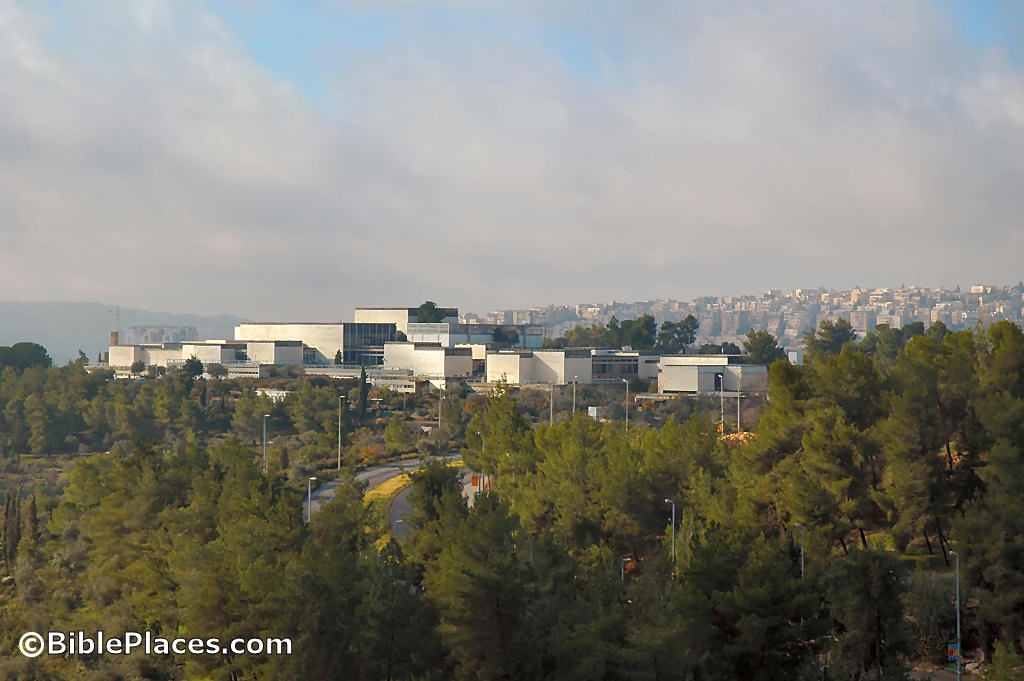
If you were planning to visit the archaeology wing at the Israel Museum in, oh, the next 2-3 years, you’re going to be disappointed.  According to the museum’s website, the wing “is currently closed for comprehensive renewal and will reopen to the public in 2009-2010.”  It really is a shame that they cannot renovate a section at a time, so that a portion of the exhibits are open to the public.  Or create a temporary exhibit of the most important finds.  Until then, the public can visit the lousy Rockefeller Museum (some great finds, but poorly displayed and described), the Eretz Israel Museum in Tel Aviv, or the Hecht Museum in Haifa.

Safe prediction: the museum wing will not finished when they say.


Israel Museum from east
Share: