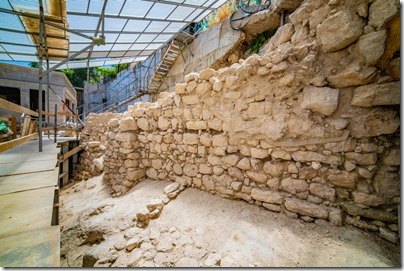
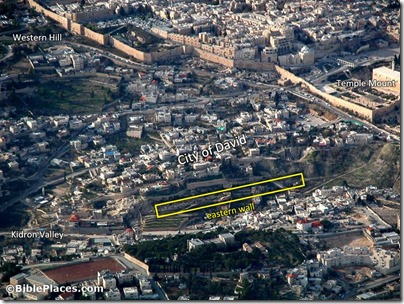
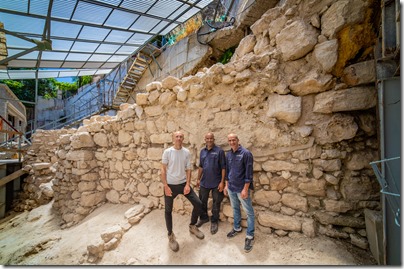
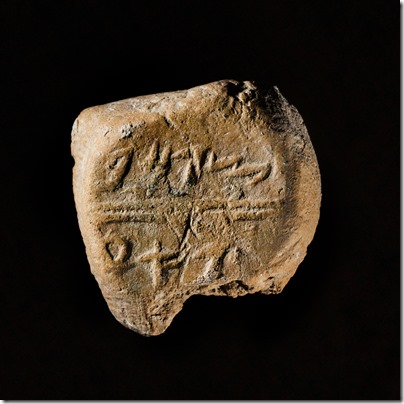
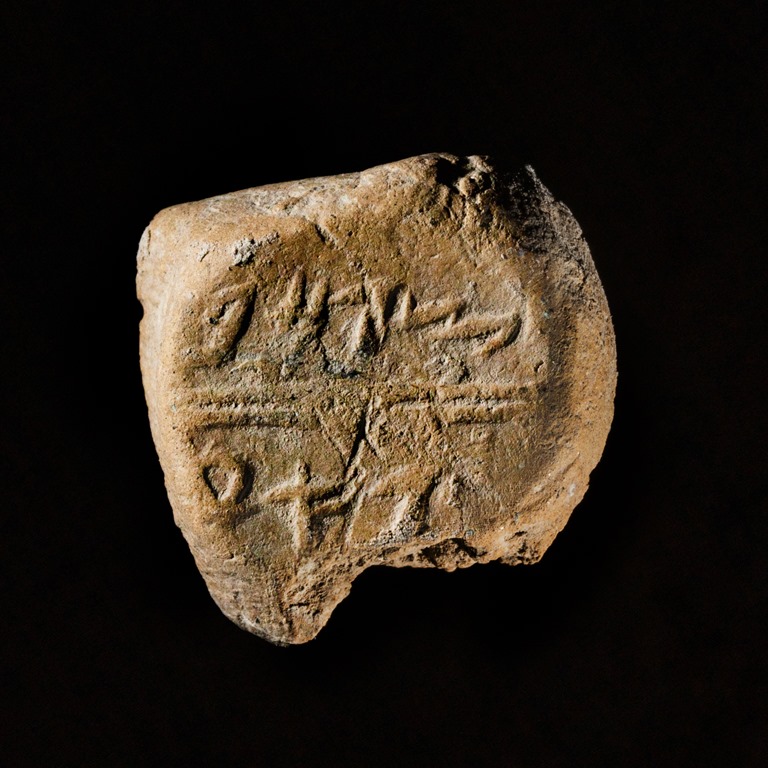
Forty years after it was discovered in Arbel by a private citizen, a Byzantine amulet featuring the name of the God of Israel has been turned over to the Israel Antiquities Authority.

“A new study scrutinizing 2,000 years of fish consumption in the ancient holy land has found that — despite clear Torah prohibitions — non-kosher finless and scaleless fish were generally eaten by all peoples, regardless of ethnic and religious affiliation.” The story is based on a Tel Aviv journal article.

Israel’s Good Name visited the northwest Negev and saw plenty of birds, several reservoirs, a couple of bridges, and animal parts falling from the sky.

On the bicentenary of Napoleon’s death, Stephane Cohen revisits his campaign in Palestine in 1799.

The director of the Israel Museum is stepping down after four years.

The summer issue of Biblical Archaeology Review includes articles on New Testament figures confirmed in archaeology, a history of the paleo-Hebrew script, and remembrances of Hershel Shanks.

The Biblical Archaeology Study Group of Tyndale House will be meeting virtually on June 30, with lectures on the Amorites, Ugarit, David’s scribes, and the exodus, by various scholars including Alan Millard and James Hoffmeier.

Webinar on May 31 and June 1: “Sheshonq (Shishak) in Palestine.” Registration required.

Webinar on June 17: “Reconsidering the Role of Nomads in Ancient Israel and Its World.” (Zoom link)

The first group of tourists to arrive in Israel for more than a year was a vaccinated group of theology students from Missouri. (Showing them all wearing masks is not good P.R.)

Eilat Mazar died on Tuesday at the age of 64 after a long illness. Following in the footsteps of her grandfather, Benjamin Mazar, her work focused especially on the City of David and southern Temple Mount excavations. A list of her publications is here.

HT: Agade, Joseph Lauer, Arne Halbakken, Charles Savelle, Ted Weis

Share:

Leen Ritmeyer has created a new 41-slide presentation on “Jerusalem in the Time of Nehemiah” that is now available through his webstore.

The Byzantine mosaic recently discovered in Yavne will be displayed outside the city’s cultural center.

David Hendin explains how the coins of Sepphoris provide a “fascinating historic portrait of the city.”

John DeLancey’s latest devotion from Israel is about 1 Samuel 17 and the battle of David and Goliath.

New on This Week in the Ancient Near East podcast: “The Strange Story of the Roman Era Half Lamp, or A Sconce to Light Their Way.”

Zoom lecture on June 3: “Digging Up Armageddon: The Search for the Lost City of Solomon,” by Eric H. Cline.

The publisher L’Erma di Bretschneider has 92 titles related to the archaeology of Pompeii and Herculaneum that are discounted by 55% through May 23.

The transatlantic voyage of a reconstruction of a 6th-century-BC ship suggests that the Phoenicians had the technical ability to sail to America, but whether they ever did so is debatable.

HT: Agade, Arne Halbakken, Charles Savelle, Alexander Schick

Share:

“A rare 2,000-year old oil lamp shaped like half of a grotesque face that was discovered in Jerusalem last week appears to have a matching partner — that was discovered in Budapest nine years ago.”

Ruth Schuster writes about recent discoveries at Hippos, including the Roman theater and the necropolis (Haaretz premium).

Bible History Daily asks the excavators of Hazor about last year’s cancellation and this year’s plans. They pose the same four questions to the excavators of Tel Burna.

Research is progressing on the seven Judean date palms that were germinated in southern Israel in recent years.

The Jordan Times interviews Eliot Braun about the ruins and cemeteries on the southeastern end of the Dead Sea.

Rossella Tercatin asks, “What do ancient coins tell us about the Omer period and the time of the Bar-Kochba revolt, when the 49 days between Passover and Shavuot became associated with death and mourning?”

Biblical World is a new podcast, and the first episode, hosted by Chris McKinny and Oliver Hersey, looks at the archaeological background of Hezekiah’s religious reform.

The Institute of Biblical Culture is registering now for its summer Biblical Hebrew course. The BIBLEPLACES coupon will give you a $300 discount. David Moster has also just created a new video: “Some of the Best Puns in the Bible.” There’s a geographic pun mentioned at 6:52.

John DeLancey has begun a new video series entitled “Devotions from Israel.” The first 5-minute devotional looks at 2 Chronicles 20.

David Barrett is creating a biblical map every week on his Bible Mapper Blog. The most recent are:

HT: Agade, Ted Weis, Arne Halbakken, Joseph Lauer

Share:

“Archaeologists have discovered a rare oil lamp, shaped like a grotesque face cut in half, at the foundation of a building erected in Jerusalem’s City of David shortly after the destruction of the Second Temple almost 2,000 years ago.”

Israel’s easing of coronavirus restrictions allowed hundreds of Christians to gather at the Church of the Holy Sepulcher for the Holy Fire ceremony.

Riots on the Temple Mount led to hundreds of injured Palestinians and policemen.

“Some 2,000 years ago, an individual scribe wrote at least eight of the Dead Sea Scroll manuscripts, making him the most prolific scribe ever identified.” The scholar’s conference presentation has been posted on YouTube.

Israel’s Good Name reports on his birdwatching trip to the Hulda Reservoir.

The Jerusalem Post reviews Yoel Elitzur’s Places in the Parasha – Biblical Geography and its Meaning.

The latest issue of Israel Museum Studies in Archaeology is now available (go to “Contents” for downloads).

The 24th Annual Bible and Archaeology Fest will be held on October 16 and 17 on Zoom, with a strong lineup of speakers.

Tali Erickson-Gini is interviewed on The Times of Israel podcast, focusing on her expertise on the Nabateans’ Incense Road.

HT: Agade, Ted Weis, Joseph Lauer, Arne Halbakken, Explorator

Share:

“A team of archaeologists in north-west the Kingdom of Saudi Arabia has uncovered the earliest evidence of dog domestication by the region’s ancient inhabitants.”

“Italian art police recovered a 1st century Roman statue that had been looted from an archaeological site nearly a decade ago after off-duty officers spotted it in an antique shop in Belgium.”

Rebekah Welton looks at excessive and deviant consumption in the Bible, particularly with reference to the rebellious son in Deuteronomy 21.

Now online: “Learning historical geography and archaeology in Israel with Chris McKinny, Part 4.”

Webinar on April 18: “Will the Real Bar Kochba Please Stand Up,” with Isaiah Gafni.

Webinar on April 21: “The Queens of Ancient Nimrud,” with Amy Gansell and Helen Malko.

Webinar on April 29: “Pandemics in Antiquity and Beyond,” with Kyle Harper, Calloway Brewster Scott, and Hunter Gardener.

Virtual workshop on May 4: “Listening To and Learning From Children in the Biblical World,” hosted by the Albright Institute.

NYU Skirball Department of Hebrew and Judaic Studies is sponsoring a 4-day virtual conference, “The Dead Sea Scrolls: A Second Public Conference” on June 6-9.

New book: Jerusalem II: Jerusalem in Roman-Byzantine Times, edited by Katharina Heyden and Maria Lissek, published by Mohr Siebeck, €154.

HT: Agade, Keith Keyser, Alexander Schick, Arne Halbakken, Charles Savelle

Share:

Archaeologists have discovered dramatic evidence of the conflagration that destroyed Azekah circa 1130 BC, leading them to dub the site as a “small Pompeii.”

According to news reports, a rare Tyrian shekel was discovered during a renovation project at the Tower of David Museum. This is true, except that the coin is not a shekel and not rare. It is a silver tetradrachm of Demetrios II Nikator from Tyre with a date of SE 184 = 129/8 BC.

While undergoing conservation work, a large structural crack was discovered in Herod’s tower in the Citadel of David.

Justin Kelley’s BAR article on “The Holy Sepulchre in History, Archaeology, and Tradition” is summarized in Bible History Daily, where a detailed plan of the Church of the Holy Sepulcher is also provided.

Scholars are using high-tech imaging to understand thousands of hand-engraved crosses on the Church of the Holy Sepulcher.

A new “Emmaus Trail” allows walkers to travel the 11 miles (18 km) from Abu Ghosh to Nicopolis/Latrun. Leen Ritmeyer takes the occasion to propose that Emmaus should be identified with Bethel in the Old Testament.

David Moster has posted a new video that explains how to “make sense of the new Dead Sea Scrolls,” including a discussion of how important these discoveries are to biblical studies.

Randall Price is on The Book and the Spade discussing the new Dead Sea Scrolls discoveries.

The latest teaching video from John DeLancey is “The Life of Jesus – His Redemptive Purpose.”

New book: Jesus of Nazareth: Archaeologists Retracing the Footsteps of Christ, by Michael Hesemann. The author’s background and motivations are reported here.

Bryan Windle lists the top 10 discoveries related to Jesus.

Robert E. Cooley died on Thursday. During his career, he excavated Tel Dothan and helped to found the Near East Archaeological Society.

HT: Agade, Charles Savelle, Ted Weis, Arne Halbakken

Share: