A 7th-century BC temple facade with Phrygian writing was discovered in western Turkey.

Restoration work is underway in the Hypostyle Hall of the Karnak Temple.

Betina Faist provides an introduction to legal practices in the Neo-Assyrian empire.

Farmers and artisans in Egypt are struggling to keep alive the ancient tradition of making papyrus.

ArtDaily has a photo essay of how the ancient technique of making papyrus paper continues today in Egypt (temporary link; see under “The Best Photos of the Day.”)

“From ancient Egypt to the Persian Empire, an ingenious method of catching the breeze kept people cool for millennia.”

The Jerusalem Post article about the discovery of the actual Trojan Horse is a hoax based on a satirical report in 2014.

Alexandra Ariotti reviews the history of Jews on the island of Crete, from before Paul’s travels there to the present day.

Free download: Guide to Ancient Near Eastern Art, by Ruth Ezra, Beth Harris, and Steven Zucker (Smarthistory, 2019).

Daily Sabah gives a short profile of Timothy Harrison, an archaeologist who has been excavating Tell Tayinat for nearly 20 years.

After 20 years of red ink, the Holy Land Experience in Orlando has permanently closed. (See our list of Bible-Related Attractions in the US.)

HT: Agade, Ted Weis, Arne Halbakken, Joseph Lauer

Share:

A massive boundary stone marking the city limits of ancient Rome in the 1st century AD was discovered near the mausoleum of Augustus during construction work.

The monumental entrance gate of the Zeus Temple’s sanctuary in the ancient city of Aizanoi, located in the Çavdarhisar district of western Kütahya province, Turkey, was unearthed during recent excavations.”

The latest discovery from the submerged ancient city of Thonis-Heracleion are fruit baskets from the 4th century BC.

Egypt moved the 4,600-year-old solar boat of Pharaoh Khufu from its old home near the Great Pyramid to the soon-to-open Grand Egyptian Museum.

A new study concludes a tablet from the Old Babylonian period is the oldest example of applied geometry.

17,000 looted artifacts were returned to Iraq from the Museum of the Bible and Cornell University.

A 3-min clip from a BBC documentary on the Persians focuses on the ziggurat of Chogha Zanbil, one of the best preserved ancient ziggurats.

Zoom lecture on August 11: “From Sanctuary to Synagogue,” by Robert Stieglitz.

On pre-publication sale at Logos: Biblical Illustrator Treasury

HT: Agade, Ted Weis, Arne Halbakken, Charles Savelle, Andy Cook, Roger Schmidgall, Explorator

Share:

“Researchers in Saudi Arabia have discovered a sixth-century B.C.E. rock carving of the last Babylonian king, Nabonidus” along with a lengthy cuneiform inscription.

“Beneath the murky waves of the Venice Lagoon, researchers have discovered the remains of an ancient Roman road and other possible port facilities, like a dock, that may predate the founding of the Italian city.”

“A spectacular ancient mosaic floor that was part of a building from the Hellenistic period is among the important finds from excavations carried out recently at Fabrika Hill in Kato Paphos, Cyprus.” The photo is apparently not of the newly discovered mosaic.

NPR has a story on what lies below ground in Istanbul.

“Work has begun to refurbish the old Acropolis Museum near the iconic Parthenon temple and turn it into an exhibition space.”

“Held annually on [Turkey’s] Aegean coast, the Selcuk camel-wrestling festival is part of a nomadic legacy rooted in ancient Turkic tribes.”

“Between the years 193 – 235, the Roman Empire was ruled by a series of emperors who were originally Phoenicians.”

The new director of Michigan State University’s excavations at Isthmia has developed a new website to share both old and new research with the public. The website is here.

The US government has seized the Museum of the Bible’s Gilgamesh Tablet, declaring that it was illegally deported from Iraq.

Death by stoning is not so common these days, especially in the United States. But that’s how a gunman in Texas recently died.

Zoom lecture on August 29: “From Standing Stones to Sacred Emptiness: Textual and Visual Portrayals of Israel’s God,” by Theodore Lewis.

University College London and King’s College London are co-hosting an eLecture series in August, entitled Ancient Near Eastern Languages in Contact (ANELC). The first eLecture will take place on Wednesday 4 August from 16:00 until 17:00 BST (London), when Dr. Ohad Cohen of the University of Haifa will be speaking on “The Canaanite Melting Pot – The Theoretical Implications of ‘Languages in Contact’ to the Understanding of Late Biblical Hebrew.”

New release: The City of Babylon: A History, c. 2000 BC – AD 116, by Stephanie Dalley

HT: Agade, Arne Halbakken, Wayne Stiles, Joseph Lauer, Ted Weis, Explorator, Mark Hoffman, Roger Schmidgall, Paleojudaica

Share:

“Scientists have reconstructed the Eastern Mediterranean silver trade, over a period including the traditional dates of the Trojan War, the founding of Rome, and the destruction of Solomon’s Temple in Jerusalem.”

A survey has located 11 new hills around Gobeklitepe, and a major study will be released in September. Tourism officials are referring to the area as “12 hills” and the “pyramids of southeast Turkey.”

An excavation of an underground complex in the Western Wall Tunnels is a candidate for an international award.

“For the first time, a large, commercial flour mill has joined scientists and other experts to revive the lost varieties of wheat of the Land of Israel.”

The oldest living olive tree is 3,000 years old and located on the island of Crete.

Carl Rasmussen explains, with photos, how the Lycian League was a model for the United States.

The first issue of the Jerusalem Journal of Archaeology is a special issue on “State Formation Processes in the 10th Century BCE Levant”, edited by A. Faust, Y. Garfinkel and M. Mumcuoglu. All 16 articles may be downloaded for free.

The SBL website has an updated list of works in their ANE Monographs series, all available for purchase or free download.

New release: The Archaeology of Daily Life: Ordinary Persons in Late Second Temple Israel, by David A. Fiensy

Cyndi Parker’s course on historical geography is now available on BiblicalTraining (free with registration).

Danya Belkin writes about 11 adventures in Israel, including rappelling, parasailing, wakeboarding, snorkeling, and camel riding.

HT: Agade, Joseph Lauer, Arne Halbakken, Charles Savelle, Explorator

Share:

Notice to email subscribers: our previous service (feedburner) is shutting down, and we have migrated all existing subscribers to the follow.it service. You do not need to do anything to continue your subscription, but if you wish to modify it or take advantage of some new features, you now have more options.

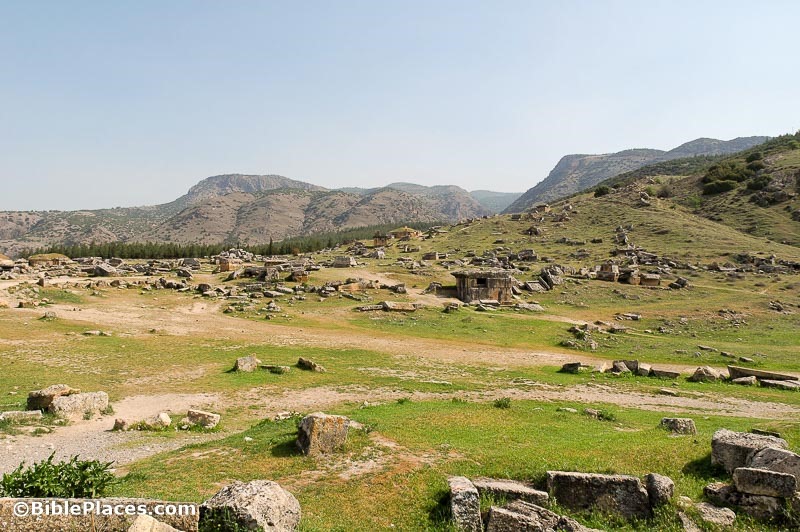
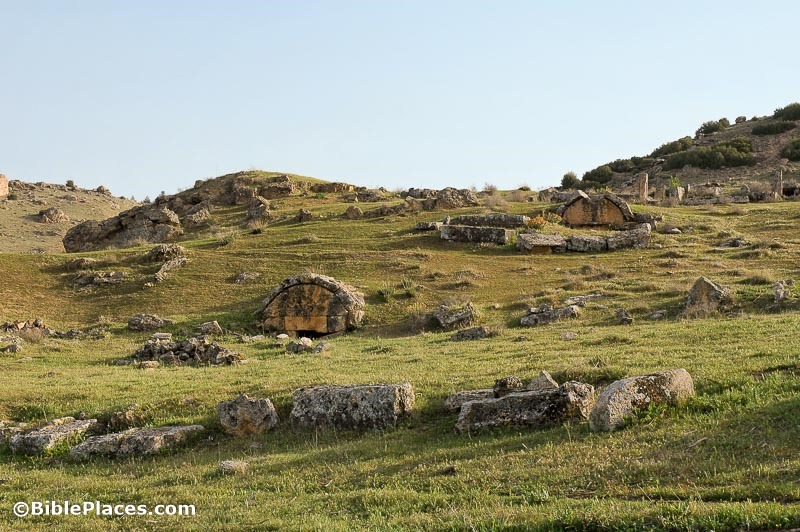
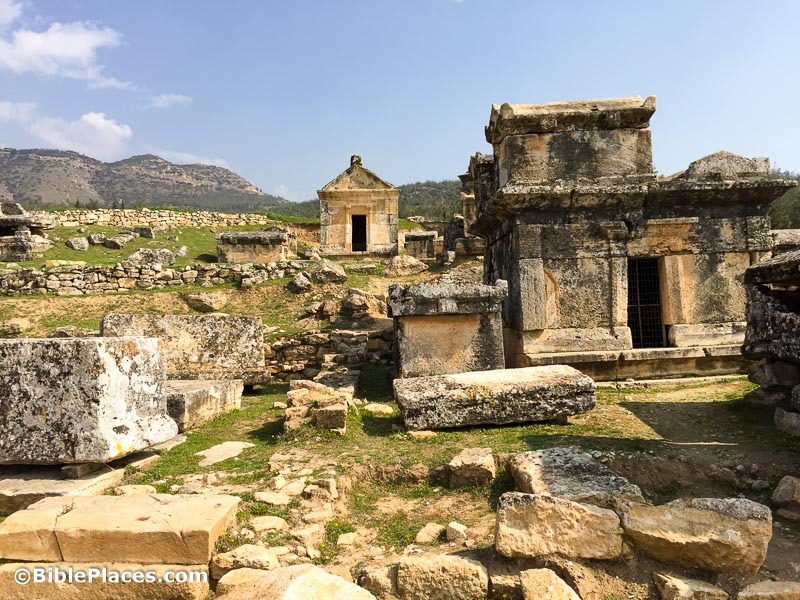
A BBC Travel special reveals the scientific explanation to the deadly gases of the Ploutonion at Hierapolis. The story includes beautiful photos.

Excavations are underway at Claros, site of an ancient oracle in western Turkey.

After several years of restoration, the warren of corridors beneath the Colosseum floor has been opened to the public.

My Modern Met tells the story of a massive scale model of Rome that took about 35 years to build. Unfortunately, the Museum of Roman Civilization where it is housed has been closed for many years.

Caroline Wazer summarizes a recent study about slave collars in ancient Rome.

Brent Nongbri has written a guide to bookshops in Rome in the first century.

Greece has announced plans for five new or upgraded museums in Chios, Trikala, Sparta, Thyrreio and Ermioni.

A registry of all archaeological sites in Greece is now available online.

“Russia has begun a project to rehabilitate Syria’s ancient city of Palmyra in its latest efforts to gain a foothold in the country’s vital sectors.”

A CNN video documents the restoration of antiquities destroyed in the Beirut port blast.

“Egyptian police on Thursday arrested a former lawmaker and 17 other suspects on charges of illegal excavation and smuggling of 201 Pharaonic, Greek and Roman artifacts.”

Two people died while illegally excavating near the Giza pyramids.

Episode 1 of Ancient Lives on the Nile premieres on YouTube on July 9 at 5:00 pm Eastern.

Michele Cammarosano and Katja Weirauch explain the value and use of wax boards in the ancient Near East.

“The Painters of Pompeii” is an exhibit of 80 artifacts and artworks shown exclusively by the Oklahoma City Museum of Art from June 26 to October 17.

I found Bryan Windle’s interview of Mark Wilson to be very interesting and helpful.

HT: Agade, Ted Weis, Joseph Lauer, Arne Halbakken, Ferrell Jenkins, Gordon Franz, Charles Savelle, Alexander Schick, Explorator, Paleojudaica, Chris McKinny

Share:

‘Atiqot 103 (2021), now online, includes articles about Iron Age pottery at Tel Eton, a fishpond at Illut, and Crusader remains at Acco.

Richard Elliott Friedman argues that Solomon’s temple was destroyed by the Edomites, not the Babylonians (Haaretz premium). An underlying journal article is available here.

David Ben-Gad HaCohen questions the standard identification of the Nahal Zered as Wadi al-Hasa.

Excavations are underway at Tel Burna (Days 1-2, Days 3-4).

A new study suggests that disruption of copper trade in the ancient Near East was not as severe as thought at the end of the Bronze Age.

The collection of 264 gold coins known as the Givati hoard were apparently minted as emergency coinage by Byzantine authorities in Jerusalem shortly before the Persian invasion in AD 614.

Archaeologists found remains of an Urartian castle dating to the 8th century BC in eastern Turkey.

A harpist has created a playable replica of the iconic Gold Lyre of Ur (25 min video).

Kyle Keimer and Chris McKinny conclude their podcast series on the Archaeology of Passion Week with part 2 and part 3. Accompanying visuals are available for each episode.

Zoom lecture on June 22, 11:30 am Eastern: Archaeological Sites of Iraqi Kurdistan as Tourism Destinations (Zoom link)

Zoom lecture on June 23: “What Recent Excavations Reveal About the Formation of Ancient Israel,” by James W. Hardin, Mississippi State University.

Zoom lecture on July 8, 12:00 pm Eastern: The Story of Tell Qasile: A Philistine Outpost in Northern Tel Aviv, by Amihai Mazar

The Bible Mapper Blog has posted some new maps, with downloadable high-res versions:

If you’ve ever wanted to go horseback riding on the Golan Heights, you can experience it through the report and photos of Israel’s Good Name.

HT: Agade, Arne Halbakken, Charles Savelle, Joseph Lauer

Share: