There are a few free lectures coming up for those in the Chicago area.

On October 2, Wednesday, Ian Morris of Stanford University will give a lecture at the Oriental Institute of the University of Chicago on “Why the West Rules — For Now: The Patterns of History, and What They Reveal About the Future.” The lecture begins at 7:00 pm and is followed by a free reception. Information about this event can be found here. Future events are listed here.

A Malaysian lawyer told a British journalist: “I am wearing your clothes, I speak your language, I watch your films, and today is whatever date it is because you say so.”

Do chaps or maps drive history? Human brilliance and folly, or geography? Or maybe genes, or culture? Ian Morris goes a level deeper than Jared Diamond’s Guns, Germs, and Steel to determine why the standards of Europe and North America now prevail in the world when it was the East that dominated for the 1,200 years between 550 and 1750 CE. Why did that happen, and what will happen next?

On October 3, Thursday, Ted Lewis from Johns Hopkins University will give a lecture on “Magic in Ancient Israel: Incantations in the Hebrew Bible and Archaeology.” This appears to be the final lecture in this year’s Wheaton College Archaeology Lecture Series. The lecture begins at 7:00 pm and will take place in the Billy Graham Center room 534. The information can be found here.

On October 5, Friday, Lisa Heidorn will present a lecture on “Dorginarti Island: The Fortress of the Lord of Eternity” at the meeting of the Chicago Chapter of the American Research Center in Egypt.

The lecture will begin at 5:00 pm and will take place at the Oriental Institute of the University of Chicago. More information can be found here. The site is located at about 21.829665°, 31.249143° (the island is now covered by Lake Nasser).

The fortress of Dorginarti, located in the northern part of the 2nd cataract, was excavated in 1964 by an Oriental Institute team; however, the excavations were abandoned after a few short months because rising waters behind the new High Dam at Aswan made continued work impossible. The fort was originally dated either to the Middle Kingdom because of its architecture, or to the late New Kingdom because of its objects and pottery. This ambiguity was due to the uncertainty in the 1960s about the dating of late New Kingdom and Third Intermediate pottery. Over the last two decades, great strides have been made in the identification of pottery to the periods after the New Kingdom, which now allows a more precise interpretation of the site. This ARCE Chicago lecture will give a recap of the fortress and its reasons for existence, in addition to the presentation of new material that is in preparation for the Oriental Institute’s publication of the site.

We noted before that on October 23, Wednesday, Gabriel Barkay will be giving a lecture on “Recent Archaeological Discoveries in Jerusalem” at Trinity Evangelical Divinity School. This lecture is noted along with other speaking engagements at Barkay’s new website.

Share:
(Post by A.D. Riddle)


This blog has on occasion mentioned schools or programs where one might go to study biblical archaeology. Trinity Evangelical Divinity School in Deerfield, IL has for over a decade offered an M.A. in Biblical and Near Eastern Archaeology and Languages. Now, beginning with this year’s catalog, the school also offers a Ph.D. in Theological Studies with a focus in Old Testament and Ancient Near Eastern History, Archaeology, and Languages. Whew! One wonders if the diploma will have to be enlarged to fit the degree title.The list of required courses for the Ph.D. includes:

Literature of the Ancient Near East
Religions of the Ancient Near East
History and Archaeology of the Ancient Near East I
History and Archaeology of the Ancient Near East II
9 hours of Ancient Near Eastern languages
Old Testament Studies I: Pentateuch and Historical Books
Old Testament Studies II: Poetic and Prophetic Books

Trinity’s faculty features several individuals whose names have appeared before on this blog: James Hoffmeier, Lawson Younger, Richard Averbeck, Barry Beitzel, John Monson.

This past summer, students and faculty from Trinity joined the first season of excavation at Abel Beth Maacah (and here). Later this fall, Trinity will feature two speakers in the Trinity Biblical and Ancient Near Eastern Archaeology Lectures. On Monday, September 23, Samuel Wolff of the Israel Antiquities Authority will speak on “Recent Excavations at Gezer.” On Wednesday, October 23, Gabi Barkay will speak on “Recent Archaeological Discoveries in Jerusalem.” Both lectures are free and open to the public. They begin at 7:00 pm and will take place at Trinity Evangelical Divinity School, Hinkson Hall in the Rodine Building.

Share:
(Post by A.D. Riddle)

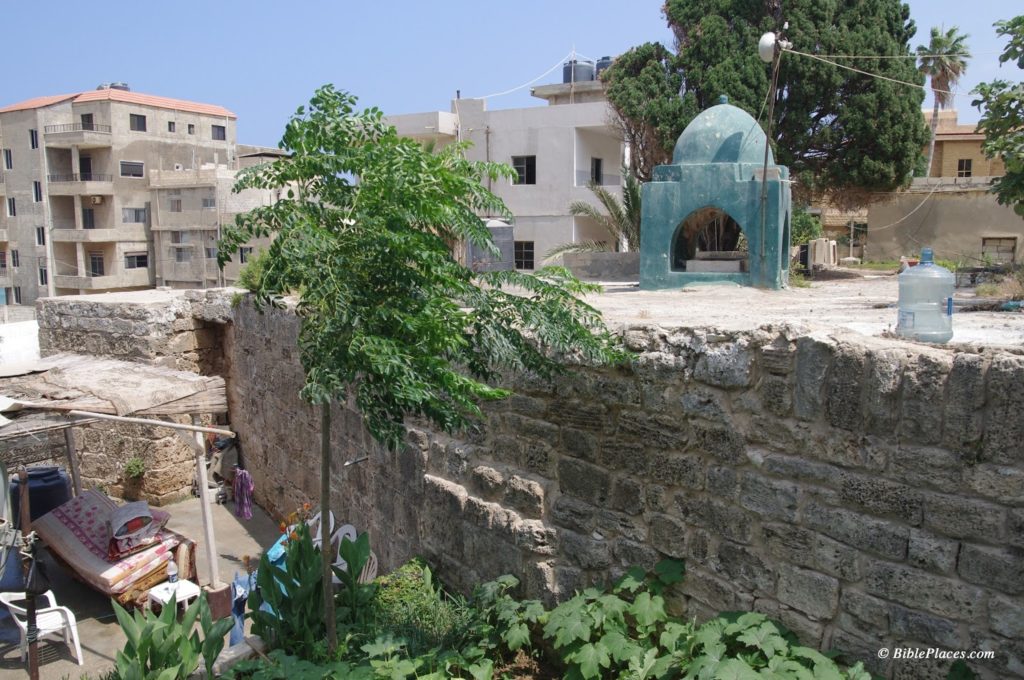
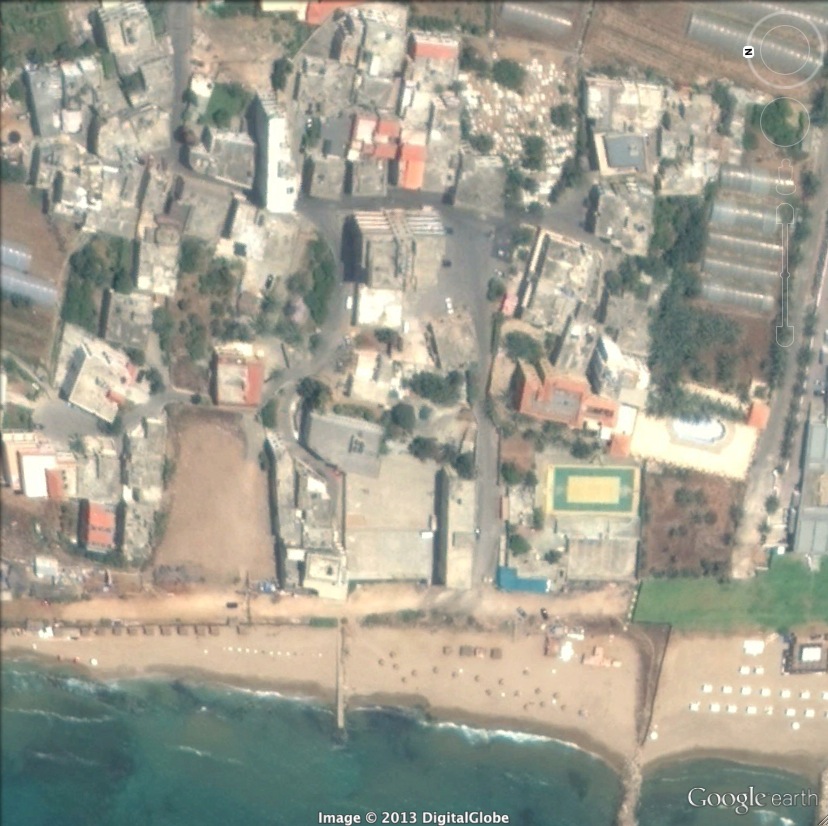
The answer to yesterday’s challenge is Nabi Yoûnis (or Nebi, Neby, Yunus, Younes, Yunas—there are a variety of English spellings. I will use the spelling “approved” by the U.S. Board on Geographic Names). It was answered correctly and quickly in the comments, so maybe next time, we should leave out the Google Earth view. The name Nabi Yoûnis is Arabic for Prophet Jonah, and the site commemorates the location where the great fish spit Jonah out onto dry land. It is located in Google Earth at 33.660894°, 35.418515°.

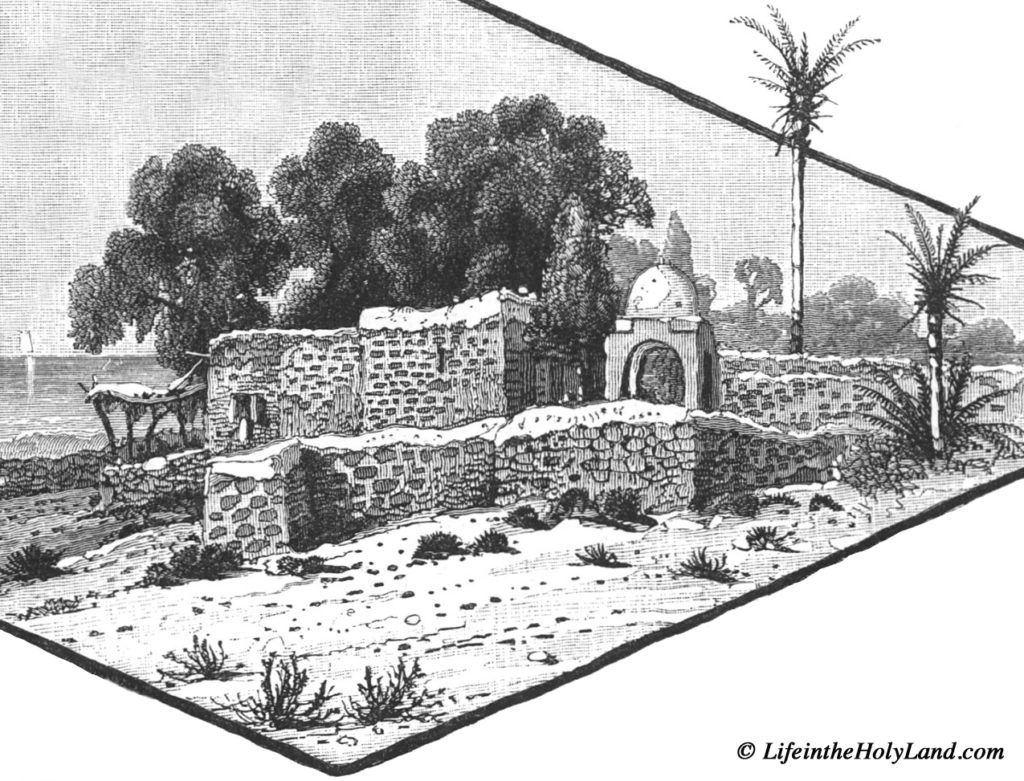
At 8:10 am on Tuesday, June 26, 1838, Edward Robinson passed by Khan Nabi Yoûnis on his way from Sidon to Beirut. He mentions that nearby was “Wely Neby Yunas, with a white dome, marking the place where, according to the Muhammedan legend, the prophet Jonas was thrown up by the fish” (Biblical Researches 3: 430-431). A nearly identically-worded description is found in Picturesque Palestine 3: 40. 

Drawing of Nabi Yoûnis from Picturesque Palestine, vol. 3.

Today, the Muslim shrine described by Robinson is surrounded by the Shiite village named Nabi Yoûnis and bears little resemblance to the drawing above. Also, the dome is now green.

Modern Nabi Yoûnis. 

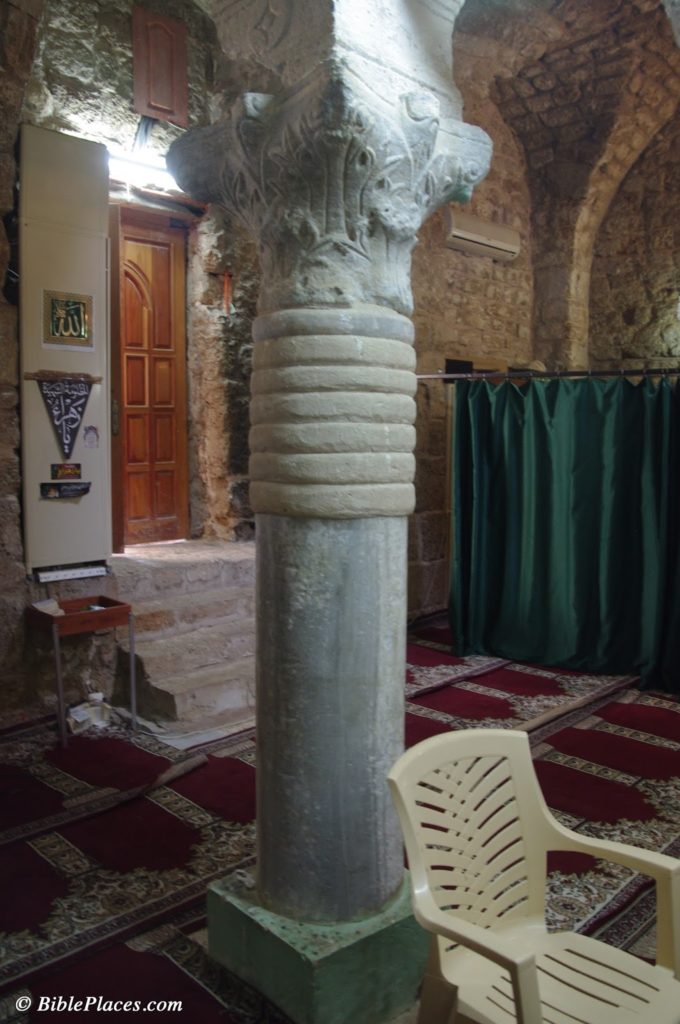
The Muslim shrine occupies the site of an earlier Byzantine church which was apparently destroyed by earthquake. Some remains from this church can be seen in reuse inside the shrine. During the Mamluk period, the structure was rebuilt and converted into a Muslim shrine.

Nabi Yoûnis, Corinthian capital from Byzantine church reused in modern Muslim shrine.

I have no way for evaluating whether or not this tradition is historically accurate, that Nabi Yoûnis is the place where Jonah was spit out. It is interesting to note that according to 2 Kings 14:25, a prophet named Jonah son of Amittai lived during Jeroboam II’s reign. This verse explains that Jonah announced large territorial gains for the kingdom of Israel in the time of Jeroboam II. For a brief moment in history, the boundary of the kingdom extended north to Lebo-Hamath, identified with modern Labwe in Lebanon. The Aramean kingdoms of Damascus and Hamath were also subjected to Israel. Nothing is said concerning the Phoenician coastal cities, so I do not know if Nabi Yoûnis would have been under some kind of Israelite control or not at this time as well.

Further note: a small side room in the Nabi Yoûnis shrine supposedly houses the tomb of Jonah. As with Noah, there are apparently multiple sites that are believed to be Jonah’s burial place. Another such tomb of Jonah is located in el-Meshhad, Israel, the site identified with Jonah’s hometown, Gath-hepher (see Picturesque Palestine 2: 61, illustration on 56).

References

Harb, Antoine Khoury.
2008     The Roots of Christianity in Lebanon. Beirut: Lebanese Heritage Foundation.

Share:
(Post by A.D. Riddle)

“The LORD commanded the fish, and it spewed Jonah out upon dry land” (Jonah 2:11, JPS).

Can anyone name the place where, in church tradition, Jonah was vomited back onto land? Here is a Google Earth view to get the ball rolling.

Post your answers in the comments below, and tomorrow we will post a follow-up with photo. I think it is safe to allow research for this one. Please give some indication of your source(s).

Share:
(Guest post by A.D. Riddle)

Unlike its neighbor to the south, Lebanon has only a handful of excavations currently in progress and there is no systematic archaeological survey of the entire country presently available. Sadly, archaeological work is only being carried out at a total of five (or so) sites: Sidon, Tell Arqa, Tell el-Burak (link 2, link 3), Baalbek, and Kamid el-Loz.

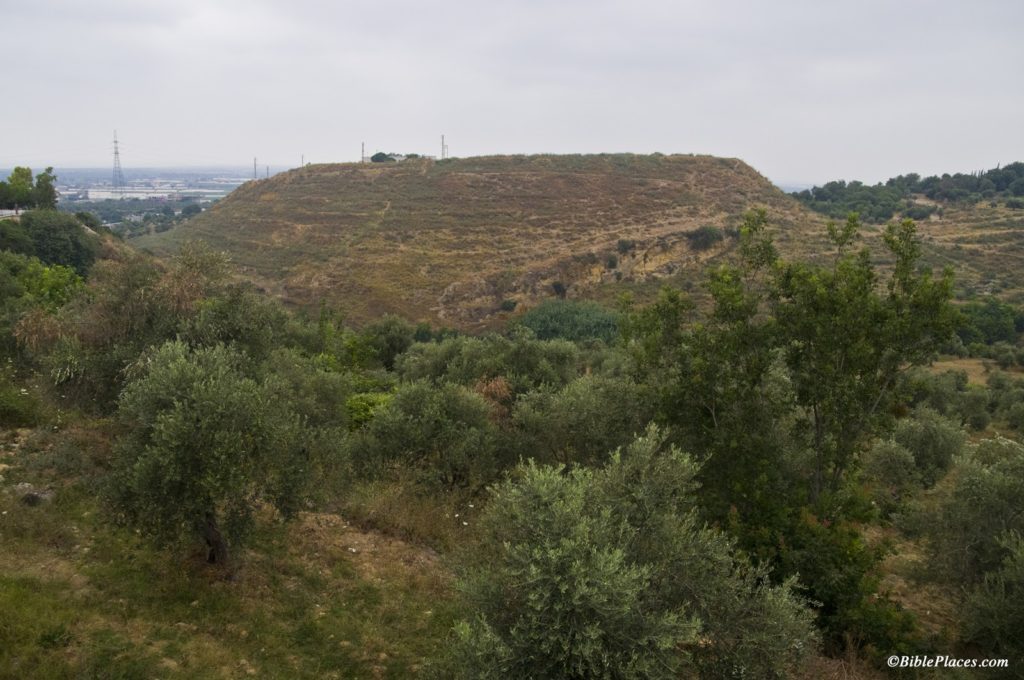
Tell Arqa in northern Lebanon.

Naturally, one would think that the paucity of archaeological work (and tourism, for that matter) is due to present security conditions. But that is only part of the story. Hélène Sader, a historian and archaeologist at the American University in Beirut, has written a piece for the ASOR blog entitled, “Archaeology in Lebanon Today: Its Politics and Its Problems,” in which she paints a fairly bleak portrait of the current situation.

The outdated antiquities law which established the Lebanese Directorate General of Antiquities (DGA) “as the sole authority” limits the DGA’s staff “to five archaeologists, five trainee archaeologists, and five architects in charge of regular and salvage excavations, restoration and conservation of historical and archaeological monuments, and the curatorship of the national and regional museums collections!” Following the Lebanese civil war (1975-1990), the Lebanese government set out to rebuild Beirut’s Central District. The DGA was then faced with the task of not only rebuilding the National Museum, but also “supervising the largest urban excavation site in the world with practically no qualified personnel, no funds, and no political support.” Since 2000, “the DGA has become extremely restrictive regarding long term excavation projects” and is “reluctant to issue permits to foreign institutions.” Numerous salvage excavations go unpublished and the excavated remains are “regularly bulldozed or disfigured by irresponsible urban planning without any objections.”
Sader concludes:

The DGA has been without leadership for the last four years. The last Director General resigned three years ago and the appointment of a new one is still blocked by political rivalries. The failure to build a new generation of professional and well-trained archaeologists is so dramatic that it is very hard today to find even a small pool of competent candidates for the position of Director General from within or outside the department of antiquities. Several DGA archaeologists and architects have lately resigned out of frustration and it seems that the institution is back to square one: no director general, insufficient numbers of qualified professionals, no reforms of the laws regulating archaeological work, no funds, and first and foremost, no vision and no direction for the future of archaeology in Lebanon.

We keep our fingers crossed that the future leadership of the DGA will have the political and financial support of the Lebanese government to build a modern institution and to promote archaeological research. Maybe then, like a phoenix, Lebanese Archaeology will rise from its ashes.

Share:
(Post by A.D. Riddle)

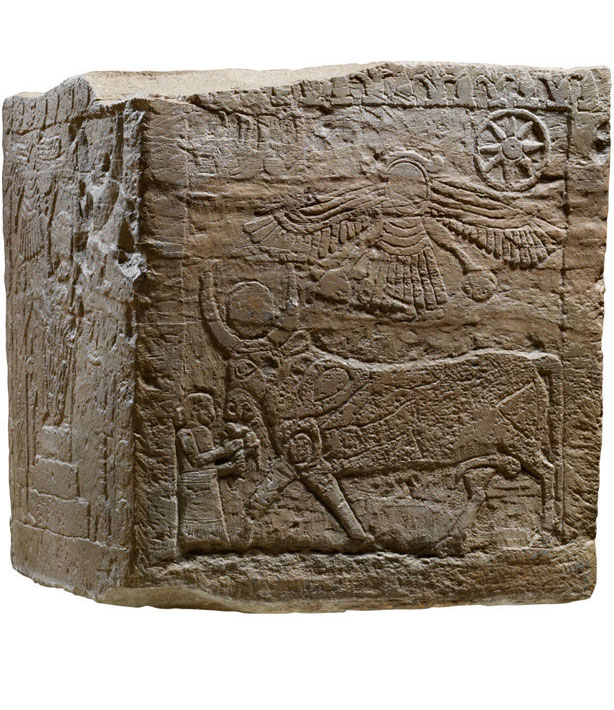
Aryn Baker wrote a piece for Time Magazine entitled “Saudi Arabia to Tourists: We Are Just Not That Into You” in which she describes how Saudi Arabia has put out a “do not disturb” sign for foreign tourists. Thus, it would seem, there are few opportunities for people to gain access to the archaeological finds from this country. That is what makes the “Roads of Arabia” exhibition so significant. “Roads of Arabia” showed in several European museums before coming to the United States. The exhibition just finished up at the Smithsonian Institution’s Arthur M. Sackler Gallery and is now headed to Pittsburgh. The exhibition has a website with hi-resolution photographs of exhibition highlights, including this pedestal or altar discovered at Tayma (biblical Tema [Job 6:19]).

Here is the schedule for upcoming shows of the exhibition:

Carnegie Museum of Natural History
Pittsburgh, PA
June 15 – Nov 4, 2013
The Museum of Fine Arts
Houston, TX
Dec 22, 2013 – Mar 9, 2014
Asian Art Museum
San Francisco, CA
Oct 17, 2014 – Jan 18, 2015
Previous posts about the exhibition can be found here and here
Share: