The AP has a nothing-else-to-report-today article about the Israeli excavations in the City of David, focusing particularly on the political aspects. The thesis of the article is summed up in this paragraph:

Israel says it’s reconnecting with its ancient heritage. Palestinians contend the archaeology is a political weapon to undermine their own links to Jerusalem.

The article interviews both sides, though it’s not in-depth enough to satisfy either side. My contribution to the story is a photograph of the City of David that shows the area sometime in the first half of the 20th century, but without most of the buildings.
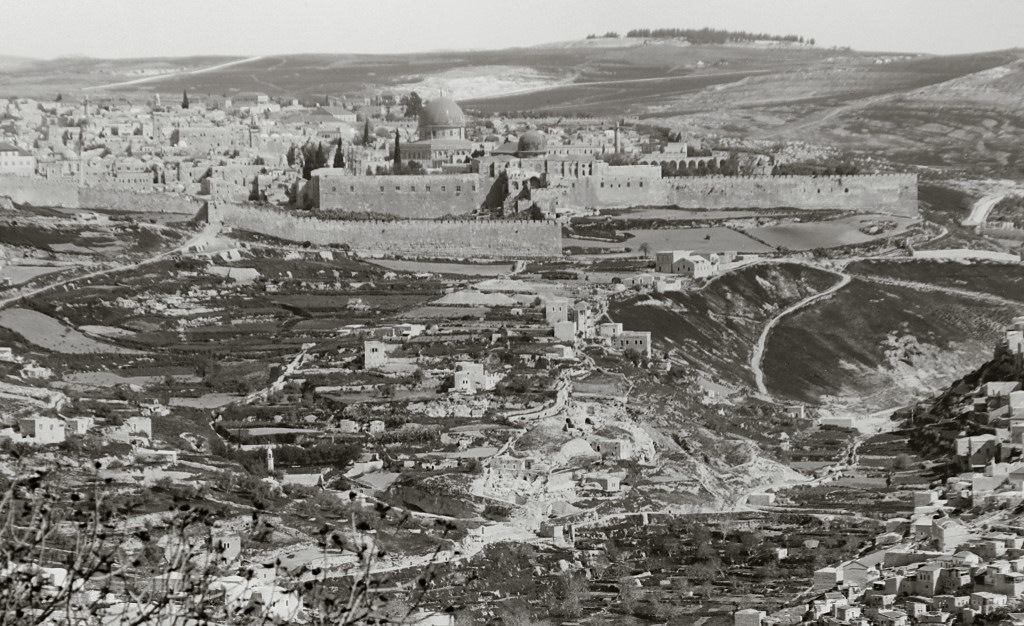
08433uJerusalem from south Kidron Valley, mat08433
City of David from the south
Source: Library of Congress, LC-matpc-08433
Some information and photos about ancient sites in the area can be found at these BiblePlaces.com pages: City of David, Hezekiah’s Tunnel, Warren’s Shaft, and Pool of Siloam.
Share:

From the AP:

A rare snowstorm swept the Middle East on Wednesday, blanketing parts of the Holy Land in white, shutting schools and sending excited children into the streets for snowball fights. The weather in Jerusalem topped local newscasts, eclipsing a government report on Israel’s 2006 war in Lebanon. Men in long Arab robes pelted each other with snowballs in the Jordanian capital, Amman, and the West Bank city of Ramallah, seat of the Palestinian government, came to a standstill. “I’m originally from Gaza where snow never falls,” said Bothaina Smairi, 28, who was out in Ramallah taking photographs. “The white snow is covering the old world and I feel like I am in a new world where everything is white, clean, and beautiful.” Jerusalem’s Old City was coated in white. A few ultra-Orthodox Jews, wearing plastic bags over their hats to keep them dry, prayed at the Western Wall, Judaism’s holiest site. Snow falls in Jerusalem once or twice each winter, but temperatures rarely drop low enough for it to stick. The Israeli weather service said up to 8 inches of snow fell in the city. By late morning, the snow changed to rain, turning the city into a slushy mess. But forecasters said temperatures were expected to drop, and the snow would continue through Thursday morning. Heavy snow also was reported in the Golan Heights and the northern Israeli town of Safed, and throughout the West Bank.

The story continues here. You can see some photos of Jerusalem in the snow from previous years here.

Share:

Haaretz reports the approval of the construction of a tunnel near the Western Wall. 

The Israel Antiquities Authority has decided to dig a tunnel under the Muslim Quarter of the Old City of Jerusalem, close to the Temple Mount. Two weeks ago, the IAA denied such a decision had been made. The tunnel will connect those under the Temple Mount and the site of Ohel Yitzhak, some 150 meters from the Temple Mount wall. The decision to begin the dig was taken in spite the fact that no plan was filed to the planning authorities. Moreover, the Palestinians under whose homes the tunnel will pass were not consulted, even though the law grants them ownership over the territory under their property. (Meron Rapoport)

The third sentence should be corrected to read: “The tunnel will connect the Western Wall ‘rabbinic tunnels’ and the site of Ohel Yitzhak….”  Such a mistake might be excusable if not for the fact that dozens were killed as a result of a similar falsehood perpetuated by Yasser Arafat in 1996.  He inaccurately claimed that Israel was digging under the Temple Mount and 85 Muslims and 16 Israelis died in the riots that resulted

HT: Joe Lauer

Share:

About a week ago there was a press release from the Third Princeton Symposium which clearly had Simcha Jacobovici’s hands on it (he’s the guy he made the multi-million dollar video-claim in the first place). Though I had no personal knowledge of the conference, I could smell deceit (well, it wouldn’t be the first time he tried to pull a fast one), so I ignored it here. Others did not (including JPost), so if you were one of those who bought his line that most scholars thought there’s a good chance that Jesus’ tomb was in fact discovered, you should be aware of the scholars that are denying his claim. 

The two places to go are the NT Gateway Weblog for a statement by a dozen scholars, and The View from Jerusalem blog by Stephen Pfann that includes the individual statements of other scholars.

In short, there may be a handful of scholars who think that this might be the tomb; the rest of the scholars are rushing to deny the possibility and denounce the misleading press release. For the record, many scholars don’t accept a bodily resurrection of Jesus, but they just don’t think the evidence that this is the tomb is compelling. Hopefully, I’ll never need to say anything else about it here.

Update (1/26): The Jerusalem Post has a lengthy editorial on the conference. The Biblical Archaeology Society has compiled a list of statements from various scholars.

Update (1/28): Organizers of the symposium, have posted a statement on the Princeton Theological Seminary website. They note that the conference papers will be published in 2 volumes by Eerdmans.

Update (2/14): James Charlesworth has an article on “Rebutting Sensational Claims Concerning a Symposium in Jerusalem” on the SBL site. Charlesworth was the symposium organizer and moderator.

Share:

The Archaeology Wing of the Israel Museum is still closed, but the Bible Lands Museum across the street is a worthwhile visit, especially with this new exhibit.

From Haaretz:

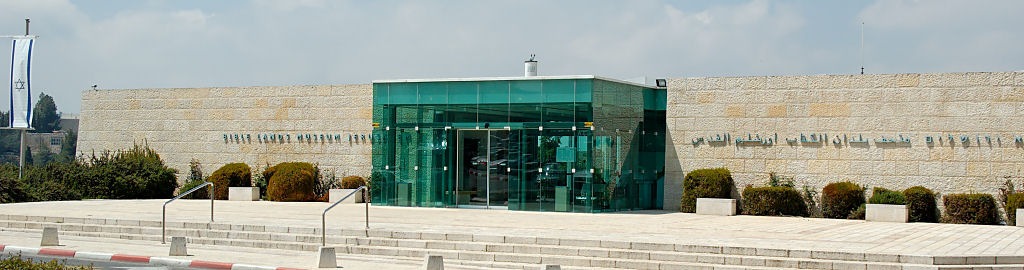
Sounds, archaeological finds and scientific hypotheses all play major roles in an exhibition entitled “Sounds of Ancient Music,” which opened last week at the Bible Lands Museum in Jerusalem. Focusing on musical developments in ancient Sumeria, Babylon, Assyria and other cultures ofBible Lands Museum, tb040605644 the Ancient Near East, through the periods of the Kingdom of Judea, Greece and the Roman Empire, the exhibition features 137 objects – among them, rare musical instruments that have been preserved from antiquity, as well as full-sized replicas of instruments from those early eras.
Among other items on display are a flute, fragments of which were discovered in a burial cave in the French Hill neighborhood of Jerusalem and dating back to the Second Temple period, as well as the well-known stone from that same period bearing the inscription, “To the House of Trumpeting to the k …,” in a form of the Hebrew alphabet typical of the Herodian period. According to scholars, this was part of the southwestern cornerstone of the Temple compound described by the first-century C.E. Jewish historian Josephus, from which a kohen (priest) blew the trumpet to usher in the Sabbath. According to the Mishna, in those days people blew trumpets, strummed harps and lyres, played the flute and beat the cymbal. It is written that the sounds of the  flute and the cymbal were so loud they could be heard even in Jericho.
The story continues here and the Hebrew version has a photo.

UPDATE (1/23): The Jerusalem Post now has an article along with notice that the exhibition will run throughout 2008.

HT: Joe Lauer

Share: