Yesterday afternoon I took my archaeology students to help with the on-going sifting operation from the Temple Mount debris. They have made some remarkably discoveries in the two years that they have been methodically sifting the material.
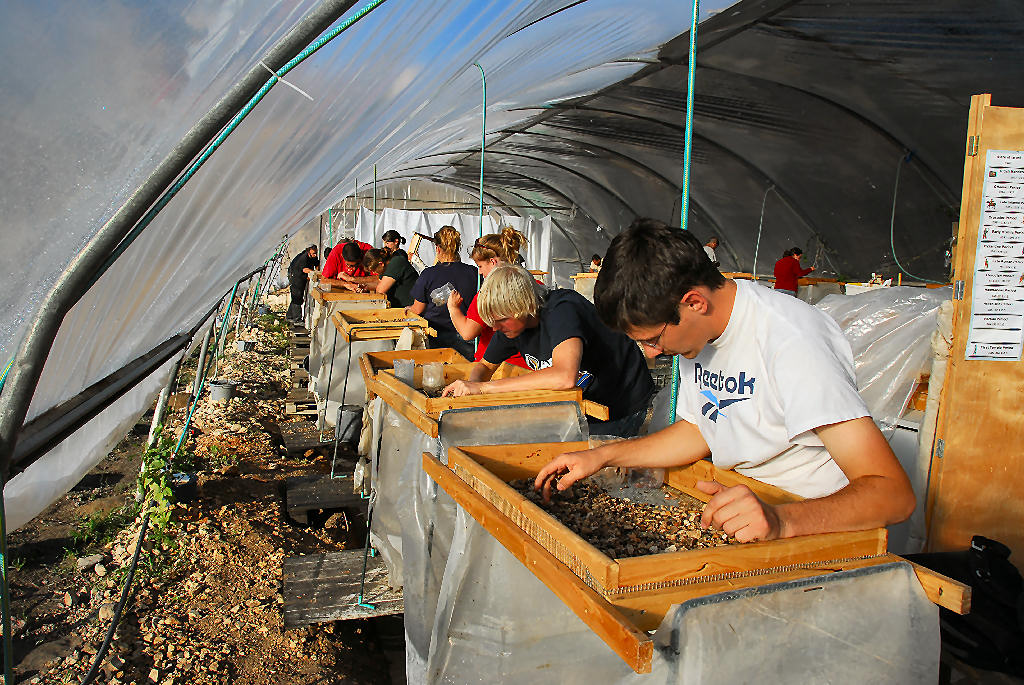

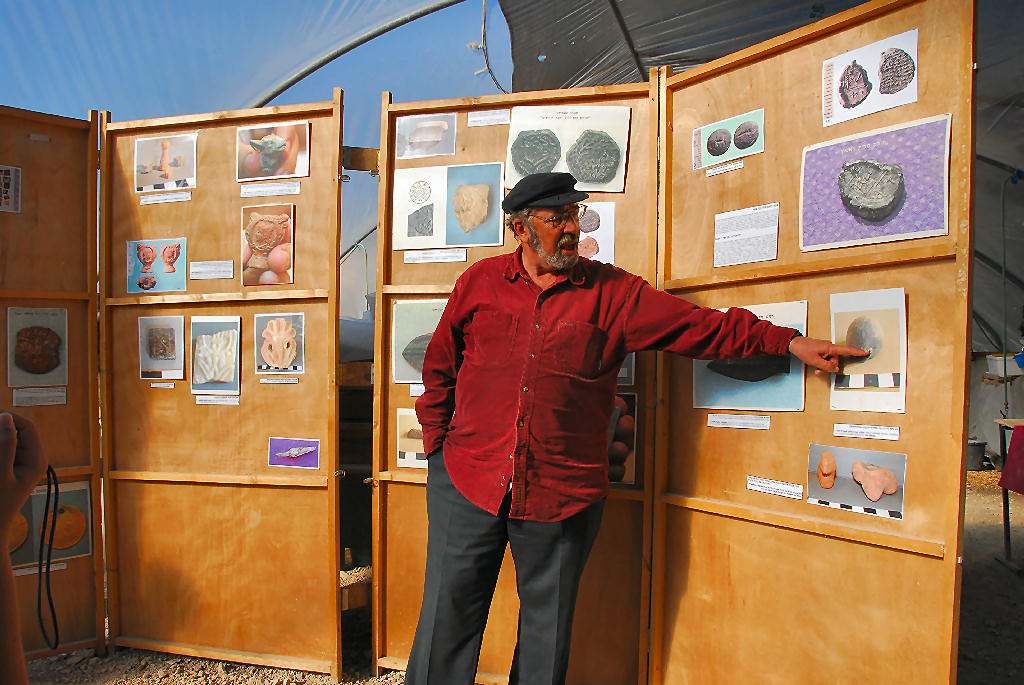
The archaeologist in charge is Gabriel Barkay, who has been involved in Jerusalem archaeology for the last 40 years. He suggested yesterday that the current project may take him the rest of his life. They have searched less than half of the debris so far.
Last week a major find from the same material was announced in the journal of the W. F. Albright Institute of Archaeological Research. An inscription from a monumental arch with the name of the Roman general Silva was discovered by the Muslims during the earth’s removal, but it only became known to a few archaeologists several years ago. The inscription is about 3 feet long by 2 feet high and, according to Barkay, was part of a hence unknown Roman triumphal arch in the vicinity of the Temple Mount. Haaretz has more details.
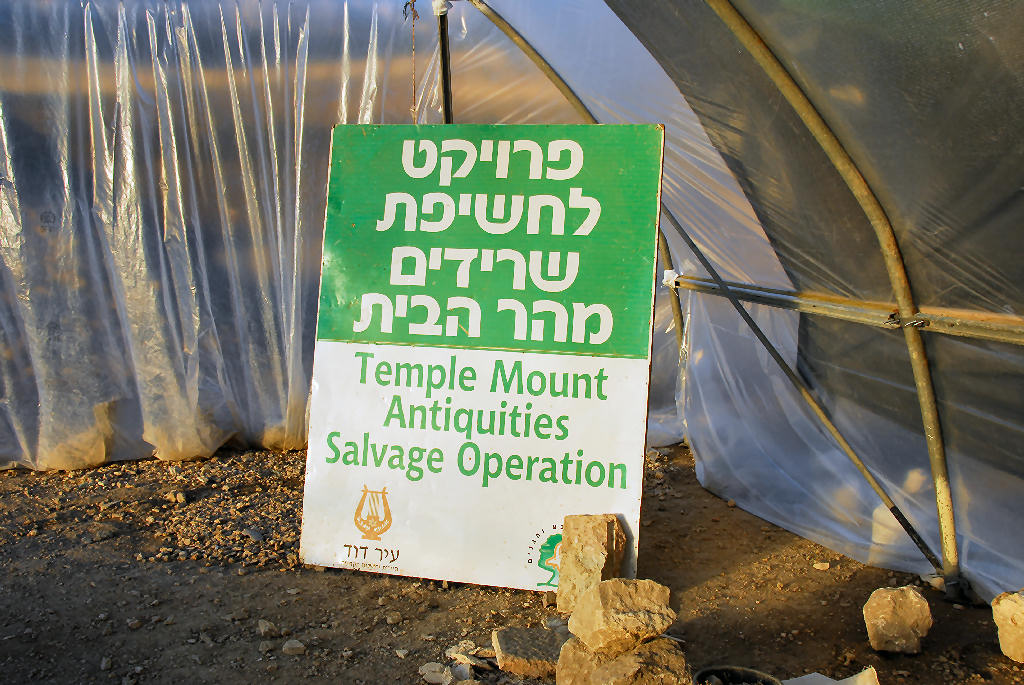
For more about the project, see the Temple Mount Archaeological Destruction website. The author, Zachi Zweig, tells me that a new website is coming with up-to-date information.

Share:

The sifting of debris removed from the Temple Mount continues under the direction of Dr. Gabriel Barkay and Tzachi Zweig, and Haaretz provides the latest update from the work there. Many artifacts have been revealed in the project.

The oldest artifacts found are remnants of tools like a blade and scraper dating back 10,000 years. Some potsherds and shards of alabaster tools date from the Bronze Age – the 3rd and 2nd millennia B.C.E. (the Canaanite and Jebusite eras). Only a handful of potsherds were found from the 10th century B.C.E. (the reigns of King David and King Solomon), but numerous artifacts date from the reigns of the later Judean kings (the 8th and 7th centuries B.C.E.), such as stone weights for weighing silver.

The most striking find from this period is a First Temple period bulla, or seal impression, containing ancient Hebrew writing, which may have belonged to a well-known family of priests mentioned in the Book of Jeremiah.

Many other findings date from the Persian period (Return to Zion), Hasmonean, Ptolemaic and Herodian periods, as well as from Second Temple times. Second Temple finds include remains of buildings: plaster shards decorated a rust-red, which Barkai says was fashionable at the time; a stone measuring 10 centimeters and on it a sophisticated carving reminiscent of Herodian decorations; and a broken stone from a decorated part of the Temple Mount – still bearing signs of fire, which Barkai says are from the Temple’s destruction in 70 C.E.

The Hebrew version of the article also includes a photograph of a bronze pendant and Roman and Babylonian arrowheads.

For background on where this all came from, see the photos and explanation here.

Share:


Muslim officials are proceeding with plans to construct a minaret on the Temple Mount. This minaret will be located near the Golden Gate (arrow in photo above) and will be the tallest minaret in the complex at 134 feet (42 m) high. This will be the first minaret constructed in 639 years, as the other four (circled in photo above) were built between 1278 and 1367. The prayer tower will be Jordanian in style and will cost approximately $700,000.

Such a construction is a violation of the principle of status quo of disputed holy sites in Israel, and almost certainly will be built without any archaeological supervision. It is ironic that if one wants to build a cottage in a remote part of Israel and antiquities are present, then an excavation must take place. But if one wants to construct on one of the most important sites in the Holy Land, there are no such requirements.

Share:

The stupid article by Ynet News has been mentioned a few places in the blogosphere already (best take: Higgaion), but I want to add my two cents and a photo. I’m assuming that you’ve read the original article and Higgaion’s response.

1. I don’t think archaeologists are to be faulted here. I’d be willing to bet that this entire article is a figment of the author’s imagination, possibly stimulated by some of the local paid workers at the site. The only archaeologist cited is Ronny Reich who rejects the article’s premise. I don’t know any other archaeologists who would claim something so foolish, especially at such an early stage.

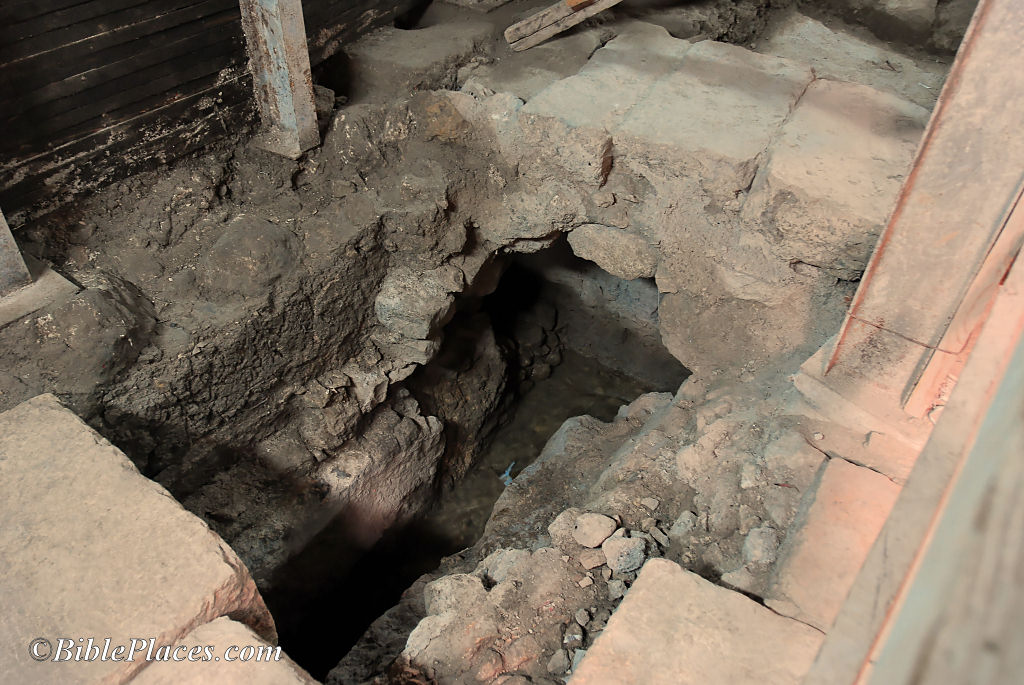
2. An aqueduct has been found. In fact, a number of aqueducts have been uncovered in the last few months. The origin(s), destination(s), and date(s) of these water channels are not always clear. Collectively, there’s a lot going on near the Pool of Siloam that archaeologists do not yet understand.

3. There is good reason to believe that there is another ancient pool or two to be found in the area. Pools mentioned in Jerusalem include the Old Pool (Isa 22:11), the Upper Pool (Isa 36:2), the Lower Pool (Isa 22:9), the King’s Pool (Neh 2:14), the Pool of Siloam (Neh 3:15), and the artificial pool (Neh 3:16). It’s quite possible that a pool had multiple names, but it’s clear that these names do not all refer to the same pool. The convergence of the Kidron, Central, and Hinnom Valleys is a natural place to find pools because this is the lowest place topographically in the city.

Does it bother anybody that the article’s author doesn’t even know where the City of David is in reference to the Western Wall (it’s directly south, not west). I confess that when I first read the article, I decided to ignore it because it was clearly worthless. I changed my mind because some people have paid attention to it.

One thing worth remembering: current excavations are uncovering new finds from the Second and First Temple periods that will certainly increase our understanding of Jerusalem’s water systems in the biblical times.

Water channel recently discovered near Pool of Siloam
Photo taken Sept. 13, 2006


Adapted from Ordnance Survey of Jerusalem, 1865

Share:

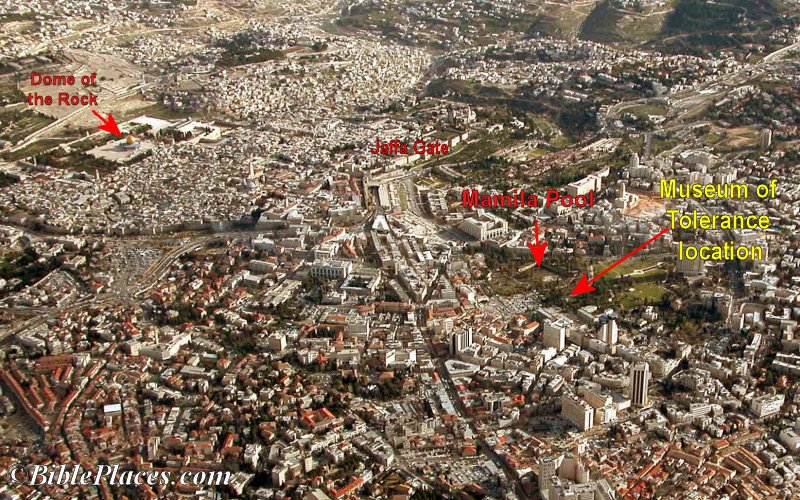
The AP has a good summary of the battle over the construction of the Museum of Tolerance in Jerusalem. The Simon Wiesenthal Center wants to build the museum where a parking lot has been located, but Muslim organizations are unhappy because it encroaches on an old Muslim cemetery. 

Read the story for the update, but note the archaeologist’s comment that if you’re going to protect every grave in Israel, people are going to need to commute from another country. Some have noted the irony that Muslims built a hotel over the part of the cemetery in the mid-20th century. It’s also interesting to see the ultra-Orthodox and Muslims groups join hands on this issue.

Jerusalem from northwest.
Click on photo for more detail.
Share:

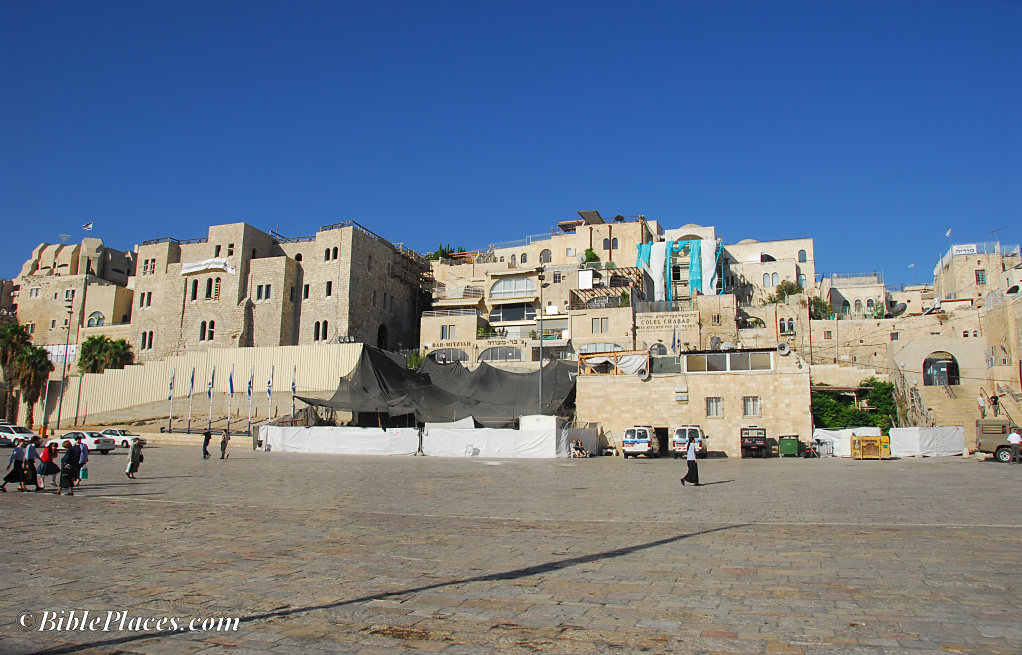
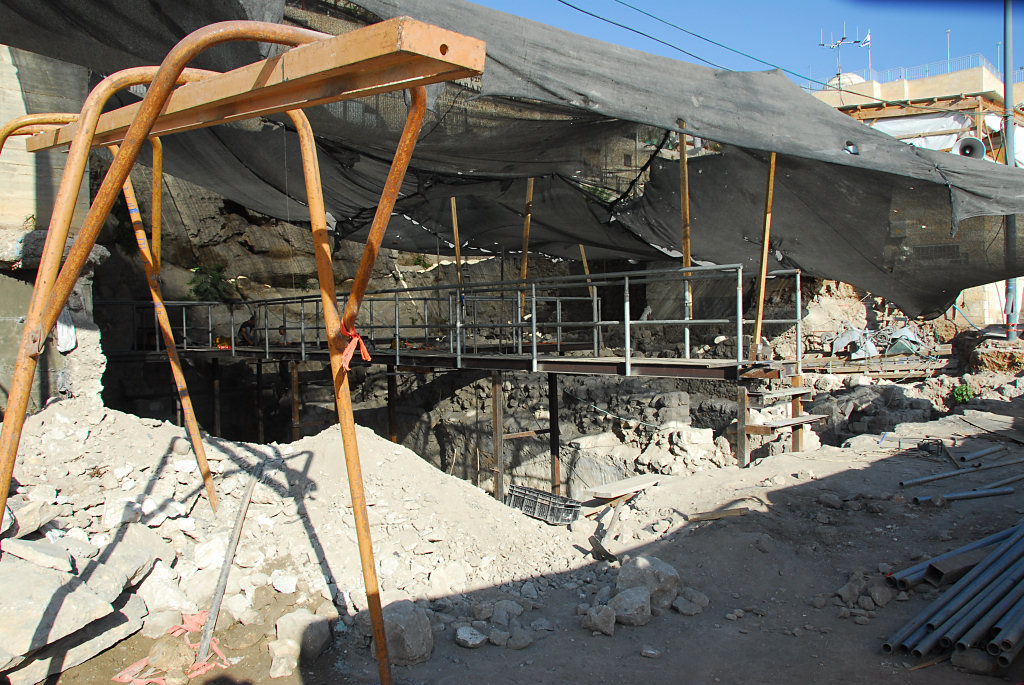
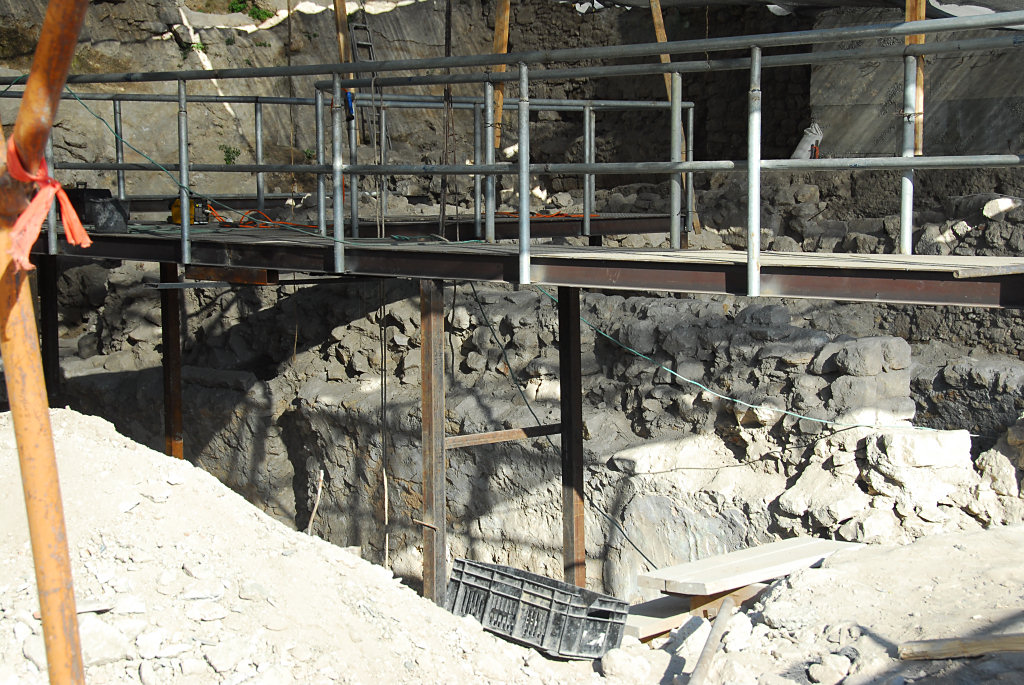
Excavations have been going on for a few months in the back (west side) of the Western Wall plaza. The Israel Antiquities Authority has a brief description of the finds so far. In short, they are excavating a building complex from the Mamluk and Ottoman periods that consists of several vaults.

This is a view from near the Western Wall towards the excavations, which are located just to the left (south) of the police station.

The excavations began in April, before construction of a building in this location.

One of the vaults is visible below the metal walkway.

Share: