A 1st-century Jewish settlement is now being excavated near Beersheba, and one find is an early depiction of a nine-branched menorah.

Christopher Rollston offers some reflections on the Nathan-Melek seal impression, concluding that it is “most likely” that this is the same person mentioned in the Bible.

“Excavation work carried out in Ramses II’s temple in Abydos, Sohag, has uncovered a new temple palace belonging to the 19th Dynasty king.”

Hasmonean-era tombs near Jericho have been looted recently.

Conservation work was done on the Western Wall ahead of the Passover holiday.

“Ancient Color” is “a new exhibition at University of Michigan’s Kelsey Museum of Archaeology, dives deep into the material and application of pigment in ancient Rome, and in doing so highlights a colorful, international history.”

Opening today at the Peabody Museum: “Ancient Mesopotamia Speaks: Highlights from the Yale Babylonian Collection.”

With 40 inches of rainfall so far this year, the Sea of Galilee rose 6 inches last weekend.

Recent rains caused flash flooding near the tomb of Cyrus in Pasargadae.

David Moster explains “Telling Time in Ancient Israel” in a new 9-minute video.

Wayne Stiles has just announced a tour to sites in Turkey and Greece, including a 3-night cruise to the Greek isles.

Reported on April 1: the discovery of the world’s oldest break-up letter.

If you’ve been thinking about registering for the Institute of Biblical Context conference this June, note that the early bird discount ends on Wednesday.

This video shows footage of Jerusalem one month after the Six-Day War in 1967.

HT: Joseph Lauer, Agade, Alexander Schick

Share:

Excavations in the Sharafat neighborhood in west Jerusalem revealed a Hasmonean-era agricultural village. Haaretz (premium) has a longer article with more photos.

A study of the garbage dumps of the Byzantine city of Elusa in Israel’s Negev reveals that the city’s decline was the result of climate change.

The Malham Cave, under Mount Sedom near the Dead Sea, has been identified as the longest salt cave in the world.

The third artifact in the TMSP’s 12 object series is a fiscal bulla inscribed “Gibeon / to the king.”

Amnon Ben Tor will be awarded the Israel Prize in the field of archaeology.

Gabriel Barkay, an Israeli archaeology, recalls his experience in excavating Susa in Iran

The Anglo-Israel Archaeological Society will be hosting lectures in the coming months by Amihai Mazar (on Tel Rehov), Jonathan Price (on Beth Shearim), and Jürgen Zangenberg (on Horvat Kur).

Andrea Berlin will be lecturing in Rockford, Illinois, on April 1, on “Phoenicians and Jews — A Tale of Two Peoples in Israel’s Upper Galilee.”

“Striking Power: Iconoclasm in Ancient Egypt” is a new exhibit at the Pulitzer Arts Foundation in St. Louis. A review article explains why so may of the statues’ noses are broken.

The latest video by the Institute for Biblical Culture is on “Ancient Israelite Fashion.” New classes in April include “The Prophets of Ancient Israel” and “The Geography of Biblical Israel/Canaan II.”

The founder of Sirin Riders explains why Israel is a great place to ride horses.

James Papandrea is on The Book and the Spade discussing his new book, A Week in the Life of Rome.

HT: Agade, Ted Weis

Share:

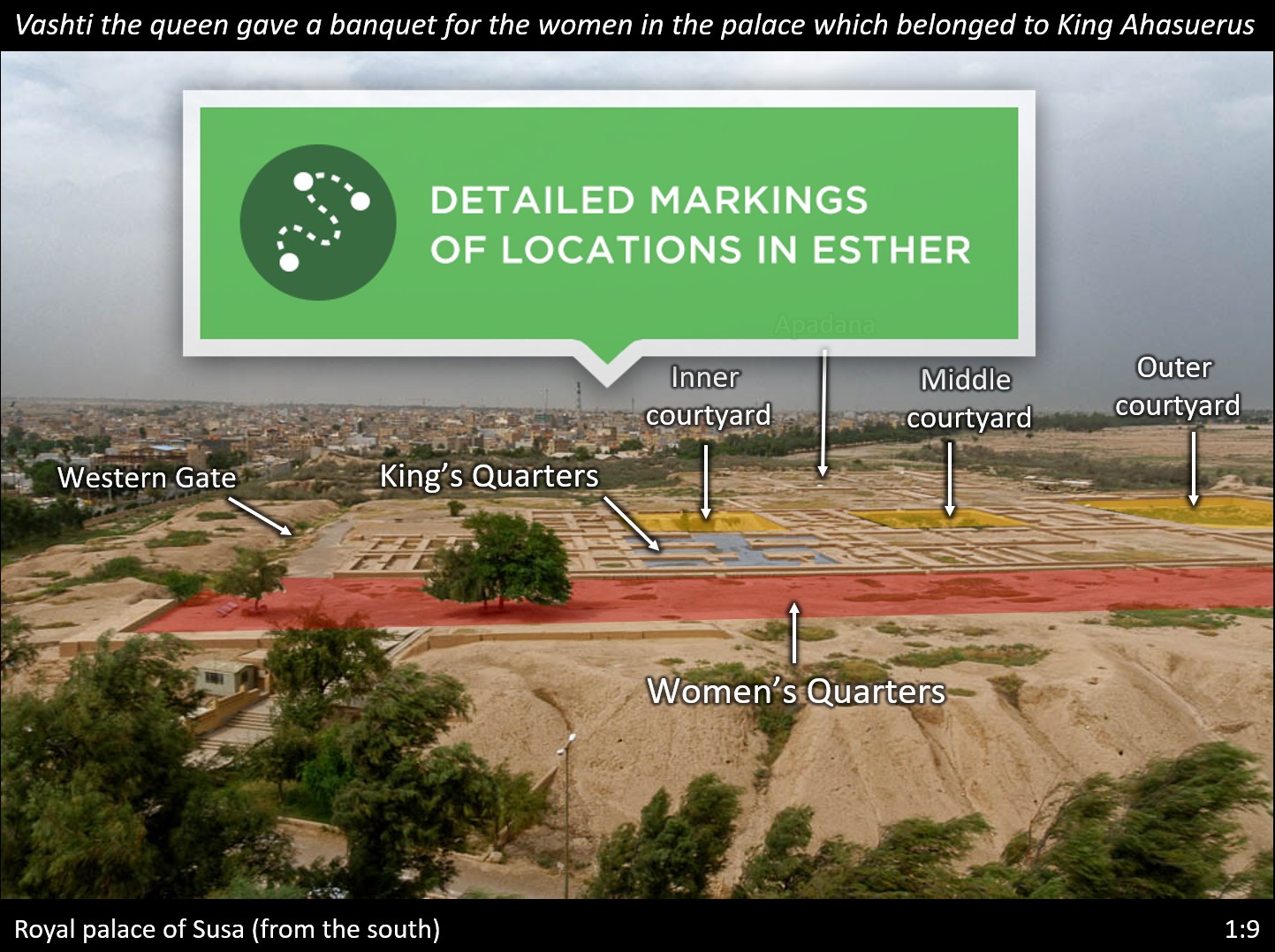
One of the most exciting, but least visited, biblical sites is Susa. It’s exciting because the entire drama of the Book of Esther takes place there, and we know exactly where Ahasuerus sat on his throne, and Esther approached him, and Mordecai overheard the conspiracy, and Haman waited in the courtyard.

Biblical Archaeology Review asked me to write about Susa for their “Site-Seeing” column for the current issue. You can flip to page 18 to see it, or it’s currently available for reading online.

My goal in writing the column was help you to enjoy the site and its rich biblical connections, especially if you’re not ready yet to sign up for a tour of biblical Iran!


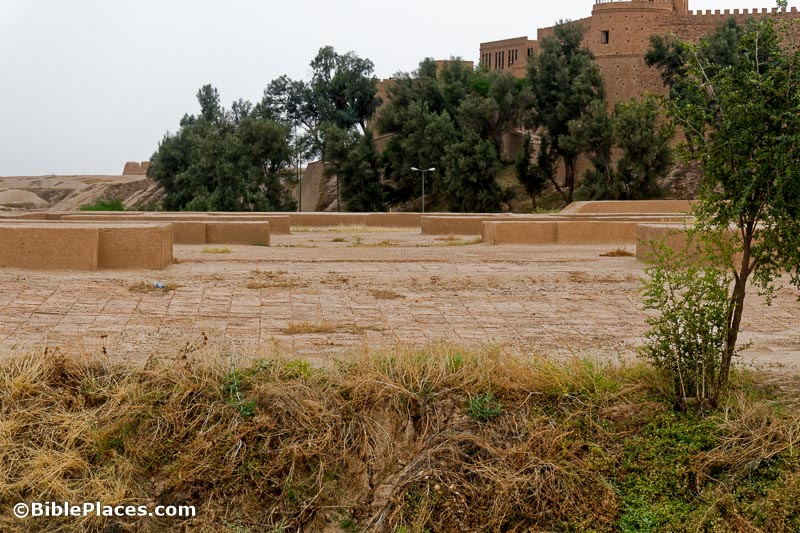
The throne room of Susa from the inner courtyard
Share:

An inscription written in the Persian, Elamite, and Babylonian languages has been discovered at Naqshe-Rustam, the royal necropolis of Persepolis.

Work on the sewer system in Kition, Cyprus, keeps revealing ancient remains from the Classical and Roman periods.

A decade of restoration work of King Tut’s tomb has been completed. The History Channel has many photos.

The vase that the British Museum realized was a mace is in fact a vase.

The BBC reports on several women whose interest in archaeology began with a childhood fascination with mummies.

Eisenbrauns is running a sale of 30-50% off of titles in the Duke Judaic Studies and Sepphoris Archaeological Report series.

Beit Shemesh and Kiriath Yearim are the subjects of discussion in this week’s The Book and the Spade.

Shmuel Browns shares several photos he took along the Alon Road in eastern Samaria.

If you have been to Israel before, answer a few quick questions to help Wayne Stiles as he puts together a video series to help travelers prepare for a Holy Land Tour.

It’s a slow week, so here’s a bonus quotation:

“My definition of archaeology, shared with students during almost forty years of teaching historical geography, is that archaeology is the science of digging a square hole and the art of spinning a yarn from it” (Anson Rainey, “Stones for Bread: Archaeology versus History.” Near Eastern Archaeology 64 (2001): 140.

HT: Agade, Ted Weis

Share:

An archaeological team working at Hatnub in Egypt has discovered the ancient system used to transfer stone blocks from the quarry.

Egyptian archaeologists have discovered parts of a booth with a seat from the time of Ramses II.

“Archeologists at the University of Toronto are in advanced negotiations with Turkey’s Ministry of Culture and Tourism to establish an archeological park at Tell Tayinat.”

Over 2 million tourists visit Pamukkale in Turkey annually, but many of them never see the impressive remains of Hierapolis next door. Ferrell Jenkins shares a beautiful photo of the Pamukkale springs.

“Lawrence of Oxford” is a new exhibition at the Magdalene Libraries and Archives that focuses on the early life of the man later known as Lawrence of Arabia.

The Harvard Semitic Museum Youtube channel offers various short videos as well as lectures.

A relief from Persepolis valued at $1.2 million was stolen a couple of times before researches at the

Oriental Institute helped provide evidence that led to its seizure and repatriation.

A rare, 3,000-year-old Assyrian relief sold for $31 million, tripling the pre-sale estimate of $10 million.

New book: A. Lichtenberger & R. Raja, eds., The Archaeology and History of Jerash. 110 Years of Excavations.

HT: Ted Weis, Charles Savelle, Agade, A.D. Riddle

Share:

A sandstone statue of a sphinx was discovered in excavations at the Kom Ombo temple.

A large and outstanding Assyrian relief from the reign of Ashurnasirpal II is being auctioned in October by Christie’s on behalf of Virginia Theological Seminary.

Egypt is celebrating the fiftieth anniversary of the project to save 20 gigantic monuments in the Abu Simbel complex from flooding by moving them to higher ground.

Is it safe to travel to Egypt now? Temma Ecker explains why now is the perfect time to experience Egypt.

The 21st Annual Bible and Archaeology Fest is being held in Denver on November 16 to 18.

Rémy Boucharlat will be lecturing on Pasargadae at the Asia House in London on October 3.

Eisenbrauns is having a 40%-off sale on many ANE works.

AASOR is looking for an editor. NEA is looking for an editor. BASOR is looking for a copyeditor.

Ehsan Yarshater, editor of the Encyclopedia Iranica, died earlier this month.

HT: Agade, Ted Weis

Share: